China Top 10 Reinforcing Steel Bar Manufacturers
China’s reinforcing steel bar industry supports bridges, towers, factories, railways, and housing projects worldwide. This article examines China’s Top 10 reinforcing steel bars manufacturers through practical purchasing criteria.
The comparison considers production capacity, product consistency, testing systems, export experience, and delivery reliability. It also reviews compliance with standards such as GB/T 1499.2, ASTM A615, and BS 4449. Heat-number traceability matters. So do mill certificates, tensile results, bend tests, chemical analysis, and coating controls.
Dr. David Darwin, a respected structural engineering researcher, has stated, “Good detailing is essential to good performance.” His observation applies directly to reinforcing steel. Strong bars cannot compensate for poor bar placement, inadequate lap lengths, or careless site handling. Manufacturer selection is only one part of structural safety.
The featured companies may offer deformed bars, straight lengths, coils, galvanized products, or epoxy-coated options. Their strengths differ by project type and destination market. Some compete through scale. Others focus on customized dimensions, faster documentation, or specialized export service. Production footage, laboratory records, and third-party inspections can reveal more than promotional claims.
No ranking is flawless. Commercial data changes, and factory performance may vary between batches. Buyers should verify current certificates, inspection results, and shipment records before signing contracts. Price alone can hide risks involving dimensional tolerances, surface condition, or delayed delivery.
This guide therefore provides a careful starting point, not a substitute for engineering approval. Each manufacturer deserves independent verification against project specifications, local regulations, and actual site conditions.
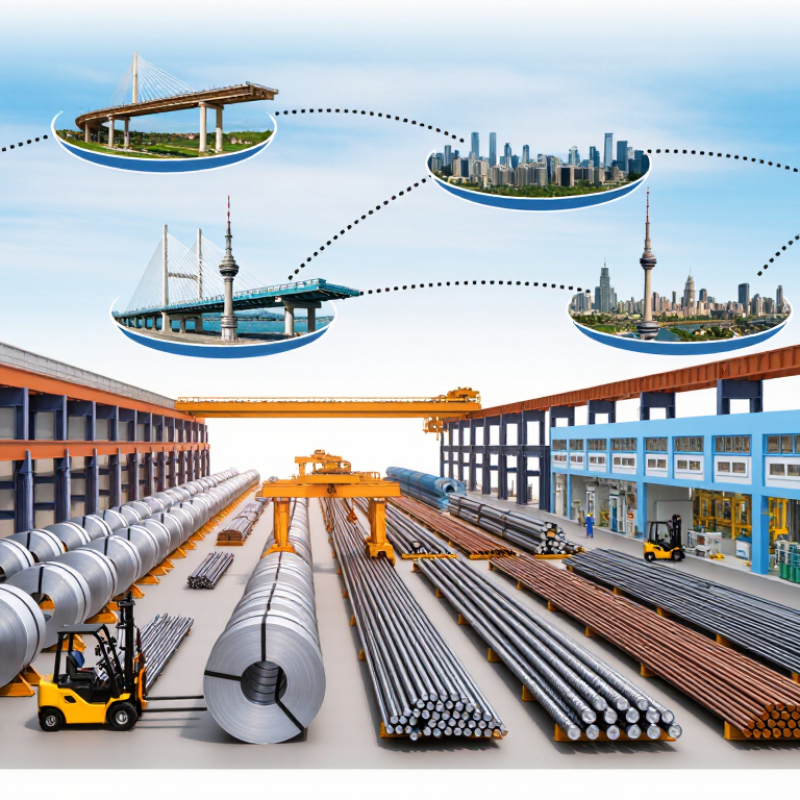
What Reinforcing Steel Bars Are and Why China Is a Major Producer
Reinforcing steel bars, commonly called rebar, strengthen concrete where tensile forces develop. Their raised ribs improve mechanical bonding with surrounding concrete. A 12-millimeter bar may look simple, but its diameter, yield strength, elongation, and rib geometry affect structural performance. Engineers specify these properties through national or project standards, not appearance alone.
China is a major producer because it has a vast construction market, integrated steelmaking capacity, and extensive rolling infrastructure. The World Steel Association’s World Steel in Figures 2024 reported China’s crude steel output at about 1.019 billion tonnes in 2023. That represented roughly 54% of global production. This enormous base supports large-scale rebar manufacturing, from billet casting to precision rolling and testing. The OECD Steel Outlook 2024 also highlighted persistent global steel overcapacity, which keeps efficiency and market discipline under pressure.
Production volume still needs careful interpretation. Rebar quality depends on chemical control, temperature management, cooling rates, and traceable mill certificates. A bar can pass a basic visual inspection yet fail stricter testing. That risk is easy to underestimate on a busy construction site. In practice, buyers should verify tensile results, bend performance, dimensional tolerance, and independent inspection records. China’s manufacturing scale is impressive, but scale alone cannot replace consistent process control.
China Top 10 Reinforcing Steel Bar Manufacturers - What Reinforcing Steel Bars Are and Why China Is a Major Producer
Manufacturer-neutral reference table for common reinforcing steel bar dimensions and technical characteristics in China
| No. | Nominal Diameter
(mm) | Reference Grade | Nominal Cross-Sectional Area
(mm²) | Theoretical Mass
(kg/m) | Typical Construction Application |
| 1 | 6 | HRB400E | 28.27 | 0.222 | Small-diameter reinforcement, distribution bars, and secondary structural elements |
| 2 | 8 | HRB400E | 50.27 | 0.395 | Slabs, stirrups, ties, and light reinforced-concrete components |
| 3 | 10 | HRB400E | 78.54 | 0.617 | Slab reinforcement, wall reinforcement, and column ties |
| 4 | 12 | HRB400E | 113.10 | 0.888 | Residential buildings, slabs, beams, walls, and general reinforced-concrete work |
| 5 | 14 | HRB400E | 153.94 | 1.210 | Beams, columns, foundations, and medium-load structural members |
| 6 | 16 | HRB400E | 201.06 | 1.580 | Primary reinforcement for beams, columns, foundations, and retaining structures |
| 7 | 20 | HRB400E | 314.16 | 2.470 | Heavy-load beams, columns, pile caps, foundations, and infrastructure projects |
| 8 | 22 | HRB400E | 380.13 | 2.980 | Large structural members, bridges, industrial buildings, and deep foundations |
| 9 | 25 | HRB400E | 490.87 | 3.850 | High-load columns, bridge components, transfer beams, and major foundations |
| 10 | 32 | HRB400E | 804.25 | 6.310 | Large-span structures, heavy civil engineering, bridges, and high-load foundations |
Technical note: The theoretical mass is calculated using the standard steel density of approximately 7,850 kg/m³ and the formula mass = 0.006165 × diameter². HRB400E is a seismic-grade hot-rolled ribbed reinforcing steel bar commonly specified for reinforced-concrete construction in earthquake-resistant applications. Actual availability, dimensional tolerances, chemical composition, mechanical properties, and delivery length should be confirmed against the applicable contract and Chinese standard, including GB/T 1499.2.
How the Top 10 Chinese Rebar Manufacturers Are Selected
China Top 10 Reinforcing Steel Bar Manufacturers
Selecting the top 10 Chinese rebar manufacturers requires more than comparing production volume. A reliable review begins with verified plant information, product standards, and recent operating records. We examine annual capacity, billet sources, rolling equipment, and quality-control procedures. Mill test certificates should show yield strength, tensile strength, elongation, chemical composition, and heat numbers. Traceability matters when steel bars move from the factory to a construction site.
Independent evidence strengthens the selection. Factory audits, laboratory reports, export records, and customer feedback help confirm actual performance. We also compare compliance with recognized standards, delivery reliability, packaging quality, and technical support. A manufacturer with modern equipment may still perform poorly if inspection records are incomplete. That is an uncomfortable point. Public data can also be limited or outdated, so rankings should remain open to review. Market conditions change quickly.
Tips: Request recent test certificates and verify them with an independent laboratory. Check bar markings, bundle labels, and heat-number consistency before shipment. Ask for samples when specifications are critical. Do not rely on capacity claims alone. A smaller supplier may offer stronger control, while a large mill may face longer scheduling delays. The final list should reflect documented evidence, practical project experience, and consistent quality rather than advertising language.
Profiles of China’s Top 10 Reinforcing Steel Bar Manufacturers
China’s top ten reinforcing steel bar manufacturers differ in scale, equipment, and market focus. This profile-based view examines practical strengths rather than relying on publicity alone. Capacity figures may change, so buyers should verify current records directly.
A coastal integrated mill controls ironmaking, steelmaking, and rolling under one system. An inland producer focuses on high-volume construction grades and railway projects. A modern electric-arc mill uses recycled steel and flexible batch production. Another manufacturer operates automated rolling lines with tight diameter control. A northern supplier serves cold regions and emphasizes impact performance. Its testing room matters.
A large export-oriented producer maintains documentation for international standards and shipment inspection. A regional mill offers shorter delivery routes for domestic contractors. One specialist develops seismic-grade bars with controlled chemical composition and elongation. Another combines heat-treatment technology with computer-based process monitoring. The tenth profile represents a smaller, responsive producer that accepts customized lengths and bundled deliveries.
Reliable evaluation requires more than a factory visit. Review mill certificates, traceability codes, tensile results, bend tests, and third-party inspection records. Check whether the stated standard matches the project specification. Production experience is useful, but it can also create overconfidence. A polished catalogue proves little. Some manufacturers publish detailed data; others require persistent questions. Buyers should compare recent samples, production dates, packing quality, and complaint-handling procedures before signing contracts. Availability, certification scope, and delivery performance should be confirmed for each order.
Production Standards, Grades, and Quality Controls for Chinese Rebar
Chinese rebar manufacturers serving the top tier of the market usually work under GB/T 1499.2, the main standard for hot-rolled steel bars for reinforced concrete. Common grades include HRB400, HRB500, and seismic grades marked with “E”. These designations indicate strength, ductility, and suitability for structural conditions. Buyers should verify the exact grade rather than rely on informal descriptions.
Quality begins with billet chemistry. Production teams check carbon, manganese, silicon, sulfur, and phosphorus before rolling. Controlled heating helps create a stable rib pattern and consistent bar dimensions. Each heat receives a traceable number. That number should connect the mill certificate, test sample, and shipment records.
Testing is not optional.
Typical controls include yield strength, tensile strength, elongation, bend tests, and, where required, rebend tests. Inspectors also measure diameter, weight per meter, rib height, and surface condition. A clean surface matters; deep seams, cracks, and excessive rust can affect concrete bonding. Independent laboratories may repeat tests before shipment, especially for large infrastructure orders.
A certificate alone is not enough. In practical purchasing, mismatched markings or incomplete heat records can create avoidable doubt. Some producers maintain excellent systems, yet small variations still appear between production lots. That is why experienced buyers compare samples, inspect loading conditions, and retain documents throughout delivery. The process is strong, but it is not flawless. Human review still matters.
China Top 10 Reinforcing Steel Bar Manufacturers: Rebar Grades and Production Standards
Minimum specified yield strength of common hot-rolled reinforcing steel bar grades under China's GB/T 1499.2-2018 standard. The figures represent grade requirements rather than data from any individual manufacturer.
Higher-grade rebar requires greater minimum yield strength. Chinese quality-control programs typically verify chemical composition, mechanical properties, bar dimensions, surface condition, straightness, heat identification, and batch traceability through testing and inspection procedures.
Industries and Projects Served by China’s Leading Rebar Suppliers
China Top 10 Reinforcing Steel Bar Manufacturers
China’s leading rebar suppliers support housing, transport, energy, and industrial construction. World Steel Association data shows China produced about 1.005 billion tonnes of crude steel in 2024. That represented over half of global output. Construction remains the largest steel-consuming sector, using roughly half of global steel demand.
Their rebar appears in high-rise foundations, metro tunnels, highway bridges, ports, and wind-energy bases. A bridge project may require ribbed bars with consistent spacing and controlled elongation. A coastal project needs stronger corrosion planning. Suppliers commonly provide 12–40 mm bars, mill certificates, heat numbers, and test results for yield strength and weldability.
Project buyers should examine more than production volume. China’s national standards often work alongside ASTM, BS, or EN requirements. Third-party tests can verify chemical composition, tensile strength, and bend performance. The World Steel Association’s World Steel in Figures 2025 supports China’s importance, but output alone does not prove dependable delivery.
A ranking can mislead.
The real test is traceability. Can the supplier match each bundle to a heat number? Can it maintain tolerances during peak construction seasons? Site experience suggests that documentation errors still create costly delays. I would also question unusually low quotations, because cheaper rebar may reflect thinner actual weight, weaker inspection, or unclear logistics rather than efficiency.





