


China’s aluminum precision-parts sector serves demanding industries, from electric vehicles to aerospace and industrial automation. The International Aluminium Institute reported about 70.6 million tonnes of global primary aluminum production in 2023. That figure shows the scale of the supply chain, not the quality of individual components. Precision still depends on alloy selection, machining capability, dimensional control, and inspection.
For buyers, small details matter. A thin-walled housing may need stable tolerances; a machined bracket may require clean edges and consistent surface finishing. Professor Julian Allwood, a materials researcher at the University of Cambridge, has studied how material choices affect manufacturing and sustainability. Paraphrasing that work: “Use materials efficiently, without compromising function.” This is a useful lens, not a substitute for supplier audits or technical verification.
This China Top 10 Aluminum Precision Parts Manufacturers guide compares manufacturers through practical criteria: processing range, quality systems, equipment, customization, and export experience. Company claims should be checked against drawings, sample parts, inspection records, and current certifications. A polished website proves little. Ask for evidence. The IAI production figure is industry context, not a precision-parts market forecast; public data rarely separates custom-machined components from broader aluminum output. That gap matters. The rankings should therefore help build a shortlist, while final supplier selection depends on your specifications, validation process, and production needs.
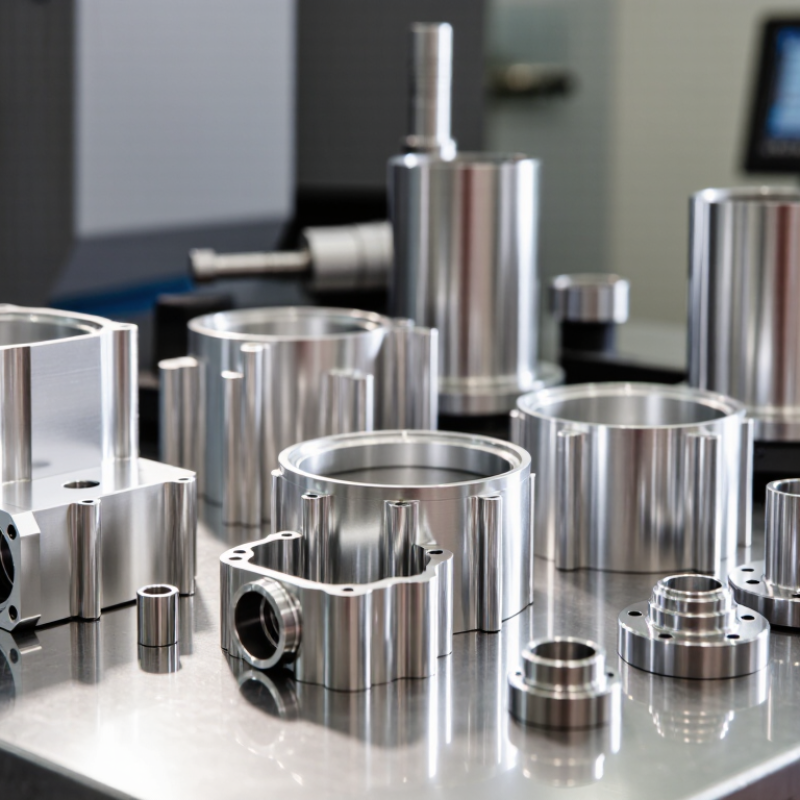
China’s aluminum precision-parts sector benefits from a large domestic supply base, but raw-metal output is only part of the story. The International Aluminium Institute reported that China produced about 41.6 million tonnes of primary aluminum in 2023, roughly three-fifths of global output. This scale supports a broad network of material suppliers, extrusion mills, foundries, heat-treatment facilities, and machining shops. It does not, by itself, prove that a factory can hold tight tolerances.
Production commonly starts with alloy selection and billet or casting preparation. Parts may then be machined on CNC equipment, deburred, inspected, and finished through anodizing or other surface treatments. A practical quality check looks beyond the drawing: operators also track tool wear, part temperature, clamping force, and measurement-system calibration. Small variations matter. A thin-walled housing can distort during machining, while inconsistent coating thickness may affect fit. The details are easy to underestimate.
For overseas buyers, supplier reviews should examine material certificates, inspection records, process controls, and sample-part results. ISO 9001 certification can indicate a documented quality system, but it does not guarantee every component will meet specification. Ask how a supplier handles nonconforming parts and repeat orders. One limitation remains: public industry data usually measures metal output, not precision-component capacity, so factory-level evidence still matters.
Scope: To avoid presenting an unsupported supplier ranking, this table summarizes ten common aluminum precision-part categories and their typical manufacturing considerations. Actual materials, tolerances, and processes vary by drawing, quantity, equipment, and inspection requirements.
| No. | Part Category | Common Manufacturing Processes | Common Aluminum Alloys | Key Quality Checks | Typical Applications |
|---|---|---|---|---|---|
| 1 | CNC-machined housings | 3-axis or 5-axis CNC milling, drilling, tapping, deburring | 6061, 6082 | Critical dimensions, hole position, flatness, thread condition, surface finish | Electronics, instruments, automation equipment |
| 2 | Mounting brackets and structural supports | CNC milling, sawing, drilling, tapping; bending where suitable | 6061, 5052 | Hole spacing, angular alignment, edge condition, dimensional consistency | Machinery, vehicle equipment, frames and fixtures |
| 3 | Heat sinks and thermal plates | Extrusion followed by cutting and machining; CNC milling for custom features | 6063, 6061 | Fin geometry, base flatness, mounting features, surface condition | Power electronics, LED equipment, thermal management assemblies |
| 4 | Enclosures and instrument panels | Sheet cutting, punching, bending, CNC machining, surface finishing | 5052, 6061 | Panel dimensions, bend angles, cut-outs, fit, coating or anodizing appearance | Control equipment, measurement devices, electrical assemblies |
| 5 | Manifolds and fluid-system blocks | CNC milling, drilling, tapping, cross-hole machining, deburring | 6061, 6082 | Port locations, thread quality, passage cleanliness, pressure or leak testing when specified | Hydraulic, pneumatic, cooling, and fluid-control systems |
| 6 | Shafts, spacers, and turned components | CNC turning, facing, grooving, drilling, secondary milling | 6061, 2011 | Diameter, concentricity, runout, surface finish, burrs | Rotating equipment, motion systems, assemblies and fixtures |
| 7 | Optical and sensor mounting components | Precision CNC milling, drilling, reaming, thread machining | 6061, 7075 | Mounting-hole position, datum relationships, flatness, cleanliness | Optical instruments, cameras, sensors, laboratory equipment |
| 8 | Custom brackets for lightweight structures | CNC machining, laser or waterjet cutting, forming where applicable | 5052, 6061, 7075 | Geometry, hole alignment, edge quality, material and temper verification | Robotics, transport equipment, aerospace-related assemblies |
| 9 | Extruded profiles with precision features | Aluminum extrusion, cut-to-length processing, CNC drilling and milling | 6063, 6061 | Profile dimensions, straightness, cut length, machined-feature position | Machine frames, enclosures, rails, heat-transfer assemblies |
| 10 | Prototype and low-volume custom parts | CNC milling or turning, rapid inspection, optional finishing | 6061, 5052, 7075 | Drawing revision, material traceability, critical dimensions, first-article inspection | Product development, testing, replacement parts, pilot production |

Selecting a precision parts manufacturer starts with the drawing, not a sales pitch. Check whether its machines can hold your tolerances across the full part, including thin walls, deep pockets, and tapped holes. Ask for inspection records from comparable jobs, not just a sample part polished for display. Numbers matter. Request measurement methods, calibration dates, and process-capability data tied to your critical dimensions. A coordinate-measuring machine report is useful, but only when its results match the drawing’s datum scheme.
Material control deserves equal attention. Ask how the supplier verifies alloy grade, temper, and batch traceability before machining. The International Aluminium Institute reports that recycling aluminium uses about 95% less energy than producing primary aluminium, so recycled content may support lower-impact sourcing. It should not, however, replace clear requirements for composition and mechanical properties. Ask for material certificates and incoming inspection records. Small details count.
Review the shop’s real production controls: tool-wear checks, first-article inspection, deburring, and packaging that prevents scratches or distortion. A clean audit file can still hide inconsistent parts; request recent data from routine production. Ask for evidence. Visit the facility if possible, and watch how operators handle parts between machining and inspection. One thing is easy to miss: the best supplier on paper may not be the best fit for a difficult drawing. Compare technical responses, delivery history, and how openly the team discusses risks before placing a large order.
Profiles of China’s top aluminum precision parts manufacturers should compare capability, not rely on rankings alone. Some focus on CNC-milled housings, where clean edges and tight hole positions matter. Others specialize in turned shafts, thin-wall components, or complex parts made through several machining steps. A strong profile explains available alloys, machining range, inspection methods, and typical production volumes. It should also show how the supplier handles drawings, surface finishes, and dimensional changes. Details matter. A tolerance figure without measurement context tells buyers very little.
Across ten profiles, look for evidence of practical quality control: calibrated measuring tools, documented inspection records, and checks at more than one production stage. Ask whether sample parts can be inspected before a larger order. Clear communication about material certificates and packaging also helps prevent avoidable surprises. Some profiles may offer broad capabilities, while others are better suited to repeat production or a narrow part family. That difference is easy to overlook.
Tips: Send a marked-up drawing and identify critical dimensions. Ask how each one is measured. Compare sample reports, not just quoted tolerances. A polished profile can still leave gaps; confirm lead times and inspection scope directly before making a decision.
Aluminum precision parts are shaped through CNC milling, turning, drilling, and sometimes die casting. The right process depends on geometry, tolerance, order volume, and material grade. For example, a milled housing may need thin walls, while a turned fitting needs accurate concentric surfaces. Deburring and inspection matter too. Small burrs can disrupt assembly, even when dimensions look correct. Some designs still need revision after the first sample; drawings do not reveal every production challenge.
Products include brackets, enclosures, heat sinks, connectors, and structural components. These parts serve automotive, electronics, machinery, and communications applications. Lightweight housings can reduce equipment mass, while finned heat sinks help move heat away from sensitive components. Surface treatments, such as anodizing, may improve corrosion resistance or appearance. However, a finish can slightly affect dimensions, so critical fits should be discussed before production. A polished sample alone is not enough evidence of consistent quality.
Tips: Share a clear 2D drawing and 3D model, and mark critical dimensions. Ask how the manufacturer checks tolerances, material condition, and surface finish. Requesting a first-article inspection can expose fit issues early. Be specific about the operating environment; salt, heat, and vibration can change material and finish choices.
China Top 10 Aluminum Precision Parts Manufacturers
Selecting an aluminum precision-parts supplier starts with process fit, not just a low quote. Ask about CNC machining, casting, surface finishing, and the part sizes each process can handle. A capable team can explain how it controls distortion on thin walls and burrs around drilled holes. Request a sample inspection report, not only a capability sheet. Small details matter. Check whether measurements cover critical features, such as a 12-millimeter bore or a flat sealing face.
Quality standards need practical proof. Confirm that stated certifications are current and relevant to the work. Review material records, calibration logs, and inspection methods, including coordinate-measuring equipment where needed. Agree on tolerances and acceptance criteria before production; vague drawings invite costly disputes. Lightweight designs, tighter tolerances, and clearer production traceability are shaping buyer expectations. Yet automation alone does not guarantee consistency. A polished audit can still miss problems during a rushed shift change, so communication and repeat inspections matter.
Tips: Send a fully dimensioned drawing and identify critical surfaces. Ask for a first-article inspection before approving a larger run.
Typical density values for common aluminum alloys provide a material benchmark relevant to precision-part design. This chart does not rank manufacturers or represent supplier-specific capabilities. Actual values may vary slightly by product form and specification.
Reference: MatWeb material property data.


For those larger-sized parts, or smaller quantity runs, we have 2 independent powder coat booths and ovens. The quality, durability and affordability of today’s powder coating finishes make this the process of choice for world-class companies.
Powder coating advantages over other forms of coating are many. Materials used in the Powder coating process can be metals and non-metals that come in a multitude of thicknesses, textures, colors, etc. Another of Powder coating’s biggest advantages over conventional coatings is its ability to create finishes in many different textures. Powder Coating Booths allow us the ability to apply these advantages to large products.
Tri-State Fabricators runs a full-service conveyor line for painting. Wet painting can provide protection or decoration to many different part styles. From start to finish, every project is easier to undergo random and point-based inspection by our skilled painting team.
Advantages to our Wet Paint Line are these lines start with product prep and ends with a thorough inspection of a high quality finished product. Our ability to complete large and small projects with a superior finish and doing so in a timely and economical fashion. This passes along the savings in production to our customers. When powder coating ins not an option, our Wet Paint Line gets the job done right the first time.
When the parts get big and heavy we roll-out our custom paint racks and oversize booth. By utilizing our partnerships with all the major paint brands, we can match virtually any color with wet paint.
The advantages of having access to a Wet Paint Booth are many. Large projects of many different shapes can be loaded into the booth. The Wet Paint Booth offers an environment that is much more controlled than a typical parts painting operation.
Not only are they used because of their controlled environment, but they’re are also advantageous when it comes to applying paint to parts that are needed in industries that require specialty coatings such as medical, aerospace, etc.
Our military forces have some very high standards when it comes to the finish of their vehicles and equipment. From the first pre-treatment step to final coat, it takes a great deal of knowledge and experience to protect the men and women of our armed forces. They deserve only the best, and Tri-State Fabricators provides it.
All of our processes are closely monitored by our staff and management teams. Both of which are highly trained in the processes of metal fabrication and finishing. Tri-State Fabricators’ goal is to always fully satisfy each and every customer, including the military. We will always put a 110% into what we do.
Abrasive media blasting is an excellent way to remove old paint, rust, and increase the paint/powder adhesion. Glass beads produce a much smoother and brighter finish than angular abrasives; leaving the part clean yet without any dimensional change. Chemically inert and environmentally friendly, we can recycle our beads approximately 30 times; making them a more preferred method of metal cleaning or surface finishing.
Advantages to Glass Bead Blasting are many. Glass bead blast media is used when a project is needing rough surfaces need to become smooth for applications of coatings such as paint. It is typically used to clean paint and rust from a product surface without deforming the surface it is being used on. Overall, compared to many other blasting media, Glass Bead Blasting is a very economical choice and those savings are always passed on to our customers.
Tri-State Fabricators utilize a zinc phosphate wash to clean and etch the material to ensure the best paint adhesion possible. The unique design of our 3-stage wash system does the work like a 5-stage. From Cleaning and rinsing to conversion coating and post-treatment, Our Part Washing process is a complete service and works throughout the fabrication service and the finishing service.
Along with the previously mentioned benefits, Curing is a vital chemical reaction that leaves the product finish hard and relatively safe from mild abrasion and aggressive corrosion. This process can be done in more than one way; ambient air-dry or in curing ovens at temps that exceed 240°.
From fixing paint mistakes (someone else’s of course) to simply cleaning our paint line hooks, our burn-off oven is put to good use. After a quick burn-off, a little clean up, and a fresh coat of paint, your parts will look better than new.
Why does our Burn-Off Oven work so well? Because super heating the air around parts turns the materials into ashes. From paint and powder coatings to rubber and machining oils, high temps do the job without degrading the integrity of the part.
Masking is a vital part of producing high quality products. We have die-cut masking patterns to protect machined surfaces as well as a wide range of plugs and caps to protect threaded holes and bolts. We provide permanent and temporary masking.
Masking allows the selected sections of a product to be protected from a fabrication or finishing service. This can be with both chemicals when etching and tapes, paints when only finishing just a section of the product. Masking is great in aiding the customization process of a project.
Screen printing is a photographic process that transfers artwork onto a porous nylon screen which allows colored ink to flow through the screen and be deposited on an aluminum or plastic component. We can generally have just about any design created onto a screen for your parts.
Some of the advantages of Screen Printing are, brand recognition for your business displaying on your products, assembly instructions, product warnings/hazards, etc. Tri-State Fabricators produces Screen Printing of the highest quality so you know it’s durable.
Metal Finishing is the art of treating the exterior portion of product, often metal but can also be made of other materials, so that the surface is clean and free of any debris. Then the process of applying coats or either paint of powder coat takes place. This coating process improves the quality of the product in both appearance and resistance to wear and corrosion.
Tri-State Fabricators, Inc., understands that a project typically isn’t complete until a high-quality finish has been added to your product. This is why our painting and powder coating teams continuously inspect the products throughout the Metal Finishing process.

