


China’s cement industry includes equipment suppliers serving projects from single production lines to complete plants. Choosing among them is not a simple price comparison. A Cement Plant depends on reliable engineering, suitable process design, and equipment that can withstand heat, dust, and continuous operation. Details matter.
This guide introduces ten Chinese manufacturers worth examining when planning a new facility or upgrading an existing line. It considers practical factors such as rotary-kiln experience, raw-material preparation, grinding systems, automation, installation support, and spare-parts access. These capabilities can affect fuel use, product consistency, maintenance time, and project schedules. A polished brochure alone proves little. Evidence matters. Buyers should verify references, technical specifications, service coverage, and performance guarantees directly with each supplier.
The companies discussed may differ widely in scale and specialization. Some focus on complete engineering, procurement, and construction services, while others concentrate on core machinery or selected process stages. The right fit depends on local raw materials, required output, energy costs, emissions targets, and available technical staff. No list can replace a site-specific assessment. Even a respected supplier may not suit every project, and published capacity figures can be difficult to compare without shared assumptions. Use this overview as a starting point, then request recent project records and speak with plant operators where possible. A careful comparison can reveal strengths that marketing materials miss—and gaps that deserve closer questions.
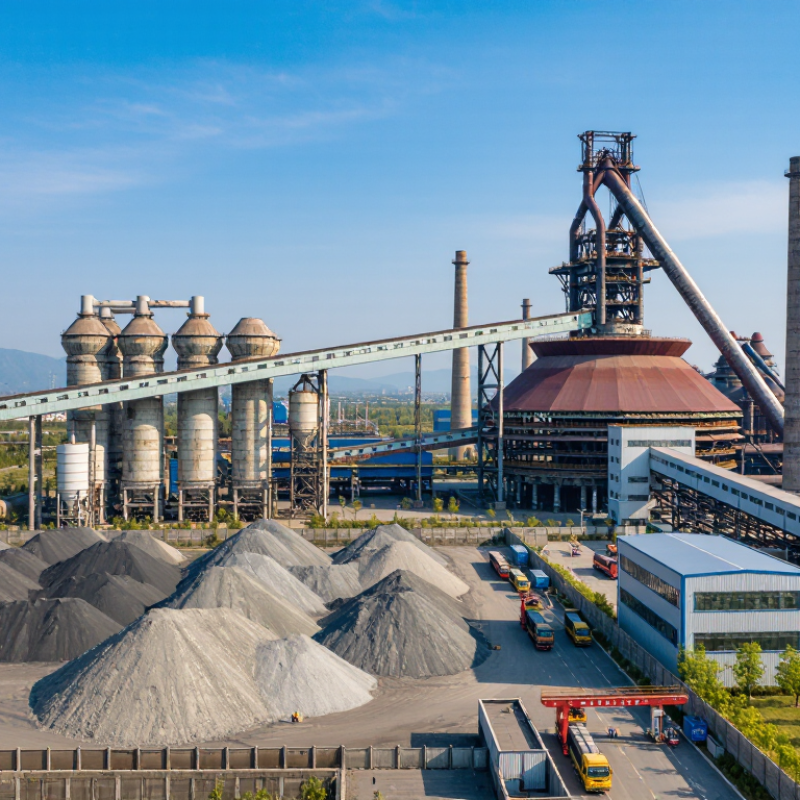
China’s cement plant manufacturing industry serves a large building-materials sector, supplying equipment for new production lines and upgrades. Its capabilities commonly include process design, crushing, raw-material grinding, rotary kilns, clinker cooling, and cement dispatch. Many manufacturers also integrate electrical controls, emissions monitoring, and waste-heat recovery systems.
The practical details matter. Kiln temperature stability, fuel use, and maintenance access can affect operating costs for years.
Suppliers are therefore assessed not only by equipment capacity, but also by commissioning support, spare-parts availability, and process reliability.
The industry is adapting to demand for more efficient plants and lower energy use. Existing facilities may add improved grinding systems, automation, or heat-recovery equipment instead of replacing an entire production line. Export projects bring extra challenges, including transport, installation schedules, local operating conditions, and staff training.
Data can be uneven.
A polished specification sheet rarely explains how equipment performs under a particular site’s raw materials or climate. Buyers should examine reference projects, service arrangements, and realistic performance guarantees, while recognizing that results depend on installation quality and day-to-day operation. Not every line is new.

For buyers comparing Chinese cement-plant manufacturers, the key question is what each supplier can deliver beyond major machinery. A production line typically includes limestone crushers, raw mills, preheaters, rotary kilns, clinker coolers, cement mills, and packing systems. Crushers set the feed size; kiln controls help maintain stable burning conditions. Dust collection and process automation also matter. Small details matter. Ask how equipment performance is tested, and what commissioning and maintenance support is included.
The International Energy Agency’s 2023 cement-sector analysis estimates that cement production causes about 7% of global CO2 emissions. This makes energy efficiency and emissions control practical purchasing criteria, not just brochure claims. Manufacturers may offer waste-heat recovery, alternative-fuel handling, emissions monitoring, and plant upgrades. The GCCA’s 2021 Net Zero Roadmap identifies efficiency and cleaner energy among the sector’s decarbonisation levers. Yet upgrades can require substantial capital and may not suit every site. That trade-off deserves scrutiny. Request project-specific energy figures, service response times, and clear performance-testing methods before comparing proposals.
A practical overview of major equipment and service areas commonly covered by cement plant suppliers. The rows are capability categories, not a company ranking; actual supply scope varies by project and supplier.
| No. | Plant Area | Key Equipment Typically Supplied | Related Services | Main Function |
|---|---|---|---|---|
| 1 | Quarrying and raw-material handling | Primary crushers, apron feeders, belt conveyors, stackers and reclaimers | Equipment sizing, layout coordination, installation supervision and commissioning | Reduces and transports limestone and other raw materials for processing and storage. |
| 2 | Raw-material preparation | Raw mills, vertical roller mills or ball mills, separators, and conveying equipment | Process design, grinding-system selection, performance testing and operator training | Grinds and blends raw materials into a suitably fine and consistent raw meal. |
| 3 | Raw-meal homogenization | Blending silos, aeration systems, bucket elevators and discharge equipment | Silo and material-flow design, controls integration and commissioning support | Helps even out variations in raw-meal composition before kiln feeding. |
| 4 | Pyroprocessing and clinker production | Preheaters, precalciners, rotary kilns, burners, coolers and clinker conveyors | Process engineering, refractory guidance, start-up assistance and performance optimization | Heats prepared raw meal to form clinker and cools the clinker for downstream handling. |
| 5 | Fuel preparation and firing | Coal or alternative-fuel mills, fuel storage and feeding systems, and burner equipment | Fuel-system design, combustion tuning, safety reviews and operating support | Prepares and meters fuels used to provide heat for the kiln and related processes. |
| 6 | Clinker and cement grinding | Cement mills, vertical roller mills or ball mills, separators, and dosing systems | Grinding-circuit design, product-quality testing, commissioning and optimization | Grinds clinker with gypsum and, where specified, other constituents to produce cement. |
| 7 | Dust collection and emissions control | Bag filters, electrostatic precipitators, ducts, fans and monitoring interfaces | System engineering, installation support, maintenance planning and compliance testing support | Captures dust from process gas streams; applicable emissions controls depend on the plant and local requirements. |
| 8 | Electrical, instrumentation and automation | Motors, drives, sensors, analyzers, control panels and distributed control systems | Controls integration, instrumentation calibration, software configuration and operator training | Monitors and coordinates equipment operation, process conditions and plant alarms. |
| 9 | Storage, packing and dispatch | Cement silos, packing machines, bulk loading systems, palletizing equipment and conveyors | Material-flow planning, system integration, commissioning and maintenance support | Stores finished cement and prepares it for bulk delivery or bagged distribution. |
| 10 | Project delivery and lifecycle support | Plant-wide equipment packages, spare parts and diagnostic tools, depending on contract scope | Feasibility and engineering studies, procurement coordination, construction supervision, commissioning, training and after-sales service | Supports project execution and ongoing plant operation; the level of service depends on the supply contract. |
Assessing China’s cement plant manufacturers requires more than comparing quoted prices or kiln capacity. Buyers should examine process design, production stability, fuel flexibility, and the ability to meet local raw-material conditions. China’s National Bureau of Statistics reported cement output of about 2.02 billion tonnes in 2023, showing the scale and diversity of its market. That matters. A capable supplier should provide verifiable operating data, not only design guarantees.
Energy and emissions performance deserve close scrutiny. The International Energy Agency estimates that cement production accounts for roughly 7% of global carbon dioxide emissions. Ask for measured heat consumption per tonne of clinker, electricity use, dust-control performance, and emissions data from comparable installations. Check the measurement period and plant conditions. A single “best-case” figure can mislead, especially when fuel quality or equipment age differs.
After-sales support is equally practical: spare-parts availability, commissioning timelines, operator training, and response arrangements should be documented. Request references from plants with similar capacity and feed materials, then verify uptime and maintenance records directly where possible. No scorecard is perfect. I would give less weight to glossy efficiency claims than to audited results, though even audited data may not capture every site’s constraints.
Industry-wide production provides context for assessing a cement plant manufacturer’s capacity planning, project experience, and ability to adapt to changing market demand. These figures are not company-specific.
Source: National Bureau of Statistics of China, annual cement output statistics. Output is shown in billion metric tonnes.
Profiles of ten notable Chinese cement plant manufacturers are most useful when they show what each supplier actually builds. Some focus on complete production lines, from raw-material handling to clinker cooling. Others specialize in rotary kilns, grinding mills, or automated control systems. A few concentrate on dust collection and heat recovery. Retrofit-focused suppliers may help older plants replace worn equipment without rebuilding every section. Modular designs can suit smaller projects, while high-capacity lines demand careful checks on utilities, site access, and commissioning support. Details matter.
A credible profile should state the supplier’s role, equipment scope, and service reach. It should also distinguish installed references from proposed capabilities. Ask for comparable project data, such as kiln output, fuel use, and commissioning time. These figures need context; raw numbers alone can mislead. A polished ranking may still leave gaps, especially around spare-parts availability and local technical support.
Tips: Request a process-flow diagram and a clear equipment list. Confirm what is included in installation and training. Check how performance guarantees are measured. Visit a running plant when practical, and speak with its operators. Plans look tidy on paper. Real sites rarely do.
When comparing China’s top cement plant manufacturers, technology, capacity, and service reveal more than a ranking alone. A supplier’s technical proposal should explain kiln design, heat recovery, emissions controls, and automation in practical terms. Ask how each system performs with the raw materials and fuel available at your site. A modern control room matters. So does reliable equipment on the production floor.
Capacity figures need careful reading. Annual output may assume ideal feed quality, stable power, and minimal downtime. Request the basis behind quoted figures, plus references from plants with similar operating conditions. Check whether proposed upgrades can be installed without lengthy shutdowns. Larger capacity is not always better if local demand or logistics cannot support it. Numbers need context.
Service can determine whether a plant runs smoothly after commissioning. Compare training, spare-parts availability, response times, and remote diagnostic support. Ask who handles maintenance planning and whether technicians can visit the site when needed. Review service commitments in writing, not just presentation slides. A polished proposal is useful, but it cannot guarantee a smooth project. I would also compare actual performance records, because published figures do not tell the whole story.


For those larger-sized parts, or smaller quantity runs, we have 2 independent powder coat booths and ovens. The quality, durability and affordability of today’s powder coating finishes make this the process of choice for world-class companies.
Powder coating advantages over other forms of coating are many. Materials used in the Powder coating process can be metals and non-metals that come in a multitude of thicknesses, textures, colors, etc. Another of Powder coating’s biggest advantages over conventional coatings is its ability to create finishes in many different textures. Powder Coating Booths allow us the ability to apply these advantages to large products.
Tri-State Fabricators runs a full-service conveyor line for painting. Wet painting can provide protection or decoration to many different part styles. From start to finish, every project is easier to undergo random and point-based inspection by our skilled painting team.
Advantages to our Wet Paint Line are these lines start with product prep and ends with a thorough inspection of a high quality finished product. Our ability to complete large and small projects with a superior finish and doing so in a timely and economical fashion. This passes along the savings in production to our customers. When powder coating ins not an option, our Wet Paint Line gets the job done right the first time.
When the parts get big and heavy we roll-out our custom paint racks and oversize booth. By utilizing our partnerships with all the major paint brands, we can match virtually any color with wet paint.
The advantages of having access to a Wet Paint Booth are many. Large projects of many different shapes can be loaded into the booth. The Wet Paint Booth offers an environment that is much more controlled than a typical parts painting operation.
Not only are they used because of their controlled environment, but they’re are also advantageous when it comes to applying paint to parts that are needed in industries that require specialty coatings such as medical, aerospace, etc.
Our military forces have some very high standards when it comes to the finish of their vehicles and equipment. From the first pre-treatment step to final coat, it takes a great deal of knowledge and experience to protect the men and women of our armed forces. They deserve only the best, and Tri-State Fabricators provides it.
All of our processes are closely monitored by our staff and management teams. Both of which are highly trained in the processes of metal fabrication and finishing. Tri-State Fabricators’ goal is to always fully satisfy each and every customer, including the military. We will always put a 110% into what we do.
Abrasive media blasting is an excellent way to remove old paint, rust, and increase the paint/powder adhesion. Glass beads produce a much smoother and brighter finish than angular abrasives; leaving the part clean yet without any dimensional change. Chemically inert and environmentally friendly, we can recycle our beads approximately 30 times; making them a more preferred method of metal cleaning or surface finishing.
Advantages to Glass Bead Blasting are many. Glass bead blast media is used when a project is needing rough surfaces need to become smooth for applications of coatings such as paint. It is typically used to clean paint and rust from a product surface without deforming the surface it is being used on. Overall, compared to many other blasting media, Glass Bead Blasting is a very economical choice and those savings are always passed on to our customers.
Tri-State Fabricators utilize a zinc phosphate wash to clean and etch the material to ensure the best paint adhesion possible. The unique design of our 3-stage wash system does the work like a 5-stage. From Cleaning and rinsing to conversion coating and post-treatment, Our Part Washing process is a complete service and works throughout the fabrication service and the finishing service.
Along with the previously mentioned benefits, Curing is a vital chemical reaction that leaves the product finish hard and relatively safe from mild abrasion and aggressive corrosion. This process can be done in more than one way; ambient air-dry or in curing ovens at temps that exceed 240°.
From fixing paint mistakes (someone else’s of course) to simply cleaning our paint line hooks, our burn-off oven is put to good use. After a quick burn-off, a little clean up, and a fresh coat of paint, your parts will look better than new.
Why does our Burn-Off Oven work so well? Because super heating the air around parts turns the materials into ashes. From paint and powder coatings to rubber and machining oils, high temps do the job without degrading the integrity of the part.
Masking is a vital part of producing high quality products. We have die-cut masking patterns to protect machined surfaces as well as a wide range of plugs and caps to protect threaded holes and bolts. We provide permanent and temporary masking.
Masking allows the selected sections of a product to be protected from a fabrication or finishing service. This can be with both chemicals when etching and tapes, paints when only finishing just a section of the product. Masking is great in aiding the customization process of a project.
Screen printing is a photographic process that transfers artwork onto a porous nylon screen which allows colored ink to flow through the screen and be deposited on an aluminum or plastic component. We can generally have just about any design created onto a screen for your parts.
Some of the advantages of Screen Printing are, brand recognition for your business displaying on your products, assembly instructions, product warnings/hazards, etc. Tri-State Fabricators produces Screen Printing of the highest quality so you know it’s durable.
Metal Finishing is the art of treating the exterior portion of product, often metal but can also be made of other materials, so that the surface is clean and free of any debris. Then the process of applying coats or either paint of powder coat takes place. This coating process improves the quality of the product in both appearance and resistance to wear and corrosion.
Tri-State Fabricators, Inc., understands that a project typically isn’t complete until a high-quality finish has been added to your product. This is why our painting and powder coating teams continuously inspect the products throughout the Metal Finishing process.

