


Choosing among China’s top 10 Cardboard Edging manufacturers requires more than comparing online catalogs. Product photos rarely reveal board density, adhesive quality, or real compression performance.
This guide examines manufacturers through practical purchasing criteria. These include recycled paper content, edge strength, dimensional accuracy, moisture resistance, and production consistency. A reliable supplier should provide clear specifications, sample approvals, factory evidence, and responsive communication. Packaging engineers may also check how corner boards perform around palletized glass, furniture, appliances, or metal coils. Small details matter. A loose fit can weaken a whole load.
The list considers manufacturing experience, export capability, quality systems, customization, and customer support. It also recognizes different purchasing needs. A distributor may prefer standard sizes, while a furniture exporter may require printed, laminated, or unusually long protectors. Pricing deserves attention, but the lowest quotation can hide thinner plies, unstable glue, or higher damage rates.
No ranking remains perfect forever. Factory capacity, raw paper supply, and service quality can change. That limitation deserves honest consideration. Buyers should request recent samples and confirm specifications before placing large orders. Independent testing can also reduce uncertainty, especially for heavy or moisture-sensitive shipments.
These manufacturers represent practical options for businesses seeking dependable Cardboard Edging from China. The final choice should match actual load conditions, budget, delivery expectations, and quality requirements. A careful comparison can protect products, reduce waste, and support more predictable logistics.
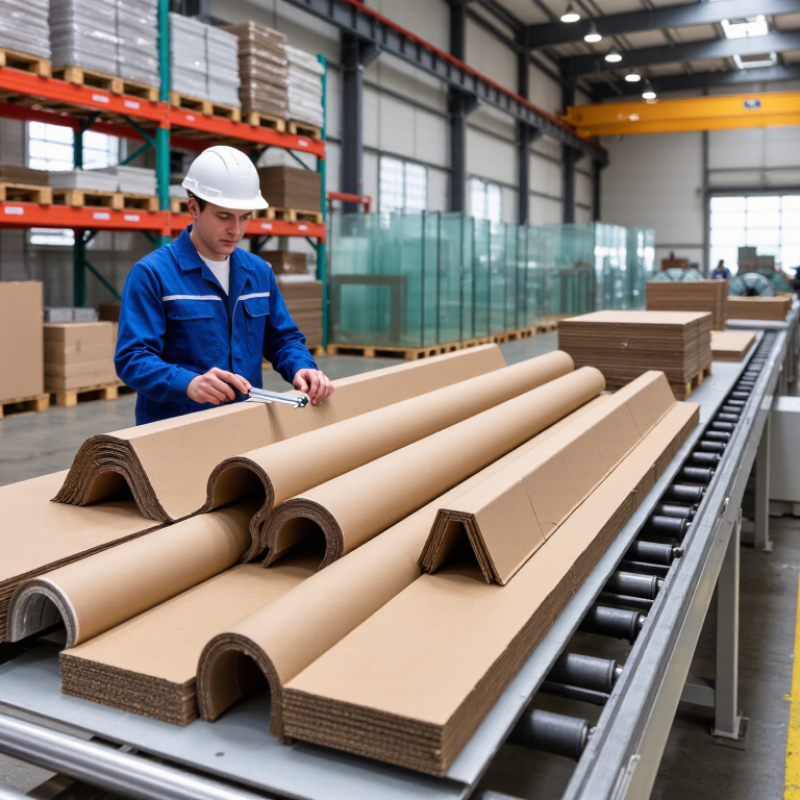
China Top 10 Cardboard Edging Manufacturers?
Cardboard edging, also called paper edge protector, is made from layered kraft paper and strong adhesive. It reinforces pallet corners during storage, strapping, and transport. A typical piece has a firm L-shaped profile, clean edges, and a slightly textured surface. Some manufacturers produce custom lengths, widths, thicknesses, and printed markings. This flexibility helps exporters protect furniture, glass, machinery, and boxed goods.
China is a major supplier because its packaging industry combines large-scale production with responsive customization. Many factories operate near paper mills, ports, and logistics networks. This can shorten lead times and reduce handling costs. Experienced buyers should inspect compression strength, moisture resistance, adhesive bonding, and dimensional accuracy. Factory audits and sample testing matter more than attractive catalog claims. The process is not flawless. Quality may vary between batches, especially when recycled fibers or changing adhesives are involved.
Tips: Ask for test samples before placing a large order. Measure corner width and thickness carefully. Check whether the protector stays rigid after humidity exposure. Request production records, inspection photos, and clear packaging details. A dependable manufacturer should explain tolerances honestly, not promise perfection. Also review shipping protection; damaged bundles can weaken otherwise well-made edging. Low pricing may look efficient, but inconsistent thickness can create higher packing labor and product damage.

Selecting China’s top ten cardboard edging manufacturers requires more than checking online rankings. We reviewed production experience, material consistency, machinery, quality controls, and export capability. Factory visits and sample comparisons helped us examine edge strength, cutting accuracy, moisture resistance, and surface finish. We also considered whether each manufacturer could maintain stable output during large orders.
Reliable evidence mattered. We checked business records, product documentation, inspection procedures, and customer feedback from different markets. Manufacturers with clear specifications and responsive technical teams received stronger consideration. Certifications were reviewed, but they were not treated as automatic proof of quality. A certificate can support trust, yet real samples often reveal more. No ranking is perfect. Some information changes quickly, and private production data is not always available.
Tips: Request samples from the same production line used for bulk orders. Measure thickness, compression strength, and dimensional tolerance. Ask how recycled materials are controlled. Confirm packaging details, lead times, replacement policies, and inspection records before signing an agreement. Photos can mislead. Direct communication helps expose small gaps. It is also wise to compare several quotations using identical specifications, because a lower price may reflect thinner material or weaker internal structure.
China’s top 10 cardboard edging manufacturers serve packaging, furniture, metal, and construction suppliers. Their products usually include paper edge protectors, angle boards, and custom corner guards.
Profile 1 focuses on heavy-duty edge protection for stone, glass, and steel coils. Its typical strength comes from multi-layer kraft paper and accurate compression control. Profile 2 serves furniture exporters with lighter profiles and clean, printable surfaces. Profile 3 produces narrow edging for panels and doors. It pays close attention to cutting accuracy. Profile 4 combines recycled paper content with reinforced structures for palletized goods. Material consistency can still vary between production batches.
Profile 5 specializes in moisture-resistant edging for sea freight and warehouse storage. Buyers should request actual test data, not broad marketing claims. Profile 6 offers flexible dimensions, including custom lengths, widths, and corner angles. Profile 7 supports high-volume orders with automated forming and packing lines. Its delivery reliability depends on production scheduling and paper supply. Profile 8 develops protective edging for appliances and engineered boards. Profile 9 emphasizes export documentation, sample approval, and carton-level traceability. Profile 10 serves smaller and medium-sized buyers with lower minimum order quantities. This can be useful for product testing, although unit prices may rise.
Experienced purchasers should compare compression strength, moisture behavior, adhesive quality, and dimensional tolerance. Ask for samples from different batches. Inspect crushed corners, uneven layers, and loose bonding. A factory visit or independent inspection adds confidence, but it cannot replace clear specifications and written quality records.
Evaluating China’s top ten cardboard edging manufacturers requires more than comparing catalog photos. The key questions concern products, materials, quality standards, and certifications. Common offerings include L-shaped edge protectors, U-shaped profiles, corner guards, and custom-cut pieces. Some suppliers also provide moisture-resistant or printed options for export packaging. Product fit matters. A protector that is too soft may collapse under strapping pressure. One that is oversized can waste carton space.
Most products use recycled kraft paper laminated with water-based adhesive. Virgin kraft layers may deliver cleaner surfaces and higher compression strength. Multi-layer winding affects thickness, squareness, and resistance to bending. In factory audits, I would check roll tension, adhesive coverage, edge bonding, and cutting accuracy. These details often reveal more than a polished sample. Still, visual inspection alone is insufficient. Compression tests, moisture checks, dimensional measurements, and batch records provide stronger evidence.
Reliable manufacturers should explain their quality system and test methods clearly. Relevant documentation may include ISO 9001, FSC chain-of-custody evidence, recycled-content declarations, and transport-packaging test reports. Certification scope must match the actual factory and product. That point is easy to overlook. Suppliers should also disclose tolerances, adhesive type, storage conditions, and corrective-action procedures. I would not treat every certificate as proof of superior performance. Testing conditions can differ from real shipments. A trial order, measured results, and an honest review of defects create a more dependable decision. No supplier is flawless.
The chart presents typical nominal thicknesses used for paperboard edge protectors across common packaging applications. Thickness varies according to load, pallet configuration, moisture exposure, and customer specifications.
Paperboard edge protectors are commonly manufactured from recycled or kraft paper layers bonded with starch-based adhesives. Product quality is generally evaluated through dimensional accuracy, compression strength, moisture resistance, adhesion, and compliance with applicable packaging and environmental requirements.
China Top 10 Cardboard Edging Manufacturers?
Choosing among China’s top cardboard edging manufacturers requires more than comparing prices. Product consistency matters. A damaged edge protector can weaken a full pallet during loading, stacking, and sea transport. Smithers’ corrugated packaging market research projects the global market will exceed 200 billion dollars by 2029, reflecting continued demand for reliable transit protection. Ask each supplier for compression-test results, moisture-resistance data, and samples from different production batches.
Compare the core specifications carefully. Check paper grade, thickness tolerance, corner angle, adhesive strength, and maximum load. A supplier offering 3-metre edging may not produce stable 1.2-metre profiles. Request a documented quality-control process, calibrated testing equipment, and traceability from paper input to shipment. ISO 9001 certification can support credibility, but it does not replace your own sample inspection. FAO forestry statistics report global paper and paperboard production above 400 million tonnes annually. Availability is broad, yet recycled fiber quality can vary by region and season. This is easy to underestimate.
Tips: Send one standard drawing to every supplier. Test samples after humidity exposure. Compare delivered cost, not factory price. Review lead time, packaging, claims handling, and export experience. A factory tour, live video inspection, or third-party audit may reveal details photographs hide. I would also repeat testing after a production delay; one successful sample proves very little. Ask uncomfortable questions early.
| Rank | Supplier Profile | Typical Product Focus | Core Material Options | Common Thickness Range | Standard Length Range | Typical MOQ | Sample Lead Time | Bulk Lead Time | Customization Capability | Quality and Compliance Documents | Export Readiness | Best Fit | Comparison Score |
|---|---|---|---|---|---|---|---|---|---|---|---|---|---|
| 1 | Supplier Profile 01 | Heavy-duty paper edge protectors | Recycled kraft paper, virgin kraft paper | 3–10 mm | 800–6,000 mm | 1,000 pieces | 5–7 working days | 15–25 working days | High | COA, material specification, packing list, invoice | Established export process | Machinery, steel, glass and palletized cargo | 9.2/10 |
| 2 | Supplier Profile 02 | Standard pallet corner boards | Multi-ply kraft paper | 2–8 mm | 600–5,000 mm | 2,000 pieces | 5–8 working days | 18–28 working days | Medium–High | COA, thickness report, product inspection report | Suitable for container shipping | General packaging and warehouse distribution | 8.9/10 |
| 3 | Supplier Profile 03 | Moisture-resistant edge protection | Water-resistant treated kraft paper | 3–9 mm | 800–5,500 mm | 1,500 pieces | 7–10 working days | 20–30 working days | High | COA, moisture-resistance test, packaging specification | Good for sea freight | Food ingredients, chemicals and humid environments | 8.8/10 |
| 4 | Supplier Profile 04 | Printed and branded edge boards | Recycled kraft paper with printed surface | 2–7 mm | 500–4,000 mm | 3,000 pieces | 8–12 working days | 22–32 working days | Very High | Color proof, COA, print approval record | Export packaging available | Retail packaging and visible pallet presentation | 8.6/10 |
| 5 | Supplier Profile 05 | Lightweight protective profiles | Lightweight recycled paperboard | 2–5 mm | 400–3,000 mm | 3,000 pieces | 5–8 working days | 15–25 working days | Medium | COA, recycled-content declaration, basic inspection report | Suitable for LCL shipments | Furniture, appliances and lightweight cartons | 8.3/10 |
| 6 | Supplier Profile 06 | High-compression corner protectors | High-density multi-ply kraft paper | 4–12 mm | 800–6,000 mm | 1,000 pieces | 7–10 working days | 20–30 working days | High | Compression test, COA, dimensional inspection report | Suitable for heavy export cargo | Stone, metal, automotive and industrial products | 8.5/10 |
| 7 | Supplier Profile 07 | Stretch-film and strapping support boards | Recycled kraft paper, laminated paperboard | 2–8 mm | 600–5,000 mm | 2,000 pieces | 5–7 working days | 15–25 working days | Medium–High | COA, load test, packaging and palletization details | Efficient for regular replenishment | Warehousing, logistics and contract packaging | 8.2/10 |
| 8 | Supplier Profile 08 | Small-batch custom dimensions | Kraft paper, recycled paperboard | 2–6 mm | 300–3,000 mm | 500 pieces | 7–12 working days | 20–35 working days | Very High | Sample approval, COA, dimensional report | Buyer verification recommended | Product testing, prototypes and smaller importers | 8.0/10 |
| 9 | Supplier Profile 09 | Economical standard edge boards | Recycled kraft paper | 2–6 mm | 600–4,000 mm | 5,000 pieces | 5–8 working days | 18–30 working days | Medium | COA and standard packing documentation | Suitable for routine shipments | Cost-sensitive packaging programs | 7.8/10 |
| 10 | Supplier Profile 10 | Premium appearance edge protectors | Virgin kraft paper, coated paperboard | 2–8 mm | 500–5,000 mm | 2,000 pieces | 8–12 working days | 22–35 working days | High | COA, appearance inspection, color and finish approval | Suitable for presentation-sensitive goods | Consumer goods, furniture and premium retail packaging | 7.9/10 |


For those larger-sized parts, or smaller quantity runs, we have 2 independent powder coat booths and ovens. The quality, durability and affordability of today’s powder coating finishes make this the process of choice for world-class companies.
Powder coating advantages over other forms of coating are many. Materials used in the Powder coating process can be metals and non-metals that come in a multitude of thicknesses, textures, colors, etc. Another of Powder coating’s biggest advantages over conventional coatings is its ability to create finishes in many different textures. Powder Coating Booths allow us the ability to apply these advantages to large products.
Tri-State Fabricators runs a full-service conveyor line for painting. Wet painting can provide protection or decoration to many different part styles. From start to finish, every project is easier to undergo random and point-based inspection by our skilled painting team.
Advantages to our Wet Paint Line are these lines start with product prep and ends with a thorough inspection of a high quality finished product. Our ability to complete large and small projects with a superior finish and doing so in a timely and economical fashion. This passes along the savings in production to our customers. When powder coating ins not an option, our Wet Paint Line gets the job done right the first time.
When the parts get big and heavy we roll-out our custom paint racks and oversize booth. By utilizing our partnerships with all the major paint brands, we can match virtually any color with wet paint.
The advantages of having access to a Wet Paint Booth are many. Large projects of many different shapes can be loaded into the booth. The Wet Paint Booth offers an environment that is much more controlled than a typical parts painting operation.
Not only are they used because of their controlled environment, but they’re are also advantageous when it comes to applying paint to parts that are needed in industries that require specialty coatings such as medical, aerospace, etc.
Our military forces have some very high standards when it comes to the finish of their vehicles and equipment. From the first pre-treatment step to final coat, it takes a great deal of knowledge and experience to protect the men and women of our armed forces. They deserve only the best, and Tri-State Fabricators provides it.
All of our processes are closely monitored by our staff and management teams. Both of which are highly trained in the processes of metal fabrication and finishing. Tri-State Fabricators’ goal is to always fully satisfy each and every customer, including the military. We will always put a 110% into what we do.
Abrasive media blasting is an excellent way to remove old paint, rust, and increase the paint/powder adhesion. Glass beads produce a much smoother and brighter finish than angular abrasives; leaving the part clean yet without any dimensional change. Chemically inert and environmentally friendly, we can recycle our beads approximately 30 times; making them a more preferred method of metal cleaning or surface finishing.
Advantages to Glass Bead Blasting are many. Glass bead blast media is used when a project is needing rough surfaces need to become smooth for applications of coatings such as paint. It is typically used to clean paint and rust from a product surface without deforming the surface it is being used on. Overall, compared to many other blasting media, Glass Bead Blasting is a very economical choice and those savings are always passed on to our customers.
Tri-State Fabricators utilize a zinc phosphate wash to clean and etch the material to ensure the best paint adhesion possible. The unique design of our 3-stage wash system does the work like a 5-stage. From Cleaning and rinsing to conversion coating and post-treatment, Our Part Washing process is a complete service and works throughout the fabrication service and the finishing service.
Along with the previously mentioned benefits, Curing is a vital chemical reaction that leaves the product finish hard and relatively safe from mild abrasion and aggressive corrosion. This process can be done in more than one way; ambient air-dry or in curing ovens at temps that exceed 240°.
From fixing paint mistakes (someone else’s of course) to simply cleaning our paint line hooks, our burn-off oven is put to good use. After a quick burn-off, a little clean up, and a fresh coat of paint, your parts will look better than new.
Why does our Burn-Off Oven work so well? Because super heating the air around parts turns the materials into ashes. From paint and powder coatings to rubber and machining oils, high temps do the job without degrading the integrity of the part.
Masking is a vital part of producing high quality products. We have die-cut masking patterns to protect machined surfaces as well as a wide range of plugs and caps to protect threaded holes and bolts. We provide permanent and temporary masking.
Masking allows the selected sections of a product to be protected from a fabrication or finishing service. This can be with both chemicals when etching and tapes, paints when only finishing just a section of the product. Masking is great in aiding the customization process of a project.
Screen printing is a photographic process that transfers artwork onto a porous nylon screen which allows colored ink to flow through the screen and be deposited on an aluminum or plastic component. We can generally have just about any design created onto a screen for your parts.
Some of the advantages of Screen Printing are, brand recognition for your business displaying on your products, assembly instructions, product warnings/hazards, etc. Tri-State Fabricators produces Screen Printing of the highest quality so you know it’s durable.
Metal Finishing is the art of treating the exterior portion of product, often metal but can also be made of other materials, so that the surface is clean and free of any debris. Then the process of applying coats or either paint of powder coat takes place. This coating process improves the quality of the product in both appearance and resistance to wear and corrosion.
Tri-State Fabricators, Inc., understands that a project typically isn’t complete until a high-quality finish has been added to your product. This is why our painting and powder coating teams continuously inspect the products throughout the Metal Finishing process.

