Top 10 Best Multi Function Induction Cookers for Buyers
A Multi Function Induction Cooker can simmer soup, sear vegetables, and keep rice warm on one compact countertop. Yet a long list of settings does not guarantee an easy cooking experience. Buyers should look beyond the feature count. Check the power levels, temperature controls, timer, safety lock, and how clearly the display responds. A crowded kitchen counter is not a showroom, and a control panel that looks simple in a photograph may feel awkward during dinner.
Food science writer Harold McGee’s discussion of induction cooking highlights a practical point: the cooktop’s magnetic field transfers energy to compatible cookware. That means pan compatibility matters as much as the appliance’s advertised power. Look for a clear compatibility guide, and check your existing pans with a magnet before buying. Small details matter.
This Top 10 guide compares multi-function models by cooking flexibility, usability, cleanup, safety features, and value. It also considers real kitchen needs, such as carrying a hot pot, wiping spills around touch controls, and storing the unit between meals. Some rankings depend on personal priorities. A large family may value a broad cooking surface, while a student may prefer lighter weight and straightforward controls. No single cooker suits everyone. The guide aims to make trade-offs visible, not pretend that one “best” choice fits every home. A shortlist can still miss a detail important to you, so use it as a starting point and verify current specifications before purchasing.
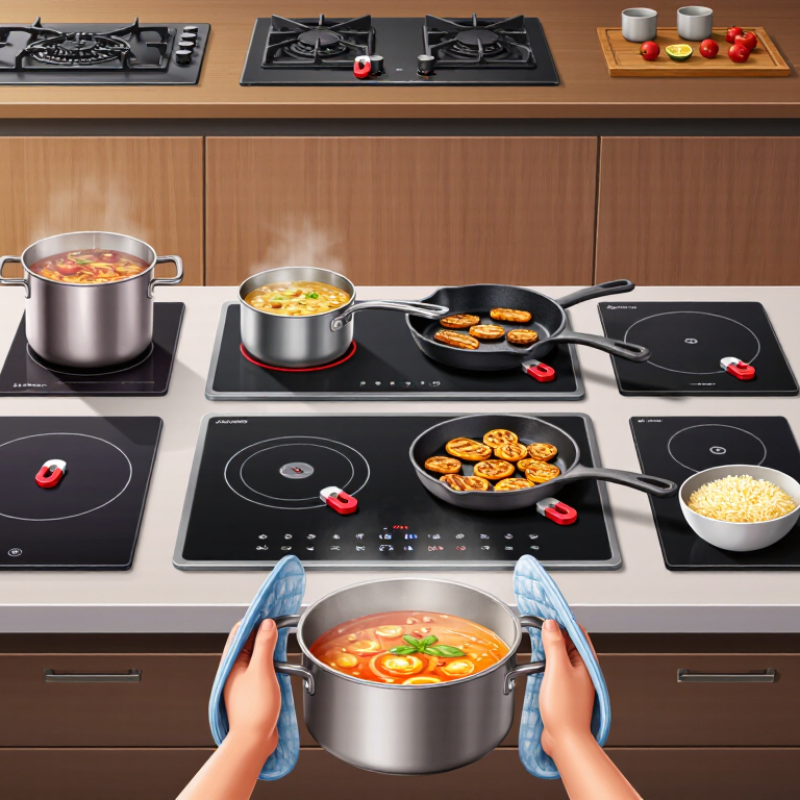
Understanding How Multifunction Induction Cookers Work
A multifunction induction cooker heats the pan, not a burner beneath it. Inside the unit, an electric current flows through a coil and creates a changing magnetic field. When compatible cookware sits on the surface, that field produces electrical currents in the pan’s base. The pan then generates heat, which cooks the food. The glass surface may warm from contact with the hot pan, but it is not the main heat source.
Cookware matters. A simple magnet test can help: if a magnet sticks firmly to the base, the pan is generally suitable. A flat, correctly sized base usually transfers energy more consistently than a warped or very small one. The cooker’s controls adjust power or temperature, while timers and preset modes manage common tasks. Useful, but not magical. Sensors and settings can respond differently to cookware, room temperature, and food quantity. For example, a small pot of water may boil quickly at a high setting, while a crowded pan needs more time. Keep the base centered and follow the appliance’s instructions. The display may show a precise number, yet cooking still requires occasional attention. That gap is worth remembering.
How Induction Cooking Compares: Typical Energy Transfer Efficiency
Induction cooktops transfer about 85% of their energy to cookware, compared with roughly 75–80% for electric resistance and 32–40% for gas. Values shown for electric resistance and gas are range midpoints; actual efficiency varies by appliance, cookware, and cooking conditions. Multifunction induction cookers use this heating method alongside features such as simmering, searing, and temperature control.
Source: U.S. Department of Energy, Energy Saver. Figures are typical estimates, not ratings for individual products.
Key Features That Define a Versatile Induction Cooker
A versatile induction cooker should adapt to different meals, not just boil water quickly. Look for precise power settings, a responsive temperature range, and a timer that can switch the unit off. These controls matter when you move from a rolling boil to a gentle simmer. Small details count.
The U.S. Department of Energy’s Energy Saver guidance says induction is about 5–10% more efficient than conventional electric cooking and roughly three times as efficient as gas. That efficiency depends on using compatible, flat-bottomed cookware. A magnet test is practical: if it sticks firmly to the pan’s base, the pan will generally work. Still, efficiency figures do not guarantee even heating in every kitchen.
Safety and cleanup deserve equal attention. A child lock, automatic shutoff, and clear residual-heat indicator can make daily use less stressful, especially in a busy home. A smooth glass surface wipes clean, though spills can bake on if ignored. Check the cooker’s wattage against your kitchen outlet, too. This is easy to overlook. I would compare controls using a familiar recipe, because a long feature list can look impressive while the simmer setting remains difficult to manage.
How to Evaluate Safety, Performance, and Ease of Use
Top 10 Best Multi Function Induction Cookers for Buyers
How to Evaluate Safety, Performance, and Ease of Use
Safety features matter more than a long menu of cooking modes. Look for automatic pan detection, overheat shutoff, a child lock, and a clear residual-heat indicator. These controls reduce common risks, but they cannot replace attention at the stove. The National Fire Protection Association’s cooking-fire research identifies unattended cooking as a major fire factor. Keep handles turned inward and avoid leaving a hot cooker running while you step away. Small habits count.
Performance is not just wattage. The U.S. Department of Energy estimates induction cooking transfers about 85% of its energy to cookware, compared with roughly 75% for conventional electric cooking and 32% for gas. That efficiency depends on compatible, flat-bottomed cookware. Check that the cooker detects your usual pots, then test how quickly it brings water to a boil and how steadily it holds a low simmer. Easy to test. Ease of use is less measurable. Try the buttons with damp hands, read the display from a normal standing position, and check whether the cooking pot lifts out without awkward twisting. Preset programs can help on busy evenings, though some may need adjustment for your recipes. I would not assume more settings mean better cooking; that is an easy mistake to make.
Comparing the Top 10 Multifunction Induction Cookers
Comparing the top ten multifunction induction cookers means looking beyond preset buttons and glossy touchscreens. A fair comparison weighs heating consistency, usable power levels, cookware detection, and how easily each unit handles everyday tasks. The most capable models should simmer sauce without scorching, bring a pot of water to a steady boil, and switch cleanly between functions. Small details matter.
At the counter, test the controls with damp fingers, check whether the display stays readable, and note how quickly the surface cools. Compare timer settings, temperature steps, cord length, and the footprint beside nearby pans. Safety features such as automatic shutoff and pan detection are practical, not decorative. Some units offer many modes but little control over low heat. That can be frustrating.
When comparing listings, match cookware requirements and rated wattage to your kitchen circuit. A larger cooking zone may suit a wide skillet, yet crowd a compact countertop. Read warranty terms and replacement-part availability carefully. Reviews help, though one report of a noisy fan does not prove a widespread fault. I would not treat preset count as a quality score; some functions may rarely leave the menu. Choose the cooker whose heat control, cleaning routine, and size fit the meals you actually make. Specs cannot decide that for you.
Choosing the Right Cooker for Your Kitchen and Cooking Habits
Choosing a multi-function induction cooker starts with your daily routine, not its longest feature list. Do you simmer soup, sear vegetables, or cook rice on busy evenings? Match the appliance’s preset programs and pot capacity to those meals. A large cooker can waste counter space when you usually prepare two portions. A small one becomes frustrating when guests arrive.
Check cookware and power requirements before buying. Induction needs magnetic cookware; a magnet should cling firmly to the pot’s base. The U.S. Department of Energy’s Energy Saver guidance says induction can use 5–10% less energy than conventional electric resistance cooking and about one-third the energy of gas cooking. Actual results vary with cookware fit, settings, and cooking habits. Efficiency is not automatic.
Look beyond the touch panel. A clear display, removable inner pot, and easy-to-clean lid matter after a long workday. If you use pressure, slow-cook, or keep-warm modes, check whether those functions operate independently and whether the instructions explain safe use. Also confirm the outlet and electrical requirements; don’t assume every kitchen can support the same appliance. Small detail, big difference. I would still question whether extra modes justify a higher price if you only use one or two. That is easy to overlook.





