Top 10 Anti-corrosion Traffic Bollard Suppliers

Selecting the right supplier is crucial when public safety depends on durable street infrastructure. A traffic bollard may face rain, salt, vehicle impact, dust, and repeated cleaning. In coastal cities, corrosion can begin around hidden welds and drainage points. This guide introduces the Top 10 Anti-corrosion Traffic Bollard Suppliers for practical evaluation.

The selection considers material quality, surface treatment, manufacturing experience, testing practices, customization, and after-sales support. Stainless steel grades, galvanized finishes, powder coatings, and protective sealants can influence service life. However, a polished appearance does not always prove reliable protection. Site conditions matter. A supplier experienced with parking entrances may not understand heavy industrial access roads. Buyers should request product drawings, coating details, load information, maintenance guidance, and project references. Clear documentation often reveals more than attractive catalogs.

Details matter greatly. Look for smooth welds, sealed joints, stable bases, and visible drainage design. Ask how the supplier checks coating thickness and impact resistance. Independent testing can strengthen confidence, but test results need proper context. One weakness in this comparison is that supplier performance may change across models and production batches. A factory can deliver excellent fixed bollards yet provide weaker automatic systems. Readers should verify current certifications, inspection records, warranty terms, and installation requirements before ordering. No ranking can replace a site assessment. The best Anti-corrosion Traffic Bollard should match local weather, traffic intensity, security needs, and maintenance capacity. A careful decision protects budgets and pedestrians. Small details often decide long-term value.
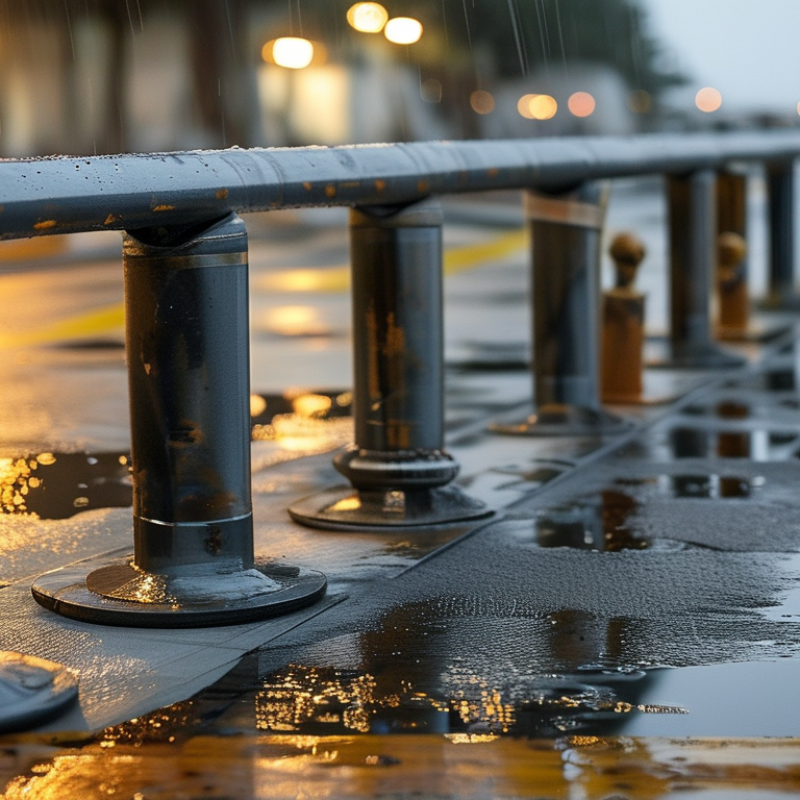
Top 10 Anti-corrosion Traffic Bollard Suppliers

Traffic Bollards: Purpose, Types, and Anti-Corrosion Features

Top 10 Anti-corrosion Traffic Bollard Suppliers

Traffic bollards control vehicles, protect entrances, and guide pedestrians around vulnerable spaces. Fixed bollards suit permanent protection, while removable and retractable models support changing access needs. Flexible polymer bollards absorb minor impacts. Steel security bollards resist stronger forces.

Corrosion deserves equal attention. The NACE IMPACT study estimated global corrosion costs at approximately 3.4% of worldwide gross domestic product. That figure explains why material selection matters beyond appearance. Top suppliers should specify stainless steel grades, hot-dip galvanizing, or marine-grade powder coatings. ASTM A123 covers zinc coating requirements for fabricated iron and steel products. ISO 12944 helps evaluate protective paint systems in different corrosive environments.

Small details matter. Look for sealed caps, sloped surfaces, drainage paths, and protected welds. These features reduce trapped water around joints and anchor plates. In coastal areas, chloride exposure can attack unprotected steel quickly. Field inspections should check coating damage, rust creep, loose anchors, and blocked drainage. A thicker coating is not automatically better. Poor surface preparation can still cause early failure.

Supplier comparisons should include salt-spray evidence, coating thickness records, impact testing, warranty conditions, and replacement-part availability. The best specification matches traffic risk, soil moisture, cleaning chemicals, and maintenance access. That judgment can fail when buyers compare prices alone. Even stainless steel needs suitable detailing and regular inspection. Performance depends on installation, not only the bollard.

Anti-Corrosion Performance of Common Traffic Bollard Materials

Stainless steel 316 generally provides the strongest resistance in coastal and chloride-rich environments because of its molybdenum content. Stainless steel 304 and hot-dip galvanized steel offer strong outdoor protection, while powder-coated steel depends heavily on coating quality and damage repair. The scores are comparative material-based ratings on a 1–5 scale, not supplier certifications or laboratory test results.

How to Evaluate Anti-Corrosion Traffic Bollard Suppliers

Evaluating anti-corrosion traffic bollard suppliers requires more than comparing catalog prices. In field projects, exposed steel can show rust around welds, drain holes, and damaged coatings. A reliable supplier should explain the material grade, coating system, and expected service environment. Ask whether the bollards use galvanized steel, stainless steel, or a tested layered finish. Request coating thickness records and salt-spray or cyclic-corrosion test reports. Independent laboratory evidence is more useful than vague claims such as “weatherproof.”

Inspect manufacturing controls as carefully as the product. Does the supplier document weld inspection, surface preparation, curing temperature, and batch traceability? Samples should reveal even coating coverage, clean threads, sealed joints, and stable anchoring plates. Ask for installation drawings and maintenance guidance suited to coastal roads, winter salts, or industrial dust. A knowledgeable technical team will discuss failure modes, not only strengths. It should also explain how impact damage is repaired without hiding corrosion beneath a patch.

Warranty terms deserve close reading. Coverage should identify coating failure, structural defects, exclusions, inspection duties, and response times. Speak with project references, then verify whether supplied models match the tested models. Low prices can reflect thinner coatings or weaker steel; they are not always savings. I have seen evaluations overvalue appearance and undervalue drainage details. That mistake is easy to repeat. A supplier may provide excellent reports but weak after-sales support. Check both before approval. Credible evaluation combines documents, physical samples, site conditions, and practical conversations with installers.

Top 10 Anti-Corrosion Traffic Bollard Suppliers

Top 10 Anti-Corrosion Traffic Bollard Suppliers

Choosing among the top 10 anti-corrosion traffic bollard suppliers requires more than comparing catalog prices. Field experience shows that coastal air, winter salt, and standing water attack weak finishes quickly. Reliable suppliers should explain their steel grade, coating system, weld quality, and drainage design. They should also provide clear inspection records and practical installation guidance.

Look for bollards with hot-dip galvanizing, durable powder coating, or layered corrosion protection. Stainless steel can perform well, but its grade must match the environment. Ask whether coating thickness is tested after production. Check anchor details, impact performance, replacement parts, and expected maintenance intervals. A serious supplier will discuss failures, not only present polished product photos. Small details matter.

Installation support matters too. A strong supplier can recommend foundations, spacing, reflective elements, and cleaning methods for different sites. Request samples when possible. Examine corners, welds, caps, and concealed surfaces. These areas often reveal manufacturing weaknesses. Pricing alone can mislead buyers. A cheaper bollard may create higher replacement costs later.

No ranking remains perfect across every climate or traffic condition. That is worth admitting. Supplier performance also depends on communication, documentation, and after-sales response. Compare verified test reports with real project references. Speak with installers, because their experience may expose problems missed during office reviews. A dependable choice combines corrosion resistance, structural performance, consistent quality, and honest technical support.

Supplier Comparison: Materials, Standards, Customization, and Support

When comparing the top 10 anti-corrosion traffic bollard suppliers, examine materials before reviewing prices. Stainless steel offers strong resistance in coastal areas, while hot-dip galvanized steel suits heavy-duty streets and loading zones. Powder-coated finishes add color and another protective layer, but damaged coatings can expose the substrate. Ask suppliers for salt-spray results, coating thickness, and maintenance guidance. These details reveal more than polished catalog images.

Standards also deserve careful checking. Reliable suppliers should provide documentation for impact ratings, visibility requirements, anchoring systems, and material traceability. Requirements vary by road authority and installation site. Do not accept “compliant” without a test report or certificate. Customization may include fixed, removable, retractable, or flexible designs, plus reflective bands, drainage holes, and non-standard heights. However, every modification can affect strength, delivery time, or warranty coverage. I have found that small design changes are often underestimated.

Tips: Request physical samples. Compare finish thickness, weld quality, edge smoothness, and base-plate alignment. Ask how scratches are repaired in the field. Support matters after delivery. A capable supplier should offer installation drawings, replacement components, response times, and clear warranty exclusions. Keep records. One overlooked issue is local cleaning practice; harsh chemicals can shorten coating life, even when the original specification appears excellent.

How to Choose the Right Traffic Bollard Supplier for Your Project

Choosing a traffic bollard supplier starts with the project environment, not a glossy product photo. A coastal road, underground car park, and logistics yard create different corrosion risks. The NACE IMPACT study estimated global corrosion costs at about US$2.5 trillion, or 3.4% of global GDP. That figure makes coating quality a procurement issue, not a decoration choice.

For a top-10 supplier shortlist, request coating specifications, test records, and installation guidance. ISO 12944 classifies corrosive environments and helps match protection systems to exposure. Ask whether steel is hot-dip galvanized, powder coated, or duplex protected. Then check coating thickness, surface preparation, drainage, and weld treatment. Salt-spray results under ISO 9227 can support comparison, but they cannot fully predict outdoor service life. Real conditions are messier.

Experience matters at the loading bay. Ask for photographs from similar sites, replacement rates, impact-test evidence, and maintenance schedules. A reliable supplier should explain what happens after a vehicle strike.

Can the post be repaired without breaking surrounding paving?
Are anchors accessible with ordinary tools?

The U.S. Federal Highway Administration has repeatedly identified corrosion management as a lifecycle cost concern for transport infrastructure. I would also verify manufacturing traceability and batch documentation. Cheap hardware may pass an initial inspection. It may still fail at the base. That is an uncomfortable gap worth challenging.


Powder Coat Booths

For those larger-sized parts, or smaller quantity runs, we have 2 independent powder coat booths and ovens. The quality, durability and affordability of today’s powder coating finishes make this the process of choice for world-class companies.

Powder coating advantages over other forms of coating are many. Materials used in the Powder coating process can be metals and non-metals that come in a multitude of thicknesses, textures, colors, etc. Another of Powder coating’s biggest advantages over conventional coatings is its ability to create finishes in many different textures. Powder Coating Booths allow us the ability to apply these advantages to large products.

Wet Paint Line

Tri-State Fabricators runs a full-service conveyor line for painting. Wet painting can provide protection or decoration to many different part styles. From start to finish, every project is easier to undergo random and point-based inspection by our skilled painting team.

Advantages to our Wet Paint Line are these lines start with product prep and ends with a thorough inspection of a high quality finished product. Our ability to complete large and small projects with a superior finish and doing so in a timely and economical fashion. This passes along the savings in production to our customers. When powder coating ins not an option, our Wet Paint Line gets the job done right the first time.

Wet Paint Booths

When the parts get big and heavy we roll-out our custom paint racks and oversize booth. By utilizing our partnerships with all the major paint brands, we can match virtually any color with wet paint.

The advantages of having access to a Wet Paint Booth are many. Large projects of many different shapes can be loaded into the booth. The Wet Paint Booth offers an environment that is much more controlled than a typical parts painting operation.

Not only are they used because of their controlled environment, but they’re are also advantageous when it comes to applying paint to parts that are needed in industries that require specialty coatings such as medical, aerospace, etc.

Military CARC

Our military forces have some very high standards when it comes to the finish of their vehicles and equipment. From the first pre-treatment step to final coat, it takes a great deal of knowledge and experience to protect the men and women of our armed forces. They deserve only the best, and Tri-State Fabricators provides it.

All of our processes are closely monitored by our staff and management teams. Both of which are highly trained in the processes of metal fabrication and finishing. Tri-State Fabricators’ goal is to always fully satisfy each and every customer, including the military. We will always put a 110% into what we do.

Glass-Bead Blasting

Abrasive media blasting is an excellent way to remove old paint, rust, and increase the paint/powder adhesion. Glass beads produce a much smoother and brighter finish than angular abrasives; leaving the part clean yet without any dimensional change. Chemically inert and environmentally friendly, we can recycle our beads approximately 30 times; making them a more preferred method of metal cleaning or surface finishing.

Advantages to Glass Bead Blasting are many. Glass bead blast media is used when a project is needing rough surfaces need to become smooth for applications of coatings such as paint. It is typically used to clean paint and rust from a product surface without deforming the surface it is being used on. Overall, compared to many other blasting media, Glass Bead Blasting is a very economical choice and those savings are always passed on to our customers.

Part Washing

Tri-State Fabricators utilize a zinc phosphate wash to clean and etch the material to ensure the best paint adhesion possible. The unique design of our 3-stage wash system does the work like a 5-stage. From Cleaning and rinsing to conversion coating and post-treatment, Our Part Washing process is a complete service and works throughout the fabrication service and the finishing service.

Along with the previously mentioned benefits, Curing is a vital chemical reaction that leaves the product finish hard and relatively safe from mild abrasion and aggressive corrosion. This process can be done in more than one way; ambient air-dry or in curing ovens at temps that exceed 240°.

Burn-Off Oven

From fixing paint mistakes (someone else’s of course) to simply cleaning our paint line hooks, our burn-off oven is put to good use. After a quick burn-off, a little clean up, and a fresh coat of paint, your parts will look better than new.

Why does our Burn-Off Oven work so well? Because super heating the air around parts turns the materials into ashes. From paint and powder coatings to rubber and machining oils, high temps do the job without degrading the integrity of the part.

Masking

Masking is a vital part of producing high quality products. We have die-cut masking patterns to protect machined surfaces as well as a wide range of plugs and caps to protect threaded holes and bolts. We provide permanent and temporary masking.

Masking allows the selected sections of a product to be protected from a fabrication or finishing service. This can be with both chemicals when etching and tapes, paints when only finishing just a section of the product. Masking is great in aiding the customization process of a project.

Screen Printing

Screen printing is a photographic process that transfers artwork onto a porous nylon screen which allows colored ink to flow through the screen and be deposited on an aluminum or plastic component. We can generally have just about any design created onto a screen for your parts.

Some of the advantages of Screen Printing are, brand recognition for your business displaying on your products, assembly instructions, product warnings/hazards, etc. Tri-State Fabricators produces Screen Printing of the highest quality so you know it’s durable.

Metal Finishing

Metal Finishing is the art of treating the exterior portion of product, often metal but can also be made of other materials, so that the surface is clean and free of any debris. Then the process of applying coats or either paint of powder coat takes place. This coating process improves the quality of the product in both appearance and resistance to wear and corrosion.

Tri-State Fabricators, Inc., understands that a project typically isn’t complete until a high-quality finish has been added to your product. This is why our painting and powder coating teams continuously inspect the products throughout the Metal Finishing process.



