


China’s top ten Anchor Drilling Machine manufacturers deserve careful evaluation, not casual ranking. China has become a major production center for drilling equipment, serving infrastructure, mining, slope stabilization, and foundation projects worldwide. However, impressive brochures cannot replace field evidence.
Dr. Karl Terzaghi, widely regarded as the father of soil mechanics, said, “The art of doing research is to see what everyone else has seen, but to think what nobody else has thought.” His principle applies directly here. A reliable Anchor Drilling Machine must match soil conditions, anchor length, drilling angle, and jobsite limitations. Torque figures matter. Pullback force matters more when ground resistance rises.
Real performance leaves visible clues. Look for stable hydraulic pressure, smooth mast movement, protected hoses, accessible filters, and disciplined weld quality. Operator feedback also reveals practical weaknesses. A machine that performs well in a factory yard may struggle beside a muddy slope or beneath low clearance.
This introduction examines ten leading Chinese manufacturers through technical capability, manufacturing experience, product range, export reliability, service support, and documented applications. Certification is useful, but it is not the entire story. Spare-parts availability can decide whether a project continues after one damaged valve.
The ranking is not absolute. Market data changes, and published specifications may not reflect every configuration. Some manufacturers communicate better than they manufacture. That uncertainty deserves attention. Buyers should compare test records, inspect machines when possible, and request references from similar projects before making a final decision.
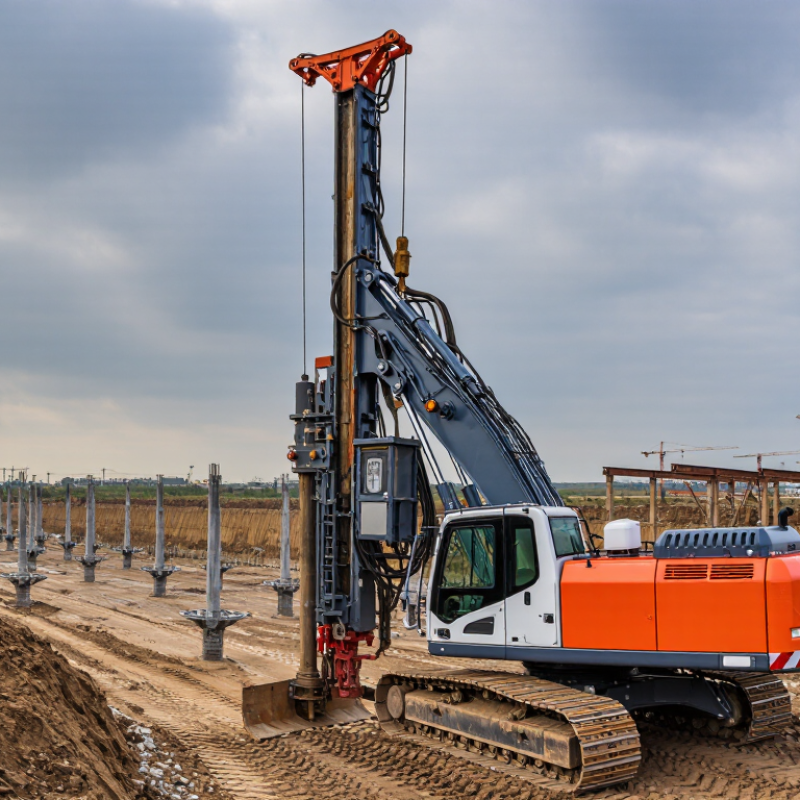
Anchor drilling machines in China serve slope stabilization, foundation support, tunnel reinforcement, and soil-nailing projects. Common types include crawler-mounted rotary rigs, down-the-hole rigs, and top-hammer machines. Rotary models suit softer formations and tight urban sites. DTH rigs perform better in hard rock, where compressed air clears the hole efficiently. Top-hammer equipment offers strong impact energy for medium-depth drilling.
Field selection depends on more than maximum drilling depth. Engineers usually compare torque, feed force, drilling diameter, mast angle, air consumption, and machine weight. A rig rated for 150 meters may achieve less on fractured rock or steep terrain. Ground conditions decide the real result. They always do.
Core industry metrics include daily hole output, average drilling time, fuel or power use, downtime, and maintenance intervals. For example, a compact crawler rig may improve access on a narrow hillside, while a heavier unit can deliver steadier thrust in dense rock. Operators should also examine transport width, noise control, dust management, and emergency stopping systems. These details affect both productivity and site reliability.
From practical project reviews, hourly output often looks impressive before setup time is included. That is a common weakness in equipment comparisons. Manufacturers and buyers should report complete cycle data, including relocation, rod changes, flushing, and routine checks. Transparent testing under stated soil conditions gives contractors a more dependable basis for choosing anchor drilling equipment.

Ranking China’s top anchor drilling machine manufacturers requires measurable evidence, not brochure language. Power and torque reveal whether a rig can handle hard rock and large anchors. Drilling depth shows its reach on bridges, tunnels, and slope projects. Diameter indicates compatibility with different anchor designs. These figures should come from tested specifications, field records, and ISO-based documentation.
A practical scoring model assigns 20% to power, 20% to torque, 20% to maximum depth, 15% to drilling diameter, and 25% to export performance.
The export score uses five-year data from UN Comtrade, covering relevant HS codes, shipment value, destination markets, and repeat orders. MarketsandMarkets estimates the global drilling equipment market at roughly US$7 billion in recent assessments, reflecting strong construction and mining demand. However, market size does not prove machine quality.
Real performance matters more. A 150 kW unit with stable torque may outperform a stronger machine that overheats during continuous drilling. Depth claims also need context, including soil type, rod length, and casing requirements. This method is not perfect. Export classifications can combine unrelated drilling equipment, weakening direct comparisons. Independent testing and verified project records should therefore receive additional attention. Small details often expose large differences.
China Top 10 Anchor Drilling Machine Manufacturers
China’s leading ten anchor drilling machine manufacturers cover crawler, truck-mounted, hydraulic, and pneumatic models. Their equipment serves slope stabilization, foundation support, tunneling, mining, and water-control projects. Common specifications include drilling diameter, maximum depth, rotary torque, feed force, and power output. A machine with strong torque may still perform poorly in fractured rock. Site conditions matter more than a catalog headline.
Product quality becomes clearer through factory records and field testing. Reliable suppliers usually provide ISO 9001 quality management certification and product documents for applicable markets. CE marking may support sales in Europe, but it does not replace technical assessment. Buyers should request test reports, welding procedures, hydraulic diagrams, and spare-parts lists. Ask for recent production photos. Check serial numbers and calibration records.
Market reach is another useful comparison point. Established manufacturers often serve domestic construction contractors and export through regional distributors. Their machines may appear on projects in Southeast Asia, the Middle East, Africa, and Latin America. Local service capacity remains critical. Response time, operator training, and parts availability can decide project costs. I would not rank a factory by export claims alone. A glossy brochure is not proof. Site references need independent checking, and some published performance figures may require cautious interpretation.
Comparing the top ten anchor drilling machine manufacturers starts with usable performance, not brochure figures. Models around 30–80 kW suit lighter soil nails and compact access. Units near 150–300 kW provide stronger torque for fractured rock, long anchors, and continuous production. However, power alone can mislead. Hydraulic efficiency, cooling capacity, and control response decide how much power reaches the bit.
Hole diameter changes the working load. A 100 mm hole generally needs less flushing volume and stabilizes faster in restricted locations. At 250–300 mm, compressors, pumps, and rod handling become critical.
Rod lengths from 2 to 6 m support tight sites and easier repositioning. Ten- to 20-m rods reduce connections, yet demand a taller mast and better alignment. A field trial should measure penetration rate, fuel use, vibration, and downtime, not only maximum diameter.
Experienced buyers also inspect service access, documented test data, and operator visibility. Ask whether rated output remains stable during simultaneous rotation and feed. That answer often separates practical equipment from impressive specifications. Still, comparisons are imperfect. Groundwater, abrasiveness, and operator skill can reverse the ranking. One machine may excel on limestone but struggle in loose fill. A reliable selection records soil conditions, actual rod changes, and maintenance hours across several sites.
China Top 10 Anchor Drilling Machine Manufacturers
Applications and Selection: Matching Torque, Depth, and Ground Conditions
Selecting an anchor drilling machine requires more than comparing catalog torque. Start with the ground. Field engineers should inspect borehole logs, groundwater levels, rock strength, and access limits before choosing equipment. Soft clay may need controlled rotary torque, while fractured rock often demands impact assistance and reliable flushing.
Torque must match the anchor diameter, drilling method, and formation resistance. Excessive torque can damage rods, enlarge the hole, or overload the rig. Insufficient torque causes stalling and uneven drilling. A 60-meter project also needs enough feed force and rod handling capacity, not merely a high headline depth. Measure twice.
For steep slopes or restricted construction areas, compact dimensions and stable tracks can matter more than maximum output. In loose ground, casing compatibility and dust or slurry control deserve close attention. Experienced operators should test a short section before full production. No selection chart is perfect. Ground conditions change within a few meters, and laboratory data may not reflect wet, fractured strata. A practical choice leaves operating margin for unexpected resistance, tool wear, and alignment errors. Too much capacity, however, increases transport cost and energy use without improving the anchor result.


For those larger-sized parts, or smaller quantity runs, we have 2 independent powder coat booths and ovens. The quality, durability and affordability of today’s powder coating finishes make this the process of choice for world-class companies.
Powder coating advantages over other forms of coating are many. Materials used in the Powder coating process can be metals and non-metals that come in a multitude of thicknesses, textures, colors, etc. Another of Powder coating’s biggest advantages over conventional coatings is its ability to create finishes in many different textures. Powder Coating Booths allow us the ability to apply these advantages to large products.
Tri-State Fabricators runs a full-service conveyor line for painting. Wet painting can provide protection or decoration to many different part styles. From start to finish, every project is easier to undergo random and point-based inspection by our skilled painting team.
Advantages to our Wet Paint Line are these lines start with product prep and ends with a thorough inspection of a high quality finished product. Our ability to complete large and small projects with a superior finish and doing so in a timely and economical fashion. This passes along the savings in production to our customers. When powder coating ins not an option, our Wet Paint Line gets the job done right the first time.
When the parts get big and heavy we roll-out our custom paint racks and oversize booth. By utilizing our partnerships with all the major paint brands, we can match virtually any color with wet paint.
The advantages of having access to a Wet Paint Booth are many. Large projects of many different shapes can be loaded into the booth. The Wet Paint Booth offers an environment that is much more controlled than a typical parts painting operation.
Not only are they used because of their controlled environment, but they’re are also advantageous when it comes to applying paint to parts that are needed in industries that require specialty coatings such as medical, aerospace, etc.
Our military forces have some very high standards when it comes to the finish of their vehicles and equipment. From the first pre-treatment step to final coat, it takes a great deal of knowledge and experience to protect the men and women of our armed forces. They deserve only the best, and Tri-State Fabricators provides it.
All of our processes are closely monitored by our staff and management teams. Both of which are highly trained in the processes of metal fabrication and finishing. Tri-State Fabricators’ goal is to always fully satisfy each and every customer, including the military. We will always put a 110% into what we do.
Abrasive media blasting is an excellent way to remove old paint, rust, and increase the paint/powder adhesion. Glass beads produce a much smoother and brighter finish than angular abrasives; leaving the part clean yet without any dimensional change. Chemically inert and environmentally friendly, we can recycle our beads approximately 30 times; making them a more preferred method of metal cleaning or surface finishing.
Advantages to Glass Bead Blasting are many. Glass bead blast media is used when a project is needing rough surfaces need to become smooth for applications of coatings such as paint. It is typically used to clean paint and rust from a product surface without deforming the surface it is being used on. Overall, compared to many other blasting media, Glass Bead Blasting is a very economical choice and those savings are always passed on to our customers.
Tri-State Fabricators utilize a zinc phosphate wash to clean and etch the material to ensure the best paint adhesion possible. The unique design of our 3-stage wash system does the work like a 5-stage. From Cleaning and rinsing to conversion coating and post-treatment, Our Part Washing process is a complete service and works throughout the fabrication service and the finishing service.
Along with the previously mentioned benefits, Curing is a vital chemical reaction that leaves the product finish hard and relatively safe from mild abrasion and aggressive corrosion. This process can be done in more than one way; ambient air-dry or in curing ovens at temps that exceed 240°.
From fixing paint mistakes (someone else’s of course) to simply cleaning our paint line hooks, our burn-off oven is put to good use. After a quick burn-off, a little clean up, and a fresh coat of paint, your parts will look better than new.
Why does our Burn-Off Oven work so well? Because super heating the air around parts turns the materials into ashes. From paint and powder coatings to rubber and machining oils, high temps do the job without degrading the integrity of the part.
Masking is a vital part of producing high quality products. We have die-cut masking patterns to protect machined surfaces as well as a wide range of plugs and caps to protect threaded holes and bolts. We provide permanent and temporary masking.
Masking allows the selected sections of a product to be protected from a fabrication or finishing service. This can be with both chemicals when etching and tapes, paints when only finishing just a section of the product. Masking is great in aiding the customization process of a project.
Screen printing is a photographic process that transfers artwork onto a porous nylon screen which allows colored ink to flow through the screen and be deposited on an aluminum or plastic component. We can generally have just about any design created onto a screen for your parts.
Some of the advantages of Screen Printing are, brand recognition for your business displaying on your products, assembly instructions, product warnings/hazards, etc. Tri-State Fabricators produces Screen Printing of the highest quality so you know it’s durable.
Metal Finishing is the art of treating the exterior portion of product, often metal but can also be made of other materials, so that the surface is clean and free of any debris. Then the process of applying coats or either paint of powder coat takes place. This coating process improves the quality of the product in both appearance and resistance to wear and corrosion.
Tri-State Fabricators, Inc., understands that a project typically isn’t complete until a high-quality finish has been added to your product. This is why our painting and powder coating teams continuously inspect the products throughout the Metal Finishing process.

