


Global buyers are reassessing their aluminum supply chains as construction, transportation, renewable energy, and industrial automation expand. Aluminum extrusion remains important because it produces precise profiles with lower machining waste. A finished profile can move from a heated billet to a cut, drilled, and packaged component within hours. Small process differences still matter.
Grand View Research identifies the global aluminum extrusion market as a long-term growth sector, supported by rising demand from construction and transportation. Its market analysis also highlights industrial applications, energy efficiency, and lightweight design as major growth factors. The International Aluminium Institute reports continuing worldwide demand for aluminum, while emphasizing recycling, energy use, and responsible production. These findings suggest that supplier selection should involve more than price comparisons.
This guide examines the Top 10 Aluminum Extrusion Suppliers for Global Buyers through practical purchasing criteria. These include extrusion capacity, alloy range, die-making capability, surface finishing, quality systems, delivery performance, and export experience. Certifications such as ISO 9001 can support confidence, but they do not replace factory audits or sample testing. Buyers should also review tolerance records, packaging methods, and communication speed.
No ranking is perfectly universal. A supplier serving a large automotive program may not suit a small solar project. A low quotation can hide tooling charges, long lead times, or inconsistent anodizing. That risk deserves attention. The following supplier overview aims to provide a reliable starting point, while leaving room for careful verification, technical discussion, and commercial judgment.
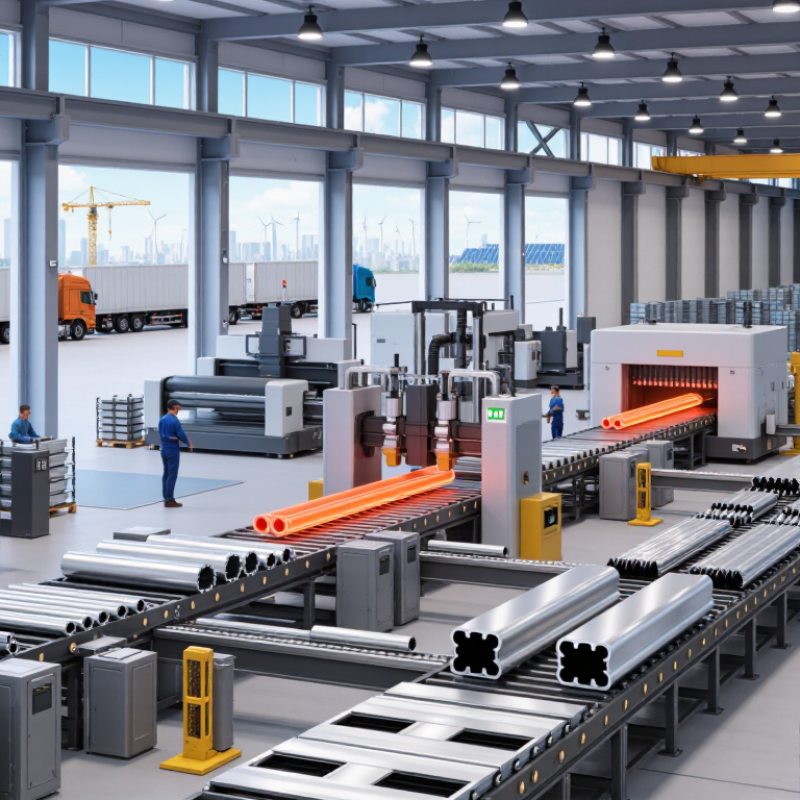
Aluminum extrusion suppliers convert heated aluminum billets into precise, continuous profiles. They design dies, control temperatures, and manage cutting, drilling, and surface finishing. Their work supports frames, heat sinks, rail systems, windows, and industrial equipment. Experienced suppliers can recommend suitable alloys for strength, corrosion resistance, or thermal performance. They also provide drawings, samples, inspection reports, and production updates. These details help global buyers reduce design errors and control quality across long-distance shipments.
Tips: Ask about alloy certificates, die charges, dimensional tolerances, and sample approval. Request photos of packaging and inspection records. A clear drawing prevents expensive misunderstandings.
Global buyers need suppliers because extrusion is not only a manufacturing step. It involves engineering judgment, production planning, packaging, and reliable communication. A capable supplier can review wall thickness, hollow sections, and difficult corners before production begins. They may also suggest changes that lower material waste. However, no supplier gets every detail right. Small measurement differences can affect assembly, especially when profiles connect with seals or fasteners. Buyers should verify samples rather than trust promises alone. Confirm lead times, delivery terms, and documentation in writing. Practical experience shows that a responsive supplier is often more valuable than the cheapest quotation. Mistakes still happen. Careful review reduces their cost.

Choosing among the top 10 aluminum extrusion suppliers requires more than comparing price lists. International buyers should examine alloy control, die design, extrusion speed, surface treatment, and delivery consistency. The International Aluminium Institute reports that aluminum production creates about 2% of global greenhouse gas emissions. Therefore, request verified energy data, recycled-content figures, and product carbon footprints.
Quality evidence matters. Ask for ISO 9001 certification, batch-level inspection records, tensile-strength results, and dimensional reports. A reliable supplier should explain tolerance control with actual samples, not vague promises. The ASTM B221 standard is widely used for aluminum extruded profiles, but local requirements may differ. Confirm testing methods before signing a contract.
Logistics can expose hidden weaknesses. The World Bank’s Logistics Performance Index 2023 shows major differences in customs efficiency, infrastructure, and shipment reliability between markets. Check the supplier’s export experience, packaging design, lead-time history, and backup production capacity. A trial order is useful. Still, one successful shipment proves little. Request references from comparable industries and review several months of delivery data. I would also test communication during a minor design change. Delayed answers often predict larger problems. A cheaper offer may become expensive after tooling revisions, rejected batches, or port delays.
Global buyers should assess the top 10 aluminum extrusion suppliers by capability, not catalog size. The U.S. Geological Survey estimated global primary aluminum production at about 70 million metric tons in 2023. This scale increases pressure on billet quality, energy use, and delivery reliability. Strong suppliers usually control alloy preparation, die design, extrusion, aging, cutting, and inspection under one system.
Core capabilities differ significantly. Some suppliers focus on architectural profiles, using precise dies for window frames and curtain walls. Others specialize in industrial sections for heat sinks, transport structures, and machinery.
Advanced suppliers offer CNC machining, anodizing, powder coating, and custom packaging. The International Aluminium Institute highlights recycling as a major industry priority, so recycled billet content and traceable sourcing deserve attention.
Ask for alloy certificates, dimensional reports, surface samples, and realistic production lead times.
Market forecasts from Grand View Research indicate continued growth in aluminum extrusion demand through the decade, supported by construction, vehicles, and renewable-energy equipment. However, rankings can mislead. A supplier may excel at large profiles but struggle with thin walls or complex tolerances.
Another may provide attractive pricing but lack stable overseas logistics.
In practical audits, buyers should inspect die maintenance, furnace records, laboratory equipment, and corrective-action history.
Paper compliance is not enough. Some suppliers also need stronger communication, especially when drawings change late.
Global buyers comparing the top ten aluminum extrusion suppliers should inspect more than catalog size. Leading suppliers usually produce mill-finish, anodized, powder-coated, and precision-cut profiles. Common products include heat sinks, window frames, solar mounting rails, machine guards, and transport components. Some offer custom dies for unusual cross-sections. This matters when a drawing includes thin walls, tight tolerances, or hidden channels. Ask for sample lengths, die charges, and dimensional inspection records before approving volume production. Small details matter.
Reliable suppliers explain alloy selection, temper, surface treatment, and test methods in writing. Architectural projects often request 6063 alloys, while industrial parts may need stronger 6061 grades. Standards such as ASTM, EN, ISO, and local building codes guide chemistry, tolerances, coating thickness, and mechanical testing. However, certificates are not enough. Buyers should match each certificate to the actual batch number. Request traceability records, hardness results, and coating reports. Documentation can reveal weaknesses early.
The strongest supplier groups serve construction, renewable energy, electronics cooling, automotive equipment, furniture, and factory automation. Their experience should appear in practical evidence: aligned corner joints, straight rails, and finishes that survive handling. Production capacity also needs scrutiny. A factory may promise 500 tons monthly, yet tooling changes can delay a small order. Compare pilot runs, packaging methods, and corrective-action responses. No supplier is perfect. Even experienced teams can miss a tolerance when a design changes late. Clear drawings and direct feedback reduce that weakness.
Choosing an aluminum extrusion supplier requires more than comparing quoted prices. USGS Mineral Commodity Summaries 2025 reported approximately 72 million metric tons of global primary aluminum production in 2024. That scale creates options, but not uniform performance. Buyers should verify alloy consistency, die capability, surface treatment, and production capacity before approval. Samples matter.
Quality begins with measurable acceptance criteria. Request mill certificates, dimensional inspection records, hardness results, and coating test data. Confirm tolerances against applicable ASTM or ISO requirements. A supplier should explain how it controls temperature, cooling, straightening, and cutting. The International Aluminium Institute reports that recycling aluminum can save up to 95% of the energy used for primary production. Recycled content may reduce environmental impact, but its alloy traceability still needs checking. A spreadsheet alone can mislead.
Cost should include tooling, packaging, freight, inspection, and rejected-material risk. Ask for a landed-cost model, not only a factory quotation. For delivery, review capacity during peak seasons and require realistic lead-time ranges. Request evidence from recent, comparable orders, while protecting confidential customer information. Promises are cheap. A pilot order can expose weak packaging, unstable tolerances, or slow communication before a larger contract. Perfect supplier selection is unlikely; disciplined verification reduces expensive surprises.
This reference scorecard shows a practical weighting model for evaluating aluminum extrusion suppliers. Quality and compliance receive the highest weighting, followed by total cost and delivery reliability. Buyers can adjust these percentages according to project specifications, order volume, certification requirements, and delivery risk.


For those larger-sized parts, or smaller quantity runs, we have 2 independent powder coat booths and ovens. The quality, durability and affordability of today’s powder coating finishes make this the process of choice for world-class companies.
Powder coating advantages over other forms of coating are many. Materials used in the Powder coating process can be metals and non-metals that come in a multitude of thicknesses, textures, colors, etc. Another of Powder coating’s biggest advantages over conventional coatings is its ability to create finishes in many different textures. Powder Coating Booths allow us the ability to apply these advantages to large products.
Tri-State Fabricators runs a full-service conveyor line for painting. Wet painting can provide protection or decoration to many different part styles. From start to finish, every project is easier to undergo random and point-based inspection by our skilled painting team.
Advantages to our Wet Paint Line are these lines start with product prep and ends with a thorough inspection of a high quality finished product. Our ability to complete large and small projects with a superior finish and doing so in a timely and economical fashion. This passes along the savings in production to our customers. When powder coating ins not an option, our Wet Paint Line gets the job done right the first time.
When the parts get big and heavy we roll-out our custom paint racks and oversize booth. By utilizing our partnerships with all the major paint brands, we can match virtually any color with wet paint.
The advantages of having access to a Wet Paint Booth are many. Large projects of many different shapes can be loaded into the booth. The Wet Paint Booth offers an environment that is much more controlled than a typical parts painting operation.
Not only are they used because of their controlled environment, but they’re are also advantageous when it comes to applying paint to parts that are needed in industries that require specialty coatings such as medical, aerospace, etc.
Our military forces have some very high standards when it comes to the finish of their vehicles and equipment. From the first pre-treatment step to final coat, it takes a great deal of knowledge and experience to protect the men and women of our armed forces. They deserve only the best, and Tri-State Fabricators provides it.
All of our processes are closely monitored by our staff and management teams. Both of which are highly trained in the processes of metal fabrication and finishing. Tri-State Fabricators’ goal is to always fully satisfy each and every customer, including the military. We will always put a 110% into what we do.
Abrasive media blasting is an excellent way to remove old paint, rust, and increase the paint/powder adhesion. Glass beads produce a much smoother and brighter finish than angular abrasives; leaving the part clean yet without any dimensional change. Chemically inert and environmentally friendly, we can recycle our beads approximately 30 times; making them a more preferred method of metal cleaning or surface finishing.
Advantages to Glass Bead Blasting are many. Glass bead blast media is used when a project is needing rough surfaces need to become smooth for applications of coatings such as paint. It is typically used to clean paint and rust from a product surface without deforming the surface it is being used on. Overall, compared to many other blasting media, Glass Bead Blasting is a very economical choice and those savings are always passed on to our customers.
Tri-State Fabricators utilize a zinc phosphate wash to clean and etch the material to ensure the best paint adhesion possible. The unique design of our 3-stage wash system does the work like a 5-stage. From Cleaning and rinsing to conversion coating and post-treatment, Our Part Washing process is a complete service and works throughout the fabrication service and the finishing service.
Along with the previously mentioned benefits, Curing is a vital chemical reaction that leaves the product finish hard and relatively safe from mild abrasion and aggressive corrosion. This process can be done in more than one way; ambient air-dry or in curing ovens at temps that exceed 240°.
From fixing paint mistakes (someone else’s of course) to simply cleaning our paint line hooks, our burn-off oven is put to good use. After a quick burn-off, a little clean up, and a fresh coat of paint, your parts will look better than new.
Why does our Burn-Off Oven work so well? Because super heating the air around parts turns the materials into ashes. From paint and powder coatings to rubber and machining oils, high temps do the job without degrading the integrity of the part.
Masking is a vital part of producing high quality products. We have die-cut masking patterns to protect machined surfaces as well as a wide range of plugs and caps to protect threaded holes and bolts. We provide permanent and temporary masking.
Masking allows the selected sections of a product to be protected from a fabrication or finishing service. This can be with both chemicals when etching and tapes, paints when only finishing just a section of the product. Masking is great in aiding the customization process of a project.
Screen printing is a photographic process that transfers artwork onto a porous nylon screen which allows colored ink to flow through the screen and be deposited on an aluminum or plastic component. We can generally have just about any design created onto a screen for your parts.
Some of the advantages of Screen Printing are, brand recognition for your business displaying on your products, assembly instructions, product warnings/hazards, etc. Tri-State Fabricators produces Screen Printing of the highest quality so you know it’s durable.
Metal Finishing is the art of treating the exterior portion of product, often metal but can also be made of other materials, so that the surface is clean and free of any debris. Then the process of applying coats or either paint of powder coat takes place. This coating process improves the quality of the product in both appearance and resistance to wear and corrosion.
Tri-State Fabricators, Inc., understands that a project typically isn’t complete until a high-quality finish has been added to your product. This is why our painting and powder coating teams continuously inspect the products throughout the Metal Finishing process.

