


Top 10 Aluminum Casement Window Manufacturers Worldwide

Aluminum Casement Window systems are valued for their slim frames, corrosion resistance, and wide opening angles. Yet performance depends on more than the frame. Glazing, hardware, drainage, and installation can change how a window handles wind, rain, and everyday use. Small details matter.

The market context is significant. Grand View Research estimated the global aluminum doors and windows market at about US$57.2 billion in 2023, with projected growth through 2030. The International Energy Agency reported that buildings accounted for roughly 30% of global final energy consumption in 2022. That figure does not isolate windows, but it underscores why thermal performance deserves attention. Dr. Wolfgang Feist, founder of the Passive House Institute, has described the window as “the most complex component of the building envelope.” It is a useful reminder, though no single design fits every climate or project.

This Top 10 overview compares manufacturers on product range, engineering capability, material choices, and international presence. It also considers practical questions: Can the sash open smoothly? Are thermal-break profiles and tested air-and-water performance clearly documented? Does the supplier support projects after delivery? Rankings are never perfect. Public data can be uneven, and a strong catalogue does not guarantee a strong installation. Still, informed comparisons help buyers and specifiers narrow the field and ask better questions before choosing an Aluminum Casement Window.
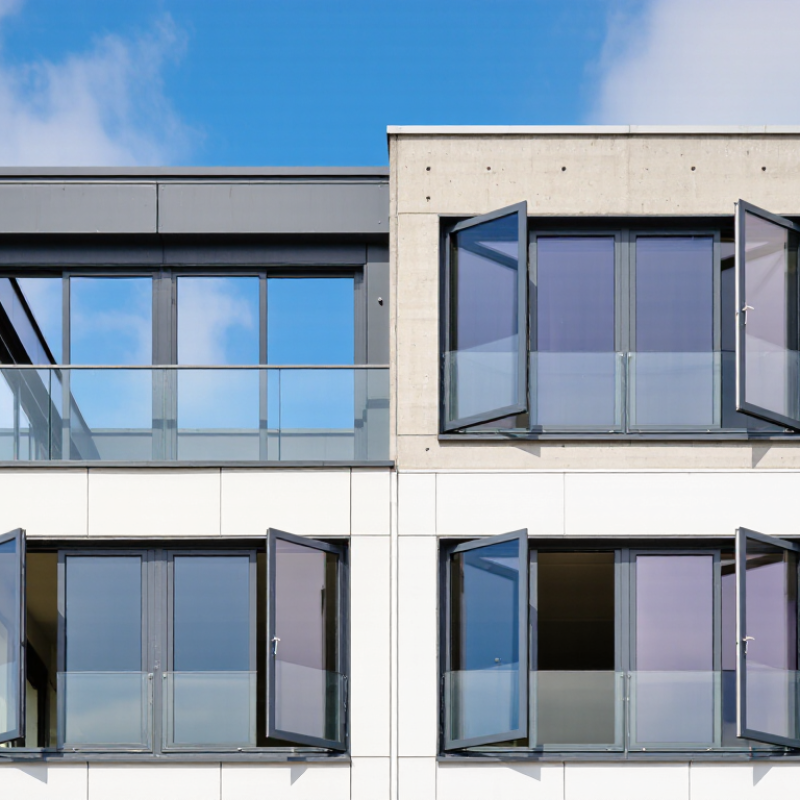
Top 10 Aluminum Casement Window Manufacturers Worldwide

What Are Aluminum Casement Windows and How Are They Made?

Aluminum casement windows have sashes attached to the frame by side hinges. A handle or crank swings the sash open, bringing in fresh air from a broad opening. The main parts are the aluminum frame, movable sash, glass, seals, and locking hardware. Slim profiles can leave more visible glass, though the exact view depends on the frame design. Small details matter. Gaskets around the sash help limit drafts and water entry when the window is closed. In colder climates, thermal breaks within the frame reduce heat transfer. Performance still depends on glazing, installation, and upkeep.

Making a casement window starts with aluminum billets heated and pushed through a shaped die. The resulting profiles are cooled, cut to length, and joined at their corners. Many designs place an insulating strip between inner and outer aluminum sections. Drainage channels are added to guide water away rather than trap it. The frame may receive a powder-coated or anodized finish before glass and hardware are fitted. Glazing is sealed into the sash, then hinges and locks are adjusted. Not always. A smooth finish alone cannot confirm a sound window. Manufacturers should check dimensions, opening action, and resistance to air and water; installers must also keep the frame square and properly sealed. A small fitting error can make a carefully made sash difficult to operate.


How Are Global Manufacturers Assessed and Compared?

Comparing global aluminum casement window manufacturers takes more than checking frame prices or catalogue claims. A credible assessment considers whole-window U-factor, solar heat gain, air leakage, water resistance, wind performance, hardware durability, and corrosion protection. Small details matter. Test reports should identify the exact frame, glazing, dimensions, and hardware tested; otherwise, a strong result may not represent the window being supplied. Compare products under equivalent conditions, since regional test methods and climate assumptions can differ.

Independent evidence helps put performance claims in context. The 2024 Global Status Report for Buildings and Construction, published by the Global Alliance for Buildings and Construction with UNEP, attributes 32% of global energy use and 34% of energy-related carbon dioxide emissions to buildings and construction in 2022. The U.S. Department of Energy estimates that windows account for 25–30% of residential heating and cooling energy use in the United States. These figures explain why thermal performance deserves scrutiny, but they do not rank manufacturers.

Review accredited laboratory reports, production quality controls, warranty terms, spare-parts access, and installation guidance. No score is perfect. A test cannot fully predict how a window will perform after years of local weather, maintenance, and installation variation. That gap matters.

Top 10 Aluminum Casement Window Manufacturers Worldwide

A credible Top 10 list of aluminum casement window manufacturers worldwide should compare performance, not just catalogue claims. Look for independently tested air leakage, water penetration, wind resistance, and thermal transmittance. Check whether test results apply to the same frame size and hardware configuration you plan to buy. A narrow thermal break, tight corner joints, and a smooth multipoint lock are practical details worth inspecting. Small details matter.

The International Energy Agency’s 2023 Buildings report estimates that buildings account for about 30% of global final energy use and 26% of energy-related emissions. Window performance is only one factor, but it can influence heating and cooling demand.

A useful manufacturer comparison also considers material consistency, finish durability, replacement-part access, and technical support after installation. Ask for documented test reports, warranty terms, and clear guidance on maintenance in coastal or high-humidity settings. Compare whole-window ratings rather than glass-only figures; the frame and operable sash affect the result.

A ranking can still be imperfect: public specifications rarely show how consistently products perform across different factories or climates. Even an impressive laboratory result may not predict a poorly installed window. For a shortlist, weigh verified performance alongside local service and the project’s actual exposure to wind, rain, and salt air.

How Do Manufacturers Differ by Region and Product Range?

Regional differences often begin with climate and building practice. Manufacturers serving colder markets commonly emphasize insulated frames, thermal breaks, and sealed glazing. In warmer coastal areas, corrosion-resistant finishes and drainage details may receive more attention. These are tendencies, not guarantees. Details matter.

Product ranges also vary. Some factories focus on standard residential sizes, while others offer large-format sashes, narrow sightlines, or custom configurations. A wider range can help with unusual openings, but it may also mean longer lead times and more complex replacement parts. Buyers should compare frame depth, glass options, hardware capacity, and opening dimensions—not just catalog photos.

Quality checks deserve equal weight. Ask how air and water performance is tested, and request reports that match the proposed window configuration. A rating for one size or glass package may not apply to another. Installation guidance matters too; even a well-made casement can leak if flashing or anchoring is poorly handled. I would not assume that a manufacturer’s regional reputation proves every product suits a specific project. Confirm local climate needs, service access, and warranty coverage in writing. Some specifications remain hard to compare across markets. That is worth acknowledging.

Top 10 Aluminum Casement Window Manufacturers Worldwide: How Do Requirements Differ by Region?

U.S. residential code benchmark: maximum permitted window U-factor by climate zone group (2021 IECC).

How to read it: Lower U-factor means less heat transfer through the window. The 2021 IECC sets a maximum of 0.40 for climate zones 1–2, 0.32 for zone 3, and 0.30 for zones 4–8. These regional requirements help shape product specifications, such as glazing and thermally broken frames; they are a code benchmark, not a manufacturer ranking or global product survey. Source: 2021 IECC, Table R402.1.3. Local amendments may differ.

What Factors Matter When Choosing a Manufacturer?

Choosing an aluminum casement window manufacturer is less about a polished catalog than repeatable performance. Ask how the thermal break, glazing, seals, and hardware work together. A thermal break should be documented, not merely described. The U.S. Department of Energy’s Energy Saver guidance estimates that windows account for 25–30% of residential heating and cooling energy use. That makes verified whole-window U-factor and solar heat gain coefficient (SHGC) more useful than glass-only claims. Ask for evidence.

Request current test reports for air leakage, water penetration, and structural pressure, matched to the size and configuration you plan to buy. A test on a small standard unit may not represent a wide opening exposed to coastal wind. Check finish specifications too: coating thickness, pretreatment, and corrosion-test results matter near salt air. Ask whether replacement hardware and gaskets will remain available years later. Small details count.

Production capacity, quality control, and delivery records deserve equal scrutiny. Request inspection checkpoints, sample corner joints, and references from projects with similar climates. Confirm warranty exclusions in writing, especially for finishes and installed products. A low quote can hide thinner profiles or vague service terms. Compare complete submittals side by side; even then, paperwork cannot reveal every factory habit. A site visit helps, when practical.

Top 10 Aluminum Casement Window Manufacturers Worldwide - What Factors Matter When Choosing a Manufacturer?

A practical comparison checklist. The factors below are not a company ranking; request project-specific evidence and compare equivalent window configurations.

Selection factor What to compare Evidence to request
1. Thermal performance Compare the whole-window U-value (Uw), not just the frame (Uf) or glazing (Ug). Lower U-values indicate less heat transfer; confirm the stated units, typically W/(m²·K). A test report or calculation for the proposed size, frame, glazing, and spacer configuration.
2. Air permeability Check the tested air-leakage performance and classification. Compare results only when test methods and specimen configurations are equivalent. A report for the complete operable window; EN 12207 is a commonly used classification standard in Europe.
3. Water tightness Review the tested resistance to water penetration and the pressure level achieved, considering the project’s exposure and local requirements. A complete-window test report; EN 12208 is commonly used to classify water-tightness performance in Europe.
4. Wind-load resistance Confirm design pressure, deflection, and safety performance for the specified window size and installation conditions. Structural calculations or test results for the relevant configuration; EN 12210 is commonly used for European classification.
5. Thermal-break design Ask how the aluminum frame reduces heat transfer between its exterior and interior sections, and whether the design suits the project’s climate and condensation requirements. Section drawings, system specifications, and thermal calculations for the complete window assembly.
6. Glazing options and safety Compare available glass make-up, thickness, low-emissivity coatings, acoustic options, and safety-glazing requirements for the intended location. Glass build-up details and documentation showing compliance with applicable local building and safety codes.
7. Hardware and operation Assess hinges, locking points, handles, opening limits, corrosion suitability, and the availability of replacement parts. Hardware specifications, maintenance guidance, and relevant durability or cycle-test documentation.
8. Finish and corrosion protection Compare finish type, color consistency, surface preparation, and suitability for the installation environment, especially coastal or industrial locations. Finish specifications, applicable test results, care instructions, and written warranty terms.
9. Quality control and compliance Check production inspections, traceability, and conformity documentation required in the destination market. A management-system certificate alone does not prove a window’s performance. Product-specific test reports and declarations where applicable; verify the scope and validity of any quality-management certificate.
10. Delivery, warranty, and support Compare confirmed lead times, packaging and shipping arrangements, installation guidance, warranty coverage, service response, and spare-parts availability. A written quotation, delivery schedule, warranty document, service contact process, and clearly stated exclusions.

Powder Coat Booths

For those larger-sized parts, or smaller quantity runs, we have 2 independent powder coat booths and ovens. The quality, durability and affordability of today’s powder coating finishes make this the process of choice for world-class companies.

Powder coating advantages over other forms of coating are many. Materials used in the Powder coating process can be metals and non-metals that come in a multitude of thicknesses, textures, colors, etc. Another of Powder coating’s biggest advantages over conventional coatings is its ability to create finishes in many different textures. Powder Coating Booths allow us the ability to apply these advantages to large products.

Wet Paint Line

Tri-State Fabricators runs a full-service conveyor line for painting. Wet painting can provide protection or decoration to many different part styles. From start to finish, every project is easier to undergo random and point-based inspection by our skilled painting team.

Advantages to our Wet Paint Line are these lines start with product prep and ends with a thorough inspection of a high quality finished product. Our ability to complete large and small projects with a superior finish and doing so in a timely and economical fashion. This passes along the savings in production to our customers. When powder coating ins not an option, our Wet Paint Line gets the job done right the first time.

Wet Paint Booths

When the parts get big and heavy we roll-out our custom paint racks and oversize booth. By utilizing our partnerships with all the major paint brands, we can match virtually any color with wet paint.

The advantages of having access to a Wet Paint Booth are many. Large projects of many different shapes can be loaded into the booth. The Wet Paint Booth offers an environment that is much more controlled than a typical parts painting operation.

Not only are they used because of their controlled environment, but they’re are also advantageous when it comes to applying paint to parts that are needed in industries that require specialty coatings such as medical, aerospace, etc.

Military CARC

Our military forces have some very high standards when it comes to the finish of their vehicles and equipment. From the first pre-treatment step to final coat, it takes a great deal of knowledge and experience to protect the men and women of our armed forces. They deserve only the best, and Tri-State Fabricators provides it.

All of our processes are closely monitored by our staff and management teams. Both of which are highly trained in the processes of metal fabrication and finishing. Tri-State Fabricators’ goal is to always fully satisfy each and every customer, including the military. We will always put a 110% into what we do.

Glass-Bead Blasting

Abrasive media blasting is an excellent way to remove old paint, rust, and increase the paint/powder adhesion. Glass beads produce a much smoother and brighter finish than angular abrasives; leaving the part clean yet without any dimensional change. Chemically inert and environmentally friendly, we can recycle our beads approximately 30 times; making them a more preferred method of metal cleaning or surface finishing.

Advantages to Glass Bead Blasting are many. Glass bead blast media is used when a project is needing rough surfaces need to become smooth for applications of coatings such as paint. It is typically used to clean paint and rust from a product surface without deforming the surface it is being used on. Overall, compared to many other blasting media, Glass Bead Blasting is a very economical choice and those savings are always passed on to our customers.

Part Washing

Tri-State Fabricators utilize a zinc phosphate wash to clean and etch the material to ensure the best paint adhesion possible. The unique design of our 3-stage wash system does the work like a 5-stage. From Cleaning and rinsing to conversion coating and post-treatment, Our Part Washing process is a complete service and works throughout the fabrication service and the finishing service.

Along with the previously mentioned benefits, Curing is a vital chemical reaction that leaves the product finish hard and relatively safe from mild abrasion and aggressive corrosion. This process can be done in more than one way; ambient air-dry or in curing ovens at temps that exceed 240°.

Burn-Off Oven

From fixing paint mistakes (someone else’s of course) to simply cleaning our paint line hooks, our burn-off oven is put to good use. After a quick burn-off, a little clean up, and a fresh coat of paint, your parts will look better than new.

Why does our Burn-Off Oven work so well? Because super heating the air around parts turns the materials into ashes. From paint and powder coatings to rubber and machining oils, high temps do the job without degrading the integrity of the part.

Masking

Masking is a vital part of producing high quality products. We have die-cut masking patterns to protect machined surfaces as well as a wide range of plugs and caps to protect threaded holes and bolts. We provide permanent and temporary masking.

Masking allows the selected sections of a product to be protected from a fabrication or finishing service. This can be with both chemicals when etching and tapes, paints when only finishing just a section of the product. Masking is great in aiding the customization process of a project.

Screen Printing

Screen printing is a photographic process that transfers artwork onto a porous nylon screen which allows colored ink to flow through the screen and be deposited on an aluminum or plastic component. We can generally have just about any design created onto a screen for your parts.

Some of the advantages of Screen Printing are, brand recognition for your business displaying on your products, assembly instructions, product warnings/hazards, etc. Tri-State Fabricators produces Screen Printing of the highest quality so you know it’s durable.

Metal Finishing

Metal Finishing is the art of treating the exterior portion of product, often metal but can also be made of other materials, so that the surface is clean and free of any debris. Then the process of applying coats or either paint of powder coat takes place. This coating process improves the quality of the product in both appearance and resistance to wear and corrosion.

Tri-State Fabricators, Inc., understands that a project typically isn’t complete until a high-quality finish has been added to your product. This is why our painting and powder coating teams continuously inspect the products throughout the Metal Finishing process.
