


7 Tips for Choosing the Right Pneumatic Calibrator?

Choosing the right Pneumatic Calibrator is more than comparing pressure ranges and display sizes. It is a decision about measurement confidence, field safety, and long-term maintenance. A calibrator may look impressive on a product sheet, yet perform poorly in a dusty plant or beside a vibrating compressor.

William Thomson, Lord Kelvin, a leading figure in measurement science, famously said, “If you cannot measure it, you cannot improve it.” His principle remains highly relevant to Pneumatic Calibrator selection. The instrument must produce dependable readings under real operating conditions, not only inside a clean laboratory.

This guide explores seven practical tips for making that choice with greater confidence. It considers accuracy, pressure range, resolution, stability, portability, pump design, and software compatibility. Each factor affects daily work. A weak hand pump can turn a five-minute test into a tiring half-hour task. An unsuitable range can create avoidable measurement uncertainty. Limited documentation can also slow troubleshooting when production pressure rises.

Experience matters here. A calibrator that fits one technician may frustrate another. Battery life, connector access, glove-friendly controls, and weight are easy to underestimate. I have seen specifications receive more attention than usability. That is not always wise.

The better question is simple: will this Pneumatic Calibrator remain reliable after repeated use, transport, and changing site conditions? The answer requires careful comparison, honest reflection, and attention to details that product brochures often leave unclear.
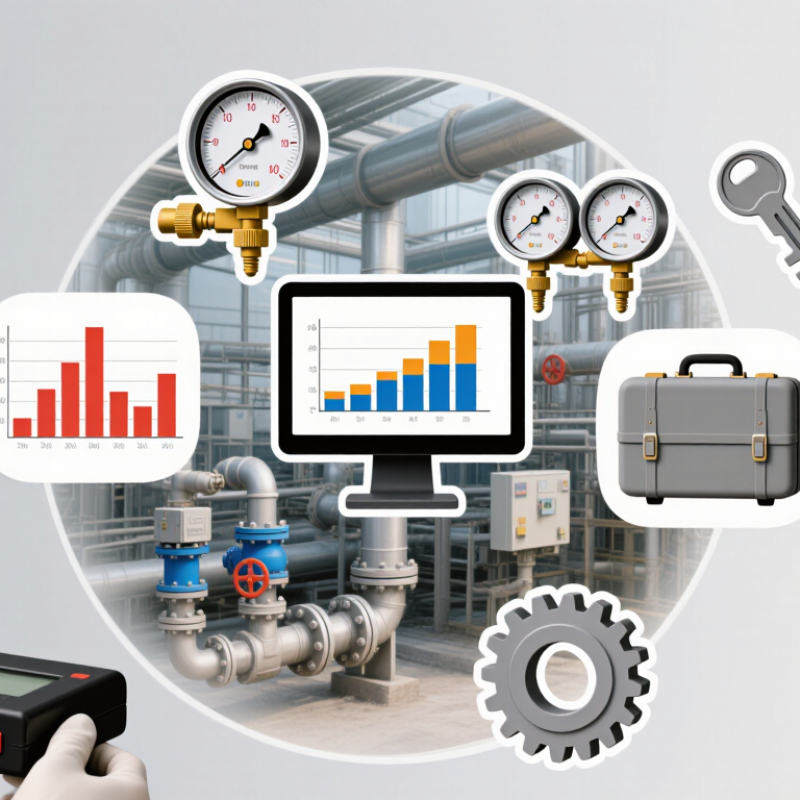
7 Tips for Choosing the Right Pneumatic Calibrator?

Understanding Pneumatic Calibrator Types and Measurement Requirements

Choosing the right pneumatic calibrator starts with understanding its type and measurement task. Pneumatic calibrators may support low pressure, vacuum, differential pressure, or higher gas pressure. Identify the pressure medium, operating range, and test instrument before comparing features. Know the medium. Clean, dry gas is often essential for stable readings. Tip one is selecting the correct pressure function. Tip two is matching the range closely to your working point. An oversized range may weaken resolution.

Accuracy is more than the number shown on the display. Check total measurement uncertainty, repeatability, hysteresis, and temperature effects. Tip three is comparing these values with your required tolerance. Do not guess. Tip four is checking connection compatibility, because a small leak can distort a low-pressure test. Inspect seals, tubing, and fittings before use. Tip five concerns portability. Field work may require a compact pump, strong case, and dependable battery life.

Tip six is deciding between manual and automated pressure generation. Automation improves efficiency, but manual control may offer better feedback during unusual tests. Tip seven is verifying calibration traceability and documentation. The certificate should show standards, dates, and uncertainty clearly. Environmental conditions also matter; dust, vibration, and temperature changes can affect results. I have seen teams overvalue screen resolution while ignoring leakage and stability. That choice looks impressive, but it may not improve the measurement. Recheck the actual process requirement before purchasing.


Pneumatic Calibrator Types and Typical Pressure Ranges

Select a calibrator by matching its pressure range to the instrument under test. Low-pressure differential calibrators suit transmitters and gauges below 1 bar, while portable and precision pneumatic calibrators commonly cover 20–100 bar. High-pressure pneumatic comparators are used when the required test pressure exceeds standard hand-pump capability. Always verify the required accuracy, resolution, media compatibility, and safety rating before selection.

Checking Accuracy, Pressure Range, and Calibration Standards

7 Tips for Choosing the Right Pneumatic Calibrator

Accuracy should match the instrument under test, not merely the catalog headline. Check the stated accuracy across the full pressure range, including low readings near zero. A calibrator showing ±0.05% of full scale may perform poorly when measuring a small pressure. Look for measurement uncertainty, resolution, repeatability, and temperature effects. These details reveal practical performance. They matter.

Pressure range is equally important. Select a unit that covers your working pressure without operating continuously at its limit. Confirm whether it generates, measures, or both. Check compatibility with air, nitrogen, or other approved media. Examine fittings, hose ratings, leak performance, and control stability. A loose connection can imitate a sensor fault.

Calibration standards support reliable decisions. Prefer equipment calibrated by a laboratory operating to ISO/IEC 17025, with traceability to recognized national or international standards. Read the certificate carefully. It should identify test points, uncertainty, environmental conditions, and the calibration date. Consider automatic documentation and secure data transfer for audits.

I once focused too heavily on screen resolution and overlooked temperature drift. That mistake changed my selection process.

Field checks, zero adjustments, and periodic recalibration still matter, even with a highly accurate instrument. No calibrator is perfect.

Evaluating Portability, Durability, and Operating Environment

Tip 1: Check portability before pressure range. A calibrator should fit inside one hand and remain usable beside crowded panels. NIST Handbook 105-2 emphasizes traceable equipment selection for field measurements. Weight matters when technicians climb ladders or cross large facilities. Tip 2: Inspect the case and fittings. Reinforced corners, sealed keys, and replaceable connectors resist daily knocks. Tip 3: Match durability with the worksite, not the brochure. IEC 60529 defines IP protection levels, but an IP rating does not guarantee chemical resistance.

Tip 4: Study the operating environment carefully. Temperature, humidity, dust, vibration, and altitude can shift pressure readings. NIST Technical Note 1297 explains that uncertainty budgets must include environmental influences. A calibrator used near compressors may need stronger vibration resistance and better thermal stability. Tip 5: Review the stated temperature range. Industrial rooms often change quickly, especially near steam lines or outdoor equipment. Allow warm-up time. I sometimes underestimate this step.

Tip 6: Confirm battery behavior in real conditions. Cold storage areas can reduce operating time, while bright displays help technicians read values through protective eyewear. The 2023 ISO Survey recorded more than 1.26 million ISO 9001 certificates worldwide, showing how widely documented quality control is practiced. Your calibration records should support that discipline. Tip 7: Verify serviceability and traceability. Look for accessible adjustment procedures, calibration certificates, and clear uncertainty data. A compact instrument is not truly portable if its accessories require a separate case.

Comparing Controls, Connectivity, Software, and Data Management

7 Tips for Choosing the Right Pneumatic Calibrator?

A pneumatic calibrator should fit your entire measurement workflow, not only its pressure range. Check control stability, adjustment speed, and performance near zero pressure. A small overshoot can waste minutes during a demanding calibration. In field work, screen readability and glove-friendly controls matter more than glossy specifications. Deloitte’s 2024 Smart Manufacturing and Operations Survey found that 86% of manufacturing leaders consider smart manufacturing important for competitiveness. Connectivity is now practical, not decorative.

Tip: Test communication before purchase. Confirm USB, wireless, or industrial network compatibility with your existing systems. The device should transfer readings without repeated manual entry. It should also record technician identity, environmental conditions, and calibration status. A connected instrument without secure access controls creates another risk. NIST Cybersecurity Framework 2.0 recommends clear governance, protection, detection, and response practices for connected systems.

Tip: Examine the software and data trail closely. Look for automatic pass or fail decisions, configurable tolerances, timestamped records, and searchable asset histories. Export formats should support your quality system, not force awkward workarounds. Industry 4.0 reports often highlight data quality as a barrier, yet product brochures rarely explain how errors are corrected. That gap deserves careful questioning.

A useful trial is simple. Create one complete calibration record, edit an incorrect value, and retrieve it later. Notice the friction. The best calibrator may not be the fastest instrument; it may be the one that leaves the clearest evidence. Overlooking battery life, sensor replacement, or offline operation remains an easy mistake.

Reviewing Safety Features, Maintenance Needs, and Total Cost

7 Tips for Choosing the Right Pneumatic Calibrator?

A pneumatic calibrator should make pressure work safer, not simply faster. Check for adjustable pressure limits, controlled venting, and overload protection. These features reduce sudden releases when a connection fails. I also inspect fittings before use, especially after transport between sites. A clear display matters when gloves, dust, or poor lighting affect reading accuracy. Small details become important under pressure.

Maintenance needs deserve equal attention. Choose a model with replaceable seals, accessible filters, and commonly available fittings. Use clean, dry air whenever possible. Moisture can damage internal parts and distort readings. Keep a simple service record showing usage hours, repairs, and verification dates. Calibration intervals should reflect workload and risk, not only the calendar. That judgment is sometimes uncomfortable.

Total cost includes more than the purchase price. Add reference checks, spare seals, adapters, batteries, compressed-air use, and technician time. A low-cost calibrator may become expensive if its fittings leak or service takes weeks. Ask how quickly repairs can be completed and whether technical documentation is clear. I once focused too heavily on the initial quote and overlooked downtime. That was a poor decision. A practical cost review should compare reliable operation over several years, including training and unexpected maintenance.

7 Tips for Choosing the Right Pneumatic Calibrator: Safety Features, Maintenance Needs, and Total Cost
Tip Evaluation Dimension What to Check Recommended Selection Criteria Typical Impact on Use Priority
1 Define the required pressure range Compare the calibrator's source and measurement range with the devices under test. Confirm whether pressure is gauge, absolute, or differential. Select a working range that covers the application with practical margin, while avoiding an unnecessarily oversized range that may reduce resolution. A suitable range improves measurement stability and reduces the risk of overpressure during testing. High
2 Verify accuracy and resolution Review the stated accuracy specification, reference conditions, display resolution, temperature effects, and whether accuracy is expressed as a percentage of reading or full scale. Choose accuracy appropriate to the instrument under test and require a traceable calibration certificate when results are used for quality or regulatory records. Higher accuracy can improve calibration confidence, but it usually increases purchase and recalibration costs. High
3 Assess pressure safety features Look for overpressure protection, pressure relief, controlled venting, non-return protection, secure fittings, and rated hoses and adapters. Ensure every pressure-containing component is rated above the maximum operating pressure and that the relief system is suitable for the test medium. Proper protection helps prevent equipment damage, uncontrolled pressure release, and operator injury. High
4 Check compatibility with the pressure medium Confirm whether the calibrator is designed for clean, dry air, inert gas, or another approved medium. Check seals, wetted materials, and contamination limits. Use only the media permitted by the manufacturer and avoid oxygen or hazardous gases unless the equipment is specifically approved for them. Correct compatibility reduces seal deterioration, contamination, leakage, and unsafe chemical reactions. High
5 Evaluate maintenance requirements Review leak checks, filter or desiccant replacement, seal inspection, battery care, sensor verification, and recommended calibration intervals. Prefer designs with accessible service parts, clear maintenance instructions, and routine checks that can be completed without specialized tools. Simple maintenance reduces downtime and helps preserve accuracy between formal calibrations. Medium
6 Consider portability and operating conditions Assess weight, dimensions, handle or case design, display readability, battery life, operating temperature, humidity limits, and resistance to field handling. Select a portable model for on-site work and confirm that environmental specifications cover the actual workplace conditions. Better portability and environmental suitability improve productivity and reduce measurement errors in field applications. Medium
7 Calculate total cost of ownership Include purchase price, reference standards, accessories, calibration certificates, periodic service, replacement seals, batteries, training, and downtime. Compare expected costs over the planned service life rather than evaluating the initial price alone. Confirm availability and lead time of spare parts. A lower purchase price may result in higher long-term costs if maintenance, recalibration, or replacement parts are expensive. High
Selection reminder: Before use, inspect fittings and hoses, verify the pressure rating of the complete test setup, release pressure safely after testing, and follow the applicable workplace safety procedures and calibration documentation requirements.

Powder Coat Booths

For those larger-sized parts, or smaller quantity runs, we have 2 independent powder coat booths and ovens. The quality, durability and affordability of today’s powder coating finishes make this the process of choice for world-class companies.

Powder coating advantages over other forms of coating are many. Materials used in the Powder coating process can be metals and non-metals that come in a multitude of thicknesses, textures, colors, etc. Another of Powder coating’s biggest advantages over conventional coatings is its ability to create finishes in many different textures. Powder Coating Booths allow us the ability to apply these advantages to large products.

Wet Paint Line

Tri-State Fabricators runs a full-service conveyor line for painting. Wet painting can provide protection or decoration to many different part styles. From start to finish, every project is easier to undergo random and point-based inspection by our skilled painting team.

Advantages to our Wet Paint Line are these lines start with product prep and ends with a thorough inspection of a high quality finished product. Our ability to complete large and small projects with a superior finish and doing so in a timely and economical fashion. This passes along the savings in production to our customers. When powder coating ins not an option, our Wet Paint Line gets the job done right the first time.

Wet Paint Booths

When the parts get big and heavy we roll-out our custom paint racks and oversize booth. By utilizing our partnerships with all the major paint brands, we can match virtually any color with wet paint.

The advantages of having access to a Wet Paint Booth are many. Large projects of many different shapes can be loaded into the booth. The Wet Paint Booth offers an environment that is much more controlled than a typical parts painting operation.

Not only are they used because of their controlled environment, but they’re are also advantageous when it comes to applying paint to parts that are needed in industries that require specialty coatings such as medical, aerospace, etc.

Military CARC

Our military forces have some very high standards when it comes to the finish of their vehicles and equipment. From the first pre-treatment step to final coat, it takes a great deal of knowledge and experience to protect the men and women of our armed forces. They deserve only the best, and Tri-State Fabricators provides it.

All of our processes are closely monitored by our staff and management teams. Both of which are highly trained in the processes of metal fabrication and finishing. Tri-State Fabricators’ goal is to always fully satisfy each and every customer, including the military. We will always put a 110% into what we do.

Glass-Bead Blasting

Abrasive media blasting is an excellent way to remove old paint, rust, and increase the paint/powder adhesion. Glass beads produce a much smoother and brighter finish than angular abrasives; leaving the part clean yet without any dimensional change. Chemically inert and environmentally friendly, we can recycle our beads approximately 30 times; making them a more preferred method of metal cleaning or surface finishing.

Advantages to Glass Bead Blasting are many. Glass bead blast media is used when a project is needing rough surfaces need to become smooth for applications of coatings such as paint. It is typically used to clean paint and rust from a product surface without deforming the surface it is being used on. Overall, compared to many other blasting media, Glass Bead Blasting is a very economical choice and those savings are always passed on to our customers.

Part Washing

Tri-State Fabricators utilize a zinc phosphate wash to clean and etch the material to ensure the best paint adhesion possible. The unique design of our 3-stage wash system does the work like a 5-stage. From Cleaning and rinsing to conversion coating and post-treatment, Our Part Washing process is a complete service and works throughout the fabrication service and the finishing service.

Along with the previously mentioned benefits, Curing is a vital chemical reaction that leaves the product finish hard and relatively safe from mild abrasion and aggressive corrosion. This process can be done in more than one way; ambient air-dry or in curing ovens at temps that exceed 240°.

Burn-Off Oven

From fixing paint mistakes (someone else’s of course) to simply cleaning our paint line hooks, our burn-off oven is put to good use. After a quick burn-off, a little clean up, and a fresh coat of paint, your parts will look better than new.

Why does our Burn-Off Oven work so well? Because super heating the air around parts turns the materials into ashes. From paint and powder coatings to rubber and machining oils, high temps do the job without degrading the integrity of the part.

Masking

Masking is a vital part of producing high quality products. We have die-cut masking patterns to protect machined surfaces as well as a wide range of plugs and caps to protect threaded holes and bolts. We provide permanent and temporary masking.

Masking allows the selected sections of a product to be protected from a fabrication or finishing service. This can be with both chemicals when etching and tapes, paints when only finishing just a section of the product. Masking is great in aiding the customization process of a project.

Screen Printing

Screen printing is a photographic process that transfers artwork onto a porous nylon screen which allows colored ink to flow through the screen and be deposited on an aluminum or plastic component. We can generally have just about any design created onto a screen for your parts.

Some of the advantages of Screen Printing are, brand recognition for your business displaying on your products, assembly instructions, product warnings/hazards, etc. Tri-State Fabricators produces Screen Printing of the highest quality so you know it’s durable.

Metal Finishing

Metal Finishing is the art of treating the exterior portion of product, often metal but can also be made of other materials, so that the surface is clean and free of any debris. Then the process of applying coats or either paint of powder coat takes place. This coating process improves the quality of the product in both appearance and resistance to wear and corrosion.

Tri-State Fabricators, Inc., understands that a project typically isn’t complete until a high-quality finish has been added to your product. This is why our painting and powder coating teams continuously inspect the products throughout the Metal Finishing process.
