


Cosmetic Squeeze Tubes can look simple on a shelf, yet small design choices shape how a product feels and performs. A tube must protect its formula, dispense cleanly, and remain comfortable to hold. A cap that twists smoothly matters. So does a nozzle that releases a neat ribbon instead of a blob. The right choice depends on the product, its users, and the filling process—not just its appearance.
For a transparent expert perspective, this guide uses a fictional composite packaging specialist, Elena Ward. Her editorially created rule of thumb is: “Choose the tube around the formula and the user’s hand; decoration comes later.” It is a practical starting point, not a universal standard. A rich cream may need a different opening from a lightweight lotion. And a tube that looks elegant in a sample may feel awkward when nearly empty.
The seven tips ahead examine material compatibility, tube size, dispensing, closure design, barrier needs, print quality, and supplier consistency. Each choice can affect daily use. A narrow nozzle offers control, but may frustrate someone seeking quick access. A glossy finish catches light, though fingerprints can quickly dull the effect. These details are easy to overlook. Some trade-offs remain imperfect, even after careful testing. That is worth admitting. By comparing real samples, checking how they dispense, and reviewing production details, brands can make a more informed choice of Cosmetic Squeeze Tubes—one grounded in practical use, not appearance alone.
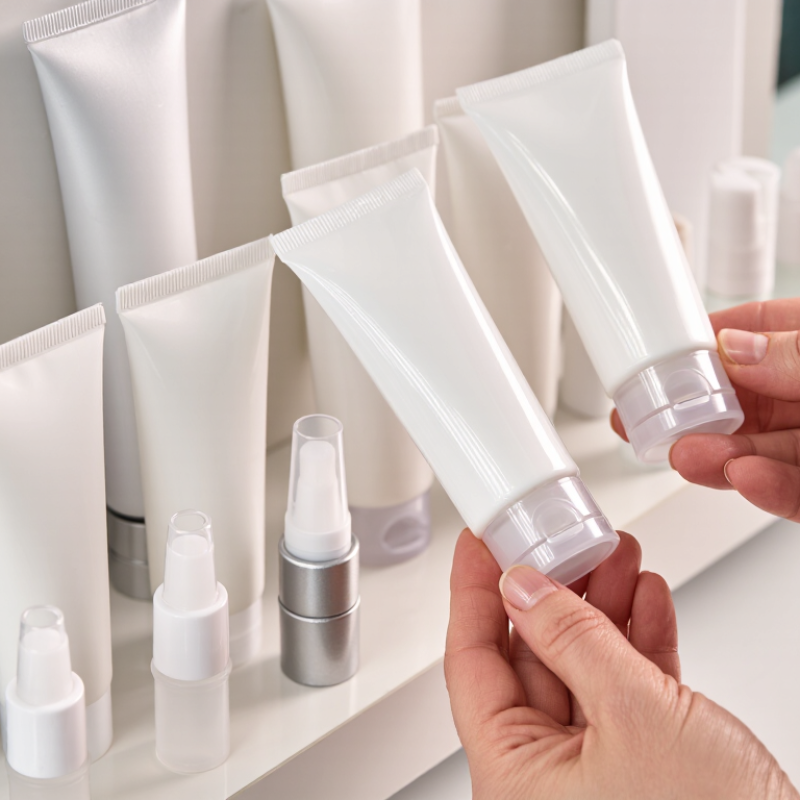
Before choosing a cosmetic squeeze tube, define what the formula needs from its packaging. A thin serum, dense balm, and exfoliating cream behave differently during filling and dispensing. Note the formula’s viscosity, oil content, light sensitivity, and intended dose. Be specific. A 30-milliliter eye cream may need controlled dispensing, while a body lotion may benefit from a wider opening. Also record how consumers will hold and store the tube.
Packaging scale makes these choices worth testing. Smithers’ industry report, The Future of Global Packaging to 2028, forecasts the global packaging market will reach about $1.2 trillion by 2028. That figure covers many formats, not cosmetic tubes, but it signals a large and changing supply chain. Ask suppliers for material specifications, compatibility data, and samples made with the proposed formula. A tube that looks suitable can still leak, swell, or dispense unevenly.
Test the actual pack. Store filled samples upright and on their sides, then check for leaks, changes in color or odor, and residue near the cap. Measure how much product remains after normal use. This is easy to overlook. I would also test the tube with wet hands; a smooth finish can become awkward in a shower. Some requirements may conflict, so document which trade-offs matter most before approving a design.

A squeeze tube is part of the formula’s protective system, not just its container. Match the material to the product: oils and fragrance components may interact with some plastics, while water-based formulas can lose moisture through the wall or cap. Polyethylene is flexible and widely used, but it is not automatically the safest choice for every formula. Consider multilayer structures or barrier layers when oxygen, light, or volatile ingredients are concerns. Small details matter. A pinched shoulder or poorly sealed closure can also create a leak path.
Ask suppliers for measured compatibility and barrier data for the exact tube construction. ASTM D3985 measures oxygen transmission, while ASTM F1249 measures water-vapor transmission; results help compare candidate materials under stated test conditions. There is no universal “good” rate: acceptance limits depend on the formula and intended shelf life. Test filled tubes, too. Track color, odor, viscosity, leakage, and weight during real-time and accelerated storage, including warm conditions. Industry guidance such as ISO/TR 18811:2018 recommends tailoring cosmetic stability testing to the product and packaging. It is tempting to treat accelerated aging as a perfect forecast. It is not. Real-time checks still matter.
Match tube size to the amount a customer uses each time. A 15-milliliter tube may suit an eye product used sparingly, while a larger body lotion tube reduces frequent refills. Consider how long the product should last after opening, too. A tube that is oversized can feel bulky in a small makeup bag. Too small, and users may struggle to dispense the final portion. Small details matter.
Shape affects grip, storage, and dispensing. Slim, rounded tubes can fit narrow toiletry pouches, while flatter shapes may stack neatly in drawers or display trays. Wider tubes can offer a steadier grip, but they need an opening that lets thicker creams move without excessive squeezing. For runny formulas, a narrow nozzle can help control flow and reduce mess around the cap. Try it first. Test filled samples with the actual formula, not an empty mock-up. Squeeze them with wet hands, store them upright and sideways, and check whether the cap is easy to handle. A first sample may still feel awkward; that is useful feedback, not a failed choice. Adjust dimensions and shape before ordering at scale.
Illustrative starting sizes: Choose tube capacity to suit how much product people use and how often they need to carry or store it. These examples are not fixed standards; confirm the final size with your formula, dispensing needs, and packaging supplier.
A squeeze tube’s closure should match the formula, the user, and the way the product will be stored. A flip-top cap suits frequent, one-handed use; a screw cap can provide a secure seal but may be awkward with wet hands. For thick creams, test the opening size and squeeze force. For runny lotions, check whether the nozzle drips after release. Small detail. Not trivial. Grand View Research estimated the global cosmetic packaging market at USD 34.8 billion in 2023, a reminder that packaging choices serve a wide range of products and use cases.
Compare dispensing methods with real samples, not drawings alone. Test the tube upright, on its side, and after repeated opening. Does product collect around the orifice? Can someone dispense a controlled amount without folding the tube? A narrow nozzle may reduce mess, yet it can clog with a dense formula. A wide opening empties more easily, though it may release too much. Check closure torque and leakage after transport simulation; a cap that feels secure in a showroom may loosen in a bag. Material compatibility matters, too: formula oils and fragrances can affect seals. One limitation is easy to miss: user tests with dry hands may not reflect bathroom use. Include wet-hand trials before choosing.
Cosmetic squeeze tubes need more than attractive artwork. Decoration must stay legible on curved, flexible surfaces. Ask for printed samples and check small text, color consistency, and rub resistance after handling. Eurostat’s 2024 packaging-waste statistics report that EU residents generated 186.5 kilograms of packaging waste per person in 2022, including 36.1 kilograms of plastic packaging waste. These figures are not specific to cosmetic tubes, but they show why material choices and accurate packaging information deserve close attention.
Tip 1: Confirm that the tube, cap, ink, and coating suit the formula and intended market. Request documentation for relevant material and labeling requirements, then verify claims with your compliance team. Tip 2: Test the printed tube after filling. Oils, heat, and repeated squeezing can expose problems that a flat artwork proof will miss. A glossy sample can still hide weak adhesion.
Tip 3: Evaluate supplier quality with records, not promises. Ask for batch traceability, inspection criteria, defect limits, and samples from production runs. Check seal integrity and cap fit, too. Small details matter. I would not approve a supplier from one perfect sample alone; real production variation needs scrutiny, and that step is easy to rush.
| Tip | What to Check | How to Verify | Potential Red Flags |
|---|---|---|---|
| 1. Match the tube structure to the formula | Review tube material, wall construction, barrier needs, and compatibility with the product’s oils, solvents, fragrance, and active ingredients. | Test samples filled with the actual formula. Check for leakage, swelling, softening, odor changes, discoloration, and changes in product appearance during storage. | Choosing a structure from appearance alone or relying only on a generic material description. |
| 2. Confirm size and dispensing performance | Check nominal capacity, tube dimensions, opening size, cap fit, product viscosity, and the amount dispensed per squeeze. | Fill production-style samples and assess squeeze force, flow consistency, closure security, and how much product remains after normal use. | A tube that is difficult to squeeze, dispenses unpredictably, or does not seal reliably. |
| 3. Test decoration on the finished tube | Compare printing, labels, hot stamping, or other finishes for color, legibility, registration, rub resistance, and appearance on the curved surface. | Approve a production-representative sample. Check small text, color consistency, adhesion, scuffing, and durability after handling and exposure to the formula. | Approving artwork on a flat proof only, or accepting decoration that smears, flakes, or becomes hard to read. |
| 4. Check applicable regulatory requirements | Identify the markets where the product will be sold. Cosmetic rules and packaging-related obligations differ by jurisdiction and product type. | Review the current requirements with qualified regulatory support. For example, assess relevant U.S. MoCRA obligations or applicable EU cosmetics requirements, including labeling and responsible-person duties where relevant. | Treating a supplier’s general compliance statement as proof that the finished cosmetic and its label meet every market’s requirements. |
| 5. Evaluate quality controls and traceability | Ask about incoming-material checks, production inspections, defect handling, lot identification, and records for finished goods. | Request documented specifications, sample inspection records, a defect-escalation process, and an explanation of how production lots can be traced. | Unclear acceptance criteria, missing lot codes, or no documented process for investigating defects. |
| 6. Verify closure, sealing, and transport performance | Check cap or flip-top fit, seal integrity, tamper-evidence needs, and resistance to leakage during shipping and storage. | Test filled samples using suitable leak, closure, and distribution checks based on the product and shipping route. Confirm results against agreed acceptance criteria. | Assuming an empty tube’s closure performance will be the same once filled and packed for shipment. |
| 7. Assess supplier capability and material claims | Review production capacity, lead times, change-control practices, sample support, and evidence for recycled-content or recyclability claims. | Confirm specifications and delivery assumptions in writing. Request supporting documentation for material claims and check whether the complete tube design is compatible with relevant local recycling systems. | Unverified environmental claims, unexplained specification changes, or delivery promises without a clear production plan. |
Note: Test methods and regulatory obligations depend on the formula, package design, intended use, and sales markets. Agree on product-specific specifications and acceptance criteria before production.


For those larger-sized parts, or smaller quantity runs, we have 2 independent powder coat booths and ovens. The quality, durability and affordability of today’s powder coating finishes make this the process of choice for world-class companies.
Powder coating advantages over other forms of coating are many. Materials used in the Powder coating process can be metals and non-metals that come in a multitude of thicknesses, textures, colors, etc. Another of Powder coating’s biggest advantages over conventional coatings is its ability to create finishes in many different textures. Powder Coating Booths allow us the ability to apply these advantages to large products.
Tri-State Fabricators runs a full-service conveyor line for painting. Wet painting can provide protection or decoration to many different part styles. From start to finish, every project is easier to undergo random and point-based inspection by our skilled painting team.
Advantages to our Wet Paint Line are these lines start with product prep and ends with a thorough inspection of a high quality finished product. Our ability to complete large and small projects with a superior finish and doing so in a timely and economical fashion. This passes along the savings in production to our customers. When powder coating ins not an option, our Wet Paint Line gets the job done right the first time.
When the parts get big and heavy we roll-out our custom paint racks and oversize booth. By utilizing our partnerships with all the major paint brands, we can match virtually any color with wet paint.
The advantages of having access to a Wet Paint Booth are many. Large projects of many different shapes can be loaded into the booth. The Wet Paint Booth offers an environment that is much more controlled than a typical parts painting operation.
Not only are they used because of their controlled environment, but they’re are also advantageous when it comes to applying paint to parts that are needed in industries that require specialty coatings such as medical, aerospace, etc.
Our military forces have some very high standards when it comes to the finish of their vehicles and equipment. From the first pre-treatment step to final coat, it takes a great deal of knowledge and experience to protect the men and women of our armed forces. They deserve only the best, and Tri-State Fabricators provides it.
All of our processes are closely monitored by our staff and management teams. Both of which are highly trained in the processes of metal fabrication and finishing. Tri-State Fabricators’ goal is to always fully satisfy each and every customer, including the military. We will always put a 110% into what we do.
Abrasive media blasting is an excellent way to remove old paint, rust, and increase the paint/powder adhesion. Glass beads produce a much smoother and brighter finish than angular abrasives; leaving the part clean yet without any dimensional change. Chemically inert and environmentally friendly, we can recycle our beads approximately 30 times; making them a more preferred method of metal cleaning or surface finishing.
Advantages to Glass Bead Blasting are many. Glass bead blast media is used when a project is needing rough surfaces need to become smooth for applications of coatings such as paint. It is typically used to clean paint and rust from a product surface without deforming the surface it is being used on. Overall, compared to many other blasting media, Glass Bead Blasting is a very economical choice and those savings are always passed on to our customers.
Tri-State Fabricators utilize a zinc phosphate wash to clean and etch the material to ensure the best paint adhesion possible. The unique design of our 3-stage wash system does the work like a 5-stage. From Cleaning and rinsing to conversion coating and post-treatment, Our Part Washing process is a complete service and works throughout the fabrication service and the finishing service.
Along with the previously mentioned benefits, Curing is a vital chemical reaction that leaves the product finish hard and relatively safe from mild abrasion and aggressive corrosion. This process can be done in more than one way; ambient air-dry or in curing ovens at temps that exceed 240°.
From fixing paint mistakes (someone else’s of course) to simply cleaning our paint line hooks, our burn-off oven is put to good use. After a quick burn-off, a little clean up, and a fresh coat of paint, your parts will look better than new.
Why does our Burn-Off Oven work so well? Because super heating the air around parts turns the materials into ashes. From paint and powder coatings to rubber and machining oils, high temps do the job without degrading the integrity of the part.
Masking is a vital part of producing high quality products. We have die-cut masking patterns to protect machined surfaces as well as a wide range of plugs and caps to protect threaded holes and bolts. We provide permanent and temporary masking.
Masking allows the selected sections of a product to be protected from a fabrication or finishing service. This can be with both chemicals when etching and tapes, paints when only finishing just a section of the product. Masking is great in aiding the customization process of a project.
Screen printing is a photographic process that transfers artwork onto a porous nylon screen which allows colored ink to flow through the screen and be deposited on an aluminum or plastic component. We can generally have just about any design created onto a screen for your parts.
Some of the advantages of Screen Printing are, brand recognition for your business displaying on your products, assembly instructions, product warnings/hazards, etc. Tri-State Fabricators produces Screen Printing of the highest quality so you know it’s durable.
Metal Finishing is the art of treating the exterior portion of product, often metal but can also be made of other materials, so that the surface is clean and free of any debris. Then the process of applying coats or either paint of powder coat takes place. This coating process improves the quality of the product in both appearance and resistance to wear and corrosion.
Tri-State Fabricators, Inc., understands that a project typically isn’t complete until a high-quality finish has been added to your product. This is why our painting and powder coating teams continuously inspect the products throughout the Metal Finishing process.

