


Choosing the right Pos Machine Battery is a practical decision, not a simple price comparison. A busy café may process hundreds of payments daily, while a small market may use its terminal only occasionally. Their battery needs will differ.
Dr. Elena Marquez, a battery systems engineer with experience in portable payment equipment, says, “A reliable POS battery is not the biggest battery; it is the right battery for the workload.” That advice deserves attention. Higher capacity can extend operating time, but it may also increase weight, charging time, and replacement cost. Compatibility matters more than impressive numbers.
This guide, “10 Tips to Choose the Best POS Machine Battery,” examines the details that technicians and business owners often overlook. We will consider battery chemistry, voltage, capacity, connector design, charging cycles, heat resistance, safety protection, and supplier reliability. Small details matter. A loose connector can interrupt a busy checkout line. Excessive heat can shorten battery life inside a crowded counter area.
Real-world testing is valuable. Check how long the terminal operates during peak hours, not only in laboratory conditions. Review the battery’s age, storage history, and warranty terms. Some specifications look excellent on paper but perform poorly after repeated charging.
There is no perfect battery for every POS machine. That assumption can lead to waste. A careful choice should balance runtime, safety, durability, cost, and service availability. Even experienced buyers can miss one factor. Careful comparison helps reduce that risk.
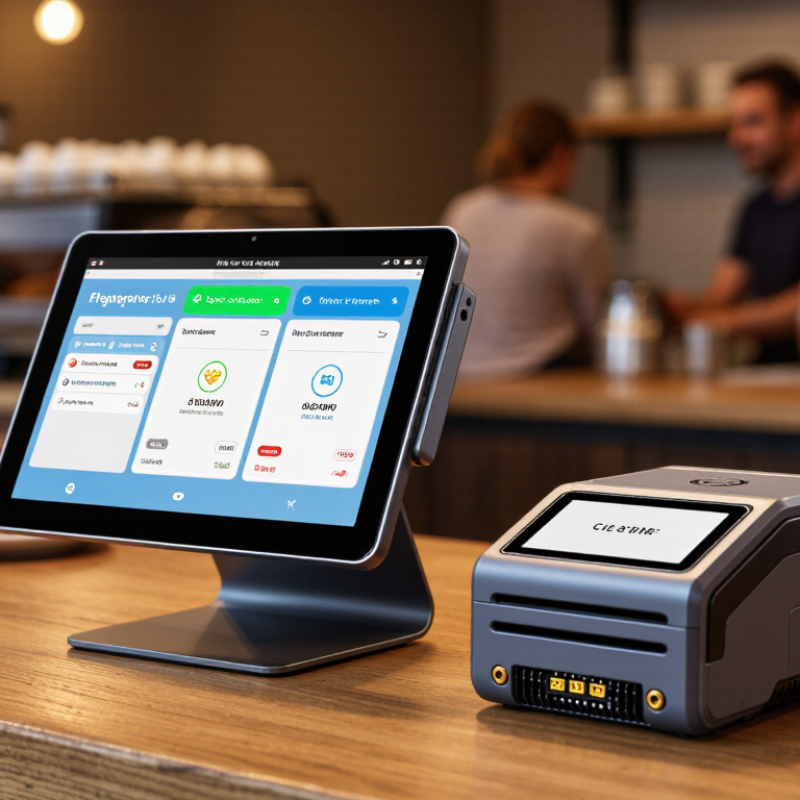
Choosing a POS machine battery starts with chemistry, not price. Lithium-ion cells usually offer high energy density and lower weight, while lithium-polymer packs fit slimmer housings. Nickel-metal hydride batteries remain usable in some older terminals, but their weight and memory effects can complicate replacement. The International Energy Agency’s Global EV Outlook 2024 reported a 14% fall in lithium-ion battery pack prices during 2023. Lower prices help, but they do not confirm compatibility. A perfect match is rare.
Check the original battery’s voltage, capacity, connector, dimensions, polarity, and protection circuit. A higher capacity may extend operating time, yet it can also increase charging time or heat. Field technicians should compare the battery-management system and charger specifications, not only the printed milliamp-hour rating. Check the label. The IEC 62133-2 safety standard also highlights testing requirements for portable lithium batteries, including protection against abnormal charging conditions. Certified testing matters more than attractive packaging.
Operating temperature deserves attention in busy counters, delivery stations, and outdoor kiosks. The U.S. Department of Energy’s battery research programs continue to identify heat as a major factor in capacity loss and service life. Avoid batteries with loose connectors, swollen cells, missing protection data, or unclear manufacturing dates. Small errors matter. I would also record charge cycles and unexpected shutdowns after installation; replacement decisions based only on runtime can be misleading. Compatibility is a technical judgment, not a guess.

Tip 1: Confirm the POS machine’s required voltage before comparing batteries. A mismatched voltage can cause shutdowns, charging faults, or permanent damage.
Tip 2: Check the connector and polarity carefully. They must match exactly.
Tip 3: Read the equipment manual and battery datasheet, not only the online listing. Specifications can be incomplete.
Tip 4: Choose capacity according to daily workload. A battery rated at 2,000 mAh may support fewer transactions than expected under heavy use.
Tip 5: Estimate runtime using actual conditions. Screen brightness, wireless connections, receipt printing, and frequent scanning all consume energy. The formula is simple: watt-hours divided by average power gives approximate operating time.
Tip 6: Test the battery during peak activity, not only on an idle counter.
Tip 7: Allow a practical reserve of 15 to 20 percent. Unexpected queues happen.
Tip 8: Check charging time and cycle life. A battery that lasts all day but needs overnight recovery may still be inconvenient.
Tip 9: Consider temperature. Hot storage areas can reduce capacity and shorten service life.
Tip 10: Inspect battery age, safety markings, and warranty terms before purchase.
I once selected a battery by capacity alone. It looked suitable, but the POS terminal stopped during busy periods. The real load was higher than expected. That mistake taught me to record actual runtime, voltage stability, and recharge behavior. Measurements are better than assumptions, although even careful estimates can be imperfect.
A reliable POS machine battery must handle busy counters, repeated charging, and accidental movement. Check its safety certifications and confirm protection against overcharging, overheating, short circuits, and deep discharge. Battery chemistry matters, but real protection circuits matter more. Inspect the casing for cracks, swelling, loose seams, or weak connector points. Measure the heat. A battery that becomes noticeably hot during payment rushes deserves careful testing.
Check the rated capacity, but do not trust the number alone. Actual runtime depends on screen brightness, wireless signals, printer use, and payment frequency. Test it under load. Compare cycle-life data and ask how capacity changes after regular daily charging. A durable battery should survive repeated use without sudden shutdowns. I once found a battery with impressive laboratory capacity, yet its runtime dropped sharply in a busy store. That experience changed how I evaluate specifications.
Charging performance also needs practical checks. Confirm the required voltage, current, connector fit, and charging time. Look for stable charging when the terminal is operating. Avoid batteries that charge quickly but become excessively warm. Ask for inspection records, batch traceability, replacement guidance, and a clear warranty. Supplier support is part of reliability. Still, no battery is perfect; poor storage, extreme temperatures, and neglected maintenance can shorten its life. A careful trial in the actual POS environment remains the most honest test.
10 Tips to Choose the Best POS Machine Battery
Compare Size, Weight, Installation, and Maintenance Needs
Measure the battery compartment before comparing capacity. A higher-capacity battery may not fit the terminal. Check length, width, height, and clearance around cables. Small details matter. Choose a lighter battery when staff carry the POS terminal between counters and tables. Excess weight can make daily handling tiring and increase drop risks. Confirm the voltage and connector type with the equipment manual. Never rely on appearance alone. Review the battery’s usable capacity, not only its advertised rating. Real performance changes with screen brightness, wireless use, receipt printing, and payment volume.
Installation should be simple and secure. Look for a matching mount, accessible screws, and clear polarity markings. A loose connection can cause unexpected shutdowns during busy service. I have seen teams overlook cable routing and later damage the connector during replacement. Leave enough space for safe removal. Consider operating temperature, especially in kitchens, delivery vehicles, or sunny kiosks. Heat can shorten battery life. Ask whether the battery supports the terminal’s charging method and protection system. Compatibility is more important than a low purchase price.
Maintenance needs should be practical for your staff. Choose a battery that allows routine inspection without dismantling the entire terminal. Check for swelling, cracks, unusual heat, or rapid capacity loss. Keep inspection records, even if they seem unnecessary. Replacement intervals depend on usage, storage, and charging habits. Avoid storing spare batteries in damp areas or direct sunlight. A conservative replacement plan may cost more, but it reduces service interruptions. I would still verify every specification with the equipment supplier, because manuals can be incomplete or outdated.
When a POS terminal serves customers through an eight-hour shift, its battery becomes a business-critical component. Choose a supplier that provides clear cell specifications, tested capacity, and documented safety controls. Ask about operating temperature, charge cycles, storage limits, and compatibility with your exact terminal model. Generic capacity claims can look impressive but perform poorly at a busy checkout.
Check the supplier’s technical evidence. Request recent test reports, inspection records, and traceable production information from qualified laboratories. A reliable supplier should explain how batteries are tested before shipment. They should also offer replacement procedures when capacity drops unexpectedly. Response time matters. A dead terminal can stop payments, printing, and inventory work within minutes.
Read the warranty before placing a large order. Confirm its duration, covered defects, capacity threshold, shipping responsibility, and claim process. Ask whether the supplier provides troubleshooting support by email or phone. Keep invoices, batch numbers, installation dates, and failure photos in one file. This makes warranty claims faster. I once treated warranty wording as routine paperwork, and that caused avoidable delays. The lesson was uncomfortable: attractive pricing cannot replace dependable support. Also, verify whether replacement batteries are available for several years, not only during the first sales season. Reliable service requires evidence, patience, and a supplier willing to answer difficult questions.


For those larger-sized parts, or smaller quantity runs, we have 2 independent powder coat booths and ovens. The quality, durability and affordability of today’s powder coating finishes make this the process of choice for world-class companies.
Powder coating advantages over other forms of coating are many. Materials used in the Powder coating process can be metals and non-metals that come in a multitude of thicknesses, textures, colors, etc. Another of Powder coating’s biggest advantages over conventional coatings is its ability to create finishes in many different textures. Powder Coating Booths allow us the ability to apply these advantages to large products.
Tri-State Fabricators runs a full-service conveyor line for painting. Wet painting can provide protection or decoration to many different part styles. From start to finish, every project is easier to undergo random and point-based inspection by our skilled painting team.
Advantages to our Wet Paint Line are these lines start with product prep and ends with a thorough inspection of a high quality finished product. Our ability to complete large and small projects with a superior finish and doing so in a timely and economical fashion. This passes along the savings in production to our customers. When powder coating ins not an option, our Wet Paint Line gets the job done right the first time.
When the parts get big and heavy we roll-out our custom paint racks and oversize booth. By utilizing our partnerships with all the major paint brands, we can match virtually any color with wet paint.
The advantages of having access to a Wet Paint Booth are many. Large projects of many different shapes can be loaded into the booth. The Wet Paint Booth offers an environment that is much more controlled than a typical parts painting operation.
Not only are they used because of their controlled environment, but they’re are also advantageous when it comes to applying paint to parts that are needed in industries that require specialty coatings such as medical, aerospace, etc.
Our military forces have some very high standards when it comes to the finish of their vehicles and equipment. From the first pre-treatment step to final coat, it takes a great deal of knowledge and experience to protect the men and women of our armed forces. They deserve only the best, and Tri-State Fabricators provides it.
All of our processes are closely monitored by our staff and management teams. Both of which are highly trained in the processes of metal fabrication and finishing. Tri-State Fabricators’ goal is to always fully satisfy each and every customer, including the military. We will always put a 110% into what we do.
Abrasive media blasting is an excellent way to remove old paint, rust, and increase the paint/powder adhesion. Glass beads produce a much smoother and brighter finish than angular abrasives; leaving the part clean yet without any dimensional change. Chemically inert and environmentally friendly, we can recycle our beads approximately 30 times; making them a more preferred method of metal cleaning or surface finishing.
Advantages to Glass Bead Blasting are many. Glass bead blast media is used when a project is needing rough surfaces need to become smooth for applications of coatings such as paint. It is typically used to clean paint and rust from a product surface without deforming the surface it is being used on. Overall, compared to many other blasting media, Glass Bead Blasting is a very economical choice and those savings are always passed on to our customers.
Tri-State Fabricators utilize a zinc phosphate wash to clean and etch the material to ensure the best paint adhesion possible. The unique design of our 3-stage wash system does the work like a 5-stage. From Cleaning and rinsing to conversion coating and post-treatment, Our Part Washing process is a complete service and works throughout the fabrication service and the finishing service.
Along with the previously mentioned benefits, Curing is a vital chemical reaction that leaves the product finish hard and relatively safe from mild abrasion and aggressive corrosion. This process can be done in more than one way; ambient air-dry or in curing ovens at temps that exceed 240°.
From fixing paint mistakes (someone else’s of course) to simply cleaning our paint line hooks, our burn-off oven is put to good use. After a quick burn-off, a little clean up, and a fresh coat of paint, your parts will look better than new.
Why does our Burn-Off Oven work so well? Because super heating the air around parts turns the materials into ashes. From paint and powder coatings to rubber and machining oils, high temps do the job without degrading the integrity of the part.
Masking is a vital part of producing high quality products. We have die-cut masking patterns to protect machined surfaces as well as a wide range of plugs and caps to protect threaded holes and bolts. We provide permanent and temporary masking.
Masking allows the selected sections of a product to be protected from a fabrication or finishing service. This can be with both chemicals when etching and tapes, paints when only finishing just a section of the product. Masking is great in aiding the customization process of a project.
Screen printing is a photographic process that transfers artwork onto a porous nylon screen which allows colored ink to flow through the screen and be deposited on an aluminum or plastic component. We can generally have just about any design created onto a screen for your parts.
Some of the advantages of Screen Printing are, brand recognition for your business displaying on your products, assembly instructions, product warnings/hazards, etc. Tri-State Fabricators produces Screen Printing of the highest quality so you know it’s durable.
Metal Finishing is the art of treating the exterior portion of product, often metal but can also be made of other materials, so that the surface is clean and free of any debris. Then the process of applying coats or either paint of powder coat takes place. This coating process improves the quality of the product in both appearance and resistance to wear and corrosion.
Tri-State Fabricators, Inc., understands that a project typically isn’t complete until a high-quality finish has been added to your product. This is why our painting and powder coating teams continuously inspect the products throughout the Metal Finishing process.

