


Choosing the right Ground Screws starts below the surface. Soil type, moisture, frost depth, load requirements, and corrosion exposure all affect performance. A screw that turns easily into dry, firm soil may behave very differently in wet clay or loose fill. Small details matter.
The scale of modern solar development makes reliable foundations increasingly important. The International Energy Agency’s Renewables 2024 report states that global renewable capacity additions reached nearly 560 gigawatts in 2023, with solar photovoltaic power accounting for about three-quarters of the increase. That figure does not measure ground-screw installations, but it shows why foundation choices deserve careful attention. A rushed specification can lead to difficult installation, uneven support, or costly rework.
There is no verified expert quotation supplied here, so assigning a sentence to a named Ground Screws specialist would risk inventing a source. That deserves a pause. This guide instead focuses on practical checks: confirm site conditions, match the screw to the expected loads, review material and coating specifications, and ask how installation quality will be documented. These ten tips are a starting point, not a substitute for site-specific engineering. Soil can surprise you. Verify before you install.
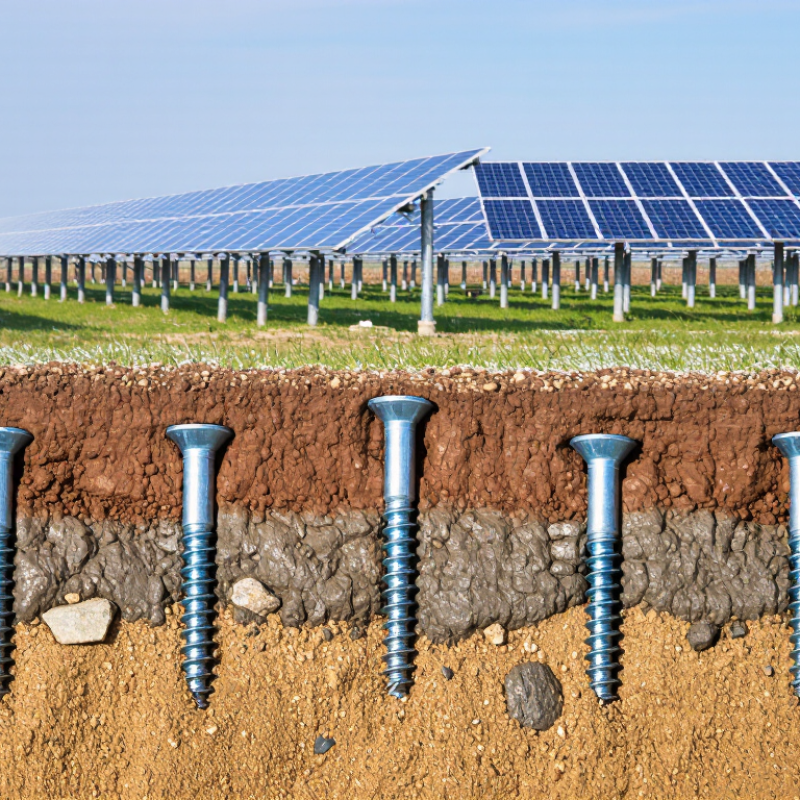
Ground screws are steel shafts with helical plates that cut into soil and transfer loads below the surface. A typical assembly includes the shaft, one or more helices, a top bracket, and corrosion protection. Unlike poured concrete footings, installation usually needs no curing time, but performance still depends on soil strength, frost depth, drainage, and installation torque. A muddy garden bed and dense gravel can demand very different screw lengths. Small detail, big consequence.
Uses range from decks, fences, signs, and sheds to solar-panel frames. NREL’s 2023 U.S. Solar Photovoltaic System and Energy Storage Cost Benchmark models a 100-MWdc utility-scale solar plant, illustrating how extensive ground-mounted systems can be. That report concerns project costs, not a universal foundation design; site-specific testing remains essential. For larger structures, engineers may use torque readings and load tests to verify capacity. Soil can be stubborn. And unpredictable.
Tip: Match the screw’s shaft, helix size, and length to the expected load and ground conditions. Ask for a geotechnical assessment where soil is uncertain, and check the bracket’s fit before installation. One practical caution: a screw that turns easily is not automatically secure. Confirm the installer records embedment depth and installation torque, then inspect exposed steel for coating damage. I would not choose by price alone; replacing a poorly sized foundation can mean disturbing the structure above it.

Before selecting ground screws, check the soil beyond the dry surface. The USDA-NRCS Soil Survey Manual classifies saturated hydraulic conductivity from very low, below 0.01 micrometers per second, to very high, above 1,000. That range signals how sharply infiltration can vary across a site. NRCS hydrologic soil groups also sort soils into four categories, A through D, by runoff and infiltration behavior. Treat these maps as screening tools, not a substitute for probing or a site assessment. A gravelly top layer may hide soft, wet soil below. Small clues matter.
Drainage and access affect installation as much as the screw specification. After rain, look for standing water, muddy ruts, and water flowing toward the work area. Check after rain. A low spot may need a different installation plan or further evaluation before equipment arrives. Walk the actual access route: note gate width, overhead branches, turning space, and room to stage materials. A compact machine may reach the work zone but still lack space to align and operate safely. The USDA-NRCS Web Soil Survey can help identify mapped soil limitations, but its boundaries do not capture every change on a small parcel. Verify questionable areas on site, and record soil layers, moisture, and installation torque as work proceeds; torque alone does not confirm capacity.
Ground screw size should follow the loads it must carry, not just the post dimensions. Estimate the weight of the structure, then consider wind uplift, sideways pressure, and uneven loading. A small garden shelter may seem light, but gusts can pull hard on its roof. Capacity figures are meaningful only when matched to the stated soil conditions and installation depth. Check whether the published rating covers compression, tension, and lateral forces; one number may not describe all three.
Soil matters. Dense gravel and soft, wet clay can behave very differently, even on nearby parts of a site. A longer or wider screw may help, but dimensions alone do not confirm capacity. Use site information and the screw maker’s technical data, and ask a qualified structural professional to review uncertain or heavily loaded designs. Allow for the required safety factors. This part can feel tedious, and a tidy table may tempt you to choose the nearest rating. I would resist that shortcut. Record screw spacing, embedment depth, and the load at each support, then check that the ground and connection details suit the actual structure.
Ground screws face constant contact with soil, moisture, and sometimes de-icing salts. Compare the steel grade, coating thickness, and installation conditions—not just the product’s appearance. Hot-dip galvanizing can protect steel, while stainless steel may suit some aggressive environments. Neither option is universal. A coating is not magic; scratches around the shaft or welds can become weak points.
Tip: Ask for coating specifications and soil-compatibility guidance. The NACE International IMPACT study estimated global corrosion costs at US$2.5 trillion annually, or 3.4% of global GDP. That figure covers many industries, not ground screws alone, but it shows why corrosion planning matters.
Check whether the supplier’s data reflects your soil’s moisture, acidity, and chloride levels.
Design matters just as much. Look for flight diameter, shaft thickness, weld quality, and load-test documentation. Match the helix geometry to the soil and expected pullout or compression loads. A narrow shaft may be easier to install, but it is not automatically suitable for a heavier structure.
Tip: Compare drawings and test conditions side by side. If a specification is unclear, pause and ask; I’ve seen small details get overlooked.
A ground screw is only as dependable as its match to the site. Check the design loads, soil profile, frost depth, drainage, and access for installation equipment before comparing prices.
A geotechnical report can reveal weak fill, dense layers, or groundwater that changes the required embedment.
Soil changes everything.
Where applicable, check whether the system has been evaluated under ICC-ES AC358, and ask for documented axial and lateral capacity. ASTM D1143 and D3689 describe compression and tension testing methods for deep foundations; ask whether relevant test results reflect comparable soil and installation conditions.
Long-term value depends on more than the purchase price.
The 2016 NACE IMPACT study estimated global corrosion costs at $2.5 trillion annually, or 3.4% of global GDP. That figure covers corrosion broadly, not ground screws alone, but it shows why coatings, soil chemistry, and inspection plans deserve attention. Ask for coating specifications, expected service-life assumptions, and clear limits on those estimates.
Small details matter.
Confirm the required installation torque and how it is recorded; torque can help verify installation, but its relationship to capacity depends on the system and soil. A missed field note can make later checks harder. I would compare the full installed cost, maintenance needs, and evidence behind each capacity claim—not just the quoted unit price.


For those larger-sized parts, or smaller quantity runs, we have 2 independent powder coat booths and ovens. The quality, durability and affordability of today’s powder coating finishes make this the process of choice for world-class companies.
Powder coating advantages over other forms of coating are many. Materials used in the Powder coating process can be metals and non-metals that come in a multitude of thicknesses, textures, colors, etc. Another of Powder coating’s biggest advantages over conventional coatings is its ability to create finishes in many different textures. Powder Coating Booths allow us the ability to apply these advantages to large products.
Tri-State Fabricators runs a full-service conveyor line for painting. Wet painting can provide protection or decoration to many different part styles. From start to finish, every project is easier to undergo random and point-based inspection by our skilled painting team.
Advantages to our Wet Paint Line are these lines start with product prep and ends with a thorough inspection of a high quality finished product. Our ability to complete large and small projects with a superior finish and doing so in a timely and economical fashion. This passes along the savings in production to our customers. When powder coating ins not an option, our Wet Paint Line gets the job done right the first time.
When the parts get big and heavy we roll-out our custom paint racks and oversize booth. By utilizing our partnerships with all the major paint brands, we can match virtually any color with wet paint.
The advantages of having access to a Wet Paint Booth are many. Large projects of many different shapes can be loaded into the booth. The Wet Paint Booth offers an environment that is much more controlled than a typical parts painting operation.
Not only are they used because of their controlled environment, but they’re are also advantageous when it comes to applying paint to parts that are needed in industries that require specialty coatings such as medical, aerospace, etc.
Our military forces have some very high standards when it comes to the finish of their vehicles and equipment. From the first pre-treatment step to final coat, it takes a great deal of knowledge and experience to protect the men and women of our armed forces. They deserve only the best, and Tri-State Fabricators provides it.
All of our processes are closely monitored by our staff and management teams. Both of which are highly trained in the processes of metal fabrication and finishing. Tri-State Fabricators’ goal is to always fully satisfy each and every customer, including the military. We will always put a 110% into what we do.
Abrasive media blasting is an excellent way to remove old paint, rust, and increase the paint/powder adhesion. Glass beads produce a much smoother and brighter finish than angular abrasives; leaving the part clean yet without any dimensional change. Chemically inert and environmentally friendly, we can recycle our beads approximately 30 times; making them a more preferred method of metal cleaning or surface finishing.
Advantages to Glass Bead Blasting are many. Glass bead blast media is used when a project is needing rough surfaces need to become smooth for applications of coatings such as paint. It is typically used to clean paint and rust from a product surface without deforming the surface it is being used on. Overall, compared to many other blasting media, Glass Bead Blasting is a very economical choice and those savings are always passed on to our customers.
Tri-State Fabricators utilize a zinc phosphate wash to clean and etch the material to ensure the best paint adhesion possible. The unique design of our 3-stage wash system does the work like a 5-stage. From Cleaning and rinsing to conversion coating and post-treatment, Our Part Washing process is a complete service and works throughout the fabrication service and the finishing service.
Along with the previously mentioned benefits, Curing is a vital chemical reaction that leaves the product finish hard and relatively safe from mild abrasion and aggressive corrosion. This process can be done in more than one way; ambient air-dry or in curing ovens at temps that exceed 240°.
From fixing paint mistakes (someone else’s of course) to simply cleaning our paint line hooks, our burn-off oven is put to good use. After a quick burn-off, a little clean up, and a fresh coat of paint, your parts will look better than new.
Why does our Burn-Off Oven work so well? Because super heating the air around parts turns the materials into ashes. From paint and powder coatings to rubber and machining oils, high temps do the job without degrading the integrity of the part.
Masking is a vital part of producing high quality products. We have die-cut masking patterns to protect machined surfaces as well as a wide range of plugs and caps to protect threaded holes and bolts. We provide permanent and temporary masking.
Masking allows the selected sections of a product to be protected from a fabrication or finishing service. This can be with both chemicals when etching and tapes, paints when only finishing just a section of the product. Masking is great in aiding the customization process of a project.
Screen printing is a photographic process that transfers artwork onto a porous nylon screen which allows colored ink to flow through the screen and be deposited on an aluminum or plastic component. We can generally have just about any design created onto a screen for your parts.
Some of the advantages of Screen Printing are, brand recognition for your business displaying on your products, assembly instructions, product warnings/hazards, etc. Tri-State Fabricators produces Screen Printing of the highest quality so you know it’s durable.
Metal Finishing is the art of treating the exterior portion of product, often metal but can also be made of other materials, so that the surface is clean and free of any debris. Then the process of applying coats or either paint of powder coat takes place. This coating process improves the quality of the product in both appearance and resistance to wear and corrosion.
Tri-State Fabricators, Inc., understands that a project typically isn’t complete until a high-quality finish has been added to your product. This is why our painting and powder coating teams continuously inspect the products throughout the Metal Finishing process.

