7 Tips for Choosing the Best Fertilizer Dye

A fertilizer’s color can do more than make a product look distinctive. It can help workers see whether granules, liquids, or treated surfaces have received an even application. Choosing a suitable Fertilizer Dye, however, takes more than matching a shade to a brand label. The dye should suit the fertilizer’s formulation, application equipment, and intended use. A color that looks vivid in a sample jar may appear faint across a field. That difference matters.

This guide examines seven practical factors, including compatibility, color strength, stability, ease of mixing, and supplier documentation. It also considers how the product behaves during storage and application, where heat, moisture, or handling may affect appearance. Check technical information and test a small batch before committing to a larger quantity. Observe whether the dye disperses evenly, changes the fertilizer’s flow, or leaves unwanted residue. Results can vary between formulations, so one successful test should not be treated as universal proof. A detail can be missed. Safe handling instructions and clear product specifications deserve attention, too. The best choice is not always the brightest or least expensive option; it is the one that performs consistently under real working conditions. These tips offer a grounded starting point, while leaving room for careful testing and informed judgment.
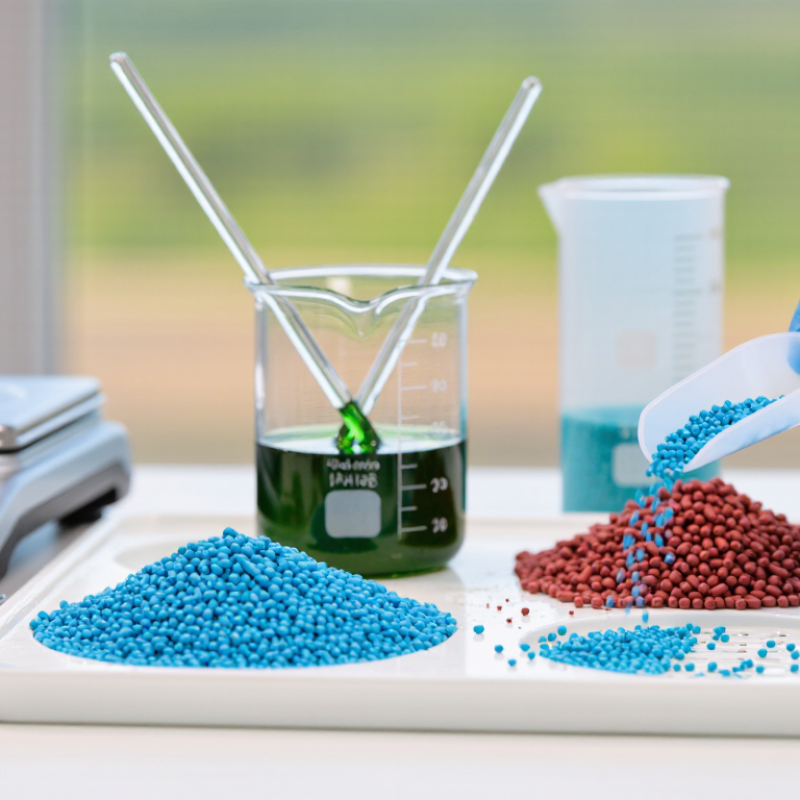
7 Tips for Choosing the Best Fertilizer Dye

Understand the Purpose of Dye in Fertilizer Products

Fertilizer dye serves a practical visual purpose: it can help distinguish product types, show whether granules have been treated, and make uneven coverage easier to notice. It is not a nutrient, and color alone cannot confirm a product’s analysis or application rate. Color is not chemistry. The USDA’s 2022 Census of Agriculture reported commercial fertilizer, lime, and soil-conditioner use across 265 million U.S. acres. That figure describes agricultural use, not dye performance, but it illustrates the scale of product handling where clear identification can matter.

Choose a dye for the job it must do. A field-applied product may need a visible, consistent color, while a stored product also needs color that remains stable during handling. Check compatibility with the fertilizer formulation, including its moisture and storage conditions; a small batch test can reveal fading, clumping, or uneven coating. Keep the color distinct from other products handled nearby. Yet a vivid shade can create false confidence. It cannot replace nutrient labels, calibration, or a proper application check. In practice, the best dye is one that improves recognition without obscuring the product’s real information.

Match Dye Compatibility to Fertilizer Type and Ingredients

Tip 1

Check the fertilizer’s physical form before choosing a dye. Water-soluble feeds, suspensions, and emulsions behave differently. A dye that disperses evenly in a clear solution may clump or fade in a concentrated suspension. Check the dye’s technical sheet for solubility, recommended dose, and pH range. Small details matter.

Tip 2

Compare the ingredients, not just the N-P-K numbers. High salt levels, iron, copper, and other micronutrients can affect color stability or cause sediment. Surfactants and chelating agents may also change how a colorant spreads. Ask for compatibility data when available. Don’t assume.

Tip 3

Run a small jar test with the actual fertilizer, dilution water, and intended dye dose. Check the mixture immediately and again after a day. Look for fading, flakes, rings, or settling. Gently invert the jar to see whether sediment redistributes. Test at a temperature similar to expected storage or use. Keep notes. A clean result in one batch does not guarantee compatibility with every formula. Even small water-quality differences may matter, so repeat the test when the fertilizer or dilution source changes.

Assess Color Strength, Consistency, and Appearance

A fertilizer dye should look vivid in the concentrate and remain recognizable after dilution. Judge it under consistent lighting, not beside a sunny window one day and a fluorescent lamp the next. ASTM E1164 describes obtaining spectrometric data for color evaluation, while ISO/CIE 11664-4:2019 defines the CIELAB color space. These references support repeatable measurement; they do not set a universal color-strength requirement for fertilizer dyes. Record the dye concentration, water source, mixing time, and reading conditions for each test.

Tip: Compare equal dilutions in clear containers against a white background. Check for streaks, sediment, or uneven color after mixing. A handheld spectrophotometer can help track batch variation. A ΔE00 below 2 may serve as an in-house screening target, but it is not a universal fertilizer specification. Keep a retained sample as a visual reference.

Appearance can change with formulation, water hardness, and storage, so assess the dye in the intended fertilizer mixture as well as on its own. Look at a thin film on a white surface and a deeper pool in the same light. Both reveal different issues. I still trust my eyes—then check them. If the color looks strong but measurements vary between batches, the dye may be difficult for customers to dose consistently. Note that judgment can be imperfect; repeat the test before rejecting a batch.

Check Dye Stability, Safety, and Environmental Standards

Tip 1: Check stability in the actual fertilizer mix. A dye can look clear in water but fade or separate in a concentrated solution. Test a small batch, then inspect it after storage in clear and shaded containers. Note any color shift, sediment, or staining. A quick test helps, but it cannot reproduce every warehouse condition.

Tip 2: Read the safety information before handling a dye. Check recommended protective equipment, exposure guidance, and instructions for spills. Avoid assuming that a plant-derived dye is automatically harmless. Try a small, controlled amount first, and keep the product away from children and pets. The label deserves a careful read.

Tip 3: Ask for evidence behind environmental claims. Look for relevant test data on biodegradability, aquatic effects, and disposal, rather than relying on broad phrases like “eco-friendly.” Confirm that the dye suits your intended use and meets applicable environmental requirements. I would not treat a bright sample as proof of performance; color alone tells very little. A supplier’s technical documents can help, though they may not answer every site-specific question.

Test Performance and Compare Suppliers Before Choosing

Before choosing a fertilizer dye, test it in the mixture and equipment you actually use. A jar test can reveal settling, clumping, or unexpected color shifts within minutes. Start with the intended dilution, then inspect the liquid after mixing and again after it stands. Small tests matter. Check whether the dye disperses evenly and stays visible on damp granules. Record water temperature, mixing time, and dose; changing one variable at a time makes results easier to interpret. Color alone is not enough. Look for residue on tank walls, clogged screens, and stains on gloves or concrete.

Repeat the trial at working scale with the pump, nozzle, and application rate planned for use. Check several samples for consistent color, not just the first bucket. Keep notes. A small test cannot reproduce every storage period or weather condition, so leave room for doubt. Ask suppliers for current technical data, recommended use rates, compatibility limits, and storage guidance. Compare their answers in writing. Request samples and test them under identical conditions; otherwise, a stronger-looking result may simply reflect a higher dose. Consider consistency, delivery timing, and clear handling instructions alongside price. If a supplier cannot answer a basic compatibility question, pause and verify before purchasing.

7 Tips for Choosing the Best Fertilizer Dye

Compare suppliers using consistent tests for color strength, solubility, light stability, pH stability, and application consistency.

Illustrative example scores on a 1–5 scale, not measured supplier data. Test samples under the same conditions and compare your own results before choosing.


Powder Coat Booths

For those larger-sized parts, or smaller quantity runs, we have 2 independent powder coat booths and ovens. The quality, durability and affordability of today’s powder coating finishes make this the process of choice for world-class companies.

Powder coating advantages over other forms of coating are many. Materials used in the Powder coating process can be metals and non-metals that come in a multitude of thicknesses, textures, colors, etc. Another of Powder coating’s biggest advantages over conventional coatings is its ability to create finishes in many different textures. Powder Coating Booths allow us the ability to apply these advantages to large products.

Wet Paint Line

Tri-State Fabricators runs a full-service conveyor line for painting. Wet painting can provide protection or decoration to many different part styles. From start to finish, every project is easier to undergo random and point-based inspection by our skilled painting team.

Advantages to our Wet Paint Line are these lines start with product prep and ends with a thorough inspection of a high quality finished product. Our ability to complete large and small projects with a superior finish and doing so in a timely and economical fashion. This passes along the savings in production to our customers. When powder coating ins not an option, our Wet Paint Line gets the job done right the first time.

Wet Paint Booths

When the parts get big and heavy we roll-out our custom paint racks and oversize booth. By utilizing our partnerships with all the major paint brands, we can match virtually any color with wet paint.

The advantages of having access to a Wet Paint Booth are many. Large projects of many different shapes can be loaded into the booth. The Wet Paint Booth offers an environment that is much more controlled than a typical parts painting operation.

Not only are they used because of their controlled environment, but they’re are also advantageous when it comes to applying paint to parts that are needed in industries that require specialty coatings such as medical, aerospace, etc.

Military CARC

Our military forces have some very high standards when it comes to the finish of their vehicles and equipment. From the first pre-treatment step to final coat, it takes a great deal of knowledge and experience to protect the men and women of our armed forces. They deserve only the best, and Tri-State Fabricators provides it.

All of our processes are closely monitored by our staff and management teams. Both of which are highly trained in the processes of metal fabrication and finishing. Tri-State Fabricators’ goal is to always fully satisfy each and every customer, including the military. We will always put a 110% into what we do.

Glass-Bead Blasting

Abrasive media blasting is an excellent way to remove old paint, rust, and increase the paint/powder adhesion. Glass beads produce a much smoother and brighter finish than angular abrasives; leaving the part clean yet without any dimensional change. Chemically inert and environmentally friendly, we can recycle our beads approximately 30 times; making them a more preferred method of metal cleaning or surface finishing.

Advantages to Glass Bead Blasting are many. Glass bead blast media is used when a project is needing rough surfaces need to become smooth for applications of coatings such as paint. It is typically used to clean paint and rust from a product surface without deforming the surface it is being used on. Overall, compared to many other blasting media, Glass Bead Blasting is a very economical choice and those savings are always passed on to our customers.

Part Washing

Tri-State Fabricators utilize a zinc phosphate wash to clean and etch the material to ensure the best paint adhesion possible. The unique design of our 3-stage wash system does the work like a 5-stage. From Cleaning and rinsing to conversion coating and post-treatment, Our Part Washing process is a complete service and works throughout the fabrication service and the finishing service.

Along with the previously mentioned benefits, Curing is a vital chemical reaction that leaves the product finish hard and relatively safe from mild abrasion and aggressive corrosion. This process can be done in more than one way; ambient air-dry or in curing ovens at temps that exceed 240°.

Burn-Off Oven

From fixing paint mistakes (someone else’s of course) to simply cleaning our paint line hooks, our burn-off oven is put to good use. After a quick burn-off, a little clean up, and a fresh coat of paint, your parts will look better than new.

Why does our Burn-Off Oven work so well? Because super heating the air around parts turns the materials into ashes. From paint and powder coatings to rubber and machining oils, high temps do the job without degrading the integrity of the part.

Masking

Masking is a vital part of producing high quality products. We have die-cut masking patterns to protect machined surfaces as well as a wide range of plugs and caps to protect threaded holes and bolts. We provide permanent and temporary masking.

Masking allows the selected sections of a product to be protected from a fabrication or finishing service. This can be with both chemicals when etching and tapes, paints when only finishing just a section of the product. Masking is great in aiding the customization process of a project.

Screen Printing

Screen printing is a photographic process that transfers artwork onto a porous nylon screen which allows colored ink to flow through the screen and be deposited on an aluminum or plastic component. We can generally have just about any design created onto a screen for your parts.

Some of the advantages of Screen Printing are, brand recognition for your business displaying on your products, assembly instructions, product warnings/hazards, etc. Tri-State Fabricators produces Screen Printing of the highest quality so you know it’s durable.

Metal Finishing

Metal Finishing is the art of treating the exterior portion of product, often metal but can also be made of other materials, so that the surface is clean and free of any debris. Then the process of applying coats or either paint of powder coat takes place. This coating process improves the quality of the product in both appearance and resistance to wear and corrosion.

Tri-State Fabricators, Inc., understands that a project typically isn’t complete until a high-quality finish has been added to your product. This is why our painting and powder coating teams continuously inspect the products throughout the Metal Finishing process.



