Top 10 Tips for Choosing the Best Ball Mill for Your Needs?
Choosing the right Ball Mill can significantly impact your operations. This essential equipment is critical for grinding materials in various industries. With so many options available, making the best decision is not easy.
Understanding your specific needs is vital. Each ball mill has unique features. Factors include size, material, and energy efficiency. An unsuitable choice may lead to inefficiencies or higher costs. Experience and knowledge in this area are crucial.
Revisiting your requirements and expectations regularly can help. Consider how different models align with your production goals. Trustworthy sources can also guide your selection process. This overview will highlight key considerations in choosing the best ball mill for your needs.
Understanding the Role of Ball Mills in Material Processing
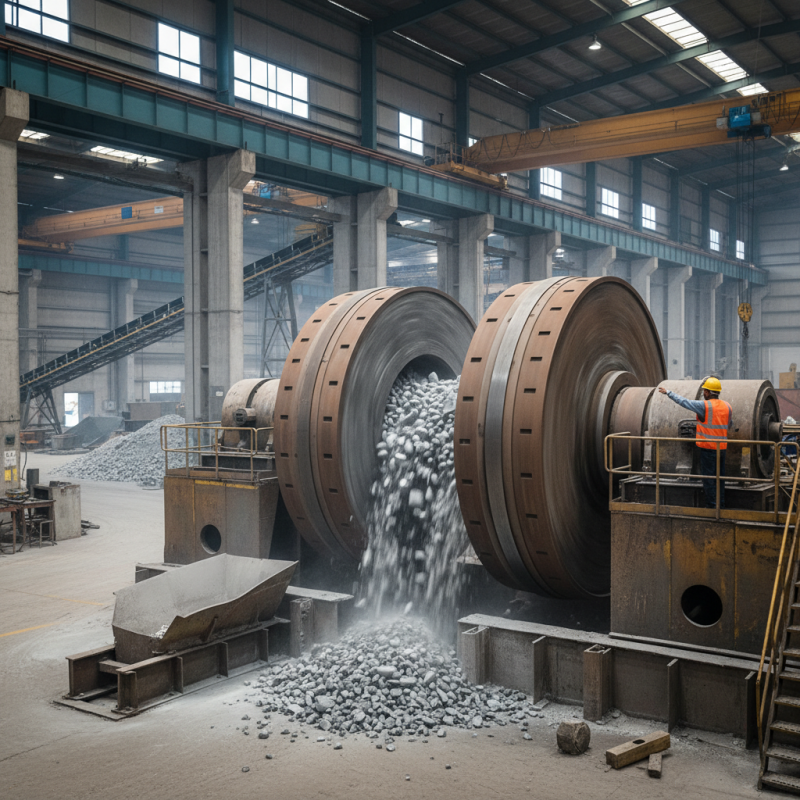
Ball mills play a crucial role in material processing, especially in industries such as mining, ceramics, and construction. These machines are essential for grinding materials into finer particles. Effective size reduction leads to enhanced chemical reactivity and better product uniformity. According to industry reports, the global ball mill market is projected to grow at a CAGR of around 5.2% from 2021 to 2026. This highlights their importance in modern manufacturing and material processing.
The efficiency of a ball mill depends on various factors, including its design, the type of material being processed, and operational parameters. For instance, the choice of grinding media can significantly impact performance. Reports indicate that using high-density media can increase grinding efficiency by up to 20%. Additionally, optimizing parameters like rotational speed and feed size is essential. An ill-suited ball mill may lead to excessive wear or inadequate grinding, resulting in subpar output.
Understanding these key factors can guide users in selecting the right equipment for their needs. Many operators may overlook the importance of ongoing maintenance and adjustment. Subtle changes in the processing environment can reduce efficiency. Regular monitoring and tinkering are often necessary for optimal results. Relying solely on initial settings can lead to unanticipated wear and inefficiencies.
Key Factors to Consider When Selecting a Ball Mill
Choosing the right ball mill is crucial for optimizing production. Key factors to consider include the volume capacity and material compatibility. According to industry reports, selecting the wrong model can lead to inefficiencies. Look for a mill that offers a balance between performance and energy consumption.
Another important consideration is the size distribution of the particles. A well-designed ball mill should provide a uniform particle size. Unevenly sized particles can affect the end product's quality. Reports indicate that mills with adjustable speed settings allow for better control over this aspect, improving overall efficiency.
Pay attention to maintenance and operational costs. A mill that is difficult to maintain can increase downtime. Data shows that an ideal ball mill should be easy to service. Regular assessments can help identify performance gaps. Analyzing these factors will inform better purchasing decisions, ultimately contributing to a more productive operation.
Top 10 Factors to Consider When Choosing a Ball Mill
Evaluating Different Types of Ball Mills: A Comparison
When it comes to choosing a ball mill, understanding the various types is crucial. Each design serves different purposes and has distinct features. For instance, a wet ball mill is ideal for grinding materials in a liquid medium. It facilitates better mixing and can lead to finer particles. On the flip side, a dry ball mill is excellent for materials that require minimal moisture. This type is typically faster and can be more energy-efficient, but may not achieve the same particle size reductions.
Another factor to consider is the milling mechanism. Some ball mills utilize gravity, while others use planetary motion. Gravity mills may be less expensive and simpler in design. However, they might not achieve the high energy impacts that planetary mills provide. This could impact efficiency and the quality of the final product. Reflecting on these options, it's essential to evaluate which features align with your specific manufacturing needs and operational budget. Each choice comes with trade-offs that require careful consideration.
Assessing the Size and Capacity Requirements for Your Ball Mill
When selecting a ball mill, size and capacity are critical factors. The mill's capacity should meet your production volume. Oversizing or undersizing can lead to inefficiencies. Determine the required throughput before making a decision. Understanding the material you will process is essential. It helps to select a mill that can handle the abrasiveness and density of the substance.
Consider the physical dimensions as well. Limited space might restrict your options. Ensure that the ball mill can fit your facility layout. A mill that is too large can cause logistical challenges and excessive maintenance costs.
During the selection process, assess your operation needs. This may include the frequency of use and maintenance requirements. Regular maintenance is crucial for optimal performance. Lack of it can lead to unexpected failures. While certain features may seem appealing, reflect on whether they are necessary for your specific situation. Avoiding unnecessary complications can save time and resources in the long run.
Top 10 Tips for Choosing the Best Ball Mill for Your Needs
| Tip Number | Tip Description | Size Requirement (mm) | Capacity Requirement (tons/hour) |
| 1 | Determine the material to be processed | 50 | 1 |
| 2 | Assess the hardness of the material | 100 | 2 |
| 3 | Consider the desired particle size | 75 | 1.5 |
| 4 | Evaluate the available space for installation | 200 | 3 |
| 5 | Check the required grinding time | 150 | 2.5 |
| 6 | Determine the mill type based on application | 120 | 1.2 |
| 7 | Assess budget constraints | 90 | 2 |
| 8 | Research energy consumption efficiency | 110 | 1.8 |
| 9 | Inquire about maintenance requirements | 130 | 2.2 |
| 10 | Get feedback from existing users | 160 | 3.5 |
Budgeting and Cost Considerations for Ball Mill Purchases
When considering a ball mill purchase, budgeting is crucial. The initial cost is only part of the equation. Operating costs can add up quickly. To make informed decisions, identify your total budget, including maintenance and operational expenses. Knowing your long-term investment will help justify your purchase.
Explore various options within your budget. Not all ball mills are created equal, and prices can vary significantly. Consider the specifications that matter most for your needs. A less expensive option may require more maintenance, leading to higher costs over time. Understand what features you genuinely need versus those that are just nice to have.
Think about financing options as well. Some manufacturers offer payment plans, impacting your cash flow. Unexpected costs can arise, so keep some budget flexibility. Always ask for quotes and compare them. This conversation can reveal valuable insights about each option. Be wary of deals that seem too good to be true; they often come with hidden costs. Prioritize cost-effectiveness to ensure a wise investment for the future.