7 Tips for Choosing Multi Pair Instrumentation Cable

Choosing the right Multi Pair Instrumentation Cable can protect measurement accuracy long before a signal reaches the control room. A cable may look suitable on a spool, yet perform poorly beside variable-frequency drives, pumps, or long cable trays. Small decisions matter. Pair count, conductor size, insulation, shielding, and jacket material all affect installation and signal quality. One overlooked detail can create noise, awkward terminations, or costly replacement work.

Signal-integrity engineer and author Howard Johnson’s work offers a useful principle, paraphrased here: judge the signal at the receiver, not only at the source. That perspective guides these seven tips. They cover matching pair quantity to current and future circuits, checking conductor resistance and capacitance, choosing appropriate shielding, and assessing voltage and temperature ratings. They also address cable routing, termination practices, and documentation. Practical details count: a drain wire must be handled correctly, and a shield can lose value when installers terminate it inconsistently. Not every site needs the most heavily shielded option. More is not always better.

The best choice depends on the instrument, route, and electrical environment. Start with equipment requirements and actual installation conditions, then compare manufacturer data sheets rather than relying on a familiar label. Ask suppliers for clear test information. Check the details twice. These tips provide a sound starting point, not a substitute for project-specific engineering review. Even careful selection cannot fix poor grounding or careless installation. That part is easy to underestimate.
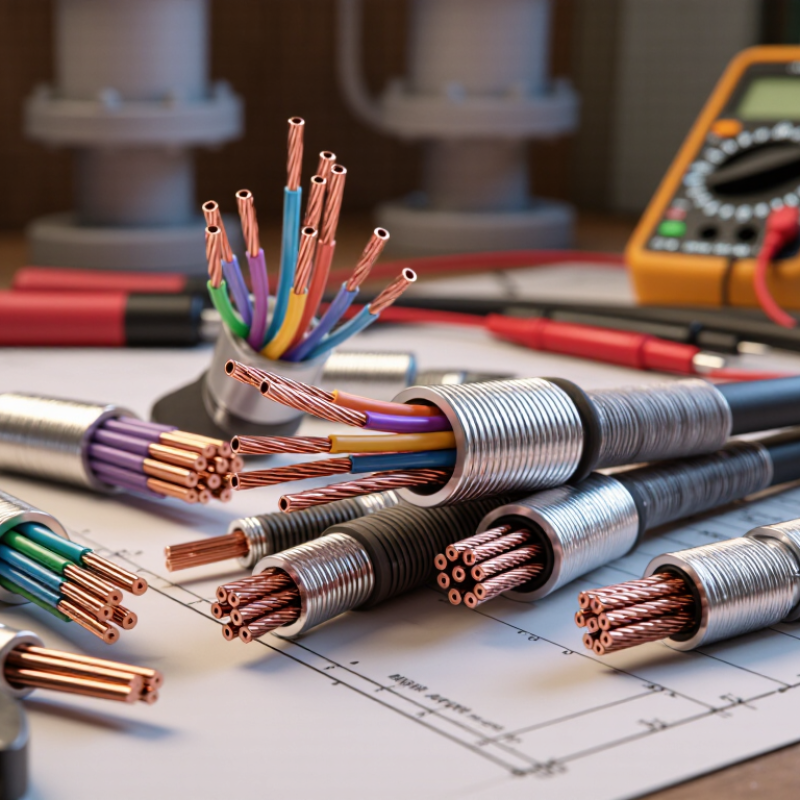
7 Tips for Choosing Multi Pair Instrumentation Cable

Understanding Multi-Pair Instrumentation Cable Applications

Multi-pair instrumentation cable carries low-level signals between sensors, control panels, and monitoring equipment. Typical applications include temperature probes, pressure transmitters, and process-control loops. Separate twisted pairs help reduce electrical interference, especially when several signals share a route near motors or variable-speed drives. Shielding helps, but it cannot compensate for poor grounding or careless installation.

The U.S. Energy Information Administration’s 2018 Manufacturing Energy Consumption Survey estimated manufacturing energy use at 26.4 quadrillion Btu, including nonfuel uses.

That scale makes dependable measurement important: a noisy signal can obscure a process change or trigger an unnecessary inspection. Cable selection should reflect the actual signal, distance, ambient temperature, moisture exposure, and likely interference. Small signals matter. A shielded cable may suit a noisy plant floor, while a tougher outer jacket may be more important in a damp equipment room.

Tips: Match pair count to current and planned signals, then check conductor size and insulation ratings against the instrument and site conditions. Keep signal cables away from power wiring where practical. Confirm shield termination requirements with the equipment documentation; grounding choices can vary. One detail is easy to miss: spare pairs are useful, but excessive unused cable can complicate routing and maintenance. Do not choose by pair count alone.

Assessing Signal, Pair, and Shielding Requirements

Choosing multi-pair instrumentation cable starts with the signals, not the cable jacket. List each circuit, its signal type, frequency range, and expected level. Low-level sensor outputs can be vulnerable to noise from nearby motors or variable-speed drives. Fast pulses and higher-frequency signals may need tighter control of capacitance and attenuation. Check the equipment documentation rather than assuming all instrument signals behave alike.

Count the pairs you need, then allow room for practical changes. A cable with spare pairs can help when a sensor is added later, but a larger cable may be harder to route through a crowded conduit. Keep related conductors within the same twisted pair when the circuit design calls for it. Small detail. Pair construction can affect noise rejection and crosstalk. Also check conductor size, temperature rating, and bend radius against the actual route.

Shielding should match the interference and grounding plan. Individual pair shields can help isolate sensitive circuits, while an overall shield offers broader protection; some installations use both. Foil is lightweight and gives broad coverage, while braid can provide greater mechanical strength. Neither choice fixes poor termination. Confirm how the shield and drain wire should be bonded for the specific system, since grounding practices vary. A missed detail here is easy to overlook, even on a carefully specified cable.

Choosing Conductors, Insulation, and Cable Construction

Choose conductor material and gauge from the actual signal, distance, and installation conditions. Copper is common for its conductivity, while the right gauge helps limit voltage drop over long runs. A larger conductor is not automatically better; it can be harder to terminate in a crowded panel. Check the load first. For frequent movement, finely stranded conductors may flex more easily than solid ones. Confirm that the terminals accept the chosen conductor type.

Match insulation to the environment. Its temperature rating should suit expected operating heat, not just room temperature. Check chemical exposure, moisture, and abrasion risks too. A cable near warm equipment or sharp tray edges needs different protection than one inside a dry control cabinet. Small details matter. Also consider insulation thickness: bulky cores can make a multi-pair cable difficult to route and bend.

Review the pair and overall construction before specifying the cable. Consistent pair twists help reduce interference between neighboring circuits; shielding can provide added protection in electrically noisy areas. An individual shield around each pair may help limit crosstalk, while an overall shield can simplify grounding arrangements. Fillers and separators keep pairs in place, and the outer jacket should match the route, such as indoor trays or damp locations. No single construction suits every job. I’ve seen specifications favor extra shielding without considering termination space, and that trade-off deserves a second look. Check bend radius and cable diameter against the installation path.

Checking Environmental, Safety, and Compliance Needs

Before choosing a multi-pair instrumentation cable, map its full route, not just the control-room connection. A section exposed to sunlight, washdown, oil, or changing temperatures may need a different jacket than a protected indoor run. Check the cable’s rated temperature range against both normal operation and brief extremes. Small details matter. A sharp tray edge or repeated movement can damage a jacket over time, even when the cable otherwise suits the environment.

Safety needs deserve the same practical check. Confirm voltage ratings, fire-performance requirements, shielding, and grounding arrangements against the equipment design and project specifications. If the cable passes through a hazardous or high-heat area, verify that its construction is suitable for that location. Do not assume a familiar cable type automatically meets every site requirement. Not always. Ask suppliers for current test reports and product documentation, then compare them with applicable codes, client rules, and installation conditions. Requirements can vary by project and location. It is tempting to specify the most rugged option everywhere, but that may add cost without solving the real exposure. A careful route survey often reveals where extra protection is actually needed.

Comparing Cable Options for Installation and Long-Term Reliability

Choosing multi-pair instrumentation cable means balancing installation practicality with signal stability over years of service. IEC 60228:2023 defines four conductor classes, from solid conductors to extra-flexible strands. Solid conductors can suit fixed routes; flexible classes are easier to handle near vibrating equipment. Check the instrument’s requirements, too: pair count, conductor size, capacitance, and shielding all affect suitability. A smaller cable may fit a crowded tray, but pulling it around a sharp bend can damage insulation.

Tip 1: Compare the cable’s minimum bend radius with the actual route. Tip 2: Match shielding to the interference environment, and plan how shields will be terminated. Tip 3: Verify the jacket’s temperature and chemical ratings against the site conditions. Small details matter. A cable beside a warm motor may age differently from one in a clean, cool control room.

For fire performance, IEC 60332-1-2 specifies a vertical flame test using a 1 kW burner; it does not establish every aspect of a cable’s fire behavior. Review the full test requirements, not just a label. Ask for documented electrical and mechanical ratings, and record the selected cable’s part-free specification in maintenance files. Honestly, field conditions are often messier than the drawings, so leave room for inspection and replacement.


Powder Coat Booths

For those larger-sized parts, or smaller quantity runs, we have 2 independent powder coat booths and ovens. The quality, durability and affordability of today’s powder coating finishes make this the process of choice for world-class companies.

Powder coating advantages over other forms of coating are many. Materials used in the Powder coating process can be metals and non-metals that come in a multitude of thicknesses, textures, colors, etc. Another of Powder coating’s biggest advantages over conventional coatings is its ability to create finishes in many different textures. Powder Coating Booths allow us the ability to apply these advantages to large products.

Wet Paint Line

Tri-State Fabricators runs a full-service conveyor line for painting. Wet painting can provide protection or decoration to many different part styles. From start to finish, every project is easier to undergo random and point-based inspection by our skilled painting team.

Advantages to our Wet Paint Line are these lines start with product prep and ends with a thorough inspection of a high quality finished product. Our ability to complete large and small projects with a superior finish and doing so in a timely and economical fashion. This passes along the savings in production to our customers. When powder coating ins not an option, our Wet Paint Line gets the job done right the first time.

Wet Paint Booths

When the parts get big and heavy we roll-out our custom paint racks and oversize booth. By utilizing our partnerships with all the major paint brands, we can match virtually any color with wet paint.

The advantages of having access to a Wet Paint Booth are many. Large projects of many different shapes can be loaded into the booth. The Wet Paint Booth offers an environment that is much more controlled than a typical parts painting operation.

Not only are they used because of their controlled environment, but they’re are also advantageous when it comes to applying paint to parts that are needed in industries that require specialty coatings such as medical, aerospace, etc.

Military CARC

Our military forces have some very high standards when it comes to the finish of their vehicles and equipment. From the first pre-treatment step to final coat, it takes a great deal of knowledge and experience to protect the men and women of our armed forces. They deserve only the best, and Tri-State Fabricators provides it.

All of our processes are closely monitored by our staff and management teams. Both of which are highly trained in the processes of metal fabrication and finishing. Tri-State Fabricators’ goal is to always fully satisfy each and every customer, including the military. We will always put a 110% into what we do.

Glass-Bead Blasting

Abrasive media blasting is an excellent way to remove old paint, rust, and increase the paint/powder adhesion. Glass beads produce a much smoother and brighter finish than angular abrasives; leaving the part clean yet without any dimensional change. Chemically inert and environmentally friendly, we can recycle our beads approximately 30 times; making them a more preferred method of metal cleaning or surface finishing.

Advantages to Glass Bead Blasting are many. Glass bead blast media is used when a project is needing rough surfaces need to become smooth for applications of coatings such as paint. It is typically used to clean paint and rust from a product surface without deforming the surface it is being used on. Overall, compared to many other blasting media, Glass Bead Blasting is a very economical choice and those savings are always passed on to our customers.

Part Washing

Tri-State Fabricators utilize a zinc phosphate wash to clean and etch the material to ensure the best paint adhesion possible. The unique design of our 3-stage wash system does the work like a 5-stage. From Cleaning and rinsing to conversion coating and post-treatment, Our Part Washing process is a complete service and works throughout the fabrication service and the finishing service.

Along with the previously mentioned benefits, Curing is a vital chemical reaction that leaves the product finish hard and relatively safe from mild abrasion and aggressive corrosion. This process can be done in more than one way; ambient air-dry or in curing ovens at temps that exceed 240°.

Burn-Off Oven

From fixing paint mistakes (someone else’s of course) to simply cleaning our paint line hooks, our burn-off oven is put to good use. After a quick burn-off, a little clean up, and a fresh coat of paint, your parts will look better than new.

Why does our Burn-Off Oven work so well? Because super heating the air around parts turns the materials into ashes. From paint and powder coatings to rubber and machining oils, high temps do the job without degrading the integrity of the part.

Masking

Masking is a vital part of producing high quality products. We have die-cut masking patterns to protect machined surfaces as well as a wide range of plugs and caps to protect threaded holes and bolts. We provide permanent and temporary masking.

Masking allows the selected sections of a product to be protected from a fabrication or finishing service. This can be with both chemicals when etching and tapes, paints when only finishing just a section of the product. Masking is great in aiding the customization process of a project.

Screen Printing

Screen printing is a photographic process that transfers artwork onto a porous nylon screen which allows colored ink to flow through the screen and be deposited on an aluminum or plastic component. We can generally have just about any design created onto a screen for your parts.

Some of the advantages of Screen Printing are, brand recognition for your business displaying on your products, assembly instructions, product warnings/hazards, etc. Tri-State Fabricators produces Screen Printing of the highest quality so you know it’s durable.

Metal Finishing

Metal Finishing is the art of treating the exterior portion of product, often metal but can also be made of other materials, so that the surface is clean and free of any debris. Then the process of applying coats or either paint of powder coat takes place. This coating process improves the quality of the product in both appearance and resistance to wear and corrosion.

Tri-State Fabricators, Inc., understands that a project typically isn’t complete until a high-quality finish has been added to your product. This is why our painting and powder coating teams continuously inspect the products throughout the Metal Finishing process.



