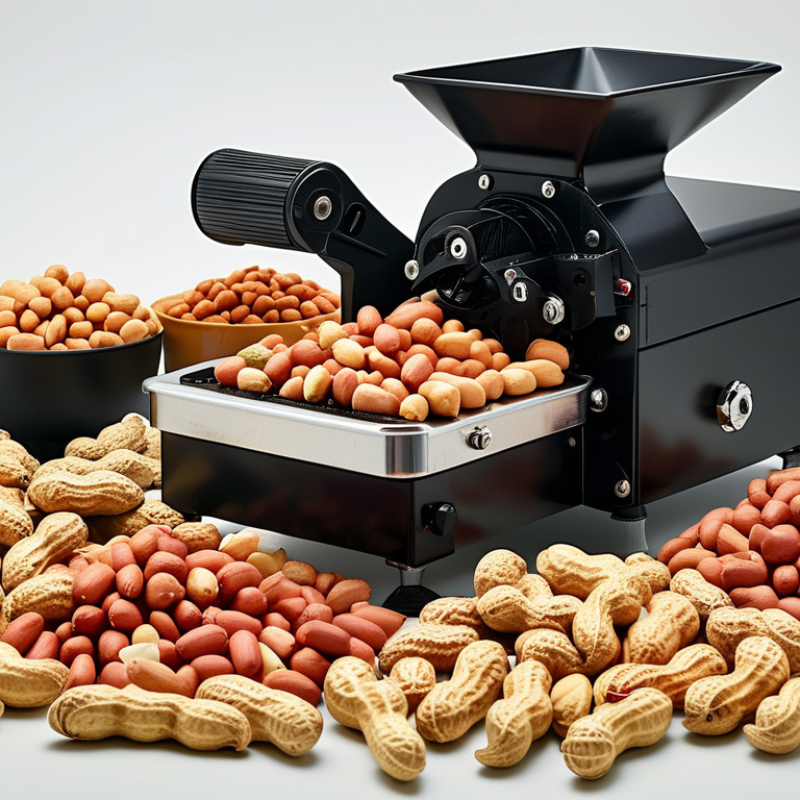
Essential Tips for Choosing the Best Peanut Color Sorter?
Choosing the best Peanut color sorter is crucial for enhancing product quality. These machines significantly improve sorting efficiency. Selecting the right model can be overwhelming.
A peanut color sorter should meet specific needs. Consider the machine's capacity and sorting accuracy. Quality matters. Look for reputable brands with strong warranties. Research user reviews to gauge reliability.
Remember, no single model suits everyone. Different peanuts require different approaches. Reflect on your operational needs. Prioritize essential features while staying mindful of budget constraints. Evaluating various options can lead to better choices in the long run.
Understanding the Purpose of Peanut Color Sorting Machines
Color sorting machines play a vital role in the peanut processing industry. These machines ensure that only high-quality peanuts reach consumers. They identify and remove discolored, damaged, or inferior peanuts from the batch. This process enhances the overall quality and market value of the final product. By using advanced technology, these machines significantly reduce human error in sorting.
Understanding the purpose of peanut color sorting machines is essential. Proper sorting not only improves aesthetics but also ensures better taste and nutritional value. A well-sorted batch can lead to increased customer satisfaction. However, operators must carefully monitor the machines to optimize performance. Sometimes, these machines may misidentify certain peanuts, leading to waste. Regular maintenance and calibration are critical for accurate results.
Investing in a suitable peanut color sorter can transform your business. It’s important to consider the specific needs of your processing operation. The right machine can streamline production and save costs. However, it's equally crucial to choose a reliable supplier. Not all machines are created equal, and choosing the wrong one can complicate your workflow. Always seek advice from industry experts when making this decision.
Key Features to Look for in a Peanut Color Sorter
When selecting a peanut color sorter, it's crucial to focus on key features that ensure efficiency and accuracy. Look for advanced optical sensors. These sensors play a vital role in detecting color variations in peanuts. A sorter with high-resolution cameras will improve sorting precision. This means fewer good peanuts are wrongly discarded.
Consider the machine's sorting capacity. A model with higher throughput can significantly boost productivity. It's essential to match the sorter’s capacity with your processing needs. Pay attention to user-friendly interfaces too. An intuitive design can minimize training time for operators.
Remember to evaluate the build quality. A robust construction can withstand long operating hours. Reflect on the machine’s maintenance requirements; less complicated maintenance saves time. Ultimately, the right peanut color sorter can enhance your processing line sustainably, leading to consistent quality in your final product.
Essential Tips for Choosing the Best Peanut Color Sorter
Evaluating the Technology Used in Color Sorting
When evaluating technology for peanut color sorting, it's crucial to understand the underlying principles. Modern systems often employ advanced optical sensors and software algorithms. These technologies can detect color variations that are not visible to the human eye. For instance, a report from the Institute of Food Technology indicates that high-resolution cameras can identify color differences within a 2-nanometer range. This precision leads to more accurate sorting, ensuring only the highest quality peanuts are selected.
The performance of color sorters can vary significantly depending on the technology used. Some machines rely solely on traditional RGB sensors, which may fall short in areas like detecting subtle color imperfections or contaminants. In contrast, innovations that incorporate near-infrared (NIR) technology enhance color discrimination. According to a study published in the Journal of Agricultural Engineering, machines utilizing NIR can improve sorting accuracy by up to 30%. However, integrating such technology may increase costs and complexity, prompting ongoing discussions within the industry about its practical applications.
Despite the advantages, it is essential to consider potential drawbacks. High-tech sorters require regular maintenance and calibration. Failure to do so may compromise sorting efficiency. Additionally, the reliance on technology can lead to overconfidence, potentially neglecting the importance of manual checks. Keeping a balance between machine sorting and human insight is vital for optimal performance. Adapting to these evolving technologies while acknowledging their limitations is key in the peanut processing industry.
Assessing the Manufacturer’s Reputation and Support
When selecting a peanut color sorter, evaluating the manufacturer's reputation is vital. A company with a proven track record often embodies quality and reliability. According to a report from the Global Color Sorter Market, leading manufacturers emphasize after-sales support and customer service. This can significantly impact your operation's efficiency. A responsive support team can resolve issues quickly, ensuring minimal downtime for your sorter.
Feedback from industry professionals indicates that many businesses face challenges with inadequate support. They wish to prioritize manufacturers known for a solid reputation. A good manufacturer will have clear communication channels. Ask about their warranty policies and the availability of spare parts. This information reveals their commitment to customer satisfaction.
Tips for choosing wisely include reviewing customer testimonials. Look for detailed experiences that reflect the manufacturer's service quality. Assess how long the company has operated in the industry. This data can guide you in making an informed choice. Reliability in support can save you time and money in the long run.
Cost Considerations and Budgeting for a Peanut Color Sorter
When budgeting for a peanut color sorter, several factors come into play. The initial purchase price can range significantly. Reports indicate that high-quality sorters cost between $10,000 and $30,000. This can be daunting for small-scale producers. It's essential to evaluate the long-term savings these machines offer in terms of labor and efficiency.
Operational costs should not be overlooked. Maintenance factors contribute to the overall budget. Regular servicing can cost around 5% of the initial investment per year. However, good maintenance extends the life of the sorter. Thus, it can provide cost-effective solutions over several years.
Investing in a reliable color sorter may seem expensive upfront. Yet, consider the cost of unsorted peanuts. A single batch of low-quality peanuts can lead to significant losses. According to industry studies, color sorters can increase the grade of peanuts by up to 20%. This improvement in quality can lead to higher market prices, offsetting initial costs over time. Choosing wisely is crucial; consider whether cheaper options truly provide value.
Essential Tips for Choosing the Best Peanut Color Sorter
| Feature | Importance | Cost Considerations ($) | Recommendation |
| Sorting Accuracy | High | 5000 - 10000 | Opt for high-quality sensors |
| Throughput | Medium | 3000 - 8000 | Choose depending on production volume |
| Maintenance Requirements | High | 1000 - 3000 | Consider ease of maintenance |
| User Interface | Medium | 500 - 2000 | Ensure it's user-friendly |
| Energy Efficiency | High | 2000 - 4000 | Look for low power consumption |