


Choosing an Aluminum Mig Welder is less about chasing the highest amperage and more about matching the machine to the work. A thin trailer panel behaves differently from a thick plate. Aluminum also conducts heat quickly, while its tough oxide layer can resist the arc. Those details make stable wire feeding, suitable power, and dependable controls practical priorities—not marketing extras.
The American Welding Society’s 2023 welding workforce report projected that the United States would need about 330,000 new welding professionals by 2028. That figure describes the broader welding workforce, not aluminum welders alone, but it points to a growing need for capable equipment and sound training. Aluminum specialist Frank Armao has emphasized a useful shop-floor principle: “Cleanliness is critical when welding aluminum.” Clean the joint, check the wire path, and keep the gun cable as straight as the workspace allows. Small habits matter.
A good choice starts with honest questions: What thickness will you weld most? Is the work at home, in a repair bay, or on a production floor? Do you need spool-gun compatibility? There is no perfect machine for every job. Even experienced welders sometimes underestimate how much setup affects the bead. These seven tips will help compare power, feeding systems, controls, duty cycle, and service support—before a rough, porous weld becomes an expensive lesson.
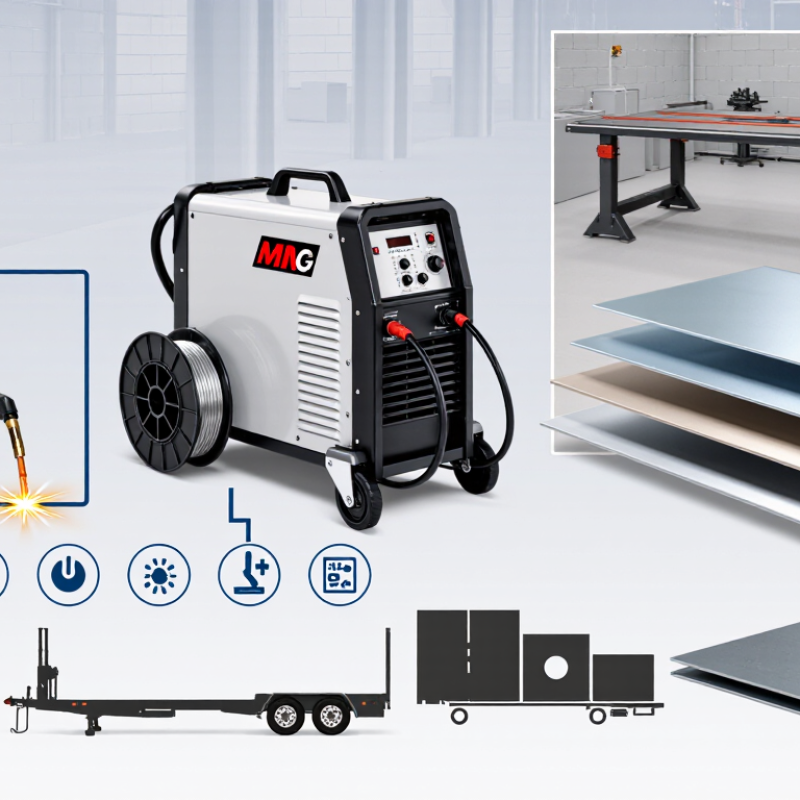
Before selecting an aluminum MIG welder, define the actual work: thin sheet panels, boat components, frames, or thicker structural joints. Record alloy, thickness, joint type, welding position, and expected duty cycle. A machine suited to 1.6 mm sheet may struggle with a heavy repair. Small details matter.
Identify the alloy before choosing filler and settings. The Aluminum Association’s Aluminum Standards and Data provides alloy and property references; AWS D1.2/D1.2M covers structural aluminum welding requirements. Pure aluminum melts at about 660°C, according to the NIST Chemistry WebBook, while aluminum oxide melts near 2,072°C, according to PubChem. That gap helps explain why oxide removal and clean wire handling matter. A shiny surface can still hide contamination.
Also consider access and heat flow. Aluminum spreads heat quickly, so a thick bracket may need more output than its appearance suggests. Thin panels can distort before a long bead is complete. Note whether the job requires short tacks, continuous welds, or out-of-position work. I would not choose from maximum amperage alone; that spec rarely describes the awkward corner or thin edge you actually need to weld.
| Task or Material | Typical Workpiece | Welding Considerations | Welder Features to Consider |
|---|---|---|---|
| Thin sheet and light fabrication | Commonly 1–3 mm sheet, such as 3003 or 5052 | Aluminum conducts heat quickly, while its low melting point makes thin material susceptible to burn-through and distortion. | Look for stable low-end output, fine voltage and wire-feed adjustments, and pulse capability if it suits the intended work. |
| General-purpose plate and structural parts | Often 3–10 mm, including 6061-T6 plate and extrusions | The required current depends on thickness, joint design, and travel speed. Some heat-treated alloys may lose strength in the heat-affected zone. | Match the rated output and duty cycle to the longest welds and thickest sections in the workload; consider a process suited to aluminum spray transfer. |
| Marine and corrosion-resistant fabrication | Commonly 5xxx-series alloys such as 5052 or 5083 | Confirm filler compatibility with the base alloy and service conditions. Some higher-magnesium alloys have restrictions on elevated-temperature service. | Choose a machine with dependable wire feeding and controls appropriate to the required bead profile and production rate. |
| Trailer, vehicle, or repair work | Mixed sheet, brackets, castings, or extrusions; alloy and thickness may vary | Identify the alloy and condition where possible. Paint, oil, and aluminum oxide can contribute to contamination and weld defects; clean the joint before welding. | Prioritize portability only if the worksite requires it, and check that the power supply and output range fit the repair materials. |
| Short runs and occasional shop projects | Small parts and intermittent welds with varied thicknesses | A spool gun can help feed soft aluminum wire over a short distance and reduce bird-nesting at the drive rolls. | Check spool-gun compatibility, included connections, and whether the machine provides the controls needed for aluminum wire. |
| Repeated or longer production welds | Long seams or repeated welds on aluminum plate and extrusions | Consistent wire delivery is important. A push-pull gun can be useful when feeding aluminum wire over longer cable lengths. | Compare duty-cycle ratings at the amperage actually required, and verify support for a push-pull system if the job calls for one. |
| Material and filler selection | Examples include 3003, 5052, 5083, and 6061 | Filler choice depends on base alloy, strength, service environment, and cracking concerns. 4043 and 5356 are common aluminum fillers, but they are not interchangeable in every application. | Ensure the feeder and gun can handle the chosen wire diameter and spool type. Use pure argon shielding gas for many aluminum MIG applications, with flow set for the setup and conditions. |
Before choosing a welder, identify the alloy, thickness range, joint type, weld length, and expected production rate. Confirm filler-metal selection and welding procedure for the specific application.

Tip: Check the power supply before choosing an aluminum MIG welder. Read the machine’s input-voltage and current requirements, then compare them with the outlet and circuit available in your workspace. A standard household circuit may limit usable output or trip under load. Leave room for other equipment, too. Small details matter.
Tip: Match welding output to the aluminum thickness and wire diameter you expect to use. Thin sheet needs controllable, lower output; thicker sections usually require more power and suitable wire-feed speed. Use the welder’s settings chart as a starting point, not a guarantee. Joint fit, position, and heat buildup can change the result. Test on scrap.
Tip: Review the rated duty cycle at the output you need. A machine may deliver high amperage briefly but need cooling breaks during longer welds. Check the rating at a specific amperage, rather than relying on the maximum-output number alone. I’d also verify the input supply under real shop conditions; a setup that looks adequate on paper may feel limiting during repeated passes. That can be easy to overlook.
When choosing an aluminum MIG welder, pay close attention to how it feeds soft wire. A long, unsupported wire path can buckle or feed unevenly. A spool gun keeps the wire close to the torch, while a push-pull setup can suit longer reaches. Check that the drive rolls have smooth U-shaped grooves and match the wire diameter. The liner and contact tip should also be sized for aluminum wire. Small mismatches can cause frustrating stops.
Feed consistency matters at the workbench. Listen for a steady wire sound and watch for smooth movement through the torch. If the wire surges, inspect the spool tension, roll pressure, and liner before changing several settings at once. That part is easy to overlook. I’ve found that a quick test bead on scrap often reveals more than a dial’s markings. Keep the torch cable as straight as practical; tight bends can add drag.
Arc control should let you balance wire speed and voltage for the material thickness and joint. Too much wire speed can make the arc harsh, while too little may produce an unstable bead. Look for clear adjustment steps and, if available, pulse settings that help manage heat on thinner aluminum. Test on clean, similarly prepared scrap, then examine the bead for even ripples and adequate fusion. A neat surface alone is not proof of a sound weld, so refine settings gradually and check the joint itself.
Choosing between a spool gun and a standard torch starts with the welder’s actual connections and controls. A spool gun feeds soft aluminum wire from a small reel near the gun, reducing the long wire-feed path where the wire can buckle. Check whether the machine supports that gun type, including its plug, trigger wiring, and feed-control settings. A matching connector alone does not guarantee full compatibility. Fit matters.
With a standard torch, confirm that the feeder can handle aluminum wire. Look for compatible U-groove drive rolls, a suitable liner, and contact tips sized for the wire diameter. The roll pressure should guide the wire without flattening it. If the wire hesitates or birds-nests near the feeder, the setup may need adjustment, not simply a stronger grip.
Before buying, compare the welder manual’s supported gun models and wire sizes with the job you plan to do. Also check cable length and gun balance; a heavy spool gun can feel awkward in tight corners. Some machines need a setting change or adapter, while others do not support a spool gun at all. I would not rely on a product listing alone. A quick call to the equipment supplier can clarify unclear compatibility details, especially for older machines. Check twice.
General compatibility guidance for aluminum MIG welding
Scores are comparative guidance, not equipment specifications: 1 = less suited, 5 = more suited. A spool gun feeds wire from a spool mounted at the gun, which can help reduce feeding problems with soft aluminum wire. A conventional torch relies on the welder’s wire feeder, so torch length, liner, drive rolls, and supported wire diameter matter. Check the welder and gun manuals to confirm connector, control, and wire compatibility before buying.
A duty-cycle rating tells you how long an aluminum MIG welder can run within a ten-minute period before cooling. Check the rating at the amperage you expect to use, not only the machine’s maximum output. A unit rated for 60 percent at one setting may offer much less time at higher amperage. Heat adds up. For repeated seams on thicker aluminum, a higher duty cycle can reduce pauses and help keep work consistent.
Usability matters when settings change often. Look for clear controls, readable displays, and a wire-feed adjustment that responds predictably. Aluminum wire is soft, so a compatible spool gun or push-pull setup can help prevent feed problems. Check how easily the torch, liner, and drive rolls can be accessed for cleaning or replacement. Small details matter. A machine that looks simple in a showroom may feel awkward with gloves on, so test the controls if possible.
Review safety features such as thermal-overload protection and clear fault indicators, then read the manual to understand their limits. These features do not replace sound setup. Use proper eye and hand protection, secure the work lead, and keep ventilation adequate for the material and workspace. Not always. A compact welder may suit occasional repairs, but its cooling capacity or controls could frustrate longer jobs. Compare the rated duty cycle, operating comfort, and protections together before deciding.


For those larger-sized parts, or smaller quantity runs, we have 2 independent powder coat booths and ovens. The quality, durability and affordability of today’s powder coating finishes make this the process of choice for world-class companies.
Powder coating advantages over other forms of coating are many. Materials used in the Powder coating process can be metals and non-metals that come in a multitude of thicknesses, textures, colors, etc. Another of Powder coating’s biggest advantages over conventional coatings is its ability to create finishes in many different textures. Powder Coating Booths allow us the ability to apply these advantages to large products.
Tri-State Fabricators runs a full-service conveyor line for painting. Wet painting can provide protection or decoration to many different part styles. From start to finish, every project is easier to undergo random and point-based inspection by our skilled painting team.
Advantages to our Wet Paint Line are these lines start with product prep and ends with a thorough inspection of a high quality finished product. Our ability to complete large and small projects with a superior finish and doing so in a timely and economical fashion. This passes along the savings in production to our customers. When powder coating ins not an option, our Wet Paint Line gets the job done right the first time.
When the parts get big and heavy we roll-out our custom paint racks and oversize booth. By utilizing our partnerships with all the major paint brands, we can match virtually any color with wet paint.
The advantages of having access to a Wet Paint Booth are many. Large projects of many different shapes can be loaded into the booth. The Wet Paint Booth offers an environment that is much more controlled than a typical parts painting operation.
Not only are they used because of their controlled environment, but they’re are also advantageous when it comes to applying paint to parts that are needed in industries that require specialty coatings such as medical, aerospace, etc.
Our military forces have some very high standards when it comes to the finish of their vehicles and equipment. From the first pre-treatment step to final coat, it takes a great deal of knowledge and experience to protect the men and women of our armed forces. They deserve only the best, and Tri-State Fabricators provides it.
All of our processes are closely monitored by our staff and management teams. Both of which are highly trained in the processes of metal fabrication and finishing. Tri-State Fabricators’ goal is to always fully satisfy each and every customer, including the military. We will always put a 110% into what we do.
Abrasive media blasting is an excellent way to remove old paint, rust, and increase the paint/powder adhesion. Glass beads produce a much smoother and brighter finish than angular abrasives; leaving the part clean yet without any dimensional change. Chemically inert and environmentally friendly, we can recycle our beads approximately 30 times; making them a more preferred method of metal cleaning or surface finishing.
Advantages to Glass Bead Blasting are many. Glass bead blast media is used when a project is needing rough surfaces need to become smooth for applications of coatings such as paint. It is typically used to clean paint and rust from a product surface without deforming the surface it is being used on. Overall, compared to many other blasting media, Glass Bead Blasting is a very economical choice and those savings are always passed on to our customers.
Tri-State Fabricators utilize a zinc phosphate wash to clean and etch the material to ensure the best paint adhesion possible. The unique design of our 3-stage wash system does the work like a 5-stage. From Cleaning and rinsing to conversion coating and post-treatment, Our Part Washing process is a complete service and works throughout the fabrication service and the finishing service.
Along with the previously mentioned benefits, Curing is a vital chemical reaction that leaves the product finish hard and relatively safe from mild abrasion and aggressive corrosion. This process can be done in more than one way; ambient air-dry or in curing ovens at temps that exceed 240°.
From fixing paint mistakes (someone else’s of course) to simply cleaning our paint line hooks, our burn-off oven is put to good use. After a quick burn-off, a little clean up, and a fresh coat of paint, your parts will look better than new.
Why does our Burn-Off Oven work so well? Because super heating the air around parts turns the materials into ashes. From paint and powder coatings to rubber and machining oils, high temps do the job without degrading the integrity of the part.
Masking is a vital part of producing high quality products. We have die-cut masking patterns to protect machined surfaces as well as a wide range of plugs and caps to protect threaded holes and bolts. We provide permanent and temporary masking.
Masking allows the selected sections of a product to be protected from a fabrication or finishing service. This can be with both chemicals when etching and tapes, paints when only finishing just a section of the product. Masking is great in aiding the customization process of a project.
Screen printing is a photographic process that transfers artwork onto a porous nylon screen which allows colored ink to flow through the screen and be deposited on an aluminum or plastic component. We can generally have just about any design created onto a screen for your parts.
Some of the advantages of Screen Printing are, brand recognition for your business displaying on your products, assembly instructions, product warnings/hazards, etc. Tri-State Fabricators produces Screen Printing of the highest quality so you know it’s durable.
Metal Finishing is the art of treating the exterior portion of product, often metal but can also be made of other materials, so that the surface is clean and free of any debris. Then the process of applying coats or either paint of powder coat takes place. This coating process improves the quality of the product in both appearance and resistance to wear and corrosion.
Tri-State Fabricators, Inc., understands that a project typically isn’t complete until a high-quality finish has been added to your product. This is why our painting and powder coating teams continuously inspect the products throughout the Metal Finishing process.

