


Selecting an Aluminum Pulp Induction Vent Liner is not just a matter of matching a cap size. The liner must suit the container material, product, filling process, and sealing equipment. A mismatch can lead to weak seals, leakage, or inconsistent opening behavior. Small details matter.
This guide outlines seven practical checks for comparing liner options. It covers container compatibility, venting needs, product conditions, seal performance, and supplier documentation. Buyers should also confirm dimensions and test samples under real production conditions. A specification sheet is useful, but it cannot reveal every issue that appears on a filling line. Not every option fits.
Consider how the package will be stored, shipped, and opened. Temperature changes, handling, and product contact may affect performance, so ask suppliers for relevant test data rather than relying on broad claims. Check whether the liner’s venting design matches the package’s purpose; venting is not automatically suitable for every product or container. The right choice depends on the complete packaging system.
Some trade-offs are unavoidable. A liner that performs well in one setup may need adjustment in another, and even a careful review cannot replace validation. That is worth admitting. Use these tips to ask clearer questions, compare evidence, and identify potential problems before ordering at scale.
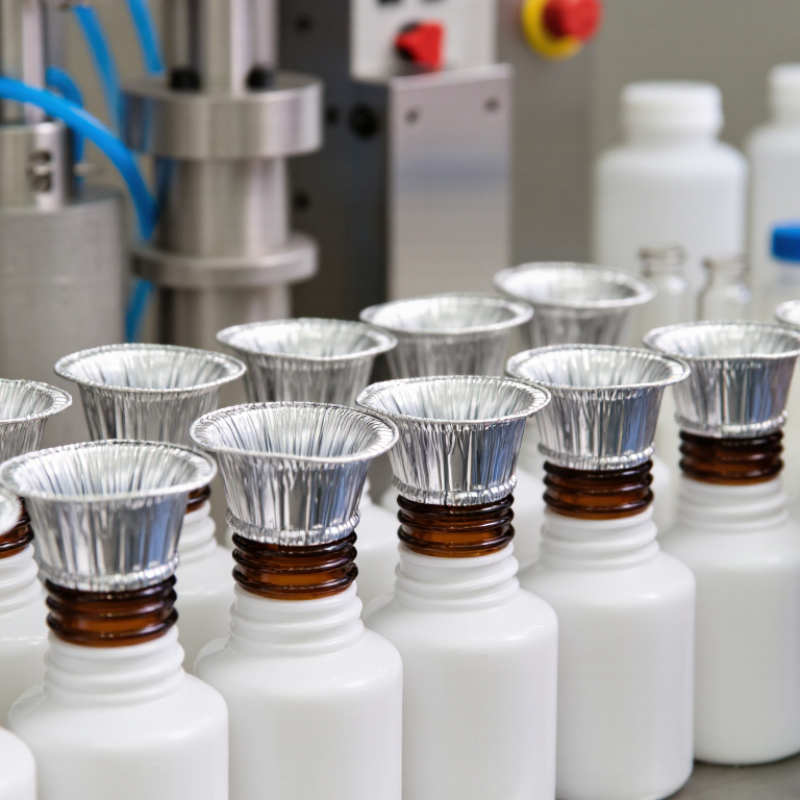
An aluminum pulp induction vent liner combines a pulpboard backing with an aluminum sealing layer and a venting feature. During induction sealing, heat bonds the foil layer to a compatible container rim. The vent helps manage pressure changes or gas buildup, while the seal helps protect the contents. Performance depends on the package, product, and sealing process. It is not a one-size-fits-all closure.
Check the container material and neck finish first. Confirm that the liner matches the rim diameter and works with the container resin. Consider the product’s acidity, oils, and storage conditions. Ask what vent rate is appropriate; too little may allow pressure to build, while too much can affect moisture protection. Check the supplier’s technical data, then test filled containers under realistic temperature and transport conditions. Small details matter. A slightly uneven rim can cause a weak seal.
During trials, inspect for foil wrinkles, incomplete bonding, and pulpboard damage. Keep induction settings consistent, but don’t assume one setting suits every line. Record the setup and results; otherwise, troubleshooting becomes guesswork.
Tip: test more than one production batch.
Tip: review the seal after storage, not just right after capping.
There is a tradeoff between venting and barrier performance, and the best balance may take a few careful trials.

An aluminum pulp induction vent liner must match the container, cap, and neck finish as a working set. Check the container opening against the cap’s inner diameter, then confirm the liner covers the sealing surface without folding or overhanging. Even a small gap can leave part of the finish unsealed. Small details matter.
Inspect the neck finish for a flat, continuous sealing land. Threads, ridges, or a narrow rim can affect contact during induction sealing. Compare liner dimensions with the cap and container specifications, but do not rely on measurements alone. Place a sample liner in the cap and check for movement, wrinkles, or exposed areas. A fit that looks right can still fail under production conditions.
Test the complete assembly using the intended container material, cap, and sealing equipment. Induction settings may need adjustment; there is no universal setting for every package. After sealing, inspect samples for even bonding and test them using a suitable leak or seal-integrity method. Record the setup and results.
One small oversight—like a slightly different neck finish—can change the outcome. Recheck compatibility whenever any component changes.
A pulp induction vent liner must balance two jobs: maintain a reliable seal and release pressure at a controlled rate. Start with the product. Fine powders can migrate into a vent path, while moisture-sensitive contents may need a low water-vapor transmission rate. Measure the product’s particle size, moisture sensitivity, and expected storage conditions before choosing the vent area or membrane structure. “Breathable” is not a specification.
Then map the shipping conditions. ISO 2533’s standard atmosphere gives pressure of about 101.3 kPa at sea level and 89.9 kPa at 1,000 metres. That roughly 11% difference is a useful screening scenario, not proof that a package will pass. Test filled containers through pressure changes and check for leakage, product dusting, and liner displacement. ASTM E96/E96M provides a recognized method for measuring water-vapor transmission; request test results for the actual liner construction, not a similar material.
Check the closure details, too. Container finish, induction settings, cap torque, and liner compression can change seal performance. A vent path that works on a flat sample may behave differently after sealing. Small detail. Ask suppliers for repeatable airflow and moisture data, then verify it on production containers. I would avoid selecting by vent rate alone; matching the liner to the product often takes a second test.
Assessing induction-sealing equipment starts with the actual container, not the liner catalogue. Record the neck finish, opening diameter, cap material, and product fill level. Then check the sealer’s coil size, conveyor speed, and available power against the container dimensions. A coil positioned too high may leave a weak seal; too much energy can wrinkle foil or overheat the sealing layer. Small differences matter.
Grand View Research estimated the global induction-sealing-machine market at about USD 1.1 billion in 2023, reflecting broad industrial demand—not proof that one setup suits every line. Treat that market figure as context, not a specification. For liner trials, log power, dwell time, line speed, and cap torque, changing one variable at a time. Test filled containers after cooling, not just empty samples. ASTM F88/F88M provides a recognized method for measuring seal strength, while ASTM F2338 describes vacuum-decay leak testing. Use both results with visual checks. A clean-looking seal can still leak.
Ask the equipment supplier for coil and power ranges, then verify them on your own containers. Run samples at startup and after line adjustments. Keep the imperfect results, too; they often reveal where your process window is narrower than expected.
Assessing Induction-Sealing Equipment and Process Requirements
Use these seven checks to compare liner and sealing-process requirements: confirm the container and closure fit, liner construction, induction-sealer compatibility, line speed, sealing settings, venting needs, and seal integrity. Each bar represents one checklist category, not a performance rating; validate operating settings with the liner supplier and equipment manufacturer.
Choose a liner by the protection the product needs, not by foil thickness alone. European Aluminium’s packaging guidance describes intact aluminum foil as a complete barrier to light, moisture, and gases. That performance depends on an unbroken foil layer and a sound seal. Tiny pinholes matter. Check the liner’s foil specification, coating, and induction-seal compatibility against the actual container and product. A reliable trial should include filled containers, realistic line speeds, and storage conditions.
Compliance needs documented evidence. For food-contact use in the United States, review applicable FDA requirements, including 21 CFR regulations for food-contact materials, and request declarations for every layer. Do not assume a foil face makes the whole liner suitable. ASTM F88/F88M provides a method for measuring seal strength; ASTM F1929 describes dye testing for channel leaks in porous packaging. These methods answer different questions. Set acceptance limits before production, rather than after a failed batch.
Quality controls should track foil defects, liner dimensions, coating consistency, and seal results across lots. Ask for inspection records, test methods, sampling plans, and traceable lot codes. European Aluminium’s packaging guidance notes that barrier claims apply to intact foil; handling damage can undermine them. Keep samples from production runs and test them after heat, transport vibration, and aging. A neat-looking seal is not proof of barrier performance. One practical weakness remains: lab tests cannot fully reproduce every filling line, so validate under real operating conditions.
| Tip | What to Evaluate | Barrier Performance | Compliance Evidence | Quality Controls to Request |
|---|---|---|---|---|
| 1. Define the venting requirement first | Confirm whether the package needs controlled gas exchange, pressure relief, or a conventional induction seal. Specify the product, container, and intended use. | An aluminum foil layer can provide a strong barrier when intact and properly sealed, but foil alone does not create a controlled vent path. A venting feature must be part of the liner design. | Request documentation identifying the liner’s intended use and any material or performance limitations relevant to the application. | Verify the construction against the agreed specification. Test assembled packages under representative filling, storage, and transport conditions. |
| 2. Match the heat-seal layer to the container | Check the container resin and finish, such as the specific PE or PP grade, as well as the neck dimensions and sealing surface. | A compatible heat-seal layer helps form a continuous seal. Poor material or surface compatibility can cause weak bonding or leak paths, reducing effective barrier performance. | Obtain the supplier’s material identification and applicable food-contact or other end-use declarations for the seal layer. | Validate induction settings on the actual container and cap system. Monitor seal appearance and conduct suitable peel or leak tests. |
| 3. Compare complete liner constructions | Review each layer, including aluminum foil, heat-seal coating, pulpboard backing, and any membrane or vent component, where present. | Barrier performance depends on the complete construction, foil continuity, seal quality, and any intentional vent feature—not simply on the presence of aluminum. | Request a current technical data sheet and composition or compliance information for each relevant layer. | Use incoming checks for construction, dimensions, and visible defects. Agree on how changes to materials or suppliers will be notified. |
| 4. Set barrier targets for the product | Identify the main risks, such as moisture, oxygen, aroma loss, leakage, or pressure changes, and define the required shelf-life conditions. | Do not assume a universal transmission rate from the liner description. Ask for test results for the specific construction and test conditions; the finished package seal also affects performance. | Confirm that any stated performance data describes the offered liner and is relevant to the intended product and use conditions. | Specify the test method, conditioning, sample configuration, and acceptance criteria before comparing supplier results. |
| 5. Check compliance by market and application | Identify destination markets and whether the package is for food, pharmaceutical, cosmetic, chemical, or another use. | Compliance status does not by itself establish barrier performance or suitability for a particular product. | For food-contact use, request applicable declarations and supporting information. Requirements may include relevant U.S. FDA provisions or EU food-contact framework rules, depending on the materials and application. | Maintain current declarations, specifications, and change records. Confirm that documents cover the actual construction and intended conditions of use. |
| 6. Assess the pulpboard and fit | Check backing-board thickness and fit, cap clearance, liner diameter, and whether the backing is intended to remain in the cap after sealing. | The pulpboard supports handling and fit, but it is not a substitute for an intact foil seal or a designed venting layer. | Request material information for the backing and verify that the complete liner is suitable for the package’s intended use. | Inspect dimensions, flatness, edge condition, and fit in the selected cap. Check for fiber or foil damage that could interfere with sealing. |
| 7. Require process validation and ongoing controls | Agree on induction-sealing settings, line speed, cap application conditions, and the monitoring plan for production. | Even a high-barrier liner can underperform if the seal is incomplete, overheated, contaminated, or inconsistent. | Keep supplier specifications and relevant compliance records linked to the approved liner version and production lots. | Use documented setup checks and routine seal-integrity testing. Define corrective actions and lot traceability for out-of-spec results. |
| Comparison note: Barrier and venting performance vary with liner construction, container material, sealing conditions, and test method. Confirm claims with application-specific data and testing of the finished package. | ||||


For those larger-sized parts, or smaller quantity runs, we have 2 independent powder coat booths and ovens. The quality, durability and affordability of today’s powder coating finishes make this the process of choice for world-class companies.
Powder coating advantages over other forms of coating are many. Materials used in the Powder coating process can be metals and non-metals that come in a multitude of thicknesses, textures, colors, etc. Another of Powder coating’s biggest advantages over conventional coatings is its ability to create finishes in many different textures. Powder Coating Booths allow us the ability to apply these advantages to large products.
Tri-State Fabricators runs a full-service conveyor line for painting. Wet painting can provide protection or decoration to many different part styles. From start to finish, every project is easier to undergo random and point-based inspection by our skilled painting team.
Advantages to our Wet Paint Line are these lines start with product prep and ends with a thorough inspection of a high quality finished product. Our ability to complete large and small projects with a superior finish and doing so in a timely and economical fashion. This passes along the savings in production to our customers. When powder coating ins not an option, our Wet Paint Line gets the job done right the first time.
When the parts get big and heavy we roll-out our custom paint racks and oversize booth. By utilizing our partnerships with all the major paint brands, we can match virtually any color with wet paint.
The advantages of having access to a Wet Paint Booth are many. Large projects of many different shapes can be loaded into the booth. The Wet Paint Booth offers an environment that is much more controlled than a typical parts painting operation.
Not only are they used because of their controlled environment, but they’re are also advantageous when it comes to applying paint to parts that are needed in industries that require specialty coatings such as medical, aerospace, etc.
Our military forces have some very high standards when it comes to the finish of their vehicles and equipment. From the first pre-treatment step to final coat, it takes a great deal of knowledge and experience to protect the men and women of our armed forces. They deserve only the best, and Tri-State Fabricators provides it.
All of our processes are closely monitored by our staff and management teams. Both of which are highly trained in the processes of metal fabrication and finishing. Tri-State Fabricators’ goal is to always fully satisfy each and every customer, including the military. We will always put a 110% into what we do.
Abrasive media blasting is an excellent way to remove old paint, rust, and increase the paint/powder adhesion. Glass beads produce a much smoother and brighter finish than angular abrasives; leaving the part clean yet without any dimensional change. Chemically inert and environmentally friendly, we can recycle our beads approximately 30 times; making them a more preferred method of metal cleaning or surface finishing.
Advantages to Glass Bead Blasting are many. Glass bead blast media is used when a project is needing rough surfaces need to become smooth for applications of coatings such as paint. It is typically used to clean paint and rust from a product surface without deforming the surface it is being used on. Overall, compared to many other blasting media, Glass Bead Blasting is a very economical choice and those savings are always passed on to our customers.
Tri-State Fabricators utilize a zinc phosphate wash to clean and etch the material to ensure the best paint adhesion possible. The unique design of our 3-stage wash system does the work like a 5-stage. From Cleaning and rinsing to conversion coating and post-treatment, Our Part Washing process is a complete service and works throughout the fabrication service and the finishing service.
Along with the previously mentioned benefits, Curing is a vital chemical reaction that leaves the product finish hard and relatively safe from mild abrasion and aggressive corrosion. This process can be done in more than one way; ambient air-dry or in curing ovens at temps that exceed 240°.
From fixing paint mistakes (someone else’s of course) to simply cleaning our paint line hooks, our burn-off oven is put to good use. After a quick burn-off, a little clean up, and a fresh coat of paint, your parts will look better than new.
Why does our Burn-Off Oven work so well? Because super heating the air around parts turns the materials into ashes. From paint and powder coatings to rubber and machining oils, high temps do the job without degrading the integrity of the part.
Masking is a vital part of producing high quality products. We have die-cut masking patterns to protect machined surfaces as well as a wide range of plugs and caps to protect threaded holes and bolts. We provide permanent and temporary masking.
Masking allows the selected sections of a product to be protected from a fabrication or finishing service. This can be with both chemicals when etching and tapes, paints when only finishing just a section of the product. Masking is great in aiding the customization process of a project.
Screen printing is a photographic process that transfers artwork onto a porous nylon screen which allows colored ink to flow through the screen and be deposited on an aluminum or plastic component. We can generally have just about any design created onto a screen for your parts.
Some of the advantages of Screen Printing are, brand recognition for your business displaying on your products, assembly instructions, product warnings/hazards, etc. Tri-State Fabricators produces Screen Printing of the highest quality so you know it’s durable.
Metal Finishing is the art of treating the exterior portion of product, often metal but can also be made of other materials, so that the surface is clean and free of any debris. Then the process of applying coats or either paint of powder coat takes place. This coating process improves the quality of the product in both appearance and resistance to wear and corrosion.
Tri-State Fabricators, Inc., understands that a project typically isn’t complete until a high-quality finish has been added to your product. This is why our painting and powder coating teams continuously inspect the products throughout the Metal Finishing process.

