


7 Tips for Buying Bio Sanitizer Tablets

Bio Sanitizer Tablets can look simple on a shelf: a small pack, a clear dosage, and bold claims. The buying decision is less simple. Tablets may be designed for drinking-water treatment, surface sanitation, or other specific uses, and those purposes are not interchangeable. Check the active ingredient, approved application, contact time, dosage instructions, and storage conditions before comparing prices. A product’s label matters more than a broad “bio” claim.

The scale of the water-safety challenge is substantial. The WHO/UNICEF Joint Monitoring Programme reported that 2.2 billion people lacked safely managed drinking-water services in 2022. That figure is not a measure of tablet demand or product effectiveness; it is context for why reliable treatment information matters. Environmental health researcher Thomas Clasen’s published work on household water treatment underscores the importance of matching a method to the actual water-quality risk. This is a paraphrase, not a direct quotation; exact expert wording should be checked against its original source.

Small details count. A tablet that dissolves slowly may not suit a rushed routine. Packaging exposed to moisture can also affect storage life. These seven tips will help buyers assess product purpose, ingredients, independent testing, directions, shelf life, and supplier transparency. No tablet is a substitute for checking local water guidance or following its label precisely. Be cautious of sweeping promises. Verify the evidence.
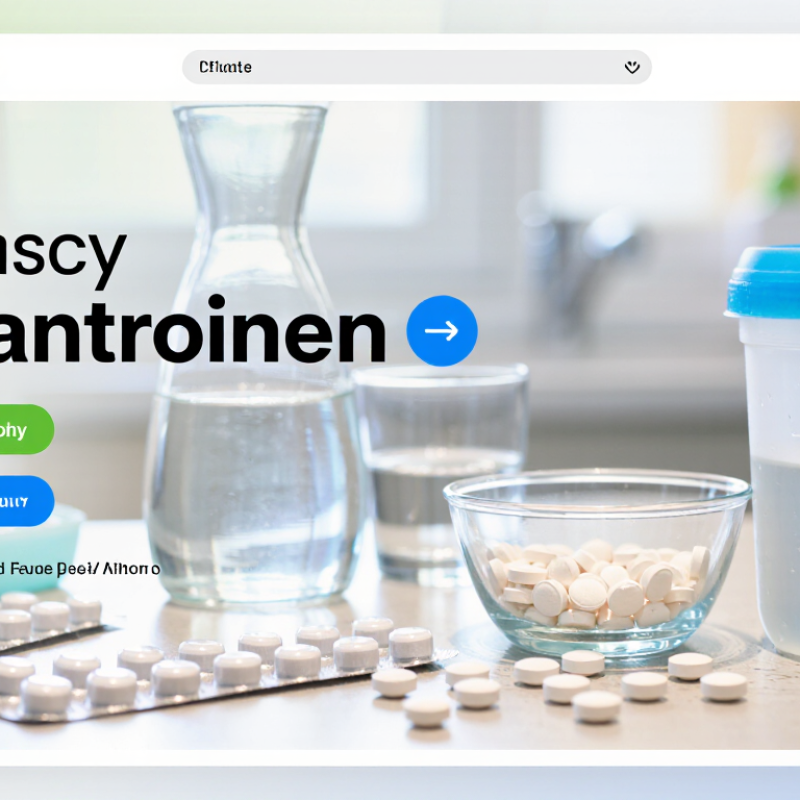
7 Tips for Buying Bio Sanitizer Tablets

Define the Intended Use and Required Sanitizing Standard

Before buying bio sanitizer tablets, define exactly what needs sanitizing: drinking water, food-contact surfaces, or reusable equipment. These uses require different contact times, dilution rates, and performance claims. The World Health Organization’s Guidelines for Drinking-water Quality specify that E. coli should not be detectable in a 100 mL sample. That is a measurable water-safety target, not proof that any tablet meets it. Check whether the product’s label names your intended use and provides a validated dose and contact time.

For food-contact surfaces, consult the applicable sanitation rules and the tablet’s instructions. The FDA Food Code 2022 calls for sanitizer concentration to be checked with a suitable test kit, rather than guessed from tablet count alone. Match the product’s stated active ingredient and concentration to the required standard. A damp cloth, cold water, or a crowded bucket can change real-world results. Small details matter.

Tip: Write down the surface or water volume, target standard, contact time, and any required test method before comparing products. Ask for independent test documentation tied to those conditions. A vague “kills germs” claim is not enough. It is tempting to treat one tablet as a universal solution; it isn’t. If the intended use is unclear, pause and verify it.


Review Active Ingredients, Safety Data, and Regulatory Approval

Before buying bio sanitizer tablets, identify the active ingredient and its stated concentration. Names alone can be confusing. Check that the product is intended for your specific use, such as treating a surface or sanitizing equipment. Similar-looking tablets are not necessarily interchangeable. Follow the label’s dilution, contact time, and rinsing instructions; a tablet that dissolves quickly may still need several minutes to work.

Read the safety data sheet, not just the front of the package. Look for eye or skin hazards, ventilation guidance, first-aid steps, and storage instructions. Keep tablets in their original container, away from moisture and children. Never mix them with other cleaners unless the label explicitly allows it. The paperwork can be dense, and a quick glance may miss an important restriction. That is worth slowing down for.

Check whether the product’s regulatory approval or registration applies to your intended use and location. Verify the number and claims through the relevant government authority, where available. Approval for one purpose does not automatically cover another, and it is not a substitute for following directions. If the label or safety documents leave key details unclear, ask the seller or manufacturer for current documentation before purchasing. A neat package is not enough.

7 Tips for Buying Bio Sanitizer Tablets: Review Active Ingredients, Safety Data, and Regulatory Approval

Tip What to Check Useful Evidence Warning Signs
1. Match the product to its intended use Confirm whether the tablets are intended for surfaces, equipment, water treatment, or another specific use. A product approved or labeled for one use is not automatically suitable for another. Clear directions identifying the target use, application method, and surfaces or materials covered. Vague claims such as “sanitizes everything,” or instructions that do not specify where the tablets may be used.
2. Identify the active ingredient Read the product label for the active ingredient and its concentration. Ingredients and concentrations vary, and effectiveness depends on the formulation and labeled use. A complete product label that names the active ingredient and provides concentration or other required composition details. Claims such as “natural,” “bio,” or “chemical-free” offered instead of a clearly identified active ingredient.
3. Check directions and contact time Follow the specified dilution or tablet-to-water ratio, application steps, and wet contact time. The surface generally must remain wet for the full labeled contact time. Specific, readable instructions, including preparation, application, contact time, and any required rinsing. Directions that omit dosage or contact time, or advice to use a stronger mixture than the label specifies.
4. Review safety information Read the label and Safety Data Sheet (SDS) for hazards, protective equipment, first aid, storage, and spill-response guidance. An SDS communicates hazards; it does not by itself certify that a product is safe or effective. An accessible, current SDS and label precautions consistent with the product’s intended handling and use. No safety documentation, missing first-aid guidance, or claims that a product is harmless under all conditions.
5. Verify regulatory status for your location Requirements depend on the product’s claims, use, and jurisdiction. In the United States, antimicrobial pesticide claims generally fall under EPA regulation; hand sanitizers are generally regulated by FDA as over-the-counter drugs. In the European Union, biocidal products require authorization for relevant uses under the Biocidal Products Regulation. Check the applicable regulator’s official database or documentation, and confirm that the authorized claims and uses match the product label. A regulatory number or approval claim that cannot be verified, or documentation for a different product, use, or jurisdiction.
6. Consider compatibility and storage Check whether the solution may damage the intended surface or equipment, and follow labeled storage, shelf-life, and disposal instructions. Keep tablets in their original container and away from children. Label details on material compatibility, storage conditions, expiry or shelf life, and disposal. No storage or expiry information, or instructions to mix the product with other cleaners without explicit label guidance.
7. Compare evidence, not just claims Look for test information relevant to the product’s specific intended use and the organisms or performance claims stated on the label. Do not assume that a laboratory result proves effectiveness in every real-world setting. Clearly described test methods, conditions, and results that align with the label claims and applicable requirements. Unsupported “kills all germs” claims, unexplained test results, or performance promises that go beyond the authorized label.
Note: “Bio” is not, by itself, a standardized guarantee of safety, environmental benefit, or regulatory approval. Always follow the product label and the rules that apply to the product’s intended use and location.

Compare Tablet Dosage, Water Compatibility, and Contact Time

7 Tips for Buying Bio Sanitizer Tablets

Compare tablet strength with the water volume you actually need to treat. A tablet intended for a small container may not suit a storage tank. Check whether the label gives a dose per litre, gallon, or container. Use a marked measuring jug when testing the instructions; estimates can drift. More is not automatically better.

Water compatibility matters. Hardness, pH, temperature, and organic matter can affect how some sanitizing ingredients perform, but the details depend on the formulation. Read the label for suitable water types and approved uses, especially if the treated water may be consumed. Don’t assume tablets with similar shapes or colors have the same chemistry. That’s easy to overlook.

Contact time is the period the solution must remain in contact with the target. For surfaces, check whether they must stay visibly wet for the full time. For water treatment, follow the specified wait before use. A quick wipe may feel sufficient, but it may not meet the directions. Compare storage conditions and tablet packaging, too; damp tablets can crumble or become difficult to dose accurately. If instructions are unclear, choose a product with a readable label and contact the supplier before use.

Check Shelf Life, Packaging, and Storage Requirements

A box of bio sanitizer tablets can look perfectly usable while its contents have been stored poorly. Check the expiry date and, when available, the manufacturing date before buying. A long remaining shelf life gives you more time to use the tablets as directed. Look for a batch number and readable storage instructions. Keep the label.

Packaging deserves a close look, too. The seal should be intact, with no tears, damp patches, or signs of tampering. Tablets exposed to moisture may soften, crumble, or stick together. That is a warning, not a reliable test of whether they still work. If the package is damaged or the product details are unclear, ask the seller for clarification rather than guessing.

Storage conditions can affect product quality after purchase. Follow the label’s temperature and humidity guidance, and keep the tablets in their original packaging unless the instructions say otherwise. A cool, dry cupboard is often more suitable than a steamy bathroom or a shelf beside a sunny window. Avoid leaving the pack in a hot car. Small details matter. I have learned that “dry place” can be easy to overlook during a busy week, so choose a storage spot you will remember and check the date before each use.

Evaluate Supplier Reliability, Product Documentation, and Total Cost

A low tablet price can hide a weak supply chain. Ask for recent batch certificates of analysis, ingredient specifications, shelf-life data, and lot traceability. Check whether documents match the exact tablet and intended use. Request references from buyers with similar volumes, plus written details on lead times and production changes. A polished brochure is not proof. I would also check how quickly the supplier answers a specific technical question; slow replies can become costly when stock runs low.

Documentation matters most when tablets are used for water treatment. The WHO/UNICEF Joint Monitoring Programme reported that 2.2 billion people lacked safely managed drinking water in 2022. This is not a product-quality test, but it shows why dosing and verification deserve care. Review instructions for dosage, contact time, storage, and water conditions. Ask for test methods and results relevant to your application. Keep the paperwork with each received batch. Small details matter.

Compare total cost per treated volume, not price per tablet. Include freight, minimum order quantities, protective packaging, storage needs, expiry-related waste, and the cost of rejected or delayed shipments. Ask suppliers to quote the same order size and delivery terms. A sample trial can reveal slow dissolution or awkward handling, though one trial cannot represent every site condition. I would still leave some room for surprises. Actual costs often shift with water quality and staff routines.

Powder Coat Booths

For those larger-sized parts, or smaller quantity runs, we have 2 independent powder coat booths and ovens. The quality, durability and affordability of today’s powder coating finishes make this the process of choice for world-class companies.

Powder coating advantages over other forms of coating are many. Materials used in the Powder coating process can be metals and non-metals that come in a multitude of thicknesses, textures, colors, etc. Another of Powder coating’s biggest advantages over conventional coatings is its ability to create finishes in many different textures. Powder Coating Booths allow us the ability to apply these advantages to large products.

Wet Paint Line

Tri-State Fabricators runs a full-service conveyor line for painting. Wet painting can provide protection or decoration to many different part styles. From start to finish, every project is easier to undergo random and point-based inspection by our skilled painting team.

Advantages to our Wet Paint Line are these lines start with product prep and ends with a thorough inspection of a high quality finished product. Our ability to complete large and small projects with a superior finish and doing so in a timely and economical fashion. This passes along the savings in production to our customers. When powder coating ins not an option, our Wet Paint Line gets the job done right the first time.

Wet Paint Booths

When the parts get big and heavy we roll-out our custom paint racks and oversize booth. By utilizing our partnerships with all the major paint brands, we can match virtually any color with wet paint.

The advantages of having access to a Wet Paint Booth are many. Large projects of many different shapes can be loaded into the booth. The Wet Paint Booth offers an environment that is much more controlled than a typical parts painting operation.

Not only are they used because of their controlled environment, but they’re are also advantageous when it comes to applying paint to parts that are needed in industries that require specialty coatings such as medical, aerospace, etc.

Military CARC

Our military forces have some very high standards when it comes to the finish of their vehicles and equipment. From the first pre-treatment step to final coat, it takes a great deal of knowledge and experience to protect the men and women of our armed forces. They deserve only the best, and Tri-State Fabricators provides it.

All of our processes are closely monitored by our staff and management teams. Both of which are highly trained in the processes of metal fabrication and finishing. Tri-State Fabricators’ goal is to always fully satisfy each and every customer, including the military. We will always put a 110% into what we do.

Glass-Bead Blasting

Abrasive media blasting is an excellent way to remove old paint, rust, and increase the paint/powder adhesion. Glass beads produce a much smoother and brighter finish than angular abrasives; leaving the part clean yet without any dimensional change. Chemically inert and environmentally friendly, we can recycle our beads approximately 30 times; making them a more preferred method of metal cleaning or surface finishing.

Advantages to Glass Bead Blasting are many. Glass bead blast media is used when a project is needing rough surfaces need to become smooth for applications of coatings such as paint. It is typically used to clean paint and rust from a product surface without deforming the surface it is being used on. Overall, compared to many other blasting media, Glass Bead Blasting is a very economical choice and those savings are always passed on to our customers.

Part Washing

Tri-State Fabricators utilize a zinc phosphate wash to clean and etch the material to ensure the best paint adhesion possible. The unique design of our 3-stage wash system does the work like a 5-stage. From Cleaning and rinsing to conversion coating and post-treatment, Our Part Washing process is a complete service and works throughout the fabrication service and the finishing service.

Along with the previously mentioned benefits, Curing is a vital chemical reaction that leaves the product finish hard and relatively safe from mild abrasion and aggressive corrosion. This process can be done in more than one way; ambient air-dry or in curing ovens at temps that exceed 240°.

Burn-Off Oven

From fixing paint mistakes (someone else’s of course) to simply cleaning our paint line hooks, our burn-off oven is put to good use. After a quick burn-off, a little clean up, and a fresh coat of paint, your parts will look better than new.

Why does our Burn-Off Oven work so well? Because super heating the air around parts turns the materials into ashes. From paint and powder coatings to rubber and machining oils, high temps do the job without degrading the integrity of the part.

Masking

Masking is a vital part of producing high quality products. We have die-cut masking patterns to protect machined surfaces as well as a wide range of plugs and caps to protect threaded holes and bolts. We provide permanent and temporary masking.

Masking allows the selected sections of a product to be protected from a fabrication or finishing service. This can be with both chemicals when etching and tapes, paints when only finishing just a section of the product. Masking is great in aiding the customization process of a project.

Screen Printing

Screen printing is a photographic process that transfers artwork onto a porous nylon screen which allows colored ink to flow through the screen and be deposited on an aluminum or plastic component. We can generally have just about any design created onto a screen for your parts.

Some of the advantages of Screen Printing are, brand recognition for your business displaying on your products, assembly instructions, product warnings/hazards, etc. Tri-State Fabricators produces Screen Printing of the highest quality so you know it’s durable.

Metal Finishing

Metal Finishing is the art of treating the exterior portion of product, often metal but can also be made of other materials, so that the surface is clean and free of any debris. Then the process of applying coats or either paint of powder coat takes place. This coating process improves the quality of the product in both appearance and resistance to wear and corrosion.

Tri-State Fabricators, Inc., understands that a project typically isn’t complete until a high-quality finish has been added to your product. This is why our painting and powder coating teams continuously inspect the products throughout the Metal Finishing process.
