10 Tips for Buying Automotive Parts Online
Buying Automotive Parts online can save time and widen your choices, but a low price means little if the part does not fit. The stakes are significant. The Auto Care Association’s 2024 Joint Channel Forecast projected the U.S. light-duty aftermarket would reach about $405 billion in 2024, reflecting a vast market with many products and sellers. A large catalog is useful. It can also make small details easy to miss.
MEMA Aftermarket Suppliers president Paul McCarthy has emphasized the aftermarket’s role in keeping vehicles operating and extending their service life. In practical terms, that means shoppers should look beyond the price tag and check fitment, product specifications, seller credibility, warranty terms, and return conditions. Treat that as a paraphrase of his industry perspective, not a verbatim quotation. A vehicle’s year, make, model, engine, and trim can change which part is correct. Even careful buyers can overlook one detail.
This guide, “10 Tips for Buying Automotive Parts Online,” focuses on checks you can make before clicking “buy.” Compare part numbers. Read the listing closely. Look for clear photos, accurate specifications, and reachable customer support. Keep the packaging and receipt until the part is installed and tested. Small steps matter. A misread connector or bolt pattern can turn a bargain into a delay. And online descriptions are not always perfect; when fitment remains unclear, pause and confirm with the seller or a qualified technician.
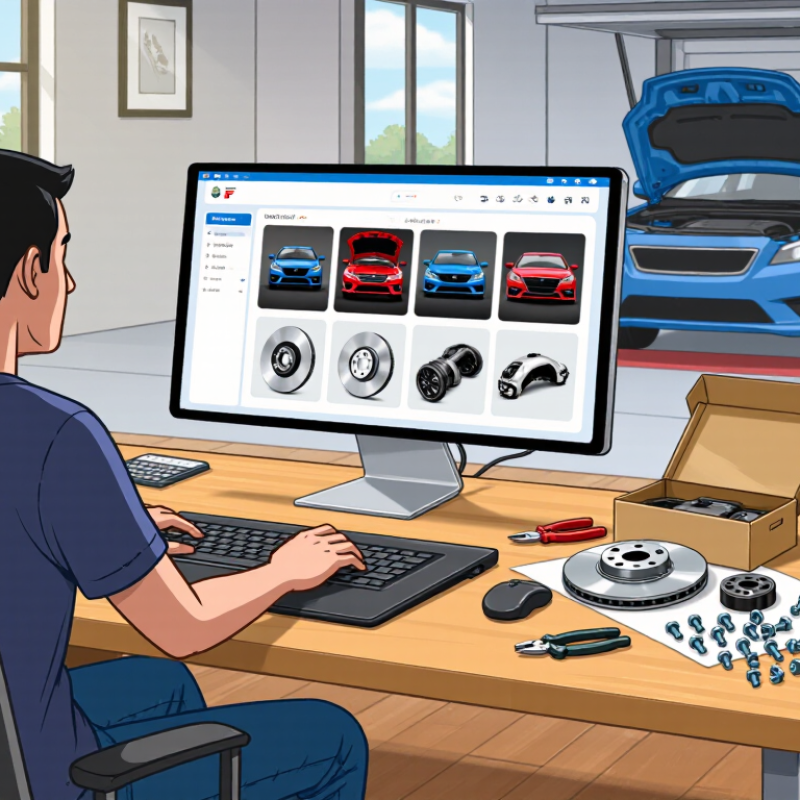
Identify the Correct Part Using Vehicle Details and OEM Numbers
A correct fit starts with the vehicle, not a tempting product photo. Note the year, make, model, engine size, trim, and production date. Then check the 17-character VIN against the vehicle itself; the National Highway Traffic Safety Administration’s VIN Decoder explains the information encoded in a VIN. A VIN narrows the search, but it may not distinguish every configuration. Small differences matter.
Find the original equipment part number on the old component, its packaging, or a service record. Match the full number, including letters and suffixes, against the listing. If a number has been replaced, ask the seller to confirm the updated number and its fitment. Compare connector shape, mounting holes, dimensions, and left- or right-side placement. A title that says “fits your model” is not enough. Check the details.
The scale of the market makes careful matching worthwhile: the Auto Care Association’s 2024 Factbook reported U.S. aftermarket sales of $391 billion in 2023. That figure does not measure incorrect orders, but it reflects a huge range of parts and applications. Catalogs can still be unclear, so pause when engine options or production dates are missing. Save the listing and confirm the return terms before ordering. A quick second check beats guessing.
Assess Seller Reputation and the Accuracy of Product Listings
Before buying automotive parts online, check who is behind the listing. Look for a verifiable business address, working contact details, clear return terms, and reviews that describe specific transactions. A trail of detailed feedback is more useful than a perfect score with vague praise. The FTC’s 2023 Consumer Sentinel Network Data Book recorded more than $10 billion in reported fraud losses across all categories. That figure does not measure auto-parts scams, but it is a good reason to verify sellers rather than rely on a polished page.
Read the fitment details slowly. Compare the part number, model year, engine, trim, and side of the vehicle with your own records. A photo can show the right shape while hiding a different connector or mounting point. The U.S. Census Bureau reported that e-commerce represented 17.1% of U.S. retail sales in the fourth quarter of 2024. As more purchases move online, accurate listings matter more. Save screenshots of the description and seller’s return policy before paying.
If a listing says “fits many models,” ask the seller to confirm compatibility in writing. Check whether the package includes clips, seals, or wiring that the photos may not show. I may still miss a fitment detail; that is why a second check against the vehicle manual or a qualified mechanic’s advice can prevent an avoidable return. A little friction now beats a part that looks right on the screen.
Compare Total Costs, Delivery Options, and Return Policies
Compare the checkout total, not the headline price. A low-cost alternator can become expensive after shipping, taxes, and handling fees. Baymard Institute’s 2025 U.S. shopper survey found that 39% abandoned carts because extra costs were too high. Ask for the full amount before paying. Delivery matters, too: compare standard and express options, estimated arrival dates, tracking, and any surcharge for a heavy or bulky part. A cheap option that arrives after a repair appointment may cost more in practical terms. I would not treat a vague delivery estimate as a promise.
Read the return policy before ordering, especially for electrical components or parts that must match a vehicle’s exact year and configuration. Check the return window, restocking fees, who pays return shipping, and whether opened packaging affects eligibility. The National Retail Federation’s 2024 Consumer Returns in the Retail Industry report estimated that 16.9% of annual retail sales would be returned. That figure covers retail broadly, but it shows why return terms deserve attention. Small print matters. Save the product listing and order confirmation, and verify the part number before opening the box. I still find policies easy to skim past; that is exactly when a costly mistake can slip through.
Check Part Quality, Warranty Coverage, and Safety Standards
When buying automotive parts online, judge the evidence, not just the product photos. Check the part number against your vehicle’s year, model, engine, and trim. A polished listing can still describe the wrong component. Look for clear photos of labels, connectors, and mounting points, plus a traceable manufacturer and batch number. Small details matter. NHTSA’s 2023 annual recall data recorded roughly 25.5 million recalled vehicles and equipment items. Those figures are not specific to online purchases, but they underline why safety checks should never be an afterthought. For brakes, steering, lighting, and other safety-critical parts, verify any applicable standards and required markings. A vague “tested” claim proves little without supporting documentation.
Read the warranty before checkout. Check its length, exclusions, return window, and who pays shipping or labor if the part fails. Ask whether installation by a qualified technician is required to keep coverage valid. Compare the warranty with the seller’s return policy; they may offer different protections. Keep screenshots of the listing and order details. I’d pause if the seller cannot confirm fitment or explain what the warranty covers. Even a familiar-looking part may not meet your needs, and a low price is not proof of value.
Pay Securely and Inspect the Part Before Installation
Before paying, check that the checkout page uses a secure connection, but do not treat that alone as proof of a trustworthy seller. Read the payment and return terms, and confirm there is a clear way to contact the seller. A credit card or reputable payment service may offer more recourse than a bank transfer. Avoid requests for gift cards or unusual off-platform payments. Save the order confirmation and item description. It takes a minute.
When the package arrives, inspect it before installation. Compare the part number, shape, dimensions, and connectors with the old part or your vehicle’s service information. Look for cracked plastic, bent tabs, loose terminals, or torn seals. Photograph the packaging and any damage, and keep the receipt. A listing photo can help, though it may not show small differences between model years.
Do not force a part that almost fits. That “almost” can become an expensive mistake. Check that the included hardware matches the description, and pause if the label or dimensions differ. I can see how easy it is to rush when a vehicle is already apart; still, fitting an uncertain part may damage nearby components. Ask the seller or a qualified technician to verify compatibility before installation.
10 Tips for Buying Automotive Parts Online
A practical checklist, grouped by the stage of the purchase.
How to use this chart: The bars count the tips in this ten-step checklist; they are not survey results.
Confirm fitment and seller policies before ordering, use a secure payment method, then check the delivered part against your order and inspect it for damage before installation.





