


7 Tips for Buying an Automated Forklift?

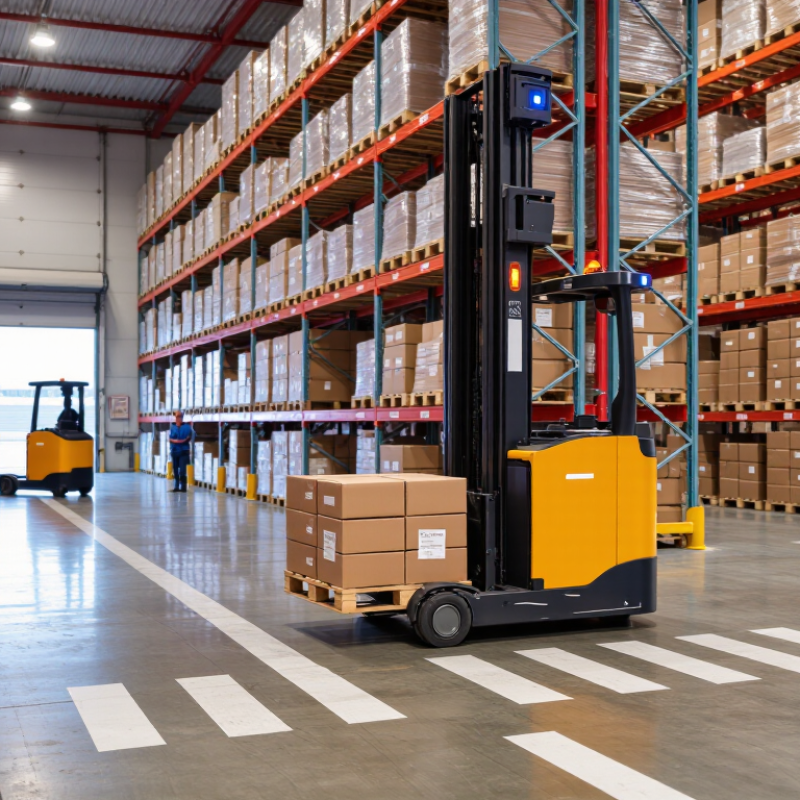
An Automated Forklift can move pallets, reduce repetitive driving, and support more consistent material handling. Yet choosing one is not just a matter of comparing speed or price. The right machine must fit your facility, your loads, and the way people work around it. A narrow aisle, uneven floor, or frequently changing pallet position can affect performance. Small mismatches matter. They can turn an impressive demonstration into a difficult daily operation.

This guide shares seven practical tips for evaluating an automated forklift before you buy. It looks at load capacity, route design, navigation, safety features, system integration, service support, and total cost of ownership. Start with real operating details: measure aisle widths, record typical load weights, and map busy crossings near docks or packing stations. Ask suppliers to explain how the truck behaves when a route is blocked or a pallet is misplaced. Then test the proposed setup in conditions that resemble your actual shifts. A smooth demo is useful, but it does not answer every question.

There is no universal best model. A system that suits a high-volume warehouse may be unnecessary for a smaller site. And estimates deserve a second look. Comparing options carefully can help you choose equipment that fits both today’s workflow and realistic future needs.
7 Tips for Buying an Automated Forklift?

Assess Your Material-Handling Needs and Operating Environment

7 Tips for Buying an Automated Forklift

Assess Your Material-Handling Needs and Operating Environment

Begin with the load, not the machine. Record pallet weights, dimensions, lifting heights, and daily movement patterns. A forklift that handles standard pallets may struggle with unstable or oversized loads. Measure aisle widths, doorway clearances, rack spacing, and turning areas. Small errors here can create expensive bottlenecks.

Study the working environment carefully. Note floor joints, slopes, wet zones, dust, temperature changes, and lighting conditions. Map pedestrian routes and areas where workers cross vehicle paths. Automation reduces some risks, but it does not remove poor layout decisions. I once underestimated floor unevenness; the resulting slowdowns affected every delivery cycle. That mistake was preventable.

Check whether the vehicle can connect with your warehouse software, doors, lifts, charging points, and storage systems. Ask for trial data using your actual pallets and routes. Test stopping accuracy near people and fixed equipment. Review battery endurance, recovery procedures, maintenance access, and manual recovery options. Reliable operation depends on clear responsibilities, staff training, and regular inspections. Collect feedback from operators and maintenance teams before choosing equipment. Their practical observations may expose problems that a sales demonstration hides. Expect some uncertainty. Real facilities are rarely as tidy as drawings suggest.


Compare Forklift Types, Payloads, and Navigation Systems

Buying an automated forklift starts with the load, not the software. Counterbalance models suit pallets moved across open floors. Reach trucks work better in narrow aisles and tall racking. Tugger-style vehicles fit repeated trailer or cart routes. Choose the wrong type, and every later calculation becomes expensive.

Check the real payload at the greatest lift height. A 1,500-kilogram rating may drop when the load is raised or extended. Measure pallet size, center of gravity, aisle width, floor quality, and daily travel distance. Include damaged pallets and uneven wrapping. They happen. During site assessments, operators should observe peak-hour traffic, not only a quiet morning. A spreadsheet may look precise, but it can hide messy warehouse behavior.

Navigation deserves equal attention. Magnetic guidance offers predictable routes but needs installed infrastructure. QR or visual navigation can adapt more easily when storage layouts change. LiDAR-based systems can detect people, racks, and temporary obstacles, yet reflective surfaces may require careful testing. Compare stopping distance, rerouting speed, localization accuracy, and recovery after a blocked aisle. Ask for recorded trial data, maintenance access, battery performance, and operator training requirements. Do not trust a smooth demonstration alone. A forklift that performs well for ten minutes may struggle during an eight-hour shift. Test mixed loads, blind corners, wet patches, and emergency stops before approving the purchase.

Check Safety Features and Compatibility With Your Facility

Safety features deserve more than a checklist. Ask how the forklift detects pedestrians, obstacles, and cross-traffic. Test emergency stops, warning lights, audible alerts, and speed controls during a site trial. Check performance around reflective packaging, dusty corners, and busy intersections. Sensors can behave differently there. They may miss something.

Measure the narrowest aisle, doorway, and turning area, not just the average. Compare these dimensions with the forklift’s turning radius and load size. Check floor condition, slopes, joints, and thresholds; a small ridge can affect travel and load stability. Also plan where the vehicle will charge and whether charging access interrupts work. A clean floor plan can still miss a pallet staging area that shifts every afternoon.

Walk the actual routes with operators and maintenance staff. Note pedestrian crossings, blind corners, rack ends, and places where workers leave carts. Confirm that the vehicle’s navigation system can handle your facility’s layout and traffic patterns, including changes during a shift. Ask the supplier to document test conditions and limitations, then repeat key tests with representative loads. A trial is useful, but it cannot reproduce every busy day. That is worth admitting before purchase.

7 Tips for Buying an Automated Forklift

Use this checklist to compare automated forklifts before purchase. The chart shows the number of practical verification points assigned to each buying consideration; the figures are checklist items, not market-share or brand data.

Prioritize emergency stopping, obstacle detection, speed control, load stability, aisle clearance, floor conditions, and system compatibility. Confirm all requirements against applicable workplace-safety rules and the forklift manufacturer’s specifications.

Evaluate Software, Service, and Total Ownership Costs

7 Tips for Buying an Automated Forklift?

Evaluate software, service, and total ownership costs before comparing purchase prices. An automated forklift must work with your routes, fleet software, warehouse system, and safety procedures. MHI’s 2024 Annual Industry Report found that 55% of respondents planned to increase supply-chain technology investment. That signals growing interest, not guaranteed savings. Ask for a live workflow test using your aisle widths, loads, shifts, and peak traffic.

Tip: Request a five-year cost breakdown. Include vehicle price, software subscriptions, system integration, batteries, chargers, training, maintenance, and any costs for future updates. Check whether software fees depend on vehicle count or features. A low initial quote can hide recurring charges. Compare the estimate with your current labor and operating costs, but state your assumptions clearly.

Tip: Put service terms under scrutiny. Ask about support hours, remote diagnostics, spare-parts availability, response targets, and fees after warranty coverage ends. Request references from sites with similar shifts and floor conditions. One uncomfortable question: what happens when wireless coverage drops during a busy shift? Model downtime as well as savings. Small gaps in the cost sheet can become expensive later.

Test the Forklift and Verify Vendor Support Before Buying

An automated forklift may move smoothly on a showroom route and still struggle in your warehouse. Test it where the work happens. Use representative loads, narrow aisles, floor joints, dock plates, and busy intersections. Keep trials supervised and follow the site’s safety procedures. Watch how accurately it approaches pickup points and whether it slows predictably near people or obstacles. Small hesitations matter.

Run the same route several times, then try a realistic shift pattern. Check battery use, charging time, alarms, recovery after a route interruption, and how clearly staff can understand the controls. A polished demonstration can hide awkward handoffs. I’d avoid judging performance from one perfect run; it is easy to overlook a recurring delay when everyone is watching.

Vendor support deserves the same scrutiny as the machine. Ask who responds to service calls, what hours they cover, and how quickly common spare parts are available. Get software update terms, training details, maintenance intervals, and warranty exclusions in writing. Request references from sites with similar layouts and workloads. If possible, ask the vendor to demonstrate a safe, supervised fault-recovery process. A quick promise is not a support plan. I would also leave time for unanswered questions; buyers sometimes focus so much on the forklift that they forget who will help when it stops.

Powder Coat Booths

For those larger-sized parts, or smaller quantity runs, we have 2 independent powder coat booths and ovens. The quality, durability and affordability of today’s powder coating finishes make this the process of choice for world-class companies.

Powder coating advantages over other forms of coating are many. Materials used in the Powder coating process can be metals and non-metals that come in a multitude of thicknesses, textures, colors, etc. Another of Powder coating’s biggest advantages over conventional coatings is its ability to create finishes in many different textures. Powder Coating Booths allow us the ability to apply these advantages to large products.

Wet Paint Line

Tri-State Fabricators runs a full-service conveyor line for painting. Wet painting can provide protection or decoration to many different part styles. From start to finish, every project is easier to undergo random and point-based inspection by our skilled painting team.

Advantages to our Wet Paint Line are these lines start with product prep and ends with a thorough inspection of a high quality finished product. Our ability to complete large and small projects with a superior finish and doing so in a timely and economical fashion. This passes along the savings in production to our customers. When powder coating ins not an option, our Wet Paint Line gets the job done right the first time.

Wet Paint Booths

When the parts get big and heavy we roll-out our custom paint racks and oversize booth. By utilizing our partnerships with all the major paint brands, we can match virtually any color with wet paint.

The advantages of having access to a Wet Paint Booth are many. Large projects of many different shapes can be loaded into the booth. The Wet Paint Booth offers an environment that is much more controlled than a typical parts painting operation.

Not only are they used because of their controlled environment, but they’re are also advantageous when it comes to applying paint to parts that are needed in industries that require specialty coatings such as medical, aerospace, etc.

Military CARC

Our military forces have some very high standards when it comes to the finish of their vehicles and equipment. From the first pre-treatment step to final coat, it takes a great deal of knowledge and experience to protect the men and women of our armed forces. They deserve only the best, and Tri-State Fabricators provides it.

All of our processes are closely monitored by our staff and management teams. Both of which are highly trained in the processes of metal fabrication and finishing. Tri-State Fabricators’ goal is to always fully satisfy each and every customer, including the military. We will always put a 110% into what we do.

Glass-Bead Blasting

Abrasive media blasting is an excellent way to remove old paint, rust, and increase the paint/powder adhesion. Glass beads produce a much smoother and brighter finish than angular abrasives; leaving the part clean yet without any dimensional change. Chemically inert and environmentally friendly, we can recycle our beads approximately 30 times; making them a more preferred method of metal cleaning or surface finishing.

Advantages to Glass Bead Blasting are many. Glass bead blast media is used when a project is needing rough surfaces need to become smooth for applications of coatings such as paint. It is typically used to clean paint and rust from a product surface without deforming the surface it is being used on. Overall, compared to many other blasting media, Glass Bead Blasting is a very economical choice and those savings are always passed on to our customers.

Part Washing

Tri-State Fabricators utilize a zinc phosphate wash to clean and etch the material to ensure the best paint adhesion possible. The unique design of our 3-stage wash system does the work like a 5-stage. From Cleaning and rinsing to conversion coating and post-treatment, Our Part Washing process is a complete service and works throughout the fabrication service and the finishing service.

Along with the previously mentioned benefits, Curing is a vital chemical reaction that leaves the product finish hard and relatively safe from mild abrasion and aggressive corrosion. This process can be done in more than one way; ambient air-dry or in curing ovens at temps that exceed 240°.

Burn-Off Oven

From fixing paint mistakes (someone else’s of course) to simply cleaning our paint line hooks, our burn-off oven is put to good use. After a quick burn-off, a little clean up, and a fresh coat of paint, your parts will look better than new.

Why does our Burn-Off Oven work so well? Because super heating the air around parts turns the materials into ashes. From paint and powder coatings to rubber and machining oils, high temps do the job without degrading the integrity of the part.

Masking

Masking is a vital part of producing high quality products. We have die-cut masking patterns to protect machined surfaces as well as a wide range of plugs and caps to protect threaded holes and bolts. We provide permanent and temporary masking.

Masking allows the selected sections of a product to be protected from a fabrication or finishing service. This can be with both chemicals when etching and tapes, paints when only finishing just a section of the product. Masking is great in aiding the customization process of a project.

Screen Printing

Screen printing is a photographic process that transfers artwork onto a porous nylon screen which allows colored ink to flow through the screen and be deposited on an aluminum or plastic component. We can generally have just about any design created onto a screen for your parts.

Some of the advantages of Screen Printing are, brand recognition for your business displaying on your products, assembly instructions, product warnings/hazards, etc. Tri-State Fabricators produces Screen Printing of the highest quality so you know it’s durable.

Metal Finishing

Metal Finishing is the art of treating the exterior portion of product, often metal but can also be made of other materials, so that the surface is clean and free of any debris. Then the process of applying coats or either paint of powder coat takes place. This coating process improves the quality of the product in both appearance and resistance to wear and corrosion.

Tri-State Fabricators, Inc., understands that a project typically isn’t complete until a high-quality finish has been added to your product. This is why our painting and powder coating teams continuously inspect the products throughout the Metal Finishing process.
