


7 Tips for Buying an Aluminium Bath Chair?

Choosing an Aluminium Bath Chair is not merely a search for a lightweight seat. It is a decision about balance, stability, hygiene, and daily confidence in a wet room. This guide introduces seven practical tips for comparing models before purchase. The advice focuses on details often missed in polished product photographs. Think about the chair beside your actual bathtub, not an imagined showroom. Measure the tub rim, bathroom doorway, and available turning space. A few centimetres can decide whether transfers feel controlled or awkward. They matter.

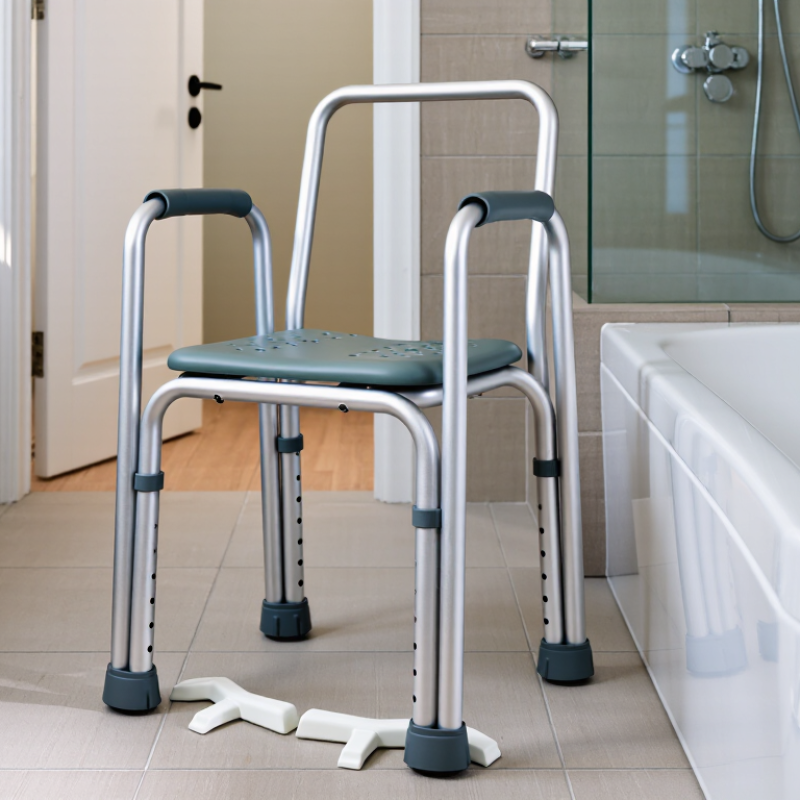
Reliable selection begins with the user’s mobility, height, weight, and bathing routine. Check the manufacturer’s stated load capacity, adjustment range, frame finish, and warranty terms. Aluminium resists rust, but fittings, screws, and joints still deserve close inspection. Look for broad rubber feet, drainage openings, rounded edges, and secure armrests where needed. A seat that feels steady on a dry floor may shift on wet tiles. That practical test is easy to overlook.

If possible, ask a physiotherapist, occupational therapist, or experienced bathroom retailer for a fit assessment. Their guidance can reveal transfer risks that specifications cannot show. Still, professional advice does not replace reading the manual. Even careful buyers can miss a detail. The following tips balance comfort, safety, maintenance, and value. No single chair suits every bathroom or user. That is the part worth remembering.

7 Tips for Buying an Aluminium Bath Chair?

Define Your Bathing Needs and Safety Requirements

Before buying an aluminium bath chair, define how and where it will be used. Measure the bathtub, shower floor, and doorway carefully. A chair that fits the bathroom may still block safe movement. Consider whether the user needs a seat for washing, support during transfers, or both. Check body weight, balance, leg strength, and available hand support. A healthcare professional can help assess risks when mobility is limited.

Tip: Look for adjustable legs, wide rubber feet, and a stable frame. Aluminium resists rust, but it does not guarantee stability. Test whether the chair remains firm when gentle pressure is applied from different directions. The seat should feel comfortable without trapping water. Drainage holes can reduce slipping, although they do not replace careful supervision. I once underestimated the importance of seat height. That mistake made standing harder than expected.

Tip: Match the chair to the user’s daily routine. A rotating or transfer-friendly design may help someone who struggles to step over the tub wall. A simpler seat may be better for independent users with good balance. Check assembly instructions and inspect screws, joints, and rubber tips regularly. Small faults matter. Ask whether the user can reach the controls, soap, and towel without twisting. Keep essential items nearby, but never overcrowd the bathing area. A chair should support safer bathing, not create another obstacle.

Check Frame Strength, Weight Capacity, and Aluminium Quality

Tip 1: Check frame strength before comfort features. The World Health Organization reports about 684,000 fatal falls globally each year. Older adults face the highest risk. A weak bath chair can turn a routine transfer into a serious accident. Look for reinforced joints, clean welds, stable legs, and wide, non-slip feet. Sit gently and test for movement. Do not assume “heavy-duty” means safe.

Tip 2: Match the weight capacity carefully. The listed limit should exceed the user’s body weight, clothing, and bathing equipment. The CDC reports that more than 3 million older adults receive emergency treatment for fall injuries annually in the United States. That figure makes capacity checks practical, not cosmetic. Ask whether testing covered static loads and repeated use. I would prefer documented test results, although paperwork alone cannot replace a physical inspection.

Tip 3: Examine aluminium quality and corrosion protection. Look for clear alloy information, consistent tubing thickness, sealed ends, and smooth surfaces without sharp burrs. Marine-grade claims can sound impressive but may lack useful evidence. An independent test report is more convincing. Check fasteners too; stainless steel parts usually resist bathroom moisture better than ordinary steel. After several weeks, inspect hidden joints again. Small white oxidation marks may be harmless, but loose fittings are not.

Choose the Right Chair Size, Height, and Seat Design

7 Tips for Buying an Aluminium Bath Chair

Choosing the right size matters more than a shiny aluminium frame. The World Health Organization reports that falls are the second leading cause of unintentional injury deaths worldwide. A bath chair cannot prevent every fall, but correct fit can reduce unstable movement. Measure the user’s hip width first. The seat should allow slight clearance without forcing the user to lean sideways. A wider seat is not always safer.

Check the seat height carefully. When seated, the user’s feet should rest flat, with knees close to a right angle. Adjustable legs help compensate for uneven bathroom floors. The CDC reports that more than one in four adults aged 65 and older falls each year. Even a small height error can make standing harder. Too high feels insecure. Too low strains the knees.

Seat design deserves equal attention.

Look for drainage holes, a lightly textured surface, and rounded edges. A backrest may improve confidence, while armrests can support controlled transfers.

However, armrests can obstruct sideways movement for some users. This is easy to overlook.

Test the chair beside the actual bath or shower, not only in a showroom. Ask whether the user can sit, turn, and rise without twisting.

Recheck the screws and rubber feet regularly; aluminium resists corrosion, but fittings still loosen.

WHO fall-prevention guidance also emphasizes environmental hazards, so remove loose mats and keep essential items within reach.


Compare Drainage, Stability, Adjustability, and Comfort Features

Buying an aluminium bath chair requires more than checking its appearance. In practice, small design details affect safety, cleaning, and daily comfort.

Tip 1: Inspect drainage. Look for a perforated seat that lets water escape quickly. Standing water can make bathing unpleasant and encourage residue. Tip 2: Check stability. The chair should have wide, non-slip feet and minimal movement on wet tiles. Press each corner gently before use. Tip 3: Measure your bathroom. Confirm the chair fits inside the tub or shower area without blocking controls. I once underestimated turning space; it made transfers awkward.

Tip 4: Test adjustability. Height settings should lock firmly and suit the user’s leg length. Both feet should rest flat, not just the toes. Tip 5: Examine the aluminium frame. It should feel rigid, with smooth joints and no sharp edges. Lightweight is useful, but excessive lightness may reduce confidence. This balance is easy to misjudge. Tip 6: Assess comfort. A slightly contoured seat, supportive back, and rounded edges can reduce pressure during longer bathing. Drainage holes should not feel harsh against the skin. Tip 7: Review maintenance. Choose surfaces that wipe clean easily, and inspect screws, feet, and adjustment pins regularly. Comfort is important, but secure contact matters more.

7 Tips for Buying an Aluminium Bath Chair? Compare Drainage, Stability, Adjustability, and Comfort Features

Comparison guide for selecting an aluminium bath chair. Measurements and weight limits vary by model; always confirm the product instructions before use.
Tip Feature to Compare What to Check Practical Buying Benchmark Why It Matters
1 Drainage
Seat holes and water flow
Look for evenly distributed drainage holes or slots, smooth edges, and a surface that does not retain puddles. Choose a seat with open drainage across the main sitting area and no blocked channels or deep recesses. Efficient drainage helps reduce standing water, soap residue, and slippery conditions during bathing.
2 Stability
Frame, feet, and load support
Inspect the frame joints, leg locks, rubber ferrules, and the contact area of all four feet. Test the chair on a level, wet surface. The chair should remain level without rocking, and its stated maximum user weight should exceed the user’s weight with a sensible safety margin. A rigid frame and secure, non-slip feet help limit movement when sitting down, standing up, or shifting position.
3 Adjustability
Seat height and leg settings
Compare the adjustment range, number of height positions, pin or button security, and whether settings can be changed without tools. Select a height that allows the user’s feet to rest flat on the floor while the knees remain comfortable and the user can transfer safely. Correct height improves balance and reduces excessive bending or strain during transfers.
4 Comfort
Seat shape and surface
Check the seat width, depth, rounded edges, back support, and whether the surface stays comfortable when wet. The seat should support the user without pressure at the thighs and provide enough room for small posture changes. A suitable seat promotes better posture and makes longer bathing sessions less tiring.
5 Aluminium Quality
Corrosion resistance and finish
Look for corrosion-resistant aluminium tubing, sealed or protected joints, smooth welds, and hardware suitable for humid environments. Avoid sharp edges, exposed rust-prone steel parts, flaking coatings, or hollow sections that can trap water. Bathrooms are consistently damp; suitable materials and finishes can help extend service life and maintain structural integrity.
6 Fit and Access
Bathroom and user dimensions
Measure the shower floor, bathtub width, doorway, and available turning space. Compare these measurements with the chair’s overall width and depth. Leave enough clearance for the user’s legs, carers, shower controls, and safe transfers without the chair touching walls or fixtures. A chair that fits poorly can obstruct movement, restrict access to controls, or become difficult to position safely.
7 Maintenance and Safety
Cleaning, assembly, and inspection
Review cleaning instructions, assembly requirements, replacement-foot availability, fastener security, and the condition of the rubber tips. Prefer a design with easy-to-clean surfaces, accessible drainage, clear adjustment markings, and no loose or damaged components. Regular cleaning and inspection help prevent residue buildup, loosened parts, and loss of grip over time.
Safety note: Use the bath chair only on a stable, level surface and follow the manufacturer’s assembly, weight-limit, and maintenance instructions. Seek professional advice if the user needs assisted transfers or has significant balance difficulties.

Review Maintenance Needs, Warranty Coverage, and Overall Value

7 Tips for Buying an Aluminium Bath Chair
Tip 1: Inspect the frame closely.

Aluminium resists rust, but joints can still loosen or show white oxidation.

Tip 2: Check the seat surface and drainage holes.

Water should not collect beneath the user.

Tip 3: Ask how often screws, rubber feet, and moving parts need inspection.

I once ignored a loose adjustment knob, and the chair became noticeably unstable. That mistake was avoidable.

Tip 4: Read the warranty in detail.

Confirm whether it covers the frame, welds, seat, fittings, and replacement parts. Some warranties exclude damage caused by harsh cleaners, poor storage, or excessive weight.

Tip 5: Check the return policy, especially if the chair feels uncomfortable after several uses.

Keep the receipt and product information. Small details matter.

Tip 6: Compare overall value, not only the purchase price.

A chair with adjustable legs, non-slip feet, and replaceable components may cost more initially. It can reduce future expenses.

Tip 7: Consider daily maintenance.

Rinse away soap after bathing, wipe the frame dry, and inspect the rubber feet weekly. Avoid abrasive products, which may damage finishes or irritate skin. A lightweight chair is convenient, but excessive lightness can reduce stability. I would reconsider any model that feels flexible when pressed.

Powder Coat Booths

For those larger-sized parts, or smaller quantity runs, we have 2 independent powder coat booths and ovens. The quality, durability and affordability of today’s powder coating finishes make this the process of choice for world-class companies.

Powder coating advantages over other forms of coating are many. Materials used in the Powder coating process can be metals and non-metals that come in a multitude of thicknesses, textures, colors, etc. Another of Powder coating’s biggest advantages over conventional coatings is its ability to create finishes in many different textures. Powder Coating Booths allow us the ability to apply these advantages to large products.

Wet Paint Line

Tri-State Fabricators runs a full-service conveyor line for painting. Wet painting can provide protection or decoration to many different part styles. From start to finish, every project is easier to undergo random and point-based inspection by our skilled painting team.

Advantages to our Wet Paint Line are these lines start with product prep and ends with a thorough inspection of a high quality finished product. Our ability to complete large and small projects with a superior finish and doing so in a timely and economical fashion. This passes along the savings in production to our customers. When powder coating ins not an option, our Wet Paint Line gets the job done right the first time.

Wet Paint Booths

When the parts get big and heavy we roll-out our custom paint racks and oversize booth. By utilizing our partnerships with all the major paint brands, we can match virtually any color with wet paint.

The advantages of having access to a Wet Paint Booth are many. Large projects of many different shapes can be loaded into the booth. The Wet Paint Booth offers an environment that is much more controlled than a typical parts painting operation.

Not only are they used because of their controlled environment, but they’re are also advantageous when it comes to applying paint to parts that are needed in industries that require specialty coatings such as medical, aerospace, etc.

Military CARC

Our military forces have some very high standards when it comes to the finish of their vehicles and equipment. From the first pre-treatment step to final coat, it takes a great deal of knowledge and experience to protect the men and women of our armed forces. They deserve only the best, and Tri-State Fabricators provides it.

All of our processes are closely monitored by our staff and management teams. Both of which are highly trained in the processes of metal fabrication and finishing. Tri-State Fabricators’ goal is to always fully satisfy each and every customer, including the military. We will always put a 110% into what we do.

Glass-Bead Blasting

Abrasive media blasting is an excellent way to remove old paint, rust, and increase the paint/powder adhesion. Glass beads produce a much smoother and brighter finish than angular abrasives; leaving the part clean yet without any dimensional change. Chemically inert and environmentally friendly, we can recycle our beads approximately 30 times; making them a more preferred method of metal cleaning or surface finishing.

Advantages to Glass Bead Blasting are many. Glass bead blast media is used when a project is needing rough surfaces need to become smooth for applications of coatings such as paint. It is typically used to clean paint and rust from a product surface without deforming the surface it is being used on. Overall, compared to many other blasting media, Glass Bead Blasting is a very economical choice and those savings are always passed on to our customers.

Part Washing

Tri-State Fabricators utilize a zinc phosphate wash to clean and etch the material to ensure the best paint adhesion possible. The unique design of our 3-stage wash system does the work like a 5-stage. From Cleaning and rinsing to conversion coating and post-treatment, Our Part Washing process is a complete service and works throughout the fabrication service and the finishing service.

Along with the previously mentioned benefits, Curing is a vital chemical reaction that leaves the product finish hard and relatively safe from mild abrasion and aggressive corrosion. This process can be done in more than one way; ambient air-dry or in curing ovens at temps that exceed 240°.

Burn-Off Oven

From fixing paint mistakes (someone else’s of course) to simply cleaning our paint line hooks, our burn-off oven is put to good use. After a quick burn-off, a little clean up, and a fresh coat of paint, your parts will look better than new.

Why does our Burn-Off Oven work so well? Because super heating the air around parts turns the materials into ashes. From paint and powder coatings to rubber and machining oils, high temps do the job without degrading the integrity of the part.

Masking

Masking is a vital part of producing high quality products. We have die-cut masking patterns to protect machined surfaces as well as a wide range of plugs and caps to protect threaded holes and bolts. We provide permanent and temporary masking.

Masking allows the selected sections of a product to be protected from a fabrication or finishing service. This can be with both chemicals when etching and tapes, paints when only finishing just a section of the product. Masking is great in aiding the customization process of a project.

Screen Printing

Screen printing is a photographic process that transfers artwork onto a porous nylon screen which allows colored ink to flow through the screen and be deposited on an aluminum or plastic component. We can generally have just about any design created onto a screen for your parts.

Some of the advantages of Screen Printing are, brand recognition for your business displaying on your products, assembly instructions, product warnings/hazards, etc. Tri-State Fabricators produces Screen Printing of the highest quality so you know it’s durable.

Metal Finishing

Metal Finishing is the art of treating the exterior portion of product, often metal but can also be made of other materials, so that the surface is clean and free of any debris. Then the process of applying coats or either paint of powder coat takes place. This coating process improves the quality of the product in both appearance and resistance to wear and corrosion.

Tri-State Fabricators, Inc., understands that a project typically isn’t complete until a high-quality finish has been added to your product. This is why our painting and powder coating teams continuously inspect the products throughout the Metal Finishing process.
