


A Handheld Portable Uv Lamp can look reassuring on a product page: a compact body, a bright indicator, and bold claims about cleaning. But appearance is not proof. The important questions are less visible: What wavelength does it emit? What dose reaches the target? How long must the lamp stay in one position? Small details matter.
Industry data needs careful reading, too. Grand View Research’s UV Disinfection Equipment Market report tracks a broad category, not a verified performance ranking of handheld lamps. Its market figures cannot tell you whether one pocket-sized model works better than another. The U.S. Food and Drug Administration warns that UV-C exposure can injure eyes and skin. Treat safety instructions as essential, not fine print. Never point a lamp at people or use it contrary to its manual.
Expert context helps. Columbia University radiologist David J. Brenner studies ultraviolet disinfection. A fair paraphrase of his research is: “UV effectiveness depends on the wavelength and the delivered dose.” That is not a product endorsement. It is a useful buying test. Look for independent test details, clear operating distances, timed exposure guidance, and credible safety controls. A vague “kills germs” label is not enough. Check the evidence.
The best choice may not be the cheapest—or the most powerful-sounding. Compare specifications with the surfaces and routine you actually have in mind. Then pause over one uncomfortable question: can you verify the claims? If not, keep looking.
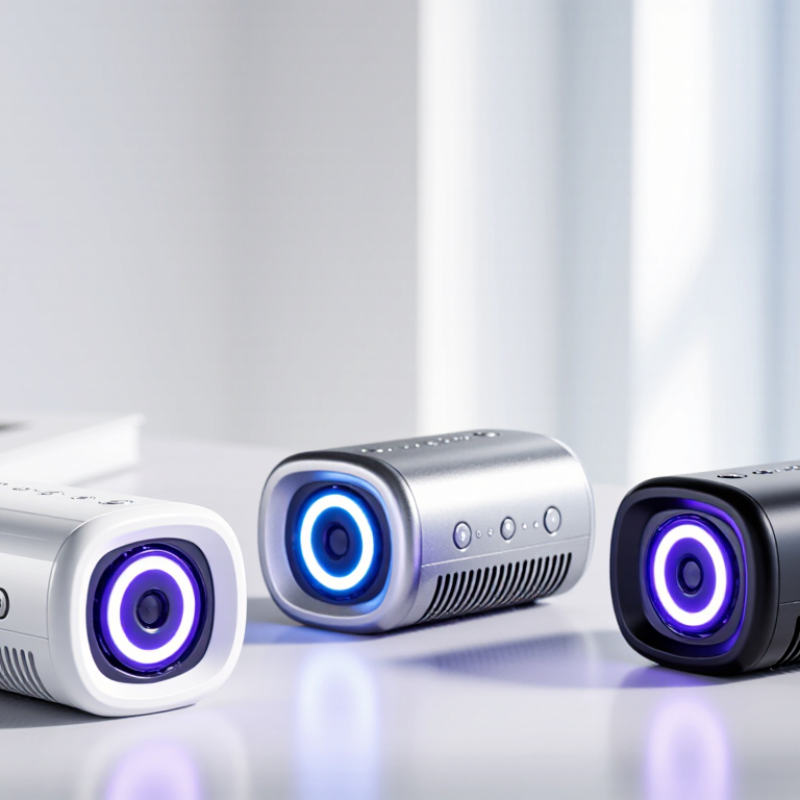
A handheld UV lamp is not one universal tool. UVA models, typically around 315–400 nanometers, can reveal fluorescent marks or support compatible resin curing. UVB lamps serve more specialized purposes and require careful handling. UVC lamps are designed for controlled disinfection applications, but exposure can injure eyes and skin. The violet glow alone does not identify a lamp’s wavelength or effectiveness. Check the specifications.
Tips: Match the wavelength to the task, then check the lamp’s stated output. For inspection, test it on a small sample first; some materials fluoresce weakly or not at all. For curing, confirm that your resin responds to that wavelength. For disinfection, follow the device instructions and keep people and pets away from direct exposure. Small details matter.
Look for clear information about wavelength, beam area, operating time, and any required protective measures. A bright lamp is not automatically a suitable one; distance and exposure time can affect results. I would be cautious about vague claims that a lamp “works on everything.” They rarely explain what that means. If the intended task is unclear, compare the lamp’s specifications with guidance from the material or equipment manufacturer before buying. A compact body is convenient, but a secure switch and a stable grip matter when aiming at a small surface.

UV lamp categories are defined by wavelength. Compare their typical wavelength bands before choosing a handheld lamp.
How to use this chart: UVA lamps are commonly used for fluorescence inspection and UV-A-reactive curing; UVB devices are used for specific phototherapy under medical guidance; and UVC devices are designed for disinfection applications. Wavelength alone does not guarantee effectiveness. UVB and UVC can injure eyes and skin, so follow the device instructions and required safety precautions.
A handheld UV lamp is only useful when its wavelength matches the intended task. UV-A and UV-C are not interchangeable. For surface-treatment claims, check the exact wavelength in nanometers and the manufacturer’s test data. A stated wavelength alone does not prove effectiveness. Small details matter.
Tip: Compare output at a stated distance, not just a headline power figure. Irradiance often falls as the lamp moves farther from a surface, so a reading taken close up may not reflect real use. Look for test conditions, exposure time, and coverage measurements. If those details are missing, comparisons become guesswork.
Effective coverage depends on beam shape, distance, and how evenly the light reaches a surface. A narrow beam may need several overlapping passes across a countertop. Shadows and textured surfaces can leave areas unexposed; UV light does not reliably reach behind objects. Distance changes everything. Check the operating instructions, keep exposure away from eyes and skin, and use only products with clear safety guidance. I would still treat broad coverage claims cautiously unless independent test details support them.
| Buying Tip | What to Compare | Useful Facts | Practical Buying Check |
|---|---|---|---|
| 1. Match the wavelength to the task | Check the specified peak wavelength in nanometers (nm), not just a label such as “UV light.” | UVA is approximately 315–400 nm; UVB is 280–315 nm; UVC is 100–280 nm. UVA lamps are commonly used for fluorescence and inspection. Germicidal UV applications use UVC, but effectiveness depends on dose and conditions. | Choose a wavelength suited to the intended application. Do not assume a UVA inspection lamp disinfects surfaces. |
| 2. Compare output using the right unit | Look for optical output in milliwatts (mW) and, when available, irradiance in milliwatts per square centimeter (mW/cm²) at a stated distance. | Optical power describes emitted energy; irradiance describes power received per area. Irradiance changes with distance and beam shape, so output figures without test conditions are difficult to compare. | Compare irradiance readings taken at the same distance and under similar measurement conditions. |
| 3. Check the effective coverage | Review beam angle, illuminated spot size, and the distance at which the coverage is specified. | A wider beam covers a larger area at the same distance but generally spreads the available light over more area. For an idealized beam, spot diameter increases with distance; real beam edges and reflector designs vary. | Look for a coverage diagram or measured spot diameter at a stated working distance rather than relying on “wide beam” claims. |
| 4. Evaluate useful performance at your working distance | Compare measured irradiance or visibility at the distance you will actually use the lamp. | Moving a lamp farther from a target usually reduces irradiance. In an ideal point-source model, it falls approximately with the square of distance, though close-range optics and beam design can change the result. | For inspection, check that the target remains clearly visible at your normal distance and under your usual ambient lighting. |
| 5. Consider runtime and power options | Check battery type, stated runtime, charging method, and whether performance changes as the battery discharges. | Runtime depends on battery capacity, lamp power, operating mode, and battery condition. A runtime figure is most useful when the maker states the mode and test conditions. | Choose a rechargeable or replaceable-battery design that suits your usage, and check whether charging can occur safely away from wet work areas. |
| 6. Prioritize UV-specific safety features | Check for wavelength and hazard information, a protective lens or shield where appropriate, and clear operating instructions. | UV exposure can injure eyes and skin. UVC is particularly hazardous to unprotected eyes and skin; some UV sources may also create other hazards depending on their design and wavelength. | Never look directly into a UV source or expose skin unnecessarily. Follow the product instructions and use suitable protective measures for the specified wavelength. |
| 7. Verify specifications and intended use | Look for a clearly stated wavelength, output measurement conditions, beam information, and the product’s intended application. | UV performance is application-specific. Disinfection, for example, depends on delivered dose, exposure time, distance, shadows, and the target surface; a lamp’s wavelength alone does not establish effectiveness. | For any regulated or safety-critical use, verify the specifications and applicable requirements independently instead of relying on broad performance claims. |
A handheld UV lamp should have safety controls that work without relying on perfect user attention. Look for a shielded design, a timed shutoff, and a switch that prevents accidental activation in a bag. A clear warning label matters. So does a manual explaining the lamp’s wavelength and intended use. Vague claims such as “kills everything” are a reason to pause.
Check whether the device reduces exposure when tilted toward the user or lifted from a surface. Some models include a motion sensor or contact guard, but these features are not a substitute for careful handling. Keep UV light away from eyes and uncovered skin, and never point the lamp at people or pets. Not a small detail. If the instructions are confusing, I would treat that as a real drawback, not a minor inconvenience.
Use the lamp only on suitable, exposed surfaces, following its stated distance and exposure time. Shadows, dust, and textured materials can limit how much light reaches a surface. UV treatment also does not remove grime, so ordinary cleaning may still be needed. Check for credible test information, not just impressive packaging. And remember: a safety feature can fail, or be bypassed by habit. Store the lamp where children cannot turn it on.
A handheld UV lamp should feel easy to carry without becoming awkward to use. Check its weight, grip, and overall length, especially if you plan to hold it for several minutes. A textured handle can help when your hands are damp, while a protective cap keeps the lamp head from collecting lint in a bag. Weight matters. Look for clear product details about the lamp’s wavelength and intended use; “UV” alone does not tell you what it can reliably do. Avoid assuming that a compact lamp will cover a large area quickly.
Battery life is more useful when the rating reflects actual operating time, not just standby time. Check whether the battery is replaceable or rechargeable, how long charging takes, and whether the charge indicator is easy to read. A low-battery light is a small detail, but it can prevent an interrupted task. Build quality deserves a close look, too: inspect the charging port, switch, seams, and any moving parts for a firm, even fit. A glossy finish can look sturdy without being durable. I’d rather have a plain casing that feels solid than a clever shape with a loose switch. Follow the manufacturer’s safety instructions, and never shine UV light toward eyes or exposed skin.
A useful handheld UV lamp should come with clear, relevant test results, not just a polished box. Check the stated wavelength, measured output, and testing distance; performance can change noticeably across a few centimeters. Look for independent test documentation that names the method and conditions. A vague “lab tested” claim tells you little. Ask whether runtime was measured with the supplied battery, since brightness may fall as charge drops. Small details matter.
Tip: Compare the test sheet with the product manual. Check for an automatic shutoff or other safety controls, and follow the maker’s instructions to avoid exposing eyes or skin. Never assume a UV lamp makes every surface safe; results depend on distance, exposure time, and surface shape.
Warranty and overall value deserve equal attention. Read what the warranty covers, how long it lasts, and whether the battery or charger is excluded. Keep the receipt and test the lamp soon after delivery. A longer warranty is useful only if the claim process is clear. Compare replacement battery costs, charging time, and included accessories, not just the checkout price. I’ve seen buyers focus on a low price, then overlook a short return window. That is easy to miss. Choose the lamp whose documented performance, practical support, and expected upkeep fit your actual use.


For those larger-sized parts, or smaller quantity runs, we have 2 independent powder coat booths and ovens. The quality, durability and affordability of today’s powder coating finishes make this the process of choice for world-class companies.
Powder coating advantages over other forms of coating are many. Materials used in the Powder coating process can be metals and non-metals that come in a multitude of thicknesses, textures, colors, etc. Another of Powder coating’s biggest advantages over conventional coatings is its ability to create finishes in many different textures. Powder Coating Booths allow us the ability to apply these advantages to large products.
Tri-State Fabricators runs a full-service conveyor line for painting. Wet painting can provide protection or decoration to many different part styles. From start to finish, every project is easier to undergo random and point-based inspection by our skilled painting team.
Advantages to our Wet Paint Line are these lines start with product prep and ends with a thorough inspection of a high quality finished product. Our ability to complete large and small projects with a superior finish and doing so in a timely and economical fashion. This passes along the savings in production to our customers. When powder coating ins not an option, our Wet Paint Line gets the job done right the first time.
When the parts get big and heavy we roll-out our custom paint racks and oversize booth. By utilizing our partnerships with all the major paint brands, we can match virtually any color with wet paint.
The advantages of having access to a Wet Paint Booth are many. Large projects of many different shapes can be loaded into the booth. The Wet Paint Booth offers an environment that is much more controlled than a typical parts painting operation.
Not only are they used because of their controlled environment, but they’re are also advantageous when it comes to applying paint to parts that are needed in industries that require specialty coatings such as medical, aerospace, etc.
Our military forces have some very high standards when it comes to the finish of their vehicles and equipment. From the first pre-treatment step to final coat, it takes a great deal of knowledge and experience to protect the men and women of our armed forces. They deserve only the best, and Tri-State Fabricators provides it.
All of our processes are closely monitored by our staff and management teams. Both of which are highly trained in the processes of metal fabrication and finishing. Tri-State Fabricators’ goal is to always fully satisfy each and every customer, including the military. We will always put a 110% into what we do.
Abrasive media blasting is an excellent way to remove old paint, rust, and increase the paint/powder adhesion. Glass beads produce a much smoother and brighter finish than angular abrasives; leaving the part clean yet without any dimensional change. Chemically inert and environmentally friendly, we can recycle our beads approximately 30 times; making them a more preferred method of metal cleaning or surface finishing.
Advantages to Glass Bead Blasting are many. Glass bead blast media is used when a project is needing rough surfaces need to become smooth for applications of coatings such as paint. It is typically used to clean paint and rust from a product surface without deforming the surface it is being used on. Overall, compared to many other blasting media, Glass Bead Blasting is a very economical choice and those savings are always passed on to our customers.
Tri-State Fabricators utilize a zinc phosphate wash to clean and etch the material to ensure the best paint adhesion possible. The unique design of our 3-stage wash system does the work like a 5-stage. From Cleaning and rinsing to conversion coating and post-treatment, Our Part Washing process is a complete service and works throughout the fabrication service and the finishing service.
Along with the previously mentioned benefits, Curing is a vital chemical reaction that leaves the product finish hard and relatively safe from mild abrasion and aggressive corrosion. This process can be done in more than one way; ambient air-dry or in curing ovens at temps that exceed 240°.
From fixing paint mistakes (someone else’s of course) to simply cleaning our paint line hooks, our burn-off oven is put to good use. After a quick burn-off, a little clean up, and a fresh coat of paint, your parts will look better than new.
Why does our Burn-Off Oven work so well? Because super heating the air around parts turns the materials into ashes. From paint and powder coatings to rubber and machining oils, high temps do the job without degrading the integrity of the part.
Masking is a vital part of producing high quality products. We have die-cut masking patterns to protect machined surfaces as well as a wide range of plugs and caps to protect threaded holes and bolts. We provide permanent and temporary masking.
Masking allows the selected sections of a product to be protected from a fabrication or finishing service. This can be with both chemicals when etching and tapes, paints when only finishing just a section of the product. Masking is great in aiding the customization process of a project.
Screen printing is a photographic process that transfers artwork onto a porous nylon screen which allows colored ink to flow through the screen and be deposited on an aluminum or plastic component. We can generally have just about any design created onto a screen for your parts.
Some of the advantages of Screen Printing are, brand recognition for your business displaying on your products, assembly instructions, product warnings/hazards, etc. Tri-State Fabricators produces Screen Printing of the highest quality so you know it’s durable.
Metal Finishing is the art of treating the exterior portion of product, often metal but can also be made of other materials, so that the surface is clean and free of any debris. Then the process of applying coats or either paint of powder coat takes place. This coating process improves the quality of the product in both appearance and resistance to wear and corrosion.
Tri-State Fabricators, Inc., understands that a project typically isn’t complete until a high-quality finish has been added to your product. This is why our painting and powder coating teams continuously inspect the products throughout the Metal Finishing process.

