10 Tips for Choosing a CNC Fiber Laser Cutting Machine

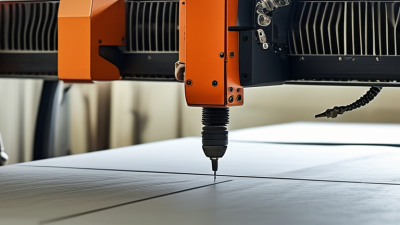
Choosing a cnc fiber laser cutting machine is not simply a matter of selecting the highest wattage. The right model must match your materials, production volume, workshop space, and operators’ skills. A small metal shop may need a 1,500 × 3,000 mm cutting bed, while a manufacturer handling thick plate may require greater power and stronger motion components. The numbers matter.

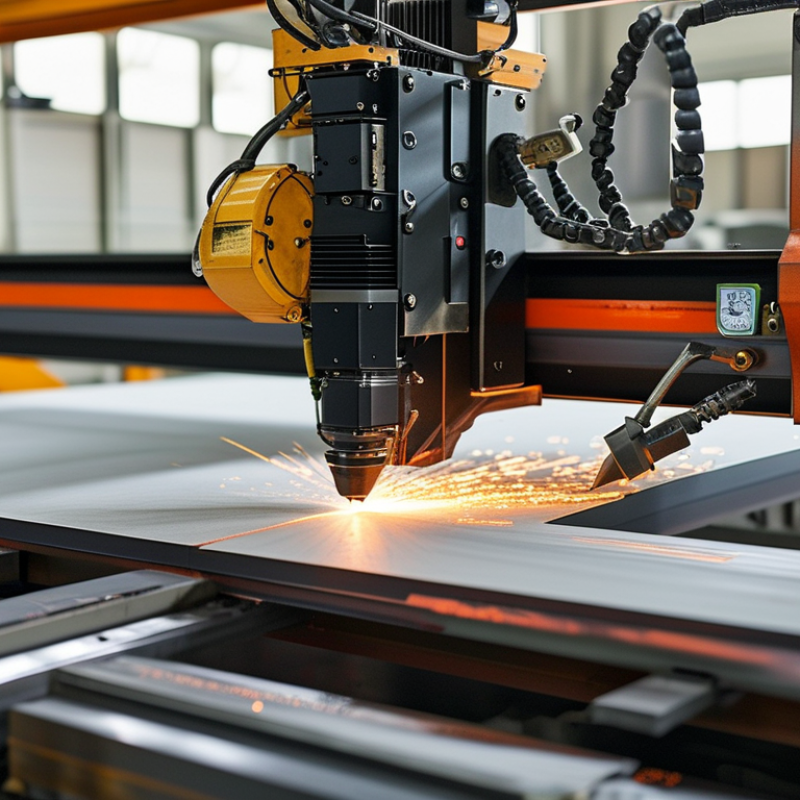
Practical experience shows that cutting speed is only one part of performance. Edge quality, pierce time, kerf consistency, energy use, and software stability affect daily output. Examine the laser source, cutting head, drive system, control software, and assist-gas requirements. Ask suppliers for test cuts using your actual stainless steel, carbon steel, or aluminum samples. A polished demonstration may hide difficult details.

Support can determine whether the machine earns money or sits idle. Check installation training, spare-part availability, response times, warranty terms, and service coverage. Reliable suppliers should explain maintenance schedules clearly, including lens cleaning and nozzle inspection. Independent certifications and documented safety features also deserve attention. Still, no machine is perfect. I have seen buyers focus on power and overlook ventilation, operator training, or floor strength. That mistake becomes expensive later. These ten practical tips will help you compare specifications carefully, question impressive claims, and choose equipment that remains dependable after the showroom lights fade.
10 Tips for Choosing a CNC Fiber Laser Cutting Machine

Classify Materials and Thicknesses for 1.06 μm Fiber-Laser Cutting

Choosing a CNC fiber laser starts with material classification, not advertised wattage. A 1.06 μm wavelength cuts carbon steel, stainless steel, and aluminum efficiently. Copper and brass require greater caution because they reflect more infrared energy and conduct heat rapidly. NIST thermal data lists copper near 401 W/m·K, aluminum near 237, and stainless steel near 16. Heat behaves very differently.

World Steel Association data reports about 1.89 billion tonnes of crude steel production in 2023. Steel remains a major cutting workload. For carbon steel, build a thickness chart around your real orders, such as 1–6 mm sheet, 8–16 mm plate, and occasional thicker sections. Stainless steel often needs cleaner gas control and careful focus positioning. Aluminum may demand higher power, faster piercing, and stronger fume extraction. Copper is less forgiving. Start with thin gauges and verified cutting tables.

Do not treat one chart as universal. A 6 kW source may cut a nominal 25 mm plate, yet edge quality can decline with scale, rust, poor flatness, or worn optics. Results also depend on nitrogen purity, nozzle alignment, focal offset, and assist-gas pressure. The International Organization for Standardization’s ISO 11553-1 emphasizes guarding and risk controls for laser processing equipment. Test samples should represent the actual alloy, thickness, and batch. My practical mistake was trusting maximum thickness before checking piercing time. That assumption wasted material. A better selection compares daily thickness distribution, required kerf quality, and realistic production speed.

10 Tips for Choosing a CNC Fiber Laser Cutting Machine

Classify Materials and Thicknesses for 1.06 μm Fiber-Laser Cutting

The chart shows typical upper working thicknesses used for preliminary machine selection with a 6 kW, 1.06 μm fiber-laser system. Actual results depend on laser power, cutting speed, assist gas, nozzle selection, material grade, surface condition, and required edge quality. Use these values as planning references rather than guaranteed capacities.

Match Laser Power to Production Needs from 1 kW to 30 kW

10 Tips for Choosing a CNC Fiber Laser Cutting Machine

Choosing laser power should begin with your production data, not a sales brochure. The 2024 World Steel Association outlook estimated global steel demand at about 1.75 billion tonnes, yet local workloads vary sharply. A workshop cutting 1–6 mm mild steel may perform efficiently with 1–3 kW. A 6–16 mm job mix often suits 6–12 kW, while 20–30 kW systems target thick plate, high throughput, and fewer machine-hours.

More power is not automatically better. It can raise electricity demand, assist-gas consumption, extraction requirements, and maintenance complexity. MarketsandMarkets’ 2023 Laser Processing Market report valued the sector at approximately USD 7.3 billion and projected about 10.8% annual growth through 2028. That growth encourages aggressive upgrades. Still, buying 30 kW for occasional thick plate can leave expensive capacity idle.

Measure your actual cutting log for three months. Record thickness, material, meters cut, pierce counts, and daily utilization. Then compare cycle-time savings against energy and consumable costs. A 12 kW source may beat a 20 kW source when most orders involve thin stainless steel and frequent setup changes. Test samples with your real nozzles and gas pressures. Cutting charts are useful, but they are not promises. One overlooked factor can hurt.

Compare Cutting Accuracy, Speed, and Positioning Within ±0.05 mm

Choosing a CNC fiber laser cutting machine starts with the ±0.05 mm claim. It sounds precise, but positioning accuracy is not cutting accuracy. Ask for test results under ISO 230-2:2014, which defines methods for checking axis positioning performance. Review accuracy, repeatability, backlash, acceleration, and thermal drift. A machine may reach ±0.05 mm in a controlled test, yet produce different results after several hours of cutting. That detail matters.

Speed must be judged beside material thickness and edge quality. A catalog may show high speed on thin steel, but production often includes stainless steel, aluminum, and thicker plates. Request cutting samples at your real settings. Record cycle time, kerf width, dross, and corner quality. Check positioning after repeated moves, not only during the first test. NIST measurement guidance also stresses that uncertainty should accompany any reported measurement, rather than being hidden behind one impressive number. Precision needs evidence.

My first comparison focused too heavily on maximum speed. That was a mistake. I now examine laser power stability, beam alignment, gas control, table rigidity, and software compensation. Review maintenance records and service response data. Ask whether ±0.05 mm applies across the full working area. It may not. Industry test procedures such as ISO 230-2 improve comparability, but they cannot replace your own material trials. Leave a small margin for temperature, vibration, and operator habits. Real factories are rarely perfect.

Evaluate Energy Use Through Typical 25–35% Wall-Plug Efficiency

When choosing a CNC fiber laser cutting machine, do not judge energy use from laser power alone. Wall-plug efficiency measures how much electrical power becomes useful laser output. A typical range is 25–35%, although the figure changes with power level, duty cycle, cooling, and operating conditions.

For example, a 3 kW laser source may require roughly 8.6–12 kW at the wall before adding the chiller, motion system, control cabinet, and exhaust equipment. That difference becomes visible on the electricity meter. Measure it yourself. Record total input power while cutting a representative steel part, including pierces, acceleration, idle time, and gas changes. Then calculate kilowatt-hours per finished part, not just kilowatts during a continuous cut. That number matters.

Ask the supplier for test conditions behind the efficiency claim. Material thickness, cutting speed, output power, and cooling temperature should be stated clearly. A laboratory value may look impressive but fail to represent a busy workshop. I have found that short production trials often reveal unexpected auxiliary loads. Sometimes the chiller consumes more than expected. This is easy to overlook.

Compare machines using the same material, thickness, and daily production volume. A slightly higher purchase price may be reasonable if lower electrical demand reduces operating costs over several years. Still, efficiency is not the only measure. Poor uptime, unstable cutting, or excessive maintenance can waste more energy than a small difference in wall-plug performance. Use measured data, question vague specifications, and leave room for real-world variation.

Verify Automation, Safety Standards, Maintenance, and Service Support

Tip 1: Verify the machine’s automation before comparing cutting speed. Ask for a live demonstration of loading, positioning, nozzle changes, and error recovery. Automatic features should reduce repetitive work, not create new setup problems. Check whether sensors detect sheet movement and whether operators can override faults safely.

Tip 2: Safety standards deserve more than a certificate photo. Request documentation for enclosure design, emergency stops, laser shielding, electrical protection, and interlock testing. Inspect the control panel during a demonstration. A warning label is not enough. Safety depends on daily behavior, clear procedures, and practical operator training.

Tip 3: Study maintenance requirements with real production conditions in mind. Ask how often lenses, filters, cooling systems, and cutting heads need inspection. Confirm the required tools and technician skills. Some suppliers describe maintenance too optimistically. That can become expensive.

Tip 4: Service support should be measurable. Check response times, spare-part availability, remote diagnostics, installation assistance, and training coverage. Request references from comparable workshops, not only large factories. A detailed service agreement is more reliable than friendly promises.

Tip 5: Test ordinary material, not only perfect samples. Examine edge quality, piercing consistency, smoke removal, and restart performance. Record results. Small weaknesses often appear after several hours of operation, when demonstrations are over. Ask who handles software updates and troubleshooting. Their answer reveals technical maturity.

10 Tips for Choosing a CNC Fiber Laser Cutting Machine - Verify Automation, Safety Standards, Maintenance, and Service Support
No. Selection Dimension What to Verify Practical Evaluation Criteria Reliable Evidence or Test Priority
1 Material and Thickness Range Confirm the machine is designed for the metals and thicknesses used in production, such as mild steel, stainless steel, aluminum, brass, or copper. Request cutting samples using the actual grades and thicknesses. Cutting capability depends on laser power, material reflectivity, assist gas, nozzle selection, and process settings. Review documented sample results, edge quality, kerf consistency, dross level, piercing time, and repeatability rather than relying only on a maximum thickness claim. High
2 Laser Power and Cutting Performance Match rated laser power to the required production mix instead of selecting power based only on the highest advertised capacity. Evaluate cutting speed, piercing performance, heat-affected areas, energy consumption, and quality at the most frequently processed thicknesses. Use a controlled test with identical material, sheet condition, gas pressure, nozzle type, and cutting program. Compare finished parts against specified tolerances. High
3 Automation and Material Handling Check whether loading, unloading, pallet changing, nesting, edge finding, nozzle changing, and production monitoring can be automated to the required level. Review the number of manual handling steps, cycle time, pallet-change time, automation compatibility, and the machine’s ability to recover from interruptions. Ask for a live demonstration of automatic loading and unloading with representative sheet sizes and weights. Verify available interfaces for conveyors, storage systems, or factory software. High
4 Machine Structure and Accuracy Assess the rigidity of the frame, guideways, drive system, worktable, and positioning feedback system. Important indicators include positioning accuracy, repeatability, acceleration, vibration control, thermal stability, and long-term performance under continuous duty. Request acceptance-test results based on recognized machine-tool practices, including dimensional checks, repeatability tests, and inspection of sample parts. High
5 Safety Enclosure and Laser Protection Verify that the enclosed system, access doors, viewing windows, interlocks, emergency stops, warning indicators, and beam-path protection are properly designed. For enclosed Class 1 laser processing equipment, access to hazardous laser radiation should be prevented during normal operation. Safety functions must not be bypassed for routine production. Request the applicable laser classification information and safety documentation. Check alignment with IEC 60825-1 and applicable regional machinery and workplace-safety requirements. High
6 Electrical and Functional Safety Review electrical design, grounding, emergency-stop circuits, safety relays or controllers, door monitoring, overload protection, and fault-reset behavior. Relevant references may include IEC 60204-1 for electrical equipment of machines, ISO 12100 for risk assessment, and ISO 13849-1 for safety-related control systems, depending on the installation region. Request the risk assessment, electrical schematics, safety-circuit validation records, conformity documents, and a demonstration of emergency-stop and interlock functions. High
7 Assist Gas, Extraction, and Cooling Confirm the requirements for oxygen, nitrogen, or compressed air, including pressure, purity, flow rate, filtration, ventilation, and exhaust capacity. Gas quality and pressure affect cutting speed, oxidation, edge appearance, and operating cost. The chiller must maintain stable temperature and provide appropriate alarms. Compare the machine utility specification with the facility’s available electrical supply, gas system, extraction system, ambient temperature, and floor conditions. Medium
8 Maintenance Requirements Identify routine tasks for protective windows, nozzles, lenses, filters, lubrication points, guideways, chiller circuits, dust collection, and calibration. Prefer accessible components, clear maintenance intervals, condition monitoring, automatic lubrication where appropriate, and software alerts for consumable replacement. Obtain a preventive-maintenance schedule and total-cost estimate. Intervals should be confirmed in the equipment manual because they vary with duty cycle, material, dust, and operating environment. High
9 Control Software and Operator Training Evaluate nesting, program transfer, parameter management, alarm history, user permissions, data backup, remote diagnostics, and compatibility with existing production software. The interface should provide clear alarms, controlled access to process parameters, recovery guidance, and safe restart procedures after faults or power interruptions. Request operator and maintenance training plans, manuals in the required language, sample programs, software update procedures, and documentation for data backup and restoration. Medium
10 Service Support, Warranty, and Spare Parts Verify installation support, commissioning, response channels, remote assistance, field-service coverage, warranty exclusions, and spare-parts availability. Review guaranteed response times, escalation procedures, recommended critical spares, technician qualifications, service documentation, and expected support throughout the machine’s operating life. Obtain the service-level terms in writing and request references from comparable users without relying solely on sales statements. Confirm who is responsible for training and acceptance testing. High

Powder Coat Booths

For those larger-sized parts, or smaller quantity runs, we have 2 independent powder coat booths and ovens. The quality, durability and affordability of today’s powder coating finishes make this the process of choice for world-class companies.

Powder coating advantages over other forms of coating are many. Materials used in the Powder coating process can be metals and non-metals that come in a multitude of thicknesses, textures, colors, etc. Another of Powder coating’s biggest advantages over conventional coatings is its ability to create finishes in many different textures. Powder Coating Booths allow us the ability to apply these advantages to large products.

Wet Paint Line

Tri-State Fabricators runs a full-service conveyor line for painting. Wet painting can provide protection or decoration to many different part styles. From start to finish, every project is easier to undergo random and point-based inspection by our skilled painting team.

Advantages to our Wet Paint Line are these lines start with product prep and ends with a thorough inspection of a high quality finished product. Our ability to complete large and small projects with a superior finish and doing so in a timely and economical fashion. This passes along the savings in production to our customers. When powder coating ins not an option, our Wet Paint Line gets the job done right the first time.

Wet Paint Booths

When the parts get big and heavy we roll-out our custom paint racks and oversize booth. By utilizing our partnerships with all the major paint brands, we can match virtually any color with wet paint.

The advantages of having access to a Wet Paint Booth are many. Large projects of many different shapes can be loaded into the booth. The Wet Paint Booth offers an environment that is much more controlled than a typical parts painting operation.

Not only are they used because of their controlled environment, but they’re are also advantageous when it comes to applying paint to parts that are needed in industries that require specialty coatings such as medical, aerospace, etc.

Military CARC

Our military forces have some very high standards when it comes to the finish of their vehicles and equipment. From the first pre-treatment step to final coat, it takes a great deal of knowledge and experience to protect the men and women of our armed forces. They deserve only the best, and Tri-State Fabricators provides it.

All of our processes are closely monitored by our staff and management teams. Both of which are highly trained in the processes of metal fabrication and finishing. Tri-State Fabricators’ goal is to always fully satisfy each and every customer, including the military. We will always put a 110% into what we do.

Glass-Bead Blasting

Abrasive media blasting is an excellent way to remove old paint, rust, and increase the paint/powder adhesion. Glass beads produce a much smoother and brighter finish than angular abrasives; leaving the part clean yet without any dimensional change. Chemically inert and environmentally friendly, we can recycle our beads approximately 30 times; making them a more preferred method of metal cleaning or surface finishing.

Advantages to Glass Bead Blasting are many. Glass bead blast media is used when a project is needing rough surfaces need to become smooth for applications of coatings such as paint. It is typically used to clean paint and rust from a product surface without deforming the surface it is being used on. Overall, compared to many other blasting media, Glass Bead Blasting is a very economical choice and those savings are always passed on to our customers.

Part Washing

Tri-State Fabricators utilize a zinc phosphate wash to clean and etch the material to ensure the best paint adhesion possible. The unique design of our 3-stage wash system does the work like a 5-stage. From Cleaning and rinsing to conversion coating and post-treatment, Our Part Washing process is a complete service and works throughout the fabrication service and the finishing service.

Along with the previously mentioned benefits, Curing is a vital chemical reaction that leaves the product finish hard and relatively safe from mild abrasion and aggressive corrosion. This process can be done in more than one way; ambient air-dry or in curing ovens at temps that exceed 240°.

Burn-Off Oven

From fixing paint mistakes (someone else’s of course) to simply cleaning our paint line hooks, our burn-off oven is put to good use. After a quick burn-off, a little clean up, and a fresh coat of paint, your parts will look better than new.

Why does our Burn-Off Oven work so well? Because super heating the air around parts turns the materials into ashes. From paint and powder coatings to rubber and machining oils, high temps do the job without degrading the integrity of the part.

Masking

Masking is a vital part of producing high quality products. We have die-cut masking patterns to protect machined surfaces as well as a wide range of plugs and caps to protect threaded holes and bolts. We provide permanent and temporary masking.

Masking allows the selected sections of a product to be protected from a fabrication or finishing service. This can be with both chemicals when etching and tapes, paints when only finishing just a section of the product. Masking is great in aiding the customization process of a project.

Screen Printing

Screen printing is a photographic process that transfers artwork onto a porous nylon screen which allows colored ink to flow through the screen and be deposited on an aluminum or plastic component. We can generally have just about any design created onto a screen for your parts.

Some of the advantages of Screen Printing are, brand recognition for your business displaying on your products, assembly instructions, product warnings/hazards, etc. Tri-State Fabricators produces Screen Printing of the highest quality so you know it’s durable.

Metal Finishing

Metal Finishing is the art of treating the exterior portion of product, often metal but can also be made of other materials, so that the surface is clean and free of any debris. Then the process of applying coats or either paint of powder coat takes place. This coating process improves the quality of the product in both appearance and resistance to wear and corrosion.

Tri-State Fabricators, Inc., understands that a project typically isn’t complete until a high-quality finish has been added to your product. This is why our painting and powder coating teams continuously inspect the products throughout the Metal Finishing process.