


Choosing a reliable supplier for Ti-6Al-4V (Grade 5) Titanium Bar takes more than comparing prices. This widely used titanium alloy offers a useful balance of strength, low weight, and corrosion resistance. Buyers may need it for aerospace components, medical equipment, or demanding industrial parts. Yet material performance depends on more than the alloy name. Product form, dimensions, heat treatment, and manufacturing history can all affect suitability.
A thoughtful supplier review should examine documented quality controls, material test reports, and lot traceability. Check whether certificates match the exact bar dimensions and specification you plan to purchase. Ask about available diameters, cutting tolerances, stock levels, and realistic delivery schedules. Details matter. If machining or further processing is planned, discuss those requirements before ordering. A supplier’s technical team should answer clearly and provide records that can be independently checked. Still, even a well-presented certificate may leave questions about how consistently a supplier handles routine orders. That deserves attention. This guide explores what buyers can verify when comparing leading Ti-6Al-4V Grade 5 bar suppliers, including product range, documentation, service, and supply reliability. No single supplier will fit every project. The best choice depends on your application, required specifications, and confidence in the evidence provided.
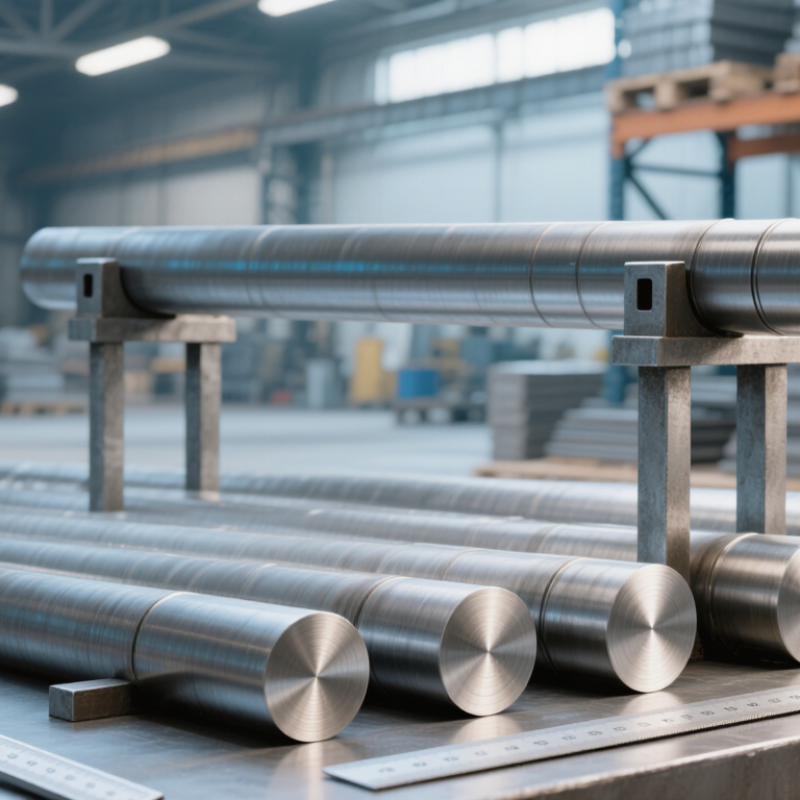
Ti-6Al-4V Grade 5 is a widely used titanium alloy, valued for its high strength and relatively low weight. It contains aluminum and vanadium, which help create a strong alpha-beta alloy. The exact properties depend on the bar’s condition, processing, and heat treatment. A grade name alone does not tell the whole story.
For engineering and purchasing teams, check the required diameter, length, surface condition, and material condition before comparing suppliers. Ask for inspection documents that identify the alloy and report relevant test results. Bar stock may be annealed or supplied in another specified condition, so confirm that it suits the part’s design and machining plan. The alloy resists corrosion in many environments, but that does not make every application suitable. It can also be challenging to machine; tooling, heat management, and cutting parameters matter. Small details count.
Tips: Match the purchase specification to the part drawing, not just a familiar grade label. Confirm dimensions and tolerances, then review traceability documents before production. For critical parts, discuss testing and acceptance requirements with a qualified materials specialist. I would not assume two bars perform identically because both are called Grade 5. Processing history can matter, and it is worth checking.

Top Ti-6Al-4V Grade 5 Titanium Bar Suppliers?
Key Criteria for Evaluating Titanium Bar Suppliers
Choosing a titanium bar supplier involves more than comparing prices. Ask for material test reports showing chemical composition and mechanical properties. Check that the documents match the bar’s heat or lot number. Traceability matters. Confirm the supplier can provide the required diameter, length, and dimensional tolerances. Surface condition deserves attention, too. Scratches, seams, or uneven finishes may affect machining and inspection. A clean sample helps, but one sample cannot prove every shipment will be consistent.
Tips: Request a sample report before ordering. Compare its lot details with the physical bar. Ask how the supplier handles nonconforming material and replacement requests.
Evaluate how clearly the supplier explains applicable specifications and testing methods. For critical applications, discuss whether additional inspection or testing is appropriate. Also check packaging and delivery practices; long bars need support to reduce bending during transit. A checklist helps, but it is not foolproof. Small differences in documentation can be easy to miss, so review the details before approving an order.
Top Ti-6Al-4V Grade 5 Titanium Bar Suppliers?
Supplier Capabilities, Certifications, and Product Range
A capable supplier should provide more than a price and a delivery estimate. For Ti-6Al-4V Grade 5 bar, ask for the material test report, heat number, dimensions, and applicable specification. These details help buyers connect the delivered bar to its documented chemistry and mechanical properties. Check the paperwork.
Certifications can offer useful evidence of a supplier’s quality processes, but they do not replace material-specific records. Confirm that certificates are current and relevant to your application. If aerospace requirements apply, ask about the supplier’s approved processes and traceability controls. A certificate alone may not answer every question. Supplier pages can look complete; sometimes, a test report still leaves a gap.
Product range also matters. Some suppliers stock round bar in common diameters, while others can source cut lengths or less typical sizes. Ask how bars are packaged, identified, and protected from handling damage. Clear answers are reassuring. Vague delivery promises are not. Compare available sizes, lead times, cutting services, and documentation before choosing. Small details matter, though requirements can differ between projects, so confirm them with your design or quality team.
Supplier evaluation guide: compare documented product capability and traceability rather than relying on supplier rankings. Requirements vary by purchase specification, product size, and condition.
| Evaluation area | Relevant facts and supplier evidence to request | Practical purchasing check |
|---|---|---|
| Material designation | Ti-6Al-4V, commonly designated Grade 5; the alloy contains aluminum and vanadium as its principal alloying elements. | Confirm the order specifies Grade 5, the governing standard, product form, and required condition. |
| Applicable product standards | ASTM B348 covers titanium and titanium-alloy bars and billets. AMS 4928 is a commonly referenced aerospace specification for Ti-6Al-4V products, including bars; verify the exact scope and revision for the order. | Ask the supplier to state the standard and revision on its quotation and material certificate. Do not assume standards are interchangeable. |
| Chemical composition | For Grade 5 under ASTM B348, typical specified limits include aluminum 5.5–6.75%, vanadium 3.5–4.5%, iron maximum 0.40%, and oxygen maximum 0.20%; the specification also limits elements such as carbon, nitrogen, and hydrogen. | Request a heat-specific chemical analysis and check every element against the applicable standard, not just the nominal alloy designation. |
| Mechanical properties | Tensile, yield, and elongation requirements depend on the applicable specification, product size, and material condition. A single generic value should not be treated as a guarantee for every bar. | Check the lot-specific test results and confirm that the test condition and specimen requirements match the purchase specification. |
| Product range | Titanium bar is commonly supplied in round form; some suppliers can source additional shapes or provide cut-to-length stock. Available diameters, lengths, and shapes depend on mill supply and inventory. | Request a current size-and-condition list, dimensional tolerances, minimum order quantity, and confirmation of whether material is stocked or made to order. |
| Material condition and processing | Grade 5 bar can be supplied in specified conditions such as annealed, depending on the governing specification and product availability. Cutting and machining services may be offered separately. | Specify the required condition, surface finish, straightness, cut length, and any processing requirements before placing the order. |
| Traceability and inspection documents | A material test report should identify the material, heat or lot, applicable specification, and test results. EN 10204 Type 3.1 is one commonly used inspection-document format when specified. | Confirm that certificates are supplied with the shipment and that heat or lot identification remains linked to the delivered bars. |
| Quality-system certifications | ISO 9001 is a general quality-management standard; AS9100 is used in the aerospace sector, and ISO 13485 is used for medical-device quality management. These certifications concern management systems and do not by themselves certify a particular bar shipment. | If certification is required, verify the current certificate, its scope, site, and validity. Separately verify product conformance and shipment documentation. |
| Grade 5 versus Grade 23 | Grade 23 is Ti-6Al-4V ELI (extra-low interstitial) and has different chemistry limits from standard Grade 5. It should not be substituted for Grade 5—or vice versa—without approval. | Check the full grade designation and interstitial-element requirements, especially for medical or other tightly controlled applications. |
| Basic material property | The commonly reported density of Ti-6Al-4V is approximately 4.43 g/cm³; actual design calculations should use the applicable engineering data and specifications. | Use the property as a reference, not as a substitute for design allowables or certified material data. |
Note: This guide summarizes common standards and procurement checks. Always verify current specification revisions and project-specific requirements before purchase.
A reliable Ti-6Al-4V Grade 5 bar should arrive with records that connect the material to its melt, not just a generic certificate. Ask for a mill test report showing heat number, product form, condition, chemistry, and mechanical results. Then match the heat number on the report to the bar tags and purchase documents. Small mismatches matter.
ASTM B348/B348M lists Grade 5 minimum tensile strength of 895 MPa and minimum yield strength of 828 MPa for applicable annealed bar requirements; elongation requirements also depend on product size. Check the cited specification and size range rather than treating these figures as universal. Request test methods, such as ASTM E8/E8M for tensile testing, and confirm that testing was performed by a laboratory with ISO/IEC 17025 accreditation where independent verification is needed. Keep the records.
A certificate can still look convincing. For higher-risk parts, arrange independent chemical analysis or tensile testing on a sample tied to the delivered heat. Verify calibration records, report revisions, and any stated deviations before cutting the bar. Traceability is practical, not decorative.
Choosing a Supplier for Your Application and Supply Needs
Grade 5 titanium bar is used where strength, low weight, and corrosion resistance matter. The right supplier should understand your application, not just quote a diameter. Share the required grade, bar size, length, quantity, and intended use. Ask for material test reports with heat or lot traceability, and confirm chemistry and mechanical properties meet your purchase specification. Check the applicable ASTM B348/B348M requirements, where relevant. Details matter.
Match the supplier’s stock and processing options to your real schedule. Confirm diameter tolerances, cut-length accuracy, surface condition, and whether custom cutting adds time. If the bar will be machined, discuss machining allowances and any inspection records your process requires. Packaging also deserves attention: bars should arrive protected from damage and clearly identified by lot. For repeat orders, ask how the supplier manages consistent documentation and availability. A low quote may not include testing, cutting, or freight. No checklist catches every mismatch, so review a sample document and clarify uncertain details before placing a larger order.


For those larger-sized parts, or smaller quantity runs, we have 2 independent powder coat booths and ovens. The quality, durability and affordability of today’s powder coating finishes make this the process of choice for world-class companies.
Powder coating advantages over other forms of coating are many. Materials used in the Powder coating process can be metals and non-metals that come in a multitude of thicknesses, textures, colors, etc. Another of Powder coating’s biggest advantages over conventional coatings is its ability to create finishes in many different textures. Powder Coating Booths allow us the ability to apply these advantages to large products.
Tri-State Fabricators runs a full-service conveyor line for painting. Wet painting can provide protection or decoration to many different part styles. From start to finish, every project is easier to undergo random and point-based inspection by our skilled painting team.
Advantages to our Wet Paint Line are these lines start with product prep and ends with a thorough inspection of a high quality finished product. Our ability to complete large and small projects with a superior finish and doing so in a timely and economical fashion. This passes along the savings in production to our customers. When powder coating ins not an option, our Wet Paint Line gets the job done right the first time.
When the parts get big and heavy we roll-out our custom paint racks and oversize booth. By utilizing our partnerships with all the major paint brands, we can match virtually any color with wet paint.
The advantages of having access to a Wet Paint Booth are many. Large projects of many different shapes can be loaded into the booth. The Wet Paint Booth offers an environment that is much more controlled than a typical parts painting operation.
Not only are they used because of their controlled environment, but they’re are also advantageous when it comes to applying paint to parts that are needed in industries that require specialty coatings such as medical, aerospace, etc.
Our military forces have some very high standards when it comes to the finish of their vehicles and equipment. From the first pre-treatment step to final coat, it takes a great deal of knowledge and experience to protect the men and women of our armed forces. They deserve only the best, and Tri-State Fabricators provides it.
All of our processes are closely monitored by our staff and management teams. Both of which are highly trained in the processes of metal fabrication and finishing. Tri-State Fabricators’ goal is to always fully satisfy each and every customer, including the military. We will always put a 110% into what we do.
Abrasive media blasting is an excellent way to remove old paint, rust, and increase the paint/powder adhesion. Glass beads produce a much smoother and brighter finish than angular abrasives; leaving the part clean yet without any dimensional change. Chemically inert and environmentally friendly, we can recycle our beads approximately 30 times; making them a more preferred method of metal cleaning or surface finishing.
Advantages to Glass Bead Blasting are many. Glass bead blast media is used when a project is needing rough surfaces need to become smooth for applications of coatings such as paint. It is typically used to clean paint and rust from a product surface without deforming the surface it is being used on. Overall, compared to many other blasting media, Glass Bead Blasting is a very economical choice and those savings are always passed on to our customers.
Tri-State Fabricators utilize a zinc phosphate wash to clean and etch the material to ensure the best paint adhesion possible. The unique design of our 3-stage wash system does the work like a 5-stage. From Cleaning and rinsing to conversion coating and post-treatment, Our Part Washing process is a complete service and works throughout the fabrication service and the finishing service.
Along with the previously mentioned benefits, Curing is a vital chemical reaction that leaves the product finish hard and relatively safe from mild abrasion and aggressive corrosion. This process can be done in more than one way; ambient air-dry or in curing ovens at temps that exceed 240°.
From fixing paint mistakes (someone else’s of course) to simply cleaning our paint line hooks, our burn-off oven is put to good use. After a quick burn-off, a little clean up, and a fresh coat of paint, your parts will look better than new.
Why does our Burn-Off Oven work so well? Because super heating the air around parts turns the materials into ashes. From paint and powder coatings to rubber and machining oils, high temps do the job without degrading the integrity of the part.
Masking is a vital part of producing high quality products. We have die-cut masking patterns to protect machined surfaces as well as a wide range of plugs and caps to protect threaded holes and bolts. We provide permanent and temporary masking.
Masking allows the selected sections of a product to be protected from a fabrication or finishing service. This can be with both chemicals when etching and tapes, paints when only finishing just a section of the product. Masking is great in aiding the customization process of a project.
Screen printing is a photographic process that transfers artwork onto a porous nylon screen which allows colored ink to flow through the screen and be deposited on an aluminum or plastic component. We can generally have just about any design created onto a screen for your parts.
Some of the advantages of Screen Printing are, brand recognition for your business displaying on your products, assembly instructions, product warnings/hazards, etc. Tri-State Fabricators produces Screen Printing of the highest quality so you know it’s durable.
Metal Finishing is the art of treating the exterior portion of product, often metal but can also be made of other materials, so that the surface is clean and free of any debris. Then the process of applying coats or either paint of powder coat takes place. This coating process improves the quality of the product in both appearance and resistance to wear and corrosion.
Tri-State Fabricators, Inc., understands that a project typically isn’t complete until a high-quality finish has been added to your product. This is why our painting and powder coating teams continuously inspect the products throughout the Metal Finishing process.

