What is a Thermistor and How Does It Work?
Thermistors Have become essential components in temperature sensing and control systems across various industries. These temperature-sensitive resistors play a critical role in applications ranging from automotive to consumer electronics. According to a recent market report, the global thermistor market is projected to reach USD 4.5 billion by 2027, driven by the growing demand for advanced temperature monitoring solutions.
Thermistors have unique characteristics that make them invaluable in precise temperature measurement. Their resistance varies significantly with temperature changes, allowing for accurate readings. However, challenges remain with their nonlinear response and sensitivity to external factors. This complexity requires careful calibration and design, emphasized in numerous engineering studies.
In the evolving landscape of technology, understanding thermistors is crucial for engineers and developers. While their performance can be exceptional, competency in using thermistors effectively takes practice. Ongoing research is essential to optimize their reliability further. Overall, thermistors have proven to be influential in enhancing temperature measurement accuracy and system performance.
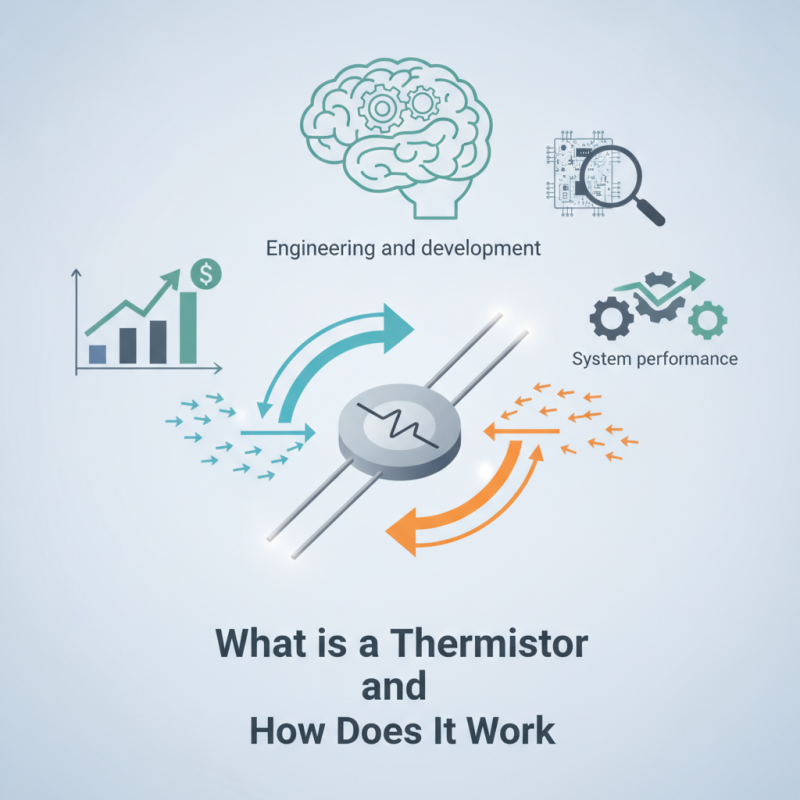
What is a Thermistor?
A thermistor is a type of resistor whose resistance varies significantly with temperature. These small devices play a critical role in temperature measurement and control. They are often made from ceramic materials that exhibit semiconducting properties. Thermistors can be classified into two types: Negative Temperature Coefficient (NTC) and Positive Temperature Coefficient (PTC). NTC thermistors decrease in resistance as temperature rises, while PTC thermistors exhibit the opposite behavior.
According to a recent report by the Global Thermistor Market, the demand for thermistors is expected to grow at a CAGR of 6.3% from 2021 to 2028. This increase is attributed to their widespread application in various industries, such as automotive, healthcare, and consumer electronics. Their compact size and reliability make them ideal for temperature sensors and circuit protection. However, despite their advantages, thermistors can have limitations. They may not provide accurate readings at extremely high or low temperatures. Additionally, their sensitivity can lead to malfunction if not calibrated correctly.
In practical applications, thermistors can be found in household appliances and medical devices. For instance, in HVAC systems, they help maintain optimal indoor temperatures. However, relying solely on thermistors for critical temperature control can pose risks. Variations in manufacturing quality and environmental factors can impact their performance. Understanding these aspects is crucial for engineers and technicians when designing temperature-sensitive applications.
What is a Thermistor and How Does It Work?
| Parameter | Description | Value/Example |
| Type | Temperature sensor | NTC, PTC |
| Operating Principle | Resistance change according to temperature | Decrease in resistance with increase in temperature (NTC) |
| Common Applications | Temperature sensing and control | Home appliances, HVAC systems, automotive |
| Temperature Range | Typical operational range | -55°C to 125°C |
| Accuracy | Precision of measurement | ±0.5°C to ±2°C |
| Response Time | Time taken to reach a stable temperature reading | Less than 1 second |
| Material | Common materials used | Metal oxides (e.g., nickel, manganese) |
Types of Thermistors: NTC vs. PTC
Thermistors are essential components in temperature sensing applications. There are two primary types: Negative Temperature Coefficient (NTC) and Positive Temperature Coefficient (PTC) thermistors. Each type has unique properties and specific uses in various industries.
NTC thermistors have resistance that decreases with an increase in temperature. They are commonly used in applications like temperature measurement and compensation. According to a 2021 report by MarketsandMarkets, the global NTC thermistor market is expected to grow at a CAGR of over 7% from 2021 to 2026. This growth indicates a rising demand in sectors like automotive and consumer electronics, where precise temperature control is crucial.
In contrast, PTC thermistors increase their resistance as temperature rises. They are widely utilized for overcurrent protection, often found in power supplies and heating elements. The ability of PTC thermistors to self-regulate makes them particularly valuable. However, they can be less sensitive than NTC types and may not provide the same level of precision in temperature measurement. This trade-off often requires careful consideration when selecting the appropriate thermistor for specific applications.
How Thermistors Function: Basics of Temperature Dependence
Thermistors are used widely in temperature sensing. Their operation hinges on the principle of temperature dependence. Essentially, thermistors are resistors whose resistance changes significantly with temperature. There are two main types: NTC (negative temperature coefficient) and PTC (positive temperature coefficient). NTC thermistors decrease in resistance as temperatures rise, while PTC thermistors increase in resistance. This property allows them to measure temperature with high sensitivity.
According to a recent industry report from ResearchAndMarkets, the global thermistor market is projected to reach $2.5 billion by 2024, reflecting their indispensable role in various sectors. Applications range from home appliances to medical devices. Their fast response time and precision make them ideal for situations where accurate temperature readings are essential. In critical environments, such as data centers, thermistors help maintain optimal conditions, assuring equipment reliability.
Tip: When selecting a thermistor, consider the temperature range and required accuracy. Not all thermistors are alike; the right one can significantly impact performance. It's essential to evaluate your specific needs rather than opting for a generic solution. Balancing cost and effectiveness is crucial, so always conduct thorough research before making a choice.
Applications of Thermistors in Electronics and Industry
Thermistors play a crucial role in various applications across electronics and industry. These temperature-sensitive resistors help maintain optimal operating conditions. In consumer electronics, thermistors monitor and regulate temperatures. They ensure devices like computers and refrigerators function efficiently. Without them, overheating could lead to failures or reduced lifespan.
In industrial settings, thermistors are essential for process control. They monitor temperature in manufacturing processes, preventing damage to equipment. For instance, in HVAC systems, thermistors measure airflow temperature. This data enables precise adjustments, enhancing energy efficiency. There's a learning curve here, as incorrect installations can lead to inaccurate readings.
Moreover, thermistors are used in medical devices. They monitor patients' body temperatures with high precision. However, calibration errors can occur, potentially leading to misleading information. Users must be aware that while reliable, thermistors need regular checks to ensure accuracy. This reliance on thermistors reflects their importance in safe practices across various fields.
Advantages and Limitations of Using Thermistors
Thermistors are valuable temperature sensors known for their sensitivity and accuracy. They can be divided into two main categories: NTC and PTC thermistors. NTC thermistors decrease resistance as temperature rises, making them ideal for applications in temperature monitoring. PTC thermistors, conversely, increase resistance with temperature. This characteristic can provide overcurrent protection in electrical devices.
One advantage of thermistors is their rapid response time. Research shows that thermistors can respond to temperature changes in under a second. This responsiveness is crucial in medical devices and industrial controls. Furthermore, thermistors often have a higher precision than traditional resistive temperature devices. A 2021 industry report highlighted that thermistors typically maintain an accuracy of ±0.1°C, which is impressive for many applications.
However, thermistors have limitations. Their temperature range is typically narrower than other sensors, such as thermocouples. They are effective within -55°C to 125°C, posing challenges in extreme environments. Additionally, their non-linear resistance-temperature relationship complicates interpretation of readings. This non-linearity demands complex calibration, which can frustrate engineers and increase costs. The choice to use a thermistor should weigh these benefits and drawbacks carefully.
Thermistor Temperature Sensitivity Analysis
This bar chart illustrates the resistance values of a thermistor at different temperatures. As temperature increases, the resistance decreases significantly, showcasing the thermistor's sensitivity to temperature changes.





