What Are the Best LED Spotlights in 2026?
Choosing the best Led Spotlights in 2026 means looking beyond brightness. Beam angle, color temperature, glare, dimming, and heat management all shape how a spotlight feels in a real room. A narrow beam can sharpen a kitchen worktop; the same beam may create harsh shadows in a living area. Small details matter.
The market is moving quickly. Grand View Research estimated the global LED lighting market at USD 75.3 billion in 2023, with continued growth projected through 2030. That figure covers LED lighting broadly, not spotlights alone. The U.S. Department of Energy’s Energy Saver guidance reports that LEDs use at least 75% less energy and can last up to 25 times longer than incandescent lighting. These are useful benchmarks, but product claims still need checking.
Lighting researcher Dr. Michael Siminovitch, director of the California Lighting Technology Center, has championed human-centered lighting. His work points to a practical test: efficiency should not come at the cost of visual comfort. A bright fixture is not automatically a good one. This guide compares beam control, color quality, efficiency, lifespan, and installation fit, using published specifications and real-world considerations. One limitation deserves attention: laboratory ratings do not always predict performance in a cramped ceiling or a reflective hallway. The best choice depends on the space, not just the box.
What LED Spotlights Are and How They Work
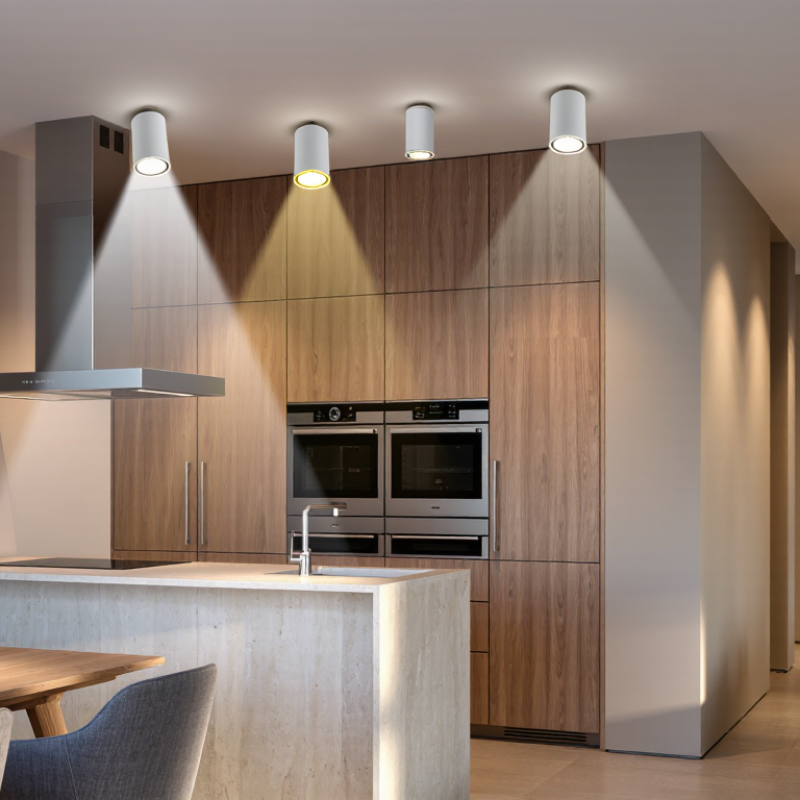
An LED spotlight directs light into a focused beam rather than spreading it evenly across a room. Inside, a semiconductor emits light when electrical current passes through it. A driver regulates that current, while a reflector or lens shapes the beam. The result can highlight a kitchen counter, artwork, or a small garden path without lighting every nearby surface.
The details matter. Beam angle affects how wide the illuminated area feels: a narrow beam creates a distinct pool, while a wider one softens the edges. Lumens describe light output; watts describe power use, so wattage alone cannot tell you how bright a spotlight will appear. Color temperature changes the mood, from warm, candle-like tones to cooler white. Color-rendering accuracy also matters when food or paint colors need to look natural. Specs help, but they do not tell the whole story. Light can feel harsher than expected. I would compare beam angle and color in the actual space, because pale walls, dark ceilings, and nearby windows all change the effect. Heat management matters too: even efficient LEDs need a suitable fixture and room to shed heat. Choosing by brightness alone is an oversimplification, and easy to miss.
Key Features to Compare in LED Spotlights in 2026
What Are the Best LED Spotlights in 2026?
The best LED spotlight depends on where its beam lands. Compare luminous efficacy, measured in lumens per watt, rather than wattage alone. Check beam angle too: a narrow beam highlights a shelf, while a wider beam spreads light across a work surface. U.S. Department of Energy Energy Saver guidance says LEDs use at least 75% less energy and can last up to 25 times longer than incandescent lighting. Those figures are useful context, not a guarantee for every spotlight.
Numbers need context.
Color quality matters in daily use. A high color rendering index (CRI) helps reveal more natural-looking colors; compare the stated CRI and color temperature before buying. For a kitchen, neutral white may feel practical, while a bedroom often benefits from warmer light. Look for clear dimming compatibility and an LM-79 photometric test report, a recognized method for measuring solid-state lighting performance.
A bright beam can still feel harsh.
Tips: Match the beam angle to the room, then check the fixture’s IP rating if it will face moisture or dust. Read the full specification sheet, not just the package front. Small details matter.
Types of LED Spotlights for Different Settings
What Are the Best LED Spotlights in 2026?
Types of LED Spotlights for Different Settings
The best spotlight depends on the room, beam angle, and mounting position. Recessed adjustable spotlights suit kitchens and hallways, where you may want to direct light onto a counter or artwork. Fixed recessed lights give a cleaner look, but they can leave dark patches if spaced poorly. Track spotlights work well in living rooms or galleries. Their heads can be repositioned as furniture or displays change. For a desk or reading nook, choose a narrower beam aimed at the task, not directly at your eyes.
Outdoor spotlights need weather protection suited to their exposure. Check the product’s IP rating and installation guidance before placing it near rain or sprinklers. A warm color temperature can feel welcoming beside a patio, while a cooler tone may help reveal details along a path. Look for dimming compatibility, too. A dimmer that does not match the light can cause flickering. There is no perfect type for every setting; beam spread and placement matter more than a high brightness figure alone.
Tips: Check the beam angle and color temperature before buying. Test one light in the room if possible. Small differences can feel surprisingly large. I’d also measure ceiling height and spacing first; it’s easy to overlight a small room.
Top LED Spotlight Choices by Use Case
The best LED spotlight in 2026 depends on where the beam needs to land. For kitchen counters or a workbench, choose a broad beam and a high color rendering index, ideally 90 or above. Colors look more natural. A warmer 2700–3000 K tone suits living areas, while 3000–4000 K can feel clearer over task surfaces. Check that the spotlight and dimmer are compatible; otherwise, low settings may flicker or buzz. The U.S. Department of Energy’s 2020 U.S. Lighting Market Characterization found LEDs represented about 48% of installed lighting stock. That shift reflects their efficiency, but it does not make every fixture a good fit.
For artwork or a hallway, a narrower beam can highlight a small area without flooding nearby walls. Outdoors, check the fixture’s IP rating and use a shielded beam to reduce glare across paths and windows. Look beyond wattage: compare lumens, beam angle, color temperature, and dimming range. DOE Energy Saver guidance says LEDs can use up to 90% less energy than incandescent lighting, though actual savings depend on use and fixture design. A detail that’s easy to miss: glossy surfaces can produce distracting hotspots. Test one spotlight before installing several. Small changes matter. I’d rethink any setup that looks bright on paper but leaves the counter’s far edge in shadow.
What Are the Best LED Spotlights in 2026? — Top Choices by Use Case
Typical beam-angle ranges can help match a spotlight to its purpose. These are practical starting points, not fixed rules; the best choice also depends on mounting distance, target size, and desired brightness.
How to Choose, Install, and Maintain an LED Spotlight
What Are the Best LED Spotlights in 2026?
Choosing an LED spotlight starts with the task, not the packaging. Check lumens for brightness and beam angle for coverage: a narrow beam highlights a shelf, while a wider beam suits a hallway. Choose a color temperature that fits the room, and confirm the spotlight is rated for damp locations if it will be installed in a bathroom. The U.S. Department of Energy reports that LEDs use at least 75% less energy and last up to 25 times longer than incandescent lighting. Those figures are useful benchmarks, though real results depend on the fixture and hours of use.
Before installation, turn off power at the breaker and verify the circuit is off with a suitable tester. Follow the fixture instructions, check that the fitting is secure, and confirm any dimmer is compatible with the LED. Aim the light away from eye level; even a compact spotlight can create harsh glare on a glossy countertop. A careful plan can still miss a detail, so check the beam after dark before tightening the final aim.
Tips: With power off, wipe the lens with a soft, dry cloth and check for dust or discoloration. If the light flickers, inspect the lamp’s fit and dimmer compatibility before replacing parts. Never use a spotlight in an enclosed fitting unless its rating allows it.





