


A Tank Container is a transport tank secured inside a protective frame, built to move liquids or gases between ships, trains, and trucks. The frame provides standard lifting and securing points; the tank holds the cargo. At a terminal, a crane can lift the complete unit rather than transfer its contents into another vessel. That simple handoff can reduce handling steps, but it does not remove the need for careful inspection.
Reg Lee, a long-time figure in the tank-container industry, offers a useful perspective. In paraphrase, his message is: “Reliable transport depends on sound equipment and disciplined handling.” This is not a verified verbatim quotation, so it should not be presented as his exact words. The principle still points to the details that matter: tank design, valves, pressure limits, cleaning records, and the checks made before loading. Small details count. A damaged fitting or unclear record can complicate an otherwise routine shipment. The container is not a magic box; its performance depends on maintenance, compatible cargo, and trained operators.
This guide explains what a Tank Container is, how its main parts work, and how cargo moves through the system. It also considers common types, loading and unloading, safety features, and practical selection factors. The mechanics are straightforward in outline, yet real operations can be less tidy. Knowing where the simple explanation ends is part of using the equipment responsibly.
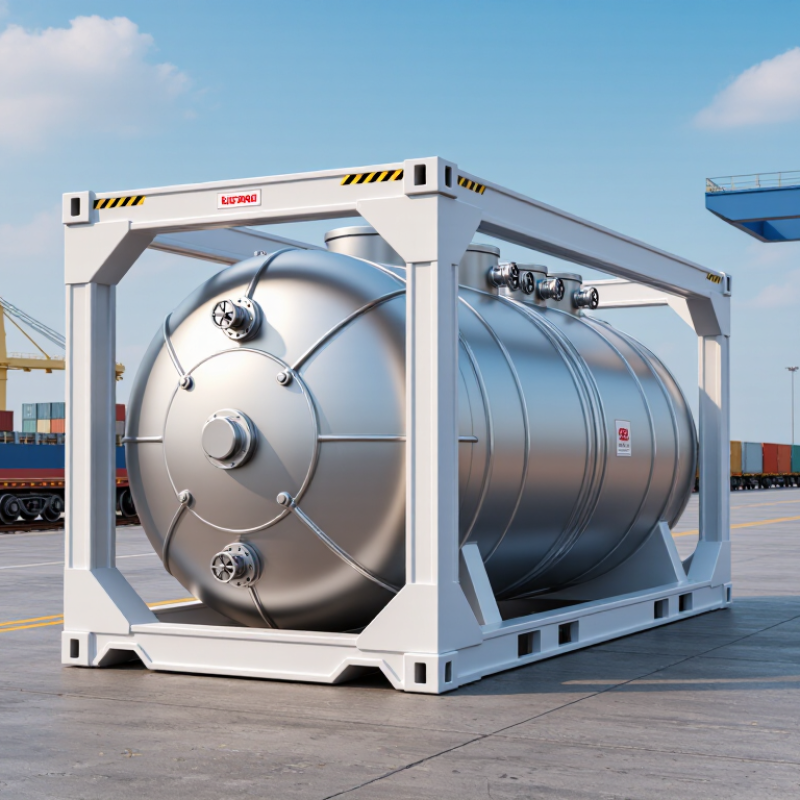
A tank container is a sealed vessel secured inside a protective steel frame. Standardized dimensions allow it to move between ships, trains, and trucks without transferring its contents. The stainless-steel tank may have insulation, heating coils, or specialized linings, depending on the cargo. It is not one-size-fits-all.
Tank containers commonly carry edible oils, juices, syrups, industrial liquids, and gases. Cargo requirements determine the tank’s materials, cleaning procedures, temperature range, and pressure rating. Syrup may need gentle heating to flow; a temperature-sensitive liquid may need insulation.
The International Tank Container Organisation’s 2024 Global Tank Container Fleet Survey estimated 801,800 tank containers worldwide on January 1, 2024. That figure describes fleet size, not cargo volume or utilization. The distinction matters.
Tips: Check product compatibility, temperature requirements, and cleaning records before loading. Review the tank’s inspection and pressure-test documentation, too. Small details matter. Residue or an incorrect setting can affect a shipment, so specifications deserve a second look.

A tank container is a cylindrical vessel held inside a strong rectangular frame. The frame gives cranes and handling equipment clear lifting points at its corner castings. It also helps protect the tank during transport and allows compatible units to be stacked. The frame carries much of the handling force; the tank itself is designed to contain liquid cargo. That distinction matters. A dented frame and a damaged tank are not the same problem, though either deserves careful inspection.
The tank shell is commonly made from corrosion-resistant stainless steel, with insulation and an outer jacket fitted when the cargo needs temperature control. At the top, a manlid provides access for inspection and cleaning. Valves and pipe connections control filling and discharge, while a pressure-relief device helps manage pressure within its rated limits. Some containers also have gauges, protective housings, or heating coils. Not every unit has the same fittings. Before use, operators should check seals, valve condition, labels, and inspection records against the container’s specifications. It is easy to focus on the large steel surfaces and overlook a small gasket. Small parts matter.
Before loading a tank container, trained staff check its inspection status, interior condition, valves, seals, and fittings. The tank must be clean and dry when the cargo requires it. Even a trace of water or residue can affect some materials. Small details matter. The loading plan should confirm that the cargo suits the tank and that the expected weight stays within its rated limits. Operators connect compatible hoses, verify the connections, and begin the transfer at a controlled rate. They watch pressure and flow throughout. A checklist helps, but it cannot replace attention at the connection point.
As the tank fills, staff monitor the cargo level and leave the required expansion space. Overfilling is not a minor mistake: liquid can expand as temperatures change. Once loading is complete, operators close and secure valves, disconnect hoses safely, and check for drips around fittings. Not quite enough. A final check should also confirm that caps, seals, and access covers are properly fitted. The container is then secured to the transport frame using its designated locking points, with the load positioned evenly. Before dispatch, staff compare the recorded cargo weight with the shipping details and inspect the exterior for damage or leaks. A rushed handover can miss something small, so clear records and a second set of eyes are worthwhile.
This illustration shows loading progress in a representative 24,000-liter tank container. After loading, operators close and secure the openings and valves, then check the seals. The 90% level is illustrative, not a universal filling target: permitted fill levels depend on the cargo, its expansion with temperature, container limits, and applicable regulations.
A tank container begins its journey with checks on the tank, valves, seals, and supporting frame. Staff confirm that the equipment suits the cargo and planned route. After loading, the access points are closed and recorded, and the container is secured to a road chassis. Small details matter.
At a terminal, cranes lift the container by its corner fittings, not by the tank shell. It may move by truck to a rail yard or port, then travel by train or ship. Each transfer depends on clear handling instructions and accurate records. The route can change. Weather, congestion, or a missed connection can keep a container waiting longer than expected.
During transit, operators may track location and, for temperature-sensitive cargo, monitor temperature as specified. Pressure checks and other controls depend on the cargo and equipment requirements. At the destination, workers inspect the container and confirm its identification before positioning it for discharge. The final transfer may be short, but it still needs careful coordination. A checklist helps, though it cannot make every handoff tidy; people and timing remain part of the system.
| Transport Stage | Where It Happens | How the Tank Container Moves | Typical Equipment or Handling | Key Checks |
|---|---|---|---|---|
| 1. Preparation | Loading facility or cleaning depot | The tank, held inside a protective ISO frame, is inspected and prepared for the intended cargo. | Inspection area; cleaning or maintenance equipment when needed | Check cleanliness, condition, valves, seals, and suitability for the cargo. |
| 2. Filling and securing | Shipper’s loading site | Liquid or gas cargo is loaded through the tank’s designated connections. Openings are closed and secured before departure. | Pumps, hoses, loading connections, and weighing equipment as required | Verify cargo details, fill limits, closure integrity, and required transport documents. |
| 3. First-mile road movement | Loading site to rail terminal or seaport | The complete unit is carried on a suitable road chassis; the cargo remains inside the tank. | Tractor unit and tank-container chassis | Confirm the frame is secured to the chassis and that applicable road and cargo rules are met. |
| 4. Terminal transfer | Rail yard or port terminal | The tank container is lifted from one transport mode and positioned for the next, without unloading the cargo. | Container crane, compatible spreader, or suitable reach stacker | Use the frame’s designated lifting points and follow the equipment’s safe-working procedures. |
| 5. Long-distance transport | Rail network or container vessel | The framed tank travels as an intermodal unit by rail or ship. The same tank can continue across modes while its cargo stays contained. | Rail wagon or container vessel; securing arrangements appropriate to the mode | Check transport documentation, unit identification, securing, and any cargo-specific requirements. |
| 6. Final-mile delivery | Destination terminal to consignee’s site | After terminal release, the tank is placed on a road chassis and delivered to the receiving facility. | Tractor unit and tank-container chassis | Confirm delivery instructions, access arrangements, and safe unloading connections. |
| 7. Unloading and return | Consignee’s site, then a cleaning depot or next loading location | Cargo is discharged using the appropriate connection and procedure. The tank is then inspected and, where necessary, cleaned before reuse. | Transfer pump or site system; cleaning equipment when required | Follow cargo-specific handling procedures and confirm the tank’s condition before its next use. |
Before unloading, the operator checks the container identification, delivery instructions, and receiving equipment. The tank should be secured on level ground, with the correct hose and fittings ready. Small details matter. A mismatched connection or damaged seal can cause leaks, so connections are inspected before valves are opened.
Cargo may flow by gravity or, when the tank and cargo permit, under controlled pressure. The method depends on the equipment and the cargo’s handling instructions. Operators open valves gradually and watch the flow, pressure, and hose for movement or leaks. In practice, the sequence is not always neat: cold lines, slow flow, or leftover liquid can change the pace. Never force a stubborn discharge.
After unloading, the tank is cleaned using a wash procedure suited to its previous contents and construction. A wash station may circulate heated water or an appropriate cleaning solution, then rinse and dry the interior. Workers inspect the tank, valves, seals, and manway for residue or damage. A clean-looking outlet is not proof that the tank is ready. Inspection records help confirm its condition before the next loading.


For those larger-sized parts, or smaller quantity runs, we have 2 independent powder coat booths and ovens. The quality, durability and affordability of today’s powder coating finishes make this the process of choice for world-class companies.
Powder coating advantages over other forms of coating are many. Materials used in the Powder coating process can be metals and non-metals that come in a multitude of thicknesses, textures, colors, etc. Another of Powder coating’s biggest advantages over conventional coatings is its ability to create finishes in many different textures. Powder Coating Booths allow us the ability to apply these advantages to large products.
Tri-State Fabricators runs a full-service conveyor line for painting. Wet painting can provide protection or decoration to many different part styles. From start to finish, every project is easier to undergo random and point-based inspection by our skilled painting team.
Advantages to our Wet Paint Line are these lines start with product prep and ends with a thorough inspection of a high quality finished product. Our ability to complete large and small projects with a superior finish and doing so in a timely and economical fashion. This passes along the savings in production to our customers. When powder coating ins not an option, our Wet Paint Line gets the job done right the first time.
When the parts get big and heavy we roll-out our custom paint racks and oversize booth. By utilizing our partnerships with all the major paint brands, we can match virtually any color with wet paint.
The advantages of having access to a Wet Paint Booth are many. Large projects of many different shapes can be loaded into the booth. The Wet Paint Booth offers an environment that is much more controlled than a typical parts painting operation.
Not only are they used because of their controlled environment, but they’re are also advantageous when it comes to applying paint to parts that are needed in industries that require specialty coatings such as medical, aerospace, etc.
Our military forces have some very high standards when it comes to the finish of their vehicles and equipment. From the first pre-treatment step to final coat, it takes a great deal of knowledge and experience to protect the men and women of our armed forces. They deserve only the best, and Tri-State Fabricators provides it.
All of our processes are closely monitored by our staff and management teams. Both of which are highly trained in the processes of metal fabrication and finishing. Tri-State Fabricators’ goal is to always fully satisfy each and every customer, including the military. We will always put a 110% into what we do.
Abrasive media blasting is an excellent way to remove old paint, rust, and increase the paint/powder adhesion. Glass beads produce a much smoother and brighter finish than angular abrasives; leaving the part clean yet without any dimensional change. Chemically inert and environmentally friendly, we can recycle our beads approximately 30 times; making them a more preferred method of metal cleaning or surface finishing.
Advantages to Glass Bead Blasting are many. Glass bead blast media is used when a project is needing rough surfaces need to become smooth for applications of coatings such as paint. It is typically used to clean paint and rust from a product surface without deforming the surface it is being used on. Overall, compared to many other blasting media, Glass Bead Blasting is a very economical choice and those savings are always passed on to our customers.
Tri-State Fabricators utilize a zinc phosphate wash to clean and etch the material to ensure the best paint adhesion possible. The unique design of our 3-stage wash system does the work like a 5-stage. From Cleaning and rinsing to conversion coating and post-treatment, Our Part Washing process is a complete service and works throughout the fabrication service and the finishing service.
Along with the previously mentioned benefits, Curing is a vital chemical reaction that leaves the product finish hard and relatively safe from mild abrasion and aggressive corrosion. This process can be done in more than one way; ambient air-dry or in curing ovens at temps that exceed 240°.
From fixing paint mistakes (someone else’s of course) to simply cleaning our paint line hooks, our burn-off oven is put to good use. After a quick burn-off, a little clean up, and a fresh coat of paint, your parts will look better than new.
Why does our Burn-Off Oven work so well? Because super heating the air around parts turns the materials into ashes. From paint and powder coatings to rubber and machining oils, high temps do the job without degrading the integrity of the part.
Masking is a vital part of producing high quality products. We have die-cut masking patterns to protect machined surfaces as well as a wide range of plugs and caps to protect threaded holes and bolts. We provide permanent and temporary masking.
Masking allows the selected sections of a product to be protected from a fabrication or finishing service. This can be with both chemicals when etching and tapes, paints when only finishing just a section of the product. Masking is great in aiding the customization process of a project.
Screen printing is a photographic process that transfers artwork onto a porous nylon screen which allows colored ink to flow through the screen and be deposited on an aluminum or plastic component. We can generally have just about any design created onto a screen for your parts.
Some of the advantages of Screen Printing are, brand recognition for your business displaying on your products, assembly instructions, product warnings/hazards, etc. Tri-State Fabricators produces Screen Printing of the highest quality so you know it’s durable.
Metal Finishing is the art of treating the exterior portion of product, often metal but can also be made of other materials, so that the surface is clean and free of any debris. Then the process of applying coats or either paint of powder coat takes place. This coating process improves the quality of the product in both appearance and resistance to wear and corrosion.
Tri-State Fabricators, Inc., understands that a project typically isn’t complete until a high-quality finish has been added to your product. This is why our painting and powder coating teams continuously inspect the products throughout the Metal Finishing process.

