


10 Straw Beach Bag Buying Tips for Global Buyers

Global buyers are giving everyday accessories more scrutiny, including the humble Straw Beach Bag. Grand View Research valued the global handbags market at approximately US$70.8 billion in 2023. Its report forecasts continued growth through 2030, although straw products remain a smaller, less transparent category.

The ThredUp 2025 Resale Report projects the global secondhand apparel market could reach US$367 billion by 2029. That shift matters. Buyers increasingly notice material origin, durability, repairability, and resale value. A woven bag may look natural, yet its details can reveal more. Check the straw type, lining, handle stitching, hardware, and packaging. Ask whether the producer can explain each one.

Orsola de Castro, co-founder of Fashion Revolution and a respected circular-fashion expert, says, “The most sustainable garment is the one already in your wardrobe.” Her principle applies to accessories too. The best purchase may be a durable bag that survives many summers, not the cheapest seasonal design.

For international buyers, the decision becomes more practical. Can the bag protect sunglasses and a phone? Does the handle remain comfortable after two hours? Will the weave tolerate humidity, folding, or light rain? These questions sound ordinary. They prevent expensive mistakes.

This guide presents ten buying tips for selecting a Straw Beach Bag across markets. It considers construction, supplier communication, packaging, customization, and responsible sourcing. Some recommendations will not fit every budget or climate. That limitation deserves honesty. Product photographs can also hide weak seams, uneven weaving, and misleading color descriptions. A careful buyer checks the evidence before placing a large order.
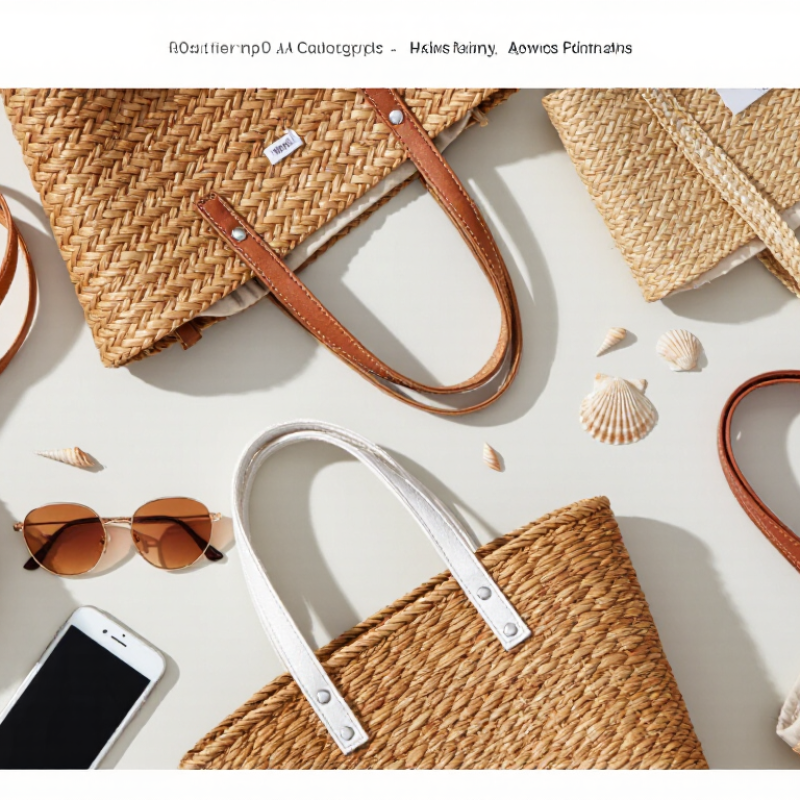
10 Straw Beach Bag Buying Tips for Global Buyers

Define Fiber, Size, Weight, and Load Specs Before Sourcing

Before sourcing, define what “straw” means. It may describe paper, raffia, seagrass, wheat straw, or a blended fiber. Request the exact fiber percentage, coating, lining, and dye method. Textile Exchange’s Materials Market Report 2024 estimates global fiber production reached 124 million tonnes in 2023. That scale makes vague material descriptions risky. Ask for composition records and a pre-production sample.

Size needs usable dimensions, not only external measurements. Specify length, height, depth, handle drop, and pocket placement in centimeters. Then define the empty bag weight. A lightweight bag may feel attractive, but thin handles can fail under daily loads. Set a target load, such as 3, 5, or 8 kilograms, and include a safety margin. Test the handles separately from the body. ISO 13934-1 offers a recognized method for measuring textile tensile properties, although woven plant fibers may require extra practical testing.

Consider moisture, abrasion, and repeated lifting. A damp beach towel weighs more than expected. Salt, sand, and sunscreen also change real use conditions. Use a filled-bag carry test, handle pull test, and seam inspection after repeated cycles. UNEP’s 2023 “Turning off the Tap” report estimates 19–23 million tonnes of plastic enter aquatic ecosystems annually, so fiber claims should be documented rather than used as marketing shortcuts. I would not treat one laboratory result as proof of durability. Some early samples look strong, yet fail where the handle meets the rim. Record test conditions, tolerances, and acceptable defects before comparing supplier quotations.


10 Straw Beach Bag Buying Tips for Global Buyers

Define fiber, size, weight, and load specifications before sourcing.

Indicative specification ranges for comparing supplier samples: natural-fiber content of 80–100%, body height of 30–45 cm, empty weight of 300–700 g, and a tested carrying load of 5–10 kg. Confirm final values through pre-production samples, measurement tolerances, and load testing.

Verify Material Composition According to ISO 1833 Testing Methods

10 Straw Beach Bag Buying Tips for Global Buyers

Verify Material Composition According to ISO 1833 Testing Methods

A straw beach bag may look entirely natural, but its fibers can be blended. Paper, raffia, cotton, polyester, and coatings may appear together. Ask the supplier for a full material declaration before approving samples. Do not rely on terms like “eco straw” or “natural weave.” They are often too vague for purchasing decisions.

ISO 1833 provides quantitative chemical analysis methods for textile fiber mixtures. An accredited laboratory can select the relevant part based on the claimed fibers. The test may report each component as a percentage by mass. Request the laboratory report, sample identification, test date, and conditioning details. Keep a sealed production sample for comparison. Small changes in weave, lining, or adhesive can affect the result.

ISO 1833 is not a universal method for every plant-based straw material. This limitation matters. A laboratory may need complementary identification methods for unusual grasses, molded paper, or surface coatings. I once treated a supplier declaration as sufficient; that was too optimistic. The bag passed a visual check, yet the inner lining changed the actual composition. Recheck different production batches, especially when the handle, lining, and decorative trim come from separate sources. Keep claims precise, such as “contains 60% cotton and 40% polyester,” only when testing supports them. Ask questions early. Mistakes become expensive after shipment.

Set Sampling and Defect Limits with an AQL 2.5 Inspection Plan

Buying straw beach bags across borders requires more than checking color and price. An AQL 2.5 inspection plan gives buyers a repeatable way to assess production lots.

Use a recognized sampling standard, such as ISO 2859-1, and record the lot size before inspection. Do not treat AQL 2.5 as a promise that 2.5 percent of bags will be acceptable. It is a sampling threshold, not a quality target.

Before production, send the factory a signed specification sheet covering dimensions, weave density, handle strength, lining, closures, and packaging. Ask for a pre-production sample. Keep it for comparison.

For a practical plan, many buyers set critical defects at zero. They may set major defects at AQL 2.5 and minor defects at a separate agreed level. Define each category with photographs.

A broken handle, sharp wire, mold, or unsafe attachment deserves immediate rejection or corrective action.

Uneven stitching, loose straw ends, stains, and small color variation need clear tolerances. Inspect randomly from sealed cartons, not handpicked pieces.

Check appearance, measurements, odor, load-bearing performance, and carton labeling. Record defect counts and photograph every failure. One overlooked detail can affect an entire shipment.

Yet AQL plans are not flawless. Natural straw varies, and inspectors can interpret tolerances differently.

Review recurring defects after each order, then adjust the specification instead of blaming sampling alone. That reflection often improves the next inspection.

Test Colorfastness Using ISO 105-X12 Dry and Wet Rubbing Methods

10 Straw Beach Bag Buying Tips for Global Buyers

Color transfer can ruin a pale dress, towel, or car seat. I once inspected a straw beach bag that looked stable when dry, yet stained a white sleeve after light rain. The woven surface was attractive, but its dye had poor wet rubbing performance. Global buyers should test this risk before placing large orders.

Ask the supplier for an ISO 105-X12 colorfastness report. This method evaluates color transfer during dry and wet rubbing. A laboratory rubs a specified white test cloth against the bag under controlled pressure and movement. The cloth is then compared with a gray scale for staining. Request the test date, material details, test direction, and individual dry and wet results. Do not accept a vague “colorfast” statement.

Test dark handles, dyed panels, trims, and printed areas separately. These parts may behave differently. Wet rubbing deserves extra attention for beach use, because humidity, rain, and damp skin can increase transfer. Check the bag after repeated rubbing, not only once. Ask whether the sample was conditioned before testing, since moisture can affect results. ISO testing improves reliability, but it cannot reproduce every real-life situation. Sand and saltwater may create additional wear. A supplier report is useful evidence, not a perfect promise. Pair it with your own sample inspection before approving production.

10 Straw Beach Bag Buying Tips for Global Buyers - Test Colorfastness Using ISO 105-X12 Dry and Wet Rubbing Methods

No. Buying Dimension What to Check Practical Specification or Test Point Suggested Buyer Action
1 Material and Construction Identify whether the bag is made from paper straw, raffia, seagrass, rush, or another plant-based fiber. Inspect the weave for loose ends, gaps, broken strands, and uneven tension. The material description, weave pattern, lining, and trim should match the approved sample and purchase specification. Request a material declaration and approve a sealed reference sample before bulk production.
2 Size and Capacity Measure body width, height, depth, handle drop, and usable interior space. Check whether the bag remains stable when filled. Record dimensions in centimetres and define measurement tolerances, such as ±1 cm for finished dimensions where appropriate. Use a dimensional drawing and a filled-bag photo to prevent misunderstandings between sampling and production.
3 Handle Strength Examine handle attachment points, reinforcement patches, stitching, knots, and areas where the handle joins the woven body. Define a project-specific static load and duration. A common internal screening target is 5 kg held for 1 hour without tearing or permanent handle separation. Perform load testing on finished bags, not only on loose handles or fabric swatches.
4 Color Consistency Compare body color, trim color, printed areas, and panels under consistent lighting. Natural fibers may show inherent shade variation. Use approved physical color standards or instrumental color tolerances agreed with the buyer; do not rely on screen images alone. Inspect production lots under daylight-simulating light and document any accepted natural variation.
5 Dry Rubbing Colorfastness Check whether dry contact transfers color from the dyed or printed surface to a white rubbing cloth. Test according to ISO 105-X12 using a specified rubbing finger, rubbing cloth, pressure, stroke count, and evaluation of staining on the Grey Scale. Set the pass level in the purchase specification. A frequently used commercial target is Grey Scale grade 4 or higher, unless the product risk assessment requires another level.
6 Wet Rubbing Colorfastness Evaluate color transfer when the surface is exposed to moisture, such as wet swimwear, towels, or rain. Test according to ISO 105-X12 with the rubbing cloth prepared under the selected laboratory procedure. Record the moisture condition because wet and dry results are not interchangeable. Use a separate wet-rubbing requirement; a practical starting benchmark is Grey Scale grade 3–4 or higher, subject to end-use and buyer approval.
7 Water and Moisture Response Observe shrinkage, staining, dye migration, loss of shape, odor, and fiber distortion after controlled exposure to moisture. Do not claim that a straw bag is waterproof unless it has been specifically designed and tested for water resistance. Provide care instructions such as keeping the bag dry, wiping spills promptly, and air-drying away from direct heat.
8 Lining, Closure, and Hardware Inspect lining seams, zipper or magnetic closure, metal rings, D-rings, snaps, and decorative attachments for sharp edges and weak points. Closures should operate smoothly, hardware should be securely attached, and all components should match the approved construction. Check the interior for snagging risks and verify that trims do not stain the lining during rubbing or moisture exposure.
9 Odor, Cleanliness, and Packaging Check for mold, excessive chemical odor, loose fibers, dust, insects, moisture marks, and compression damage after packing. Bags should be dry, clean, odor-free under normal inspection conditions, and protected from moisture during international transport. Use breathable protective packaging where suitable and include carton humidity protection for long or humid shipping routes.
10 Inspection Records and Compliance Confirm that specifications, test reports, labeling, packaging marks, and inspection results are traceable to the relevant production lot. ISO 105-X12 describes a rubbing colorfastness test method; it does not establish one universal pass/fail grade for every product. State the test method, dry or wet condition, laboratory result, acceptance grade, sampling plan, and corrective-action process in the order documents.

Note: ISO 105-X12 specifies a method for assessing colorfastness to rubbing. Required performance grades should be agreed according to the bag's color, material, intended use, destination-market requirements, and buyer risk assessment.

Screen REACH SVHCs at the 0.1% Article 33 Disclosure Threshold

For global buyers, a straw beach bag is not chemically simple. Straw, dyes, coatings, metal fittings, adhesives, and plastic liners may be separate articles. Under REACH Article 33, suppliers must disclose a Candidate List SVHC above 0.1% by weight in an article or component. The threshold is not a general safety guarantee. It triggers information duties.

Ask for a component-level material declaration, not only a finished-product statement. Request recent laboratory screening for dyes, coatings, handles, buckles, and printed areas. A supplier declaration helps. It is not proof. ECHA’s REF-10 enforcement project checked 2,407 products and reported an 18% non-compliance rate, showing why paperwork deserves verification. Keep test reports, production dates, sample photographs, and batch numbers together.

Check the current ECHA Candidate List before each buying season. Compare every listed SVHC with the bag’s materials and accessories. If a component exceeds 0.1%, provide the substance name and safe-use information to commercial customers and consumers. For relevant articles, SCIP notification duties may also apply in the European Union. Small details matter. A hidden metal clasp can change the assessment. So can a decorative coating. I would also question vague claims such as “REACH approved”; REACH does not issue one universal product certificate. A careful buyer leaves room for uncertainty and retests after material, dye, or factory changes.

Powder Coat Booths

For those larger-sized parts, or smaller quantity runs, we have 2 independent powder coat booths and ovens. The quality, durability and affordability of today’s powder coating finishes make this the process of choice for world-class companies.

Powder coating advantages over other forms of coating are many. Materials used in the Powder coating process can be metals and non-metals that come in a multitude of thicknesses, textures, colors, etc. Another of Powder coating’s biggest advantages over conventional coatings is its ability to create finishes in many different textures. Powder Coating Booths allow us the ability to apply these advantages to large products.

Wet Paint Line

Tri-State Fabricators runs a full-service conveyor line for painting. Wet painting can provide protection or decoration to many different part styles. From start to finish, every project is easier to undergo random and point-based inspection by our skilled painting team.

Advantages to our Wet Paint Line are these lines start with product prep and ends with a thorough inspection of a high quality finished product. Our ability to complete large and small projects with a superior finish and doing so in a timely and economical fashion. This passes along the savings in production to our customers. When powder coating ins not an option, our Wet Paint Line gets the job done right the first time.

Wet Paint Booths

When the parts get big and heavy we roll-out our custom paint racks and oversize booth. By utilizing our partnerships with all the major paint brands, we can match virtually any color with wet paint.

The advantages of having access to a Wet Paint Booth are many. Large projects of many different shapes can be loaded into the booth. The Wet Paint Booth offers an environment that is much more controlled than a typical parts painting operation.

Not only are they used because of their controlled environment, but they’re are also advantageous when it comes to applying paint to parts that are needed in industries that require specialty coatings such as medical, aerospace, etc.

Military CARC

Our military forces have some very high standards when it comes to the finish of their vehicles and equipment. From the first pre-treatment step to final coat, it takes a great deal of knowledge and experience to protect the men and women of our armed forces. They deserve only the best, and Tri-State Fabricators provides it.

All of our processes are closely monitored by our staff and management teams. Both of which are highly trained in the processes of metal fabrication and finishing. Tri-State Fabricators’ goal is to always fully satisfy each and every customer, including the military. We will always put a 110% into what we do.

Glass-Bead Blasting

Abrasive media blasting is an excellent way to remove old paint, rust, and increase the paint/powder adhesion. Glass beads produce a much smoother and brighter finish than angular abrasives; leaving the part clean yet without any dimensional change. Chemically inert and environmentally friendly, we can recycle our beads approximately 30 times; making them a more preferred method of metal cleaning or surface finishing.

Advantages to Glass Bead Blasting are many. Glass bead blast media is used when a project is needing rough surfaces need to become smooth for applications of coatings such as paint. It is typically used to clean paint and rust from a product surface without deforming the surface it is being used on. Overall, compared to many other blasting media, Glass Bead Blasting is a very economical choice and those savings are always passed on to our customers.

Part Washing

Tri-State Fabricators utilize a zinc phosphate wash to clean and etch the material to ensure the best paint adhesion possible. The unique design of our 3-stage wash system does the work like a 5-stage. From Cleaning and rinsing to conversion coating and post-treatment, Our Part Washing process is a complete service and works throughout the fabrication service and the finishing service.

Along with the previously mentioned benefits, Curing is a vital chemical reaction that leaves the product finish hard and relatively safe from mild abrasion and aggressive corrosion. This process can be done in more than one way; ambient air-dry or in curing ovens at temps that exceed 240°.

Burn-Off Oven

From fixing paint mistakes (someone else’s of course) to simply cleaning our paint line hooks, our burn-off oven is put to good use. After a quick burn-off, a little clean up, and a fresh coat of paint, your parts will look better than new.

Why does our Burn-Off Oven work so well? Because super heating the air around parts turns the materials into ashes. From paint and powder coatings to rubber and machining oils, high temps do the job without degrading the integrity of the part.

Masking

Masking is a vital part of producing high quality products. We have die-cut masking patterns to protect machined surfaces as well as a wide range of plugs and caps to protect threaded holes and bolts. We provide permanent and temporary masking.

Masking allows the selected sections of a product to be protected from a fabrication or finishing service. This can be with both chemicals when etching and tapes, paints when only finishing just a section of the product. Masking is great in aiding the customization process of a project.

Screen Printing

Screen printing is a photographic process that transfers artwork onto a porous nylon screen which allows colored ink to flow through the screen and be deposited on an aluminum or plastic component. We can generally have just about any design created onto a screen for your parts.

Some of the advantages of Screen Printing are, brand recognition for your business displaying on your products, assembly instructions, product warnings/hazards, etc. Tri-State Fabricators produces Screen Printing of the highest quality so you know it’s durable.

Metal Finishing

Metal Finishing is the art of treating the exterior portion of product, often metal but can also be made of other materials, so that the surface is clean and free of any debris. Then the process of applying coats or either paint of powder coat takes place. This coating process improves the quality of the product in both appearance and resistance to wear and corrosion.

Tri-State Fabricators, Inc., understands that a project typically isn’t complete until a high-quality finish has been added to your product. This is why our painting and powder coating teams continuously inspect the products throughout the Metal Finishing process.
