


Steel Structure Corrosion Protection by Environment

Steel structure corrosion protection should start with one basic question: what environmental conditions will the building face throughout its service life? A coating system that performs well in a dry industrial area may not offer the same protection in a tropical coastal region or a warehouse exposed to heavy snow. The difference matters because corrosion does more than affect appearance. It can increase maintenance costs, complicate repairs, and shorten the useful life of structural components.

Two projects from different climates illustrate why corrosion protection needs to follow local conditions rather than rely on a standard specification.

Tropical Humidity and Storm Exposure in the Philippines

The Philippines presents several challenges for steel buildings. High humidity, frequent rainfall, strong winds, and exposure to tropical storms create conditions that can accelerate corrosion. For industrial facilities and logistics centers, these factors deserve attention from the beginning of the structural design.
Steel StructureSteel Structure

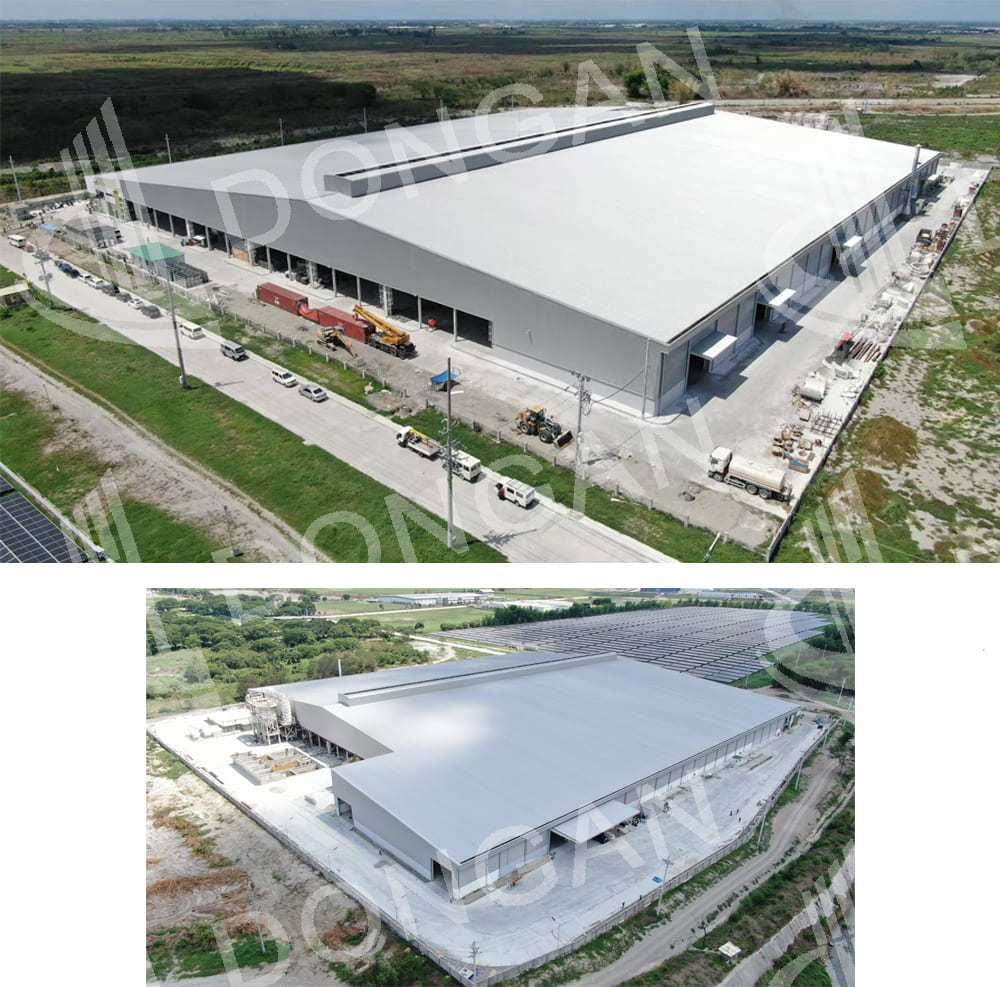
In a logistics center project in the Philippines, DongAn considered the local climate when arranging corrosion protection for the steel components. The objective was not simply to apply a thicker coating. Instead, the treatment needed to address prolonged moisture exposure and the possibility of damage during severe weather.

Humidity and rainwater can gradually affect vulnerable areas, particularly around bolted connections, welds, cut edges, and other details where water may accumulate. Strong winds during typhoons add another concern. Wind-driven rain can reach joints and exposed surfaces that ordinary rainfall may not affect as directly.

For this type of project, surface preparation plays an important role. Proper cleaning and rust removal help establish a reliable foundation for subsequent coating applications. The coating system should also provide suitable adhesion, moisture resistance, and durability under the expected exposure conditions.

Drainage and detailing deserve equal attention. Roof edges, wall connections, gutters, and exposed steel interfaces should prevent unnecessary water retention. Even a suitable coating system may struggle when the building repeatedly traps moisture around vulnerable connections.
Heavy Snow and Moisture Pressure in Russian Warehouses

Steel Structure

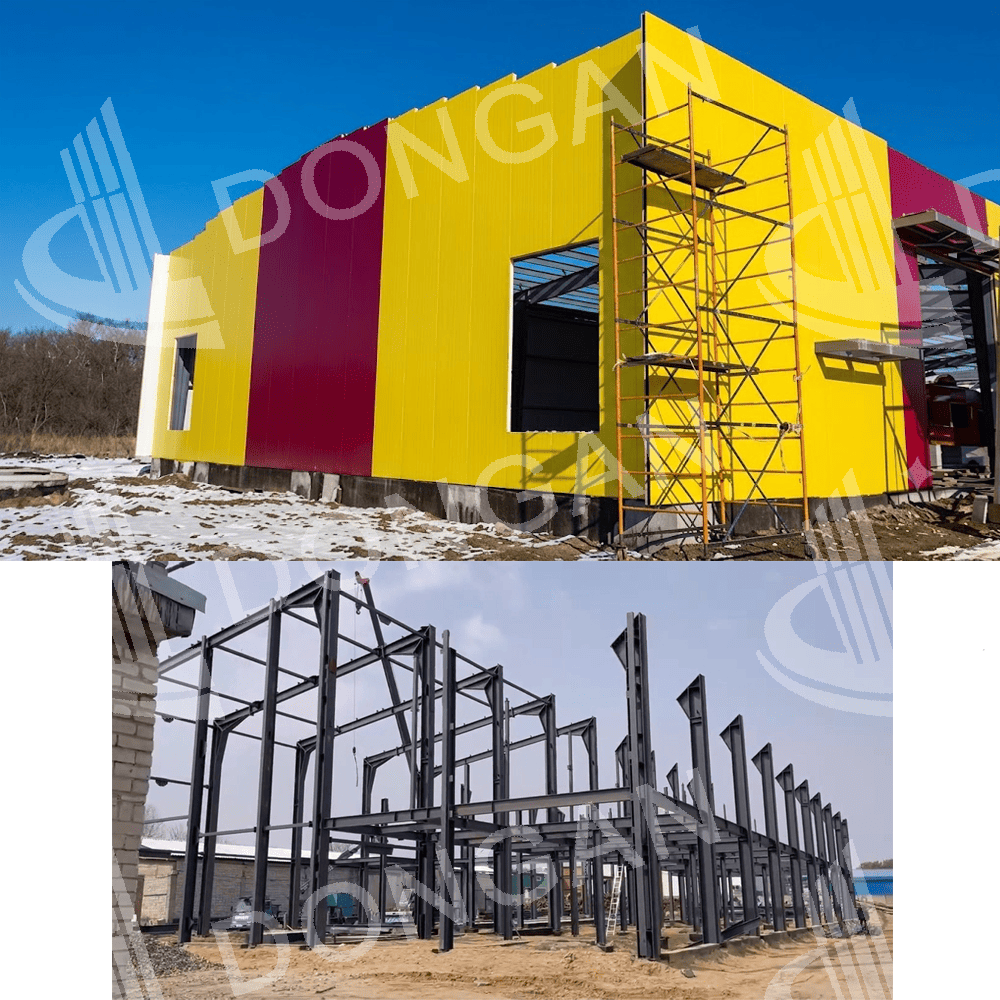
A different set of conditions applies to large warehouse projects in Russia. Low temperatures and heavy snowfall create a distinct combination of environmental and structural challenges.

When snow accumulates on a roof for extended periods, the building must withstand substantial snow loads. At the same time, roof surfaces and wall connections face prolonged exposure to moisture from melting snow, freezing, and repeated temperature changes.

These conditions influence corrosion protection in several ways. Snow accumulation increases the importance of reliable roof drainage and connection detailing. During thaw periods, meltwater may collect around roof joints, gutters, and drainage outlets. If these areas contain gaps or poorly protected steel surfaces, moisture can gradually create corrosion problems.

Structural deformation also deserves consideration. Heavy snow loads can increase stress on roof members and connections. Although the coating itself does not determine structural capacity, the design must account for how movement and connection details affect coating integrity.
Steel Structure

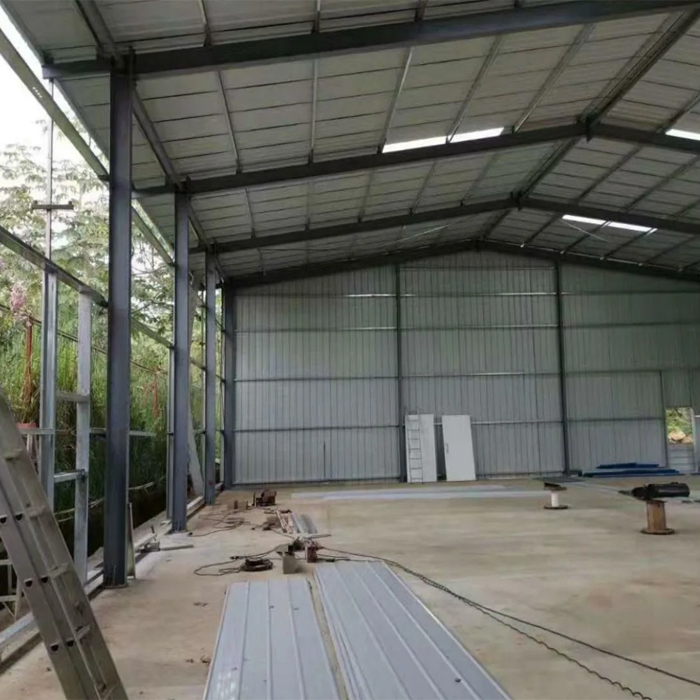
For large Russian warehouse projects, DongAn considers these conditions when optimizing the rust-prevention treatment. The focus extends beyond the exposed surfaces to include roof framing, connection areas, and other components that may experience prolonged moisture exposure.

This approach also highlights an important distinction: corrosion protection and waterproofing serve different purposes. A protective coating helps prevent steel corrosion, while roof cladding, flashing, sealants, and drainage details control water penetration. Both systems need to work together.

Matching Coating Systems to Actual Exposure

There is no single coating specification that suits every steel building. The appropriate system depends on several factors, including humidity, rainfall, atmospheric pollutants, coastal salt exposure, temperature variations, and the expected maintenance schedule.

Surface preparation should come first. For example, abrasive blast cleaning can remove mill scale, rust, and surface contaminants before painting. Depending on the project specification, preparation grades such as Sa 2½ may provide the required cleanliness for a protective coating system.

The next step involves selecting a suitable primer and topcoat combination. Different coating technologies offer different levels of corrosion resistance, weatherability, and chemical protection. The required dry film thickness also depends on the exposure category and the expected service life.
Steel Structure

However, more coating does not always mean better value. An unnecessarily expensive system can increase initial project costs without delivering meaningful benefits under the actual operating conditions. Conversely, reducing coating requirements too aggressively may create higher maintenance expenses later.

A practical specification should balance protection performance, material costs, application conditions, and future maintenance. It should also consider whether the steel components will receive their coatings in a controlled factory environment or require additional treatment after transportation and site installation.

Corrosion Protection as a Lifecycle Cost Decision

The real objective of corrosion protection is not to achieve the highest possible coating specification. It is to provide reliable protection at a reasonable cost throughout the building’s service life.

A logistics center in the Philippines and a large warehouse in Russia face very different environmental pressures. One must account for tropical humidity, heavy rainfall, and typhoons. The other must consider prolonged snow accumulation, roof moisture, and repeated freeze-thaw cycles.

These differences should influence coating selection, surface preparation, structural detailing, and maintenance planning. They also show why early coordination matters. Adjusting the protection system during the design and fabrication stages usually offers more flexibility than dealing with corrosion after the building enters operation.

For each steel structure project, the most economical solution is the one that matches the actual environment and operating requirements. A well-considered protection system helps control long-term maintenance costs while supporting the building’s intended service life.


 

Powder Coat Booths

For those larger-sized parts, or smaller quantity runs, we have 2 independent powder coat booths and ovens. The quality, durability and affordability of today’s powder coating finishes make this the process of choice for world-class companies.

Powder coating advantages over other forms of coating are many. Materials used in the Powder coating process can be metals and non-metals that come in a multitude of thicknesses, textures, colors, etc. Another of Powder coating’s biggest advantages over conventional coatings is its ability to create finishes in many different textures. Powder Coating Booths allow us the ability to apply these advantages to large products.

Wet Paint Line

Tri-State Fabricators runs a full-service conveyor line for painting. Wet painting can provide protection or decoration to many different part styles. From start to finish, every project is easier to undergo random and point-based inspection by our skilled painting team.

Advantages to our Wet Paint Line are these lines start with product prep and ends with a thorough inspection of a high quality finished product. Our ability to complete large and small projects with a superior finish and doing so in a timely and economical fashion. This passes along the savings in production to our customers. When powder coating ins not an option, our Wet Paint Line gets the job done right the first time.

Wet Paint Booths

When the parts get big and heavy we roll-out our custom paint racks and oversize booth. By utilizing our partnerships with all the major paint brands, we can match virtually any color with wet paint.

The advantages of having access to a Wet Paint Booth are many. Large projects of many different shapes can be loaded into the booth. The Wet Paint Booth offers an environment that is much more controlled than a typical parts painting operation.

Not only are they used because of their controlled environment, but they’re are also advantageous when it comes to applying paint to parts that are needed in industries that require specialty coatings such as medical, aerospace, etc.

Military CARC

Our military forces have some very high standards when it comes to the finish of their vehicles and equipment. From the first pre-treatment step to final coat, it takes a great deal of knowledge and experience to protect the men and women of our armed forces. They deserve only the best, and Tri-State Fabricators provides it.

All of our processes are closely monitored by our staff and management teams. Both of which are highly trained in the processes of metal fabrication and finishing. Tri-State Fabricators’ goal is to always fully satisfy each and every customer, including the military. We will always put a 110% into what we do.

Glass-Bead Blasting

Abrasive media blasting is an excellent way to remove old paint, rust, and increase the paint/powder adhesion. Glass beads produce a much smoother and brighter finish than angular abrasives; leaving the part clean yet without any dimensional change. Chemically inert and environmentally friendly, we can recycle our beads approximately 30 times; making them a more preferred method of metal cleaning or surface finishing.

Advantages to Glass Bead Blasting are many. Glass bead blast media is used when a project is needing rough surfaces need to become smooth for applications of coatings such as paint. It is typically used to clean paint and rust from a product surface without deforming the surface it is being used on. Overall, compared to many other blasting media, Glass Bead Blasting is a very economical choice and those savings are always passed on to our customers.

Part Washing

Tri-State Fabricators utilize a zinc phosphate wash to clean and etch the material to ensure the best paint adhesion possible. The unique design of our 3-stage wash system does the work like a 5-stage. From Cleaning and rinsing to conversion coating and post-treatment, Our Part Washing process is a complete service and works throughout the fabrication service and the finishing service.

Along with the previously mentioned benefits, Curing is a vital chemical reaction that leaves the product finish hard and relatively safe from mild abrasion and aggressive corrosion. This process can be done in more than one way; ambient air-dry or in curing ovens at temps that exceed 240°.

Burn-Off Oven

From fixing paint mistakes (someone else’s of course) to simply cleaning our paint line hooks, our burn-off oven is put to good use. After a quick burn-off, a little clean up, and a fresh coat of paint, your parts will look better than new.

Why does our Burn-Off Oven work so well? Because super heating the air around parts turns the materials into ashes. From paint and powder coatings to rubber and machining oils, high temps do the job without degrading the integrity of the part.

Masking

Masking is a vital part of producing high quality products. We have die-cut masking patterns to protect machined surfaces as well as a wide range of plugs and caps to protect threaded holes and bolts. We provide permanent and temporary masking.

Masking allows the selected sections of a product to be protected from a fabrication or finishing service. This can be with both chemicals when etching and tapes, paints when only finishing just a section of the product. Masking is great in aiding the customization process of a project.

Screen Printing

Screen printing is a photographic process that transfers artwork onto a porous nylon screen which allows colored ink to flow through the screen and be deposited on an aluminum or plastic component. We can generally have just about any design created onto a screen for your parts.

Some of the advantages of Screen Printing are, brand recognition for your business displaying on your products, assembly instructions, product warnings/hazards, etc. Tri-State Fabricators produces Screen Printing of the highest quality so you know it’s durable.

Metal Finishing

Metal Finishing is the art of treating the exterior portion of product, often metal but can also be made of other materials, so that the surface is clean and free of any debris. Then the process of applying coats or either paint of powder coat takes place. This coating process improves the quality of the product in both appearance and resistance to wear and corrosion.

Tri-State Fabricators, Inc., understands that a project typically isn’t complete until a high-quality finish has been added to your product. This is why our painting and powder coating teams continuously inspect the products throughout the Metal Finishing process.
