


10 Spy Camera Detector Tips for Global Buyers?

Hidden cameras are no longer limited to dramatic television scenes. They can appear inside smoke alarms, USB chargers, wall clocks, or unfamiliar electronic displays. For global travelers, renters, and business professionals, a Spy Camera Detector can provide an additional layer of privacy awareness. It should not replace careful observation, secure accommodation choices, or local privacy guidance.

Industry data shows why this topic deserves practical attention. Grand View Research reports that the global video surveillance market continues to expand rapidly, driven by connected cameras and smart monitoring systems. That growth supports safety, but it also increases the number of small imaging devices in everyday environments. Verizon’s 2024 Data Breach Investigations Report found that the human element remained involved in 68% of breaches. The report focuses on digital security, not hidden cameras, yet it highlights a useful lesson: technology works best when people remain alert.

This guide presents ten Spy Camera Detector tips for buyers comparing products across regions. It examines lens detection, infrared scanning, radio-frequency sensing, false alarms, battery life, and testing methods. A bright reflection near a television may be a lens, but it may also be glass or polished plastic. Not every signal indicates surveillance. That uncertainty matters. Buyers should check product specifications, certification claims, return policies, and privacy practices before purchasing. Independent testing is often limited, and some marketing language sounds more certain than the evidence allows. Use these tips as a careful starting point, not a guarantee of complete protection.
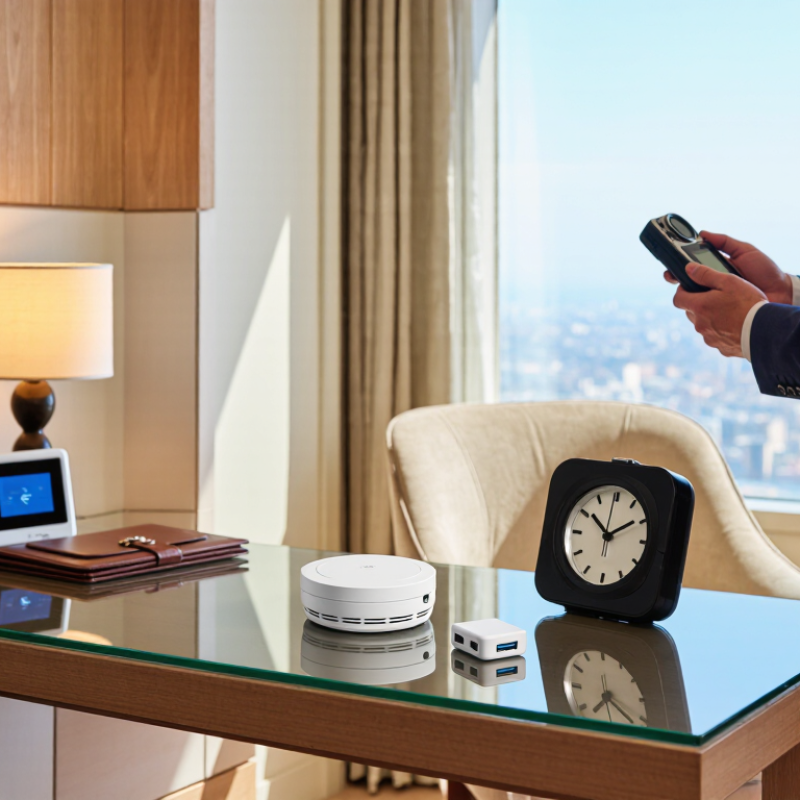
10 Spy Camera Detector Tips for Global Buyers?

Understanding How Spy Camera Detectors Work

10 Spy Camera Detector Tips for Global Buyers

Understanding How Spy Camera Detectors Work

A spy camera detector usually uses radio frequency sensing, optical reflection, or both. RF sensors identify wireless signals from nearby transmitting devices. They may react to routers, phones, speakers, or other electronics. This creates false alarms in busy hotel rooms.

Turn off unnecessary devices before testing. Then move slowly around lamps, vents, smoke alarms, and wall decorations.

Optical detectors work differently. Small LEDs shine light toward suspicious surfaces. A camera lens can return a sharp, bright reflection through the detector’s viewing filter. Dim the room and check from several angles.

A tiny blue or white glint deserves closer inspection. However, dust, glass, and polished metal can reflect light too. The result is not proof.

Wired cameras may transmit no radio signal. Some compact devices also remain inactive until motion occurs. A careful inspection should combine detector readings with visual checks.

Look for unusual holes, loose panels, fresh screws, or objects facing beds and desks. Read the detector’s sensitivity instructions carefully. Excessive sensitivity can confuse judgment.

In practical testing, users often scan too quickly and miss corners. Slow work is less impressive, but usually more reliable.

Test the device in a controlled room before international travel. Battery limits, unfamiliar plugs, and local privacy rules also require attention.


Choosing the Right Detector for Different Environments

10 Spy Camera Detector Tips for Global Buyers

Choosing a detector starts with the environment, not the product label. A hotel room may require lens reflection checks, infrared scanning, and radio-frequency detection. Offices often contain strong Wi-Fi signals, wireless microphones, and many electronic devices. This noise can create false alerts. Choose a detector with adjustable sensitivity and clear signal strength indicators. Test it near known routers before inspecting a private space. It should remain stable, not simply react to everything.

For bathrooms and changing areas, a lens finder with visible and infrared light can help locate reflective camera surfaces. Move slowly around clocks, vents, chargers, and smoke alarms. In vehicles, compact detectors are easier to use near dashboards and seat gaps. Wired cameras may produce no radio signal, so RF detection alone is not enough. Rental apartments need a broader approach. Check unfamiliar electronics, scan dark corners, and inspect unusual openings without touching installed equipment. Keep local privacy rules in mind.

Reliable results also depend on technique. Read the detection range carefully, because walls, metal, and furniture can weaken signals. Rechargeable models are convenient, but battery readings can be misleading. Carry a spare power source. No detector is perfect. I once trusted a strong alert near a router and missed the importance of visual inspection. That mistake changed my process. Use two methods when possible, record suspicious locations, and seek qualified local assistance if an object appears altered or unsafe. Erotiske?

Choosing a Spy Camera Detector for Different Environments

Ratings are indicative guidance on a 1–5 scale, not laboratory measurements. RF scanning is useful when a camera is transmitting; lens-reflection checks need a clear line of sight. For a thorough check, combine methods and account for obstacles, ambient radio signals, and the time available.

Preparing a Room Before Starting the Detection Process

Before using a spy camera detector, prepare the room like an investigator, not a hurried shopper. Remove unnecessary electronic devices, chargers, mirrors, and decorative objects. Photograph the room from each corner. This creates a useful visual baseline.

IoT Analytics reported 14.4 billion connected IoT devices worldwide in 2023, with 18.8 billion expected in 2024. That density increases the chance of false alerts from routers, smart speakers, and wireless sensors. Switch off devices that are not essential, but leave critical safety equipment untouched. Note every active network, power adapter, and unfamiliar cable. Small details matter.

Dim the lights, close curtains, and inspect reflective surfaces with a flashlight. A lens may produce a sharp pinpoint reflection. Move slowly. RF detectors can react to Wi-Fi traffic, Bluetooth signals, or nearby mobile devices, so record signal strength before changing the room. NIST guidance on IoT device management supports maintaining an accurate device inventory, while Verizon’s 2024 Data Breach Investigations Report analyzed 30,458 incidents and 10,626 breaches, showing why access and connectivity deserve attention.

Do not dismantle walls, outlets, or furniture. That can damage property and create unsafe conditions. I still find room preparation imperfect; false positives are common. Repeat the scan after removing one variable at a time, and compare results with your photographs. A second person can notice what the first misses.

Scanning for Hidden Cameras Step by Step

Tip 1: Start with a calm visual scan. Check smoke alarms, wall clocks, chargers, vents, mirrors, and unusual holes.

Tip 2: Look for objects facing beds, showers, desks, or changing areas. A camera needs a clear view.

Tip 3: Switch off the room lights and inspect tiny indicator lights. Some devices glow faintly, but darkness is not proof.

Tip 4: Use a flashlight at a low angle. Camera lenses may reflect a small, sharp point.

Tip 5: Check unfamiliar Wi-Fi devices through the property’s approved network information. Unknown devices require caution, not immediate conclusions.

Tip 6: Use a radio-frequency detector only as a supporting tool. It can react to routers, phones, and other harmless electronics.

Tip 7: Listen for buzzing or clicking near powered objects. This clue is weak alone. I once mistook a charger’s sound for surveillance, so I verify twice.

Tip 8: Examine mirrors from several angles, without damaging them. Reflection tests can be misleading.

Tip 9: Photograph suspicious details for your records, but avoid capturing other guests or private information.

Tip 10: If concern remains, leave the area and contact property management or local authorities through lawful channels. Do not dismantle devices or confront strangers.

Keep your inspection practical. False alarms happen. A reliable detector supports careful observation, privacy awareness, and professional verification.

Verifying Suspicious Findings and Protecting Your Privacy

A detector alert is a clue, not proof. Phones, routers, and motion sensors can trigger readings that resemble a hidden device. Pause and note the location, time, and detector setting. Then repeat the check from another position, keeping the room’s ordinary electronics in mind. Stay calm.

Look for visible, unfamiliar objects near the alert, such as a newly placed adapter or a small lens-like opening. Use a flashlight to inspect surfaces without moving or opening electrical fixtures. Record what you observe with a photo or written note. I have found that rushed checks can make ordinary reflections seem suspicious; that is an easy mistake to make. If the signal persists, ask a qualified security professional to assess it with appropriate equipment.

Protect your privacy while you verify. Avoid discussing sensitive details in the room, and use a trusted device elsewhere to contact someone you trust. Do not confront a person or publicly identify an object based only on a detector reading. If you are staying in temporary accommodation, request another room or a secure alternative while the concern is reviewed. Keep your notes factual, including what you checked and what remains uncertain.

10 Spy Camera Detector Tips for Global Buyers? - Verifying Suspicious Findings and Protecting Your Privacy

# Tip What to Do How to Verify a Finding Important Limitation Privacy-Safe Response
01 Start with a careful visual inspection Check objects with an unobstructed view of private areas, such as unfamiliar chargers, clocks, décor, or smoke-alarm-like devices. Look for unusual openings, exposed wiring, or objects that seem out of place. Compare the object with its surroundings and inspect it from more than one angle. A suspicious-looking object alone is not proof that it contains a camera. Ordinary holes, screws, reflections, and decorative details can resemble a lens. Do not dismantle fixtures or damage property. Photograph the object in place if it is safe and lawful to do so.
02 Use a flashlight to look for lens reflections Dim the room if appropriate and slowly sweep a flashlight across likely camera positions while observing from different angles. Recheck any bright pinpoint reflection from another angle and compare it with nearby reflective surfaces. Glass, polished metal, and plastic can also reflect light; some camera lenses may not produce a clear reflection. Treat a reflection as a lead for further checking, not as confirmation. Avoid shining bright lights into other guests’ rooms or public spaces.
03 Try a phone camera check for infrared light In a darkened room, point a phone camera toward suspected areas and look for small glowing points that may come from infrared LEDs. Check whether the phone camera can see an infrared remote-control signal, then compare the result using the front and rear cameras. Many phone cameras filter infrared, and not all cameras use infrared illumination. Other infrared sources may also appear as lights. Use this only as a supplementary check. Do not assume that seeing or not seeing a glow proves the presence or absence of a camera.
04 Understand the limits of radio-frequency detectors If using an RF detector, first read its instructions and test it near a known, permitted transmitting device. Sweep slowly and note signal changes. Repeat the sweep with nearby phones and wireless devices moved or switched off where practical; check whether the signal remains localized. RF detectors can react to Wi-Fi, Bluetooth, mobile phones, and other radio sources. A wired, offline, or non-transmitting camera may not be detected. Do not interfere with communications or access networks you are not authorized to inspect. Avoid treating a signal reading as proof of surveillance.
05 Check your own network information carefully Review the devices and connection details available through a network you own or are authorized to manage. Look for an unfamiliar device entry, then compare its connection time and details with the devices you or your travel companions are using. Device names can be generic or misleading, and a camera may use another network or store footage locally. Do not attempt to break into a router, scan networks without permission, or collect other users’ traffic.
06 Repeat checks under different conditions Revisit a suspected area after moving personal devices away, reducing unnecessary wireless activity, or changing the lighting. Record what changed and whether the same observation can be reproduced. A consistent, localized result is more useful than a single reading. Environmental interference, device settings, and room layout can affect detector results. Keep notes factual and avoid identifying or accusing a person without reliable evidence.
07 Look for a plausible power source Notice whether an unfamiliar object is plugged in, connected to visible wiring, or positioned where a power source would make sense. Observe the cable route and surrounding setup without moving or opening the object. Compare it with ordinary room equipment. Battery-powered devices may have no visible cable, while legitimate equipment often needs power. Do not unplug or handle safety equipment, alarms, or electrical fixtures. Contact the property manager if a fixture seems unsafe.
08 Document suspicious findings objectively If lawful and safe, take clear photos of the object and its location, and write down the date, time, and detector readings. Keep original files and note the method used. Separate direct observations from assumptions about what the object might be. Photos and detector readings may not establish what a device is or whether it recorded anything. Store documentation securely. Avoid posting identifying images or allegations publicly while facts remain unverified.
09 Use a cautious response if concern remains Move away from the area if you feel unsafe. Contact the accommodation provider, venue security, or an appropriate local authority, depending on the situation. Ask for an inspection by someone authorized and qualified to assess the object. Request that the concern and any response be documented. Procedures and privacy laws differ by country and location; a detector result by itself may not meet a legal standard. Do not remove, destroy, or tamper with a suspected device. Preserve the scene where practical and follow local guidance.
10 Reduce exposure while traveling Choose reputable accommodation, review the room before unpacking, and keep sensitive conversations and personal activities away from unfamiliar devices. Use a repeatable room-check routine and reassess any new or changed objects rather than relying on a single detector reading. No consumer detector or inspection routine can guarantee that a space is free of recording devices. Use reasonable precautions, protect device accounts with strong authentication, and seek help if you find credible evidence of a privacy violation.

Powder Coat Booths

For those larger-sized parts, or smaller quantity runs, we have 2 independent powder coat booths and ovens. The quality, durability and affordability of today’s powder coating finishes make this the process of choice for world-class companies.

Powder coating advantages over other forms of coating are many. Materials used in the Powder coating process can be metals and non-metals that come in a multitude of thicknesses, textures, colors, etc. Another of Powder coating’s biggest advantages over conventional coatings is its ability to create finishes in many different textures. Powder Coating Booths allow us the ability to apply these advantages to large products.

Wet Paint Line

Tri-State Fabricators runs a full-service conveyor line for painting. Wet painting can provide protection or decoration to many different part styles. From start to finish, every project is easier to undergo random and point-based inspection by our skilled painting team.

Advantages to our Wet Paint Line are these lines start with product prep and ends with a thorough inspection of a high quality finished product. Our ability to complete large and small projects with a superior finish and doing so in a timely and economical fashion. This passes along the savings in production to our customers. When powder coating ins not an option, our Wet Paint Line gets the job done right the first time.

Wet Paint Booths

When the parts get big and heavy we roll-out our custom paint racks and oversize booth. By utilizing our partnerships with all the major paint brands, we can match virtually any color with wet paint.

The advantages of having access to a Wet Paint Booth are many. Large projects of many different shapes can be loaded into the booth. The Wet Paint Booth offers an environment that is much more controlled than a typical parts painting operation.

Not only are they used because of their controlled environment, but they’re are also advantageous when it comes to applying paint to parts that are needed in industries that require specialty coatings such as medical, aerospace, etc.

Military CARC

Our military forces have some very high standards when it comes to the finish of their vehicles and equipment. From the first pre-treatment step to final coat, it takes a great deal of knowledge and experience to protect the men and women of our armed forces. They deserve only the best, and Tri-State Fabricators provides it.

All of our processes are closely monitored by our staff and management teams. Both of which are highly trained in the processes of metal fabrication and finishing. Tri-State Fabricators’ goal is to always fully satisfy each and every customer, including the military. We will always put a 110% into what we do.

Glass-Bead Blasting

Abrasive media blasting is an excellent way to remove old paint, rust, and increase the paint/powder adhesion. Glass beads produce a much smoother and brighter finish than angular abrasives; leaving the part clean yet without any dimensional change. Chemically inert and environmentally friendly, we can recycle our beads approximately 30 times; making them a more preferred method of metal cleaning or surface finishing.

Advantages to Glass Bead Blasting are many. Glass bead blast media is used when a project is needing rough surfaces need to become smooth for applications of coatings such as paint. It is typically used to clean paint and rust from a product surface without deforming the surface it is being used on. Overall, compared to many other blasting media, Glass Bead Blasting is a very economical choice and those savings are always passed on to our customers.

Part Washing

Tri-State Fabricators utilize a zinc phosphate wash to clean and etch the material to ensure the best paint adhesion possible. The unique design of our 3-stage wash system does the work like a 5-stage. From Cleaning and rinsing to conversion coating and post-treatment, Our Part Washing process is a complete service and works throughout the fabrication service and the finishing service.

Along with the previously mentioned benefits, Curing is a vital chemical reaction that leaves the product finish hard and relatively safe from mild abrasion and aggressive corrosion. This process can be done in more than one way; ambient air-dry or in curing ovens at temps that exceed 240°.

Burn-Off Oven

From fixing paint mistakes (someone else’s of course) to simply cleaning our paint line hooks, our burn-off oven is put to good use. After a quick burn-off, a little clean up, and a fresh coat of paint, your parts will look better than new.

Why does our Burn-Off Oven work so well? Because super heating the air around parts turns the materials into ashes. From paint and powder coatings to rubber and machining oils, high temps do the job without degrading the integrity of the part.

Masking

Masking is a vital part of producing high quality products. We have die-cut masking patterns to protect machined surfaces as well as a wide range of plugs and caps to protect threaded holes and bolts. We provide permanent and temporary masking.

Masking allows the selected sections of a product to be protected from a fabrication or finishing service. This can be with both chemicals when etching and tapes, paints when only finishing just a section of the product. Masking is great in aiding the customization process of a project.

Screen Printing

Screen printing is a photographic process that transfers artwork onto a porous nylon screen which allows colored ink to flow through the screen and be deposited on an aluminum or plastic component. We can generally have just about any design created onto a screen for your parts.

Some of the advantages of Screen Printing are, brand recognition for your business displaying on your products, assembly instructions, product warnings/hazards, etc. Tri-State Fabricators produces Screen Printing of the highest quality so you know it’s durable.

Metal Finishing

Metal Finishing is the art of treating the exterior portion of product, often metal but can also be made of other materials, so that the surface is clean and free of any debris. Then the process of applying coats or either paint of powder coat takes place. This coating process improves the quality of the product in both appearance and resistance to wear and corrosion.

Tri-State Fabricators, Inc., understands that a project typically isn’t complete until a high-quality finish has been added to your product. This is why our painting and powder coating teams continuously inspect the products throughout the Metal Finishing process.
