Top 10 Silicone Decorative Molds for Wholesale Buyers
A decorative mold can look impressive in a catalog and still disappoint during production. Fine floral veins may disappear after casting, while narrow edges can tear during demolding. Small flaws matter. For wholesale buyers, Silicone Decorative Molds deserve closer inspection than product photos alone can provide. A useful selection balances design appeal, material suitability, release performance, and consistent dimensions across repeat orders. That balance is not always easy to judge from a supplier’s sample, especially when bulk production introduces variations.
This guide explores ten decorative mold options for businesses serving craft, home décor, and seasonal gifting markets. Think botanical reliefs for plaster plaques, geometric cavities for resin ornaments, and detailed borders for furniture embellishments. Details drive decisions. Before ordering, compare cavity dimensions, silicone hardness, wall thickness, and compatibility with your intended casting material. Request samples and test them under your actual curing, cleaning, and demolding conditions. Ask suppliers for specifications and relevant test documentation where applicable. Food-contact applications require separate verification; suitability for resin casting does not establish suitability for chocolate or fondant. A low unit price can lose its appeal when distorted cavities create repeated waste.
There is no universal winner among Silicone Decorative Molds. A flexible design may release intricate shapes easily yet need additional support to hold its form. Samples have limits. Even a promising trial cannot establish long-term durability without repeated use. The following selections give wholesale buyers practical comparison points, including design versatility, packaging needs, and replacement availability. Use them to build a shortlist, then challenge your assumptions before committing to volume.
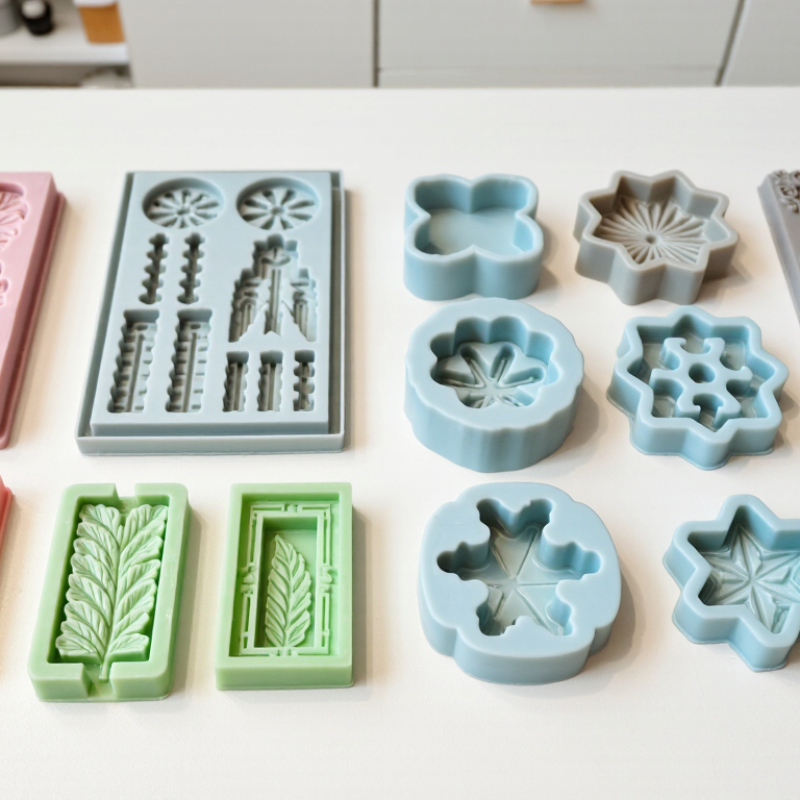
Silicone Decorative Molds: Materials, Features, and Common Uses
Silicone decorative molds turn floral patterns, geometric textures, and small figurines into repeatable products for wholesale orders. Most use flexible silicone rubber, with platinum-cured and tin-cured formulations offering different processing characteristics. Platinum-cured silicone typically offers low shrinkage, helping preserve fine details across repeated casts. Actual durability depends on formulation, casting material, and handling. Shore A hardness indicates firmness: softer molds release intricate shapes more easily, while firmer molds support heavier castings. Samples matter.
Useful features include smooth cavities, stable bases, and enough wall thickness to resist distortion during filling. A rose-shaped cavity should reproduce petal edges without tearing during removal. Thin walls may reduce purchase costs but require support trays, adding handling time that buyers sometimes overlook when comparing quotations. Check cavity dimensions, finished-piece weight, and compatibility with your intended material before placing a bulk order. Ask for documentation. Temperature limits should come from product specifications, since appearance alone cannot confirm heat resistance.
Common applications include plaster ornaments, wax decorations, soap bars, and resin accessories. Baking and chocolate work require molds documented as suitable for the intended food-contact conditions. Keep food molds separate from craft molds. An attractive sample can still hide an awkward release angle or a base that rocks when filled. That is easy to miss. Trial several casting cycles, record defects, and inspect delicate edges before approving production quantities.
How to Compare the Top 10 Silicone Decorative Molds for Wholesale
Comparing the top 10 silicone decorative molds for wholesale starts with your intended casting material. A detailed floral mold may suit plaster ornaments but struggle with thicker mixtures in narrow petal cavities. Check cavity dimensions, silicone hardness, wall thickness, and the recommended casting materials. Details matter. For example, compare the depth of a 70 mm floral cavity across samples, rather than judging photographs alone. Ask suppliers for technical data sheets and care instructions. Request samples before ordering.
Test each shortlisted mold using the same mixture, curing conditions, and release method. Record trapped bubbles, torn edges, demolding time, and finished-piece dimensions. Photograph results beside a ruler. Count usable pieces. A cheaper mold can become expensive when delicate details repeatedly break during removal. Still, a small trial cannot establish its full production lifespan. That uncertainty deserves attention. Compare minimum order quantities, carton dimensions, delivery terms, and replacement policies alongside sample performance. A slightly uneven outer rim might be acceptable; distortion inside the decorative cavity deserves closer inspection.
Tips: Build a comparison sheet with one row per mold and separate columns for quality, cost, and supply reliability. Include freight and expected rejects when estimating cost per usable piece. Ask whether samples and bulk orders use the same silicone specification. Keep an approved sample for checking incoming batches. Leave durability estimates provisional until repeated casting provides better evidence.
How to Compare 10 Silicone Decorative Mold Shapes for Wholesale Buying
Compare the calculated capacity of ten geometric cavity designs used for decorative casting. Each design below has specified internal dimensions, allowing buyers to compare material requirements on a consistent basis. These are illustrative geometric designs, not a sales ranking or measurements of commercial products.
Internal cavity dimensions: Cube: 4 cm edge; rectangular block: 6 × 4 × 2 cm; short cylinder: 4 cm diameter × 2 cm height; tall cylinder: 4 cm diameter × 6 cm height; sphere: 4 cm diameter; hemisphere: 4 cm diameter; cone: 4 cm base diameter × 6 cm height; truncated cone: 6 cm bottom diameter × 4 cm top diameter × 4 cm height; square pyramid: 4 × 4 cm base × 6 cm height; triangular prism: right-triangle base with perpendicular sides of 3 and 4 cm, extending 6 cm.
What the comparison shows: Calculated volumes, in chart order, are 64.00, 48.00, 25.13, 75.40, 33.51, 16.76, 25.13, 79.59, 32.00, and 36.00 mL. Values use standard solid-geometry formulas, with 1 cm³ equal to 1 mL, and assume complete filling. Larger cavities require more casting material per piece. Multiply cavity volume by the number of cavities to estimate material volume per full mold; multiply that volume by the casting material’s density to estimate mass. For wholesale purchasing, also compare cavity count, silicone hardness, wall thickness, casting-material compatibility, dimensional tolerances, and supplier-verified service life. Capacity alone does not determine mold quality or production cost.
Matching Mold Designs and Sizes to Customer Demand
A useful top-ten assortment should reflect what customers make, not just which silicone molds look attractive. Consider flowers, leaves, hearts, shells, butterflies, geometric shapes, letters, lace borders, rosettes, and seasonal ornaments. Demand varies. Review recent orders, customer inquiries, and repeat purchases before assigning quantities to each design. Floral molds may attract steady interest, while seasonal shapes can leave excess stock after a short selling window.
Match dimensions to the finished decoration rather than the mold’s outer measurements. A 20-millimeter flower suits small accents; a 70-millimeter bloom creates a much larger focal point. Depth matters, too. A shallow cavity produces a different result from a deep cavity with the same width. Ask suppliers for cavity dimensions, overall dimensions, and photographs beside a ruler. For food applications, request documentation supporting suitability for the intended use and selling market. Check sample pieces for clear detail, easy release, and thin sections that might tear during repeated handling.
Wholesale quantities should follow evidence, although early decisions will sometimes be imperfect. For an initial 100-unit order, a provisional mix might include 60 small, 30 medium, and 10 large molds. That split is a starting assumption, not an industry benchmark. Larger designs might sell faster among event decorators than among hobby buyers. Test a small batch. Track sales by cavity size and design, then adjust the next order when actual demand challenges your original choices.
Quality Standards, Material Safety, and Durability Checks
A top-ten shortlist might include floral, leaf, lace, geometric, shell, lettering, border, medallion, seasonal, and miniature relief molds. For wholesale buyers, attractive patterns are only the starting point. Check the paperwork. Request batch identification, intended-use specifications, and independent laboratory reports matching the supplied silicone formulation. A generic certificate cannot establish that every color or production batch meets the same requirements.
Material safety depends on the application. For food-contact silicone, Germany’s Federal Institute for Risk Assessment sets useful benchmarks in Recommendation XV. These include maximum levels of 0.5% for volatile organic components and 0.5% for extractable components, under specified testing conditions. These figures are technical limits, not evidence that a particular shipment passed. Ask suppliers for measured results, test methods, and sample identification. “Food grade” alone says little. Decorative molds intended for resin or plaster require separate suitability checks; food-contact documentation does not establish compatibility with those materials.
Durability needs practical screening alongside laboratory evidence. Test narrow petals, deep lettering, and thin borders, where tearing can start during demolding. Count the cycles. A buyer might specify 100 demolding cycles as an internal purchasing screen, rather than an established industry standard. Compare cavity dimensions before and afterward, using the same measurement method and temperature. Record edge tears, permanent distortion, and lost surface detail. This screening remains imperfect: a few samples can miss inconsistent curing across a large shipment. Retain an approved reference sample and inspect randomly selected molds from each delivery against it.
Wholesale Pricing, Minimum Orders, and Supplier Selection
Ten silicone decorative mold styles worth comparing include floral, leaf, geometric, lace, baroque, alphabet, frame, border, animal, and seasonal designs. For wholesale buyers, their value depends on pricing, minimum orders, and consistent production quality. Request quotes at 100, 500, and 1,000 units to reveal volume discounts. These quantities are comparison points, not standard supplier minimums. Ask whether prices include individual packaging, custom colors, and export cartons. A cheaper mold may have thinner walls, making intricate edges harder to release without damage.
Minimum order quantities can apply per design, color, or total purchase. Clarify this before budgeting. An order of 500 pieces offers limited variety if each design requires 250 units. Compare landed costs, including freight, duties, and inspection fees, rather than unit prices alone. Request samples from the intended production material. Check cavity dimensions, flexibility, surface defects, and compatibility with your intended casting material. Request relevant test reports for any claimed material properties. A supplier’s catalog cannot establish those claims. Samples are imperfect predictors. Production batches can still vary, so agree on defect criteria and replacement terms in writing.
Tips: Start with a mixed trial order if the supplier permits it. Test detailed corners. Record release quality across repeated uses and photograph tears or distortion. The lowest quotation may still suit simple designs; rejecting it automatically would also be a mistake. Ask how long repeat orders take during peak periods.





