


Top Shirt Gift Boxes for Wholesale Buyers

Choosing Shirt Gift Boxes for wholesale orders involves more than finding an attractive lid and matching ribbon. Buyers must consider shirt size, folding style, shipping conditions, storage space, and the cost per unit. A box that looks refined in a product photo may feel bulky on a crowded shelf or arrive dented after transit. Fit comes first.

This guide compares common options, including rigid boxes, folding cartons, kraft styles, and designs with windows or magnetic closures. It also looks at practical details such as insert support, print finishes, minimum order quantities, lead times, and how samples can reveal flaws before a large purchase. Small details matter. A collar that shifts inside the box can weaken an otherwise polished presentation.

Wholesale requirements vary. A boutique ordering a few seasonal colors may need flexibility, while a larger retailer may prioritize consistent sizing and repeatable production. No single package works for every shirt or budget, and customization can add cost or time. That trade-off deserves a careful look. By weighing appearance against protection, price, and handling, buyers can shortlist Shirt Gift Boxes that suit their products and customers. The recommendations are starting points, not guarantees; confirm dimensions and request a production sample when possible.
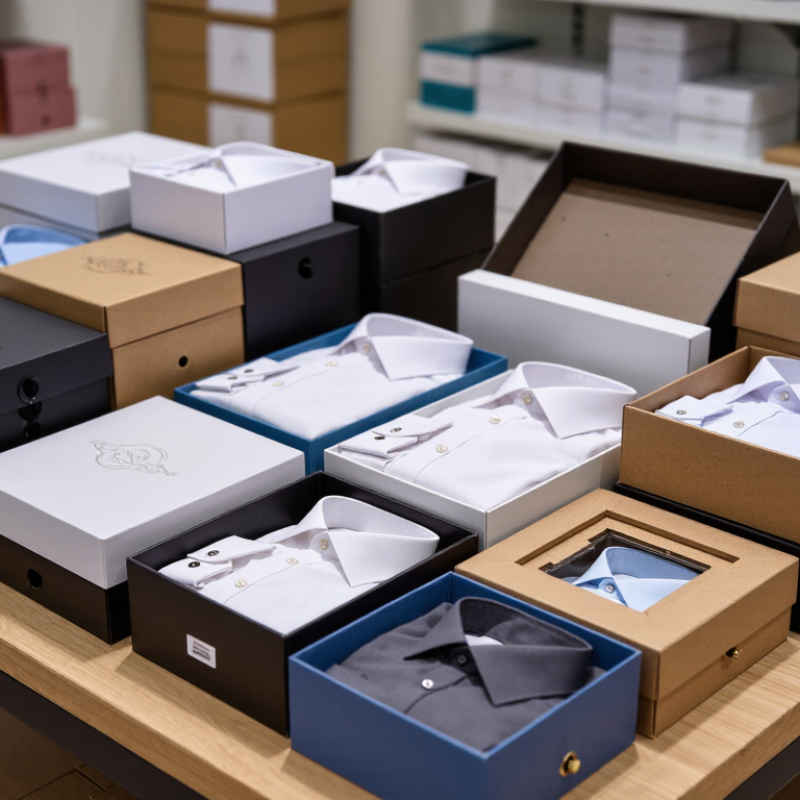
Top Shirt Gift Boxes for Wholesale Buyers

What Shirt Gift Boxes Are and Why Wholesale Buyers Use Them

Top Shirt Gift Boxes for Wholesale Buyers

What Shirt Gift Boxes Are and Why Wholesale Buyers Use Them

A shirt gift box is a rigid or folding carton sized to hold a folded shirt, often with tissue paper or a card. For wholesale buyers, it turns ordinary stock into a ready-to-present product. A clean lid, snug fit, and smooth opening can improve the unboxing experience while helping shirts stay neat during storage and delivery. That matters. Packaging also affects material use and freight space, so buyers should compare box dimensions with their folded garments before ordering in bulk.

The box is useful for retail gifting, corporate orders, and seasonal sets. It can reduce the need for last-minute wrapping, but it does not guarantee more sales. PwC’s 2024 Voice of the Consumer Survey found that 46% of respondents said they were buying more sustainable products. This is a broad consumer finding, not a shirt-box-specific result. Still, it gives buyers a reason to ask about recycled content, recyclability, and protective performance.

Tips: Test a sample with the actual shirt, tissue, and insert. Check whether corners crush under stacked cartons. Ask suppliers for material specifications and confirm the box fits your shipping cartons; oversized packaging can add avoidable volume. A small batch test is wise, even when the unit price looks less attractive. Small details count.

Top Shirt Gift Boxes for Wholesale Buyers - What Shirt Gift Boxes Are and Why Wholesale Buyers Use Them

A shirt gift box is a packaging box designed to present and protect a folded shirt. The dimensions below are example interior-size starting points, not universal standards; fit depends on the shirt’s fabric, fold, and added inserts.

Box Style Example Interior Dimensions Typical Use Common Construction Why Wholesale Buyers Choose It Ordering Check
Folding Carton Gift Box Approx. 12 × 10 × 3 in
(305 × 254 × 76 mm)
A folded dress shirt, T-shirt, or lightweight top, depending on the fold and fabric. Printed paperboard, supplied flat or pre-glued depending on the design. Stores efficiently before assembly and can provide a neat, gift-ready presentation. Request a folded sample to check board strength, closure, and shirt fit.
Rigid Lift-Off-Lid Box Approx. 12 × 10 × 3 in
(305 × 254 × 76 mm)
Premium gifting, special occasions, and presentation sets with tissue or a small insert. Rigid paperboard base and separate lid, often wrapped with decorative paper. Offers a sturdy presentation and can be reused for storage. Confirm assembled dimensions, lid fit, and how the box will be packed for shipping.
Shallow Shirt Box Approx. 14 × 11 × 2 in
(356 × 279 × 51 mm)
Thin, neatly folded shirts where a low-profile pack is preferred. Folding carton or rigid paperboard, with a shallow base and lid. Uses less box depth than a deeper format and can help create a tidy retail display. Check the finished stack height, including tissue, collar supports, or other inserts.
Mailer-Style Gift Box Approx. 13 × 10 × 2.5 in
(330 × 254 × 64 mm)
Single-shirt shipments and gift orders that need a closing flap. Corrugated board or sturdy paperboard with an integrated fold-over closure. Combines a presentation format with a box that is convenient to close and handle. Confirm board grade and test the packed box against the intended shipping conditions.
Window Gift Box Approx. 12 × 10 × 3 in
(305 × 254 × 76 mm)
Retail display when buyers want the shirt color, pattern, or folded presentation visible. Paperboard box with a clear film window in the lid. Shows part of the product without opening the box. Check window placement, film attachment, and whether the visible area matches the fold.
Gift Box with Insert Approx. 12 × 10 × 3 in
(305 × 254 × 76 mm)
A shirt paired with a tie, pocket square, or other small accessory. Paperboard or rigid box with a fitted paperboard insert or divider. Separates items and helps keep a coordinated gift set organized. Provide the dimensions and quantity of each item so the insert can be checked for fit.

Wholesale buying tip: Compare the usable interior dimensions, material, assembly requirements, packing method, and sample quality before placing an order. Always verify the box with the actual folded shirt and any intended tissue, insert, or accessories.


Common Shirt Gift Box Styles and Their Best Uses

Rigid two-piece boxes suit premium shirts, executive gifts, and small seasonal runs. Their firm walls protect folded collars, while a paperboard insert keeps the shirt centered. They look substantial, but take more storage space and usually cost more to ship. For wholesale orders, confirm the box fits the shirt after tissue wrapping, not just the garment alone.

Folding cartons work well for retail gift sets and larger wholesale volumes. They ship flat, stack neatly, and can carry a printed size or care card. A drawer-style box adds a reveal moment for boutique gifting, though its sleeve may slow packing lines. Magnetic-flap boxes feel polished for corporate gifts. Use them when presentation matters more than compact storage.

Kraft mailer boxes suit casual shirts, online orders, and brands seeking a simpler unboxing. They are lighter, but less protective. McKinsey’s 2023 US consumer survey on packaging sustainability found that 60% of respondents considered recyclability important when choosing packaging. That makes recyclable paperboard a practical option, provided coatings and inserts do not complicate disposal. Still, a recyclable box is not automatically the best choice: test the fit, stacking strength, and shipping damage rate with a small batch first.

Materials, Sizes, and Features That Shape Box Quality

Top Shirt Gift Boxes for Wholesale Buyers

Material affects both protection and presentation. A shirt box made from rigid paperboard holds its shape and gives folded garments a clean display. Corrugated board adds cushioning for longer shipping routes, though its fluted edges can look less refined. Kraft paperboard offers a natural finish, but lighter grades may crease under stacked cartons. Check board thickness and corner strength using samples, not photos alone. A tidy sample can hide weaknesses that appear in bulk production.

Size matters. Measure the folded shirt, including collars and packaging tissue, then allow enough clearance for easy packing. Too much empty space lets garments shift; too little can flatten collars or strain seams. Common features include lift-off lids, magnetic closures, ribbon pulls, and tissue inserts. Each adds cost and packing time, so match features to the order’s price point and handling needs. Small details matter. Yet they are easy to overlook.

Tips: Test a filled box under a realistic stack of cartons. Check whether lids stay aligned and prints resist scuffing. Ask suppliers for tolerances on dimensions and board thickness; small variations can complicate automated packing.

How to Compare Wholesale Suppliers, Prices, and Minimum Orders

For wholesale shirt gift boxes, compare suppliers using the same specification: box dimensions, board thickness, finish, insert, and packing method. A low unit price can hide setup fees, freight, or a higher minimum order quantity. Ask for a written quote at several order levels, such as 500, 1,000, and 2,500 boxes. Check whether the price includes samples and tooling. Ask for samples.

Inspect a physical sample with a folded shirt inside. Does the lid sit flat? Does the insert shift during handling? Confirm lead time, color tolerance, and how defects are handled. Minimum orders vary with materials and printing, so request the reason behind each MOQ rather than comparing figures alone. Small details matter. A spreadsheet can miss storage costs when oversized cartons take up valuable space.

Packaging choices also affect waste. The U.S. EPA’s 2018 Advancing Sustainable Materials Management report estimated that containers and packaging made up 82.2 million tons of U.S. municipal solid waste; 53.9% was recycled. This broad category is not a shirt-box benchmark, but it supports asking suppliers for material weights and recycled-content documentation. One weak spot in many comparisons: recycled content is not useful proof by itself unless the supplier can document it. Check claims against the box specification, then weigh durability against cost. A cheaper box that arrives crushed may cost more in replacements.

Top Shirt Gift Boxes for Wholesale Buyers: MOQ Cost Scenarios

Estimated order value at an assumed unit price of $2.50 per box. These are calculated planning scenarios, not supplier quotes or market price claims.

Compare each supplier’s actual unit price and minimum order quantity (MOQ), then calculate the order total using the same method: quantity × unit price. Shipping, setup fees, and taxes are not included.

Customization and Sustainable Options for Bulk Shirt Packaging

For wholesale buyers, a shirt box must protect folded collars, buttons, and size labels through storage and delivery. Custom sizing can reduce empty space and help shirts arrive neatly presented. Add practical details, such as a tuck-in tab, a clear size label, or a printed inside panel. Keep decoration purposeful. Extra coatings and inserts can complicate material recovery. For repeat orders, test the box with actual shirts before approving a large run; fabric thickness can change the fit.

Sustainability claims need evidence, not green-colored ink. Eurostat reported that the EU generated 83.4 million tonnes of packaging waste in 2022, with paper and cardboard recycling at 83.2%. These are regional figures, not proof that every paper box is recycled. The OECD’s 2022 Global Plastics Outlook estimated that only 9% of plastic waste was recycled worldwide in 2019. Buyers can ask suppliers for recycled-fiber content, material specifications, and guidance on disposal. Avoiding unnecessary plastic windows and oversized boxes may also reduce material use. Recycled board can vary in shade and stiffness. Test print quality, compression, and moisture resistance before ordering in bulk. Small details matter.

Powder Coat Booths

For those larger-sized parts, or smaller quantity runs, we have 2 independent powder coat booths and ovens. The quality, durability and affordability of today’s powder coating finishes make this the process of choice for world-class companies.

Powder coating advantages over other forms of coating are many. Materials used in the Powder coating process can be metals and non-metals that come in a multitude of thicknesses, textures, colors, etc. Another of Powder coating’s biggest advantages over conventional coatings is its ability to create finishes in many different textures. Powder Coating Booths allow us the ability to apply these advantages to large products.

Wet Paint Line

Tri-State Fabricators runs a full-service conveyor line for painting. Wet painting can provide protection or decoration to many different part styles. From start to finish, every project is easier to undergo random and point-based inspection by our skilled painting team.

Advantages to our Wet Paint Line are these lines start with product prep and ends with a thorough inspection of a high quality finished product. Our ability to complete large and small projects with a superior finish and doing so in a timely and economical fashion. This passes along the savings in production to our customers. When powder coating ins not an option, our Wet Paint Line gets the job done right the first time.

Wet Paint Booths

When the parts get big and heavy we roll-out our custom paint racks and oversize booth. By utilizing our partnerships with all the major paint brands, we can match virtually any color with wet paint.

The advantages of having access to a Wet Paint Booth are many. Large projects of many different shapes can be loaded into the booth. The Wet Paint Booth offers an environment that is much more controlled than a typical parts painting operation.

Not only are they used because of their controlled environment, but they’re are also advantageous when it comes to applying paint to parts that are needed in industries that require specialty coatings such as medical, aerospace, etc.

Military CARC

Our military forces have some very high standards when it comes to the finish of their vehicles and equipment. From the first pre-treatment step to final coat, it takes a great deal of knowledge and experience to protect the men and women of our armed forces. They deserve only the best, and Tri-State Fabricators provides it.

All of our processes are closely monitored by our staff and management teams. Both of which are highly trained in the processes of metal fabrication and finishing. Tri-State Fabricators’ goal is to always fully satisfy each and every customer, including the military. We will always put a 110% into what we do.

Glass-Bead Blasting

Abrasive media blasting is an excellent way to remove old paint, rust, and increase the paint/powder adhesion. Glass beads produce a much smoother and brighter finish than angular abrasives; leaving the part clean yet without any dimensional change. Chemically inert and environmentally friendly, we can recycle our beads approximately 30 times; making them a more preferred method of metal cleaning or surface finishing.

Advantages to Glass Bead Blasting are many. Glass bead blast media is used when a project is needing rough surfaces need to become smooth for applications of coatings such as paint. It is typically used to clean paint and rust from a product surface without deforming the surface it is being used on. Overall, compared to many other blasting media, Glass Bead Blasting is a very economical choice and those savings are always passed on to our customers.

Part Washing

Tri-State Fabricators utilize a zinc phosphate wash to clean and etch the material to ensure the best paint adhesion possible. The unique design of our 3-stage wash system does the work like a 5-stage. From Cleaning and rinsing to conversion coating and post-treatment, Our Part Washing process is a complete service and works throughout the fabrication service and the finishing service.

Along with the previously mentioned benefits, Curing is a vital chemical reaction that leaves the product finish hard and relatively safe from mild abrasion and aggressive corrosion. This process can be done in more than one way; ambient air-dry or in curing ovens at temps that exceed 240°.

Burn-Off Oven

From fixing paint mistakes (someone else’s of course) to simply cleaning our paint line hooks, our burn-off oven is put to good use. After a quick burn-off, a little clean up, and a fresh coat of paint, your parts will look better than new.

Why does our Burn-Off Oven work so well? Because super heating the air around parts turns the materials into ashes. From paint and powder coatings to rubber and machining oils, high temps do the job without degrading the integrity of the part.

Masking

Masking is a vital part of producing high quality products. We have die-cut masking patterns to protect machined surfaces as well as a wide range of plugs and caps to protect threaded holes and bolts. We provide permanent and temporary masking.

Masking allows the selected sections of a product to be protected from a fabrication or finishing service. This can be with both chemicals when etching and tapes, paints when only finishing just a section of the product. Masking is great in aiding the customization process of a project.

Screen Printing

Screen printing is a photographic process that transfers artwork onto a porous nylon screen which allows colored ink to flow through the screen and be deposited on an aluminum or plastic component. We can generally have just about any design created onto a screen for your parts.

Some of the advantages of Screen Printing are, brand recognition for your business displaying on your products, assembly instructions, product warnings/hazards, etc. Tri-State Fabricators produces Screen Printing of the highest quality so you know it’s durable.

Metal Finishing

Metal Finishing is the art of treating the exterior portion of product, often metal but can also be made of other materials, so that the surface is clean and free of any debris. Then the process of applying coats or either paint of powder coat takes place. This coating process improves the quality of the product in both appearance and resistance to wear and corrosion.

Tri-State Fabricators, Inc., understands that a project typically isn’t complete until a high-quality finish has been added to your product. This is why our painting and powder coating teams continuously inspect the products throughout the Metal Finishing process.
