


Top Shipping Container Sizes and Prices for Buyers

Choosing a Shipping Container starts with a practical question: what needs to fit inside, and where will the unit go? Common options include 10-foot, 20-foot, and 40-foot containers, but dimensions can vary by model and supplier. A 20-foot unit may suit tools, stock, or a compact workshop. A 40-foot container offers more floor space, though its length can complicate delivery and placement. Measure the intended contents, access route, and available ground before comparing listings. Small details matter.

Prices depend on more than size. New or “one-trip” containers usually cost more than used units, while condition, location, delivery distance, and modifications can change the final quote. Ask whether the stated price includes transport, unloading, taxes, and any requested features. Check door operation, floor condition, visible corrosion, and roof integrity when possible. Photos help, but they do not replace an inspection. Prices move.

This guide compares common container sizes and explains the factors behind buyer costs. It is designed to help readers ask better questions, not promise a universal price. Supplier terminology can be inconsistent, and online estimates may not reflect local availability. That part is easy to overlook. A careful comparison should account for usable interior dimensions, delivery access, and the container’s intended use. With those details in hand, buyers can narrow their choices and request quotes that are easier to evaluate.
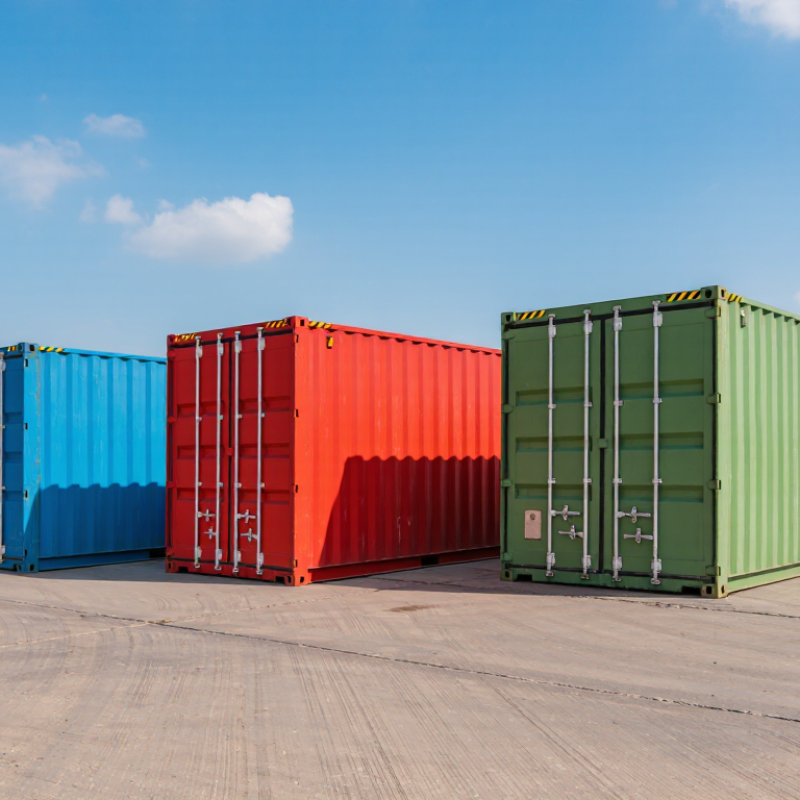
Top Shipping Container Sizes and Prices for Buyers

Common Shipping Container Types and Their Standard Dimensions

ISO 668:2020 defines the standard external dimensions used for common freight containers. A 20-foot Dry Container measures about 6.06 metres long, 2.44 metres wide, and 2.59 metres high. The 40-foot version is roughly 12.19 metres long, with the same width and standard height. These are exterior measurements, not usable cargo space. That distinction matters.

A high-cube container keeps the 40-foot footprint but reaches about 2.90 metres in external height. Typical interior dimensions are approximately 5.9 by 2.35 by 2.39 metres for a 20-footer, and 12.0 by 2.35 by 2.39 metres for a 40-foot standard unit. High-cube interiors are taller, though fittings and wall thickness reduce usable space. Real-world interiors vary. A pallet may fit through the door but still be awkward to turn inside. Check door opening dimensions, floor condition, and measured interior clearance before buying. ISO 668:2020 provides the dimensional framework; the seller’s actual unit should still be measured, since repairs and construction tolerances can affect available space.


How Container Size Affects Capacity and Intended Use

Container size affects more than floor space; it shapes how goods can be loaded, secured, and accessed. A standard 20-foot container holds roughly 33 cubic metres, but door openings and wall fittings reduce usable room. It can suit dense cargo, such as boxed tools or machinery, where weight may become a limit before space does. Measure the largest item, including pallet overhang. Small details matter.

A standard 40-foot container offers about 67 cubic metres, making it useful for bulky, lighter goods or larger shipments. A 40-foot high-cube unit adds roughly 30 centimetres of interior height, helpful for tall equipment or stacked cartons. More volume is not always better. Partly empty space can let cargo shift, and a longer unit needs more room for delivery and placement. Rated payload varies by model and condition, so check the data plate and compare it with the shipment’s actual weight. Prices also depend on size, condition, and delivery distance; the biggest container may cost more without improving the fit. Measure twice. Some estimates still miss awkward shapes.

Key Factors That Determine Shipping Container Prices

Container prices reflect more than size. A standard 20-foot unit may cost less than a 40-foot high-cube box, but condition can reverse the gap. Buyers should inspect door seals, floor boards, corner castings, and roof patches. A fresh-looking coat of paint proves little. Ask for dated photos and a clear grade description, then compare like with like.

Location matters. A container sitting near a depot can be cheaper to collect than one requiring inland transport, even when its listed price is higher. Freight markets also affect availability and repositioning costs. Drewry’s World Container Index reached $5,937 per 40-foot container in July 2024; that is a freight-rate measure, not a purchase-price quote, but it illustrates how sharply logistics costs can shift. UNCTAD’s Review of Maritime Transport 2024 reported that container-ship capacity grew 8.2% in 2023, a supply change that can influence regional stock and pricing.

Other cost drivers include steel prices, exchange rates, taxes, delivery distance, and whether the unit is new or used. Clarify what the quote includes: delivery, lifting, inspection, and any repairs. I would not rely on one online listing alone. Quotes can omit important fees, and local availability changes quickly. Check the final delivered cost before comparing offers.

Comparing New, Used, and Modified Container Costs

For buyers in the United States, a new, one-trip 20-foot container often costs about $2,500–$4,500 before delivery. A 40-foot unit may run roughly $4,000–$6,500. These are planning ranges, not firm quotes; location, season, and availability can shift prices. New units usually have cleaner floors, tighter doors, and fewer dents. That can matter if the container will sit somewhere visible.

Used containers usually cost less. A used 20-foot unit may be around $1,500–$3,000, while a 40-foot unit can fall near $2,500–$4,500. Condition varies. Ask for recent photos of the roof, floor, door seals, and lower frame, and check whether the doors open smoothly. A low price can hide repair work. I have seen estimates miss delivery costs, too; that part is easy to overlook.

Modified containers can start near $5,000 and exceed $20,000, depending on the work. A basic side door or window costs less than insulation, electrical wiring, interior finishes, and several cutouts. Every opening needs careful reinforcement and sealing. Get an itemized quote, including transport and installation. It may still be imperfect, but it gives you something real to compare. A modification that looks simple on paper can take longer once the fabricator checks the container’s structure.

How Buyers Can Evaluate and Select the Right Container

Choosing the right container starts with its intended use and the space available. A 20-foot unit often suits tools, stock, or a compact site office, while a 40-foot unit holds more but needs room for delivery and placement. Measure the access route, not just the pad. Measure twice. Check the door opening too; bulky items may not fit even when the container’s listed capacity looks generous.

Price depends on size, condition, location, and delivery distance. Compare quotes that include the same services, such as unloading and placement. Ask whether the unit is new, cargo-worthy, or used for storage, and request recent photos of the roof, floor, corners, and door seals. Look for soft patches, daylight around closed doors, and signs of standing water. Ask for the actual dimensions and a written delivery estimate. A low price can hide costly transport or repair needs. That matters. I might still miss a flaw in a photo, so an in-person inspection is better when practical. If inspection is impossible, get clear answers in writing before paying.

Powder Coat Booths

For those larger-sized parts, or smaller quantity runs, we have 2 independent powder coat booths and ovens. The quality, durability and affordability of today’s powder coating finishes make this the process of choice for world-class companies.

Powder coating advantages over other forms of coating are many. Materials used in the Powder coating process can be metals and non-metals that come in a multitude of thicknesses, textures, colors, etc. Another of Powder coating’s biggest advantages over conventional coatings is its ability to create finishes in many different textures. Powder Coating Booths allow us the ability to apply these advantages to large products.

Wet Paint Line

Tri-State Fabricators runs a full-service conveyor line for painting. Wet painting can provide protection or decoration to many different part styles. From start to finish, every project is easier to undergo random and point-based inspection by our skilled painting team.

Advantages to our Wet Paint Line are these lines start with product prep and ends with a thorough inspection of a high quality finished product. Our ability to complete large and small projects with a superior finish and doing so in a timely and economical fashion. This passes along the savings in production to our customers. When powder coating ins not an option, our Wet Paint Line gets the job done right the first time.

Wet Paint Booths

When the parts get big and heavy we roll-out our custom paint racks and oversize booth. By utilizing our partnerships with all the major paint brands, we can match virtually any color with wet paint.

The advantages of having access to a Wet Paint Booth are many. Large projects of many different shapes can be loaded into the booth. The Wet Paint Booth offers an environment that is much more controlled than a typical parts painting operation.

Not only are they used because of their controlled environment, but they’re are also advantageous when it comes to applying paint to parts that are needed in industries that require specialty coatings such as medical, aerospace, etc.

Military CARC

Our military forces have some very high standards when it comes to the finish of their vehicles and equipment. From the first pre-treatment step to final coat, it takes a great deal of knowledge and experience to protect the men and women of our armed forces. They deserve only the best, and Tri-State Fabricators provides it.

All of our processes are closely monitored by our staff and management teams. Both of which are highly trained in the processes of metal fabrication and finishing. Tri-State Fabricators’ goal is to always fully satisfy each and every customer, including the military. We will always put a 110% into what we do.

Glass-Bead Blasting

Abrasive media blasting is an excellent way to remove old paint, rust, and increase the paint/powder adhesion. Glass beads produce a much smoother and brighter finish than angular abrasives; leaving the part clean yet without any dimensional change. Chemically inert and environmentally friendly, we can recycle our beads approximately 30 times; making them a more preferred method of metal cleaning or surface finishing.

Advantages to Glass Bead Blasting are many. Glass bead blast media is used when a project is needing rough surfaces need to become smooth for applications of coatings such as paint. It is typically used to clean paint and rust from a product surface without deforming the surface it is being used on. Overall, compared to many other blasting media, Glass Bead Blasting is a very economical choice and those savings are always passed on to our customers.

Part Washing

Tri-State Fabricators utilize a zinc phosphate wash to clean and etch the material to ensure the best paint adhesion possible. The unique design of our 3-stage wash system does the work like a 5-stage. From Cleaning and rinsing to conversion coating and post-treatment, Our Part Washing process is a complete service and works throughout the fabrication service and the finishing service.

Along with the previously mentioned benefits, Curing is a vital chemical reaction that leaves the product finish hard and relatively safe from mild abrasion and aggressive corrosion. This process can be done in more than one way; ambient air-dry or in curing ovens at temps that exceed 240°.

Burn-Off Oven

From fixing paint mistakes (someone else’s of course) to simply cleaning our paint line hooks, our burn-off oven is put to good use. After a quick burn-off, a little clean up, and a fresh coat of paint, your parts will look better than new.

Why does our Burn-Off Oven work so well? Because super heating the air around parts turns the materials into ashes. From paint and powder coatings to rubber and machining oils, high temps do the job without degrading the integrity of the part.

Masking

Masking is a vital part of producing high quality products. We have die-cut masking patterns to protect machined surfaces as well as a wide range of plugs and caps to protect threaded holes and bolts. We provide permanent and temporary masking.

Masking allows the selected sections of a product to be protected from a fabrication or finishing service. This can be with both chemicals when etching and tapes, paints when only finishing just a section of the product. Masking is great in aiding the customization process of a project.

Screen Printing

Screen printing is a photographic process that transfers artwork onto a porous nylon screen which allows colored ink to flow through the screen and be deposited on an aluminum or plastic component. We can generally have just about any design created onto a screen for your parts.

Some of the advantages of Screen Printing are, brand recognition for your business displaying on your products, assembly instructions, product warnings/hazards, etc. Tri-State Fabricators produces Screen Printing of the highest quality so you know it’s durable.

Metal Finishing

Metal Finishing is the art of treating the exterior portion of product, often metal but can also be made of other materials, so that the surface is clean and free of any debris. Then the process of applying coats or either paint of powder coat takes place. This coating process improves the quality of the product in both appearance and resistance to wear and corrosion.

Tri-State Fabricators, Inc., understands that a project typically isn’t complete until a high-quality finish has been added to your product. This is why our painting and powder coating teams continuously inspect the products throughout the Metal Finishing process.
