


Moving freight from Shenzhen to Los Angeles involves more than choosing a vessel or booking a pickup. Shenzhen To Los Angeles DDP Shipping can include export handling, international transport, customs clearance, duties, and delivery to an agreed destination. The exact scope depends on the quote and shipping agreement. Read the details carefully.
A carton leaving a warehouse in Shenzhen may travel by air or ocean freight, then move through a U.S. port or airport before final delivery. Each route affects transit time, cost, and handling. Small details matter. Package dimensions, cargo weight, delivery access, and the consignee’s address can all change the plan. A low quote may not include every service. Check what “door delivery” actually means.
This guide answers ten common questions about costs, transit estimates, paperwork, tracking, and delivery arrangements. It also explains what information to request before confirming a shipment. Ask for a clear breakdown of charges and a realistic delivery window, rather than relying on a single headline price. Customs requirements and charges can vary with the goods, declared value, and shipment details, so confirm current arrangements with your carrier or customs professional. No estimate is perfect. Even a well-planned shipment can face delays, and that possibility deserves attention before you promise a delivery date to a customer.
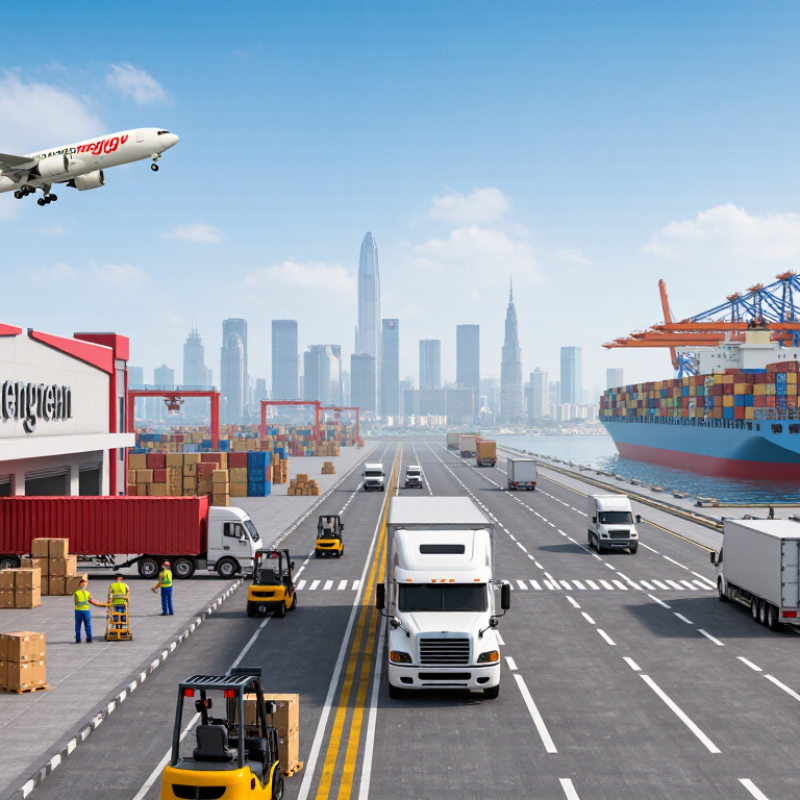
For a Shenzhen-to-Los Angeles DDP shipment, the seller arranges transport to the named destination and covers agreed shipping costs. The service commonly includes pickup in Shenzhen, export clearance, international freight, U.S. import clearance, applicable duties and taxes, and delivery to the stated address. The exact scope depends on the written quote. That detail matters.
DDP places responsibility for import clearance and import charges on the seller, subject to the agreed terms and applicable requirements. The seller also carries the risk until the goods arrive at the named destination, ready for unloading. Unloading itself is generally not included. Neither are services such as liftgate delivery, inside placement, or storage unless the quote says so. A pallet sent to a Los Angeles warehouse may need different delivery arrangements from cartons going to a residence.
Check that the quote lists the full delivery address, cargo dimensions, weight, and any access limits. Accurate product descriptions and declared values help the shipping provider prepare customs paperwork; unclear details can cause delays or extra charges. Ask who handles an inspection or an address change, too. I would not treat “DDP” as a promise that every possible fee is covered. The small print deserves a careful read.

A Shenzhen-to-Los Angeles DDP quote combines origin pickup, export handling, ocean freight, destination charges, import clearance, duties, and final delivery. For ocean freight, forwarders price by container type or shared-container volume and weight. Oversized cartons can change the chargeable volume, so provide accurate dimensions, not just total weight. Air freight uses chargeable weight, which compares actual weight with dimensional weight.
UNCTAD’s Review of Maritime Transport 2024 reports that over 80% of world trade by volume moves by sea. That scale does not make every sailing predictable. A direct ocean leg may take roughly 15–20 days, while door-to-door delivery often needs 25–40 days, depending on sailing schedules, port handling, customs processing, and truck appointments. Not the whole trip. Ask whether a quote includes a delivery buffer and any peak-season or fuel surcharges.
DDP pricing also depends on the shipment’s declared value, product classification, and applicable U.S. duties. Those details can shift the landed cost substantially. Request an itemized quote showing the assumed cargo details and each included charge. A neat estimate can still miss a delay or extra handling fee; I would treat unusually exact transit promises with care.
Typical door-to-door transit time varies by shipping mode. The ranges below are approximate calendar days from pickup in Shenzhen to delivery in Los Angeles; customs inspections, peak seasons, and final-mile access can add time.
How DDP costs are calculated: A quote generally combines origin pickup and export handling, international freight, destination handling and delivery, customs clearance, and applicable duties and taxes. Freight is priced using chargeable weight or shipment volume, depending on the mode. Duties depend on the goods’ customs value and tariff classification, so the figures must be confirmed for each shipment. Transit and costs are estimates, not guaranteed quotes.
For Shenzhen-to-Los Angeles DDP shipping, the right transport mode depends on urgency, shipment size, and handling needs. Air freight often suits samples, replacement parts, and compact, high-value goods. It moves quickly, but chargeable weight can make bulky cartons expensive. A 20-kilogram box of accessories may be practical by air when a launch date is close. Fast, but not always economical.
Ocean freight is usually more cost-effective for larger shipments. Full container load (FCL) can suit shipments that fill a container or need dedicated space. Less-than-container load (LCL) shares container space and may fit a few pallets of furniture, home textiles, or packaged consumer goods. Allow extra time for consolidation, port handling, and delivery appointments. Not every pallet travels smoothly.
DDP can be arranged by air or ocean. Under this term, the seller generally takes responsibility for import clearance and applicable charges through delivery, so confirm the scope in writing. Provide accurate dimensions, gross weight, product descriptions, and packaging details before booking. Fragile goods need sturdy cartons and clear handling instructions; heavy equipment may require crating and suitable unloading arrangements. Customs review and carrier schedules can change, so leave a realistic time buffer. A small detail matters: destination access can affect final delivery costs.
| No. | Question | Practical Answer | Best Suited For |
|---|---|---|---|
| 1 | Which transport modes are available from Shenzhen to Los Angeles? | Common options include ocean freight by full container load (FCL) or less than container load (LCL), and air freight. The appropriate choice depends on shipment size, urgency, cargo characteristics, and total landed cost. | FCL for larger shipments; LCL for smaller, non-urgent shipments; air freight for time-sensitive or relatively compact cargo. |
| 2 | How long does each mode usually take? | Air freight is generally faster than ocean freight. Ocean transit commonly takes several weeks, while total door-to-door time can be longer because of export handling, port operations, customs clearance, and final delivery. Actual schedules vary by carrier, service, and congestion. | Choose based on the required delivery window, allowing extra time for clearance and inland transport. |
| 3 | When is FCL a better choice than LCL? | FCL provides use of a whole container, while LCL combines a shipment with cargo from other shippers. FCL can be preferable for larger volumes, cargo that benefits from fewer handling steps, or shipments that need a dedicated container. LCL can suit smaller volumes but may involve consolidation and deconsolidation handling. | FCL: larger loads or handling-sensitive goods. LCL: smaller shipments where a full container is unnecessary. |
| 4 | What does DDP mean for this route? | Under DDP (Delivered Duty Paid), the seller is responsible for arranging delivery to the named destination and for export and import clearance, duties, and applicable taxes under the agreed Incoterms® rule. The named place and exact cost inclusions should be stated clearly in the sales agreement. | Buyers seeking a delivered price, provided the seller can properly manage U.S. import requirements. |
| 5 | Who handles U.S. customs entry under DDP? | The seller is responsible for import clearance under DDP, but the parties should confirm in advance how the U.S. importer of record, customs broker, product classification, and required entry information will be arranged. DDP does not remove U.S. regulatory obligations. | Shipments with a clearly agreed importer-of-record arrangement and complete, accurate customs documents. |
| 6 | Which cargo types commonly suit ocean freight? | Ocean freight is often used for general merchandise, furniture, machinery, and other cargo that can tolerate a longer transit time and can be packed for container handling. Oversized, temperature-controlled, hazardous, or unusually heavy cargo needs a suitability and service check before booking. | Non-urgent, container-compatible cargo with packaging suitable for a longer journey and multiple handling stages. |
| 7 | Which cargo types may suit air freight? | Air freight can suit urgent shipments, samples, lightweight goods, and higher-value products where speed is important. Airlines apply limits and handling rules for dimensions, weight, batteries, dangerous goods, and other restricted items. | Time-sensitive or compact cargo that meets airline acceptance and packaging requirements. |
| 8 | Can batteries, electronics, or hazardous goods be shipped? | Possibly, but acceptance depends on the exact item, battery type and configuration, transport mode, packaging, labels, documentation, and applicable dangerous-goods rules. Some goods are restricted or prohibited, so obtain a cargo-specific review before dispatch. | Goods for which the shipper can provide accurate specifications and any required safety documents. |
| 9 | What information is needed to quote DDP shipping? | Provide the cargo description, number and type of packages, dimensions, gross weight, cargo value, pickup and delivery addresses, preferred mode, and any special handling or compliance details. Accurate product descriptions and tariff classification are important for assessing duties and clearance requirements. | All shipments, especially goods with regulated materials, batteries, wood packaging, or unusual dimensions. |
| 10 | Does DDP include insurance, and what can affect the final cost? | DDP does not by itself require the seller to insure the cargo. Confirm insurance separately. The final cost may depend on mode, shipment size and weight, origin and destination services, customs duties and taxes, product classification, and any inspections, storage, or special handling. | Shippers and buyers who want a clear written breakdown of freight, clearance, duties, delivery, and insurance. |
For Shenzhen-to-Los Angeles DDP shipments, “delivered duty paid” describes a delivery arrangement, not a customs exemption. The seller or its appointed broker typically coordinates export, freight, U.S. customs entry, and applicable duties and taxes. The importer of record still has important compliance responsibilities. Keep company names, addresses, and cargo descriptions consistent across documents. Small mismatches matter.
Tips: Before cargo leaves Shenzhen, request a commercial invoice listing accurate product descriptions, quantities, unit values, currency, and country of origin. Check that the packing list and bill of lading or air waybill match. Confirm the proposed HTS classification and who will provide importer details, a customs bond, and entry information. Customs may request additional product details or filings, depending on the goods. Details matter.
Duties are not a flat DDP fee. They can depend on classification, customs value, origin, and rules in force when the shipment enters the United States. Ask for a written cost breakdown covering freight, clearance, duties, and delivery. Clarify who handles extra charges if customs requests documents or changes a classification. Verify current requirements with a qualified customs broker or official U.S. guidance before shipping. Estimates can be imperfect.
For a Shenzhen-to-Los Angeles DDP shipment, tracking should show more than “in transit.” Ask for timestamps at origin pickup, export clearance, vessel departure, arrival, customs release, and final delivery. Request the vessel name, bill of lading number, and a named contact responsible for status updates. A useful update says what changed, why, and when the next update is due. “Still moving” is not enough.
Delays need early attention. UNCTAD’s Review of Maritime Transport 2024 reported that weekly Suez Canal transits fell 42% over roughly two months, as route disruptions forced ships to reroute. That example is not a forecast for every Pacific shipment, but it shows how disruptions can affect schedules and vessel connections. If an ETA slips, ask whether the cause is port congestion, a missed sailing, customs processing, or inland delivery capacity. Confirm who handles import clearance and duties under the agreed DDP terms, and request revised delivery timing in writing. Keep a small schedule buffer. A dashboard can look reassuring while a container waits for its next connection; I would not treat an unchanged tracking status as proof that nothing is wrong.


For those larger-sized parts, or smaller quantity runs, we have 2 independent powder coat booths and ovens. The quality, durability and affordability of today’s powder coating finishes make this the process of choice for world-class companies.
Powder coating advantages over other forms of coating are many. Materials used in the Powder coating process can be metals and non-metals that come in a multitude of thicknesses, textures, colors, etc. Another of Powder coating’s biggest advantages over conventional coatings is its ability to create finishes in many different textures. Powder Coating Booths allow us the ability to apply these advantages to large products.
Tri-State Fabricators runs a full-service conveyor line for painting. Wet painting can provide protection or decoration to many different part styles. From start to finish, every project is easier to undergo random and point-based inspection by our skilled painting team.
Advantages to our Wet Paint Line are these lines start with product prep and ends with a thorough inspection of a high quality finished product. Our ability to complete large and small projects with a superior finish and doing so in a timely and economical fashion. This passes along the savings in production to our customers. When powder coating ins not an option, our Wet Paint Line gets the job done right the first time.
When the parts get big and heavy we roll-out our custom paint racks and oversize booth. By utilizing our partnerships with all the major paint brands, we can match virtually any color with wet paint.
The advantages of having access to a Wet Paint Booth are many. Large projects of many different shapes can be loaded into the booth. The Wet Paint Booth offers an environment that is much more controlled than a typical parts painting operation.
Not only are they used because of their controlled environment, but they’re are also advantageous when it comes to applying paint to parts that are needed in industries that require specialty coatings such as medical, aerospace, etc.
Our military forces have some very high standards when it comes to the finish of their vehicles and equipment. From the first pre-treatment step to final coat, it takes a great deal of knowledge and experience to protect the men and women of our armed forces. They deserve only the best, and Tri-State Fabricators provides it.
All of our processes are closely monitored by our staff and management teams. Both of which are highly trained in the processes of metal fabrication and finishing. Tri-State Fabricators’ goal is to always fully satisfy each and every customer, including the military. We will always put a 110% into what we do.
Abrasive media blasting is an excellent way to remove old paint, rust, and increase the paint/powder adhesion. Glass beads produce a much smoother and brighter finish than angular abrasives; leaving the part clean yet without any dimensional change. Chemically inert and environmentally friendly, we can recycle our beads approximately 30 times; making them a more preferred method of metal cleaning or surface finishing.
Advantages to Glass Bead Blasting are many. Glass bead blast media is used when a project is needing rough surfaces need to become smooth for applications of coatings such as paint. It is typically used to clean paint and rust from a product surface without deforming the surface it is being used on. Overall, compared to many other blasting media, Glass Bead Blasting is a very economical choice and those savings are always passed on to our customers.
Tri-State Fabricators utilize a zinc phosphate wash to clean and etch the material to ensure the best paint adhesion possible. The unique design of our 3-stage wash system does the work like a 5-stage. From Cleaning and rinsing to conversion coating and post-treatment, Our Part Washing process is a complete service and works throughout the fabrication service and the finishing service.
Along with the previously mentioned benefits, Curing is a vital chemical reaction that leaves the product finish hard and relatively safe from mild abrasion and aggressive corrosion. This process can be done in more than one way; ambient air-dry or in curing ovens at temps that exceed 240°.
From fixing paint mistakes (someone else’s of course) to simply cleaning our paint line hooks, our burn-off oven is put to good use. After a quick burn-off, a little clean up, and a fresh coat of paint, your parts will look better than new.
Why does our Burn-Off Oven work so well? Because super heating the air around parts turns the materials into ashes. From paint and powder coatings to rubber and machining oils, high temps do the job without degrading the integrity of the part.
Masking is a vital part of producing high quality products. We have die-cut masking patterns to protect machined surfaces as well as a wide range of plugs and caps to protect threaded holes and bolts. We provide permanent and temporary masking.
Masking allows the selected sections of a product to be protected from a fabrication or finishing service. This can be with both chemicals when etching and tapes, paints when only finishing just a section of the product. Masking is great in aiding the customization process of a project.
Screen printing is a photographic process that transfers artwork onto a porous nylon screen which allows colored ink to flow through the screen and be deposited on an aluminum or plastic component. We can generally have just about any design created onto a screen for your parts.
Some of the advantages of Screen Printing are, brand recognition for your business displaying on your products, assembly instructions, product warnings/hazards, etc. Tri-State Fabricators produces Screen Printing of the highest quality so you know it’s durable.
Metal Finishing is the art of treating the exterior portion of product, often metal but can also be made of other materials, so that the surface is clean and free of any debris. Then the process of applying coats or either paint of powder coat takes place. This coating process improves the quality of the product in both appearance and resistance to wear and corrosion.
Tri-State Fabricators, Inc., understands that a project typically isn’t complete until a high-quality finish has been added to your product. This is why our painting and powder coating teams continuously inspect the products throughout the Metal Finishing process.

