How to Select 6061 Aluminum Plate for Semiconductor Applications?
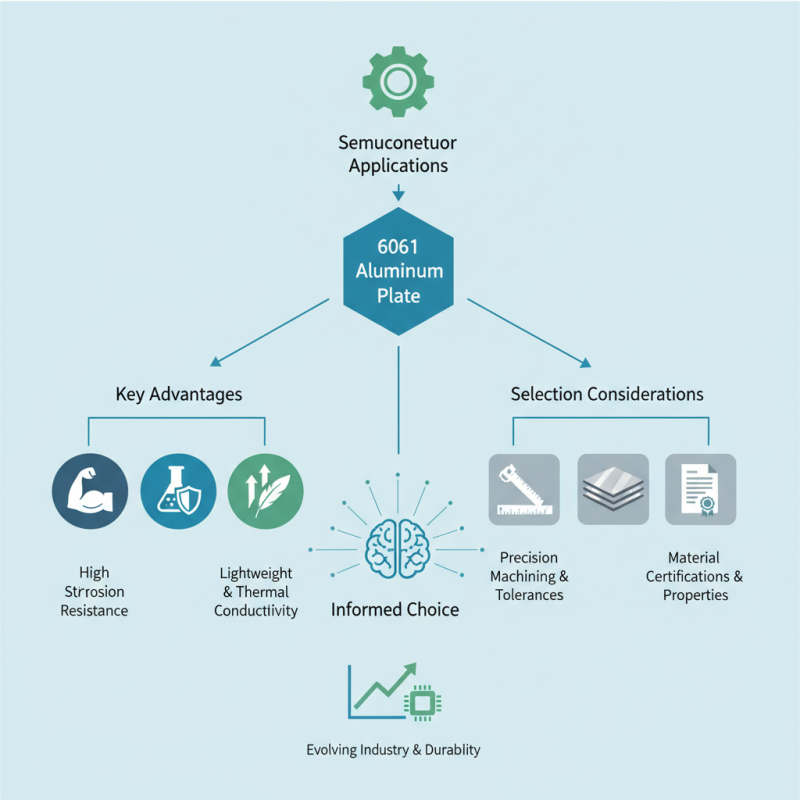
Selecting the right material for semiconductor applications is critical. 6061 Aluminum Plate For Semiconductor offers unique advantages. This alloy has high strength and excellent corrosion resistance. According to industry reports, 6061 aluminum is preferred for its lightweight properties and thermal conductivity.
In the semiconductor field, precision machining is essential. The ability to achieve tight tolerances influences performance. Yet, not every 6061 aluminum plate is the same. Variability in composition may lead to inconsistencies. An informed choice is vital.
Manufacturers must consider factors like thickness and surface finish. These elements directly impact the efficiency of semiconductor devices. Trustworthy suppliers should provide detailed material certifications. Knowledge of the alloy's mechanical properties is important for durability. Understanding the nuances of 6061 aluminum can guide effective applications in this rapidly evolving industry.
Understanding the Properties of 6061 Aluminum for Semiconductor Use
When selecting 6061 aluminum plate for semiconductor applications, understanding its properties is crucial. This aluminum alloy possesses excellent machinability, making it favorable in production environments. Its tensile strength can reach up to 310 MPa. This characteristic is critical, as robust materials withstand physical stress during manufacturing processes.
Another significant property is its corrosion resistance, which is beneficial for semiconductor equipment exposed to chemicals. According to industry reports, 6061 aluminum can maintain its integrity in diverse environments. However, it is worth noting that this alloy’s performance can vary based on the heat treatment applied. The T6 temper, for example, offers enhanced mechanical properties, but may alter its workability.
Thermal conductivity is another important aspect. While 6061 aluminum does conduct heat, it is less efficient than copper. This is a limitation in applications where efficient heat dissipation is essential. Engineers often face the challenge of balancing thermal management with structural integrity. In some scenarios, the trade-off may not be optimal, necessitating a review of material choices.
Assessing the Purity and Composition of 6061 Aluminum Plates
When selecting 6061 aluminum plates for semiconductor applications, purity and composition are critical factors. The aluminum alloy 6061 is known for its good mechanical properties. However, impurities can significantly affect its performance in sensitive environments. Ensuring high purity levels can lead to improved electrical conductivity. This is vital for semiconductor devices where efficiency is key.
Analyzing the chemical composition is equally important. 6061 typically contains magnesium and silicon, which contribute to its strength and weldability. However, trace elements can alter its properties. It's essential to examine the levels of iron, copper, and other potential contaminants. Too much of these elements can lead to lower performance. Conducting thorough testing can reveal these details.
In practice, not all suppliers provide comprehensive composition data. This inconsistency can lead to unexpected results in applications. Thus, communication with suppliers is crucial. Request certifications and specifications to ensure you are sourcing the right material. Understanding the composition helps avoid integration issues in semiconductor manufacturing.
Composition Analysis of 6061 Aluminum Plate for Semiconductor Applications
This chart illustrates the chemical composition of 6061 aluminum plates, which are critical for semiconductor applications. The primary elements included in the alloy and their respective percentages are shown, facilitating the assessment of purity and suitability for high-tech applications.
Evaluating the Mechanical Properties Relevant to Semiconductor Applications
Selecting the right 6061 aluminum plate for semiconductor applications requires careful evaluation of its mechanical properties. Key properties include tensile strength, yield strength, and ductility. The typical tensile strength of 6061 is around 310 MPa, while the yield strength may reach 275 MPa. These values make it a robust option for components facing mechanical stress.
Corrosion resistance is also vital. In semiconductor environments, exposure to chemicals is common. 6061 aluminum offers good resistance to oxidation and corrosion, which is essential for maintaining component integrity. However, surface treatments might be necessary for enhanced protection. Moreover, the toughness of 6061 is lower than that of other alloys. This could present challenges in applications requiring high impact resistance. Evaluating the specific requirements of the semiconductor process is crucial.
Thermal conductivity should not be overlooked. 6061 aluminum has a thermal conductivity of approximately 150 W/mK. This property affects heat dissipation in semiconductor devices. Insufficient heat management can lead to device failure. Therefore, a precise analysis of thermal performance is crucial. Manufacturers should conduct thorough assessments to ensure compliance with application standards.
Choosing the Right Thickness and Dimensions for 6061 Aluminum Plates
When selecting 6061 aluminum plates for semiconductor applications, thickness and dimensions are critical factors. Research suggests that a plate thickness between 0.25 to 1 inch is ideal for ensuring stability and performance in semiconductor manufacturing. Thin plates may warp under heat, while excessively thick plates can add unnecessary weight.
Dimensions also play a significant role. Standard sizes like 48x96 inches are common, but custom dimensions are often required. Precision cutting is vital to maintain tolerances. An ASTM report indicates that plates must adhere to ±0.500 inch tolerances for effective machining. Variance in dimensions can lead to fitting issues, adversely affecting overall efficiency.
Engineers often overlook the implications of choosing the wrong thickness. It may lead to increased costs or failures during production. Thus, collaborating with industry experts is essential to understand specific application requirements. Balancing cost, weight, and compatibility significantly impacts the selection process. Careful consideration of these aspects will ensure optimal performance in semiconductor applications.
Examining Surface Treatments and Finishes for Enhanced Performance
Selecting the right 6061 aluminum plate for semiconductor applications involves examining its surface treatments and finishes. These treatments can significantly enhance the plate's performance, especially in demanding environments. Common surface treatments include anodizing, which increases corrosion resistance, and chemical finishes, which may improve conductivity.
Tips: Consider the specific requirements of your application. Evaluate how different treatments affect the thermal properties of aluminum. Anodized surfaces often provide better heat dissipation, a crucial feature in semiconductor devices.
Surface finishes can also impact adhesion and wear resistance. A well-prepared surface allows for better bonding with other materials. However, it’s easy to overlook the importance of uniformity. Inconsistent finishes can lead to unpredictable performance.
Ultimately, meticulous selection and validation of surface treatments is crucial. Conduct tests to ensure the chosen method aligns with your operational needs. This step may take time but can prevent future challenges in semiconductor manufacturing.
How to Select 6061 Aluminum Plate for Semiconductor Applications?
| Property | 6061 Aluminum Plate Value | Surface Treatment | Finishes |
| Tensile Strength (MPa) | 310 | Anodizing | Matte Finish |
| Yield Strength (MPa) | 275 | Chemical Conversion Coating | Brushed Finish |
| Corrosion Resistance | Good | Alodine | High Gloss Finish |
| Hardness (Brinell) | 95 HB | Electropolishing | Mirror Finish |
| Electrical Conductivity | 40% IACS | Anodizing with Seal | Textured Finish |





