


Why Choose Seamless Pipe Over Welded Pipe?

Choosing between Seamless Pipe and welded pipe is not a simple strength contest. The manufacturing route, material grade, dimensions, inspection requirements, and service conditions all affect suitability. Seamless pipe has no longitudinal weld seam, which can be valuable where pressure, temperature, or cyclic loading demand careful risk control. But that feature alone does not guarantee better performance. Not automatically better.

The scale of steel production offers useful context, not a direct answer. World Steel Association reported 1,882.6 million tonnes of global crude steel production in 2024. Pipe buyers still need to assess the specific product, rather than infer quality from industry-wide output. ASTM A106 and API 5L provide recognized product requirements for relevant pipe applications, while ASME B31.3 addresses process-piping design and construction. These standards help frame the comparison; they do not make every product interchangeable. A pipe’s grade, wall thickness, manufacturing records, and inspection results matter.

This article examines where seamless construction can offer practical advantages, where welded pipe may be a sound and economical choice, and which trade-offs deserve scrutiny. Welded pipe can meet demanding specifications when its material and weld quality are properly controlled. Conversely, seamless pipe may bring higher cost or availability constraints. The right decision depends on the line: its operating pressure, fluid, temperature, diameter, and consequence of failure. Check the specification closely. A confident choice should rest on verified data and application needs, not on the word “seamless” alone.
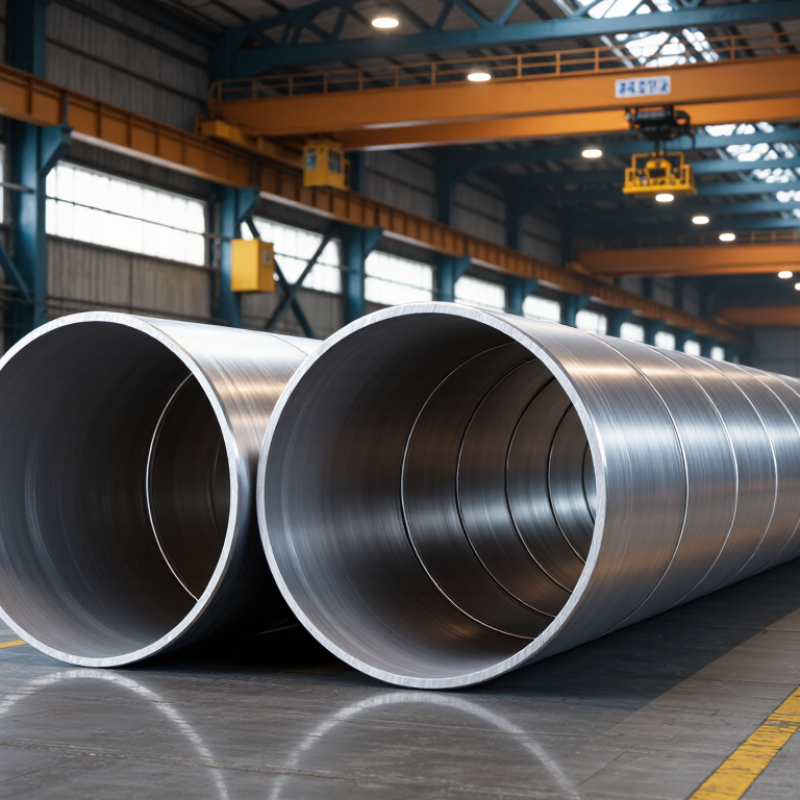
Why Choose Seamless Pipe Over Welded Pipe?

Seamless and Welded Pipes: Key Definitions and Differences

Seamless pipe begins as a solid steel billet. The heated billet is pierced, then rolled or drawn into a hollow tube. No longitudinal weld joins its walls. Welded pipe starts as flat strip or plate, formed into a cylinder and joined along a seam, commonly by electric resistance or arc welding.

That seam is the defining difference, not a simple quality ranking. Welded pipe can have consistent wall thickness and close dimensions, depending on manufacturing controls. The weld zone is inspected and tested under applicable product requirements. Seamless pipe avoids a weld seam, but it can still contain manufacturing imperfections and may show greater variation in wall thickness. Nothing is perfect.

Choice depends on the service. For high-pressure or cyclic-duty lines, engineers compare grade, diameter, wall thickness, temperature, corrosion exposure, and inspection records—not just the production route. Seamless products are often selected where avoiding a longitudinal seam matters, while welded options can suit many structural and fluid applications. Cost and availability also matter. Reviewing the pipe specification and operating conditions is more reliable than assuming seamless always performs better. Check the mill test certificate and dimensional tolerances before deciding.


How Manufacturing Processes Shape Pipe Properties

Seamless and welded pipes begin differently, and that difference influences their structure. Seamless pipe starts as a solid steel billet, heated and pierced to create a hollow shell. Rollers then stretch and shape it. There is no longitudinal weld seam. The process can suit demanding pressure or temperature conditions, but it does not make every seamless pipe automatically stronger.

Welded pipe usually begins as flat steel strip or plate. The material is formed into a cylinder, then its edges are joined by welding. That seam is a distinct feature, not necessarily a weakness. Modern production controls heat and weld quality, while inspection can detect flaws. The finished pipe’s performance depends on its grade, wall thickness, weld procedure, and testing. Small details count.

Manufacturing also affects dimensions, surface condition, and consistency. A welded pipe may offer close dimensional control and efficient production for many ordinary systems. Seamless pipe can be useful when a continuous wall is preferred, though its wall thickness may vary along the length. That trade-off is easy to overlook. I would compare the actual specification, inspection records, and service conditions before choosing, rather than relying on the manufacturing label alone. A clean cut end tells little about how the pipe was made or tested.

Why Choose Seamless Pipe Over Welded Pipe?

Minimum specified mechanical properties for ASTM A53 Grade B pipe

ASTM A53 Grade B specifies the same minimum tensile strength (60 ksi) and yield strength (35 ksi) for Type S seamless and Type E electric-resistance-welded pipe. The manufacturing route alone does not mean one type has higher specified minimum strength; suitability also depends on service conditions, inspection, and other requirements.

Comparing Strength, Pressure Resistance, and Reliability

Seamless pipe has no longitudinal weld seam, removing one potential location for defects or stress concentration. That can matter in cyclic service, where pressure pulses repeatedly load the pipe wall. But seamless does not automatically mean stronger. Wall thickness, steel grade, diameter, temperature, and manufacturing quality all shape pressure capacity.

API Specification 5L, 46th edition, sets a minimum yield strength of 52 ksi (359 MPa) for Grade X52. That value identifies the grade, not a strength advantage for seamless pipe over welded pipe. Both manufacturing routes can meet specified grade requirements. ASME B31.3-2022 also accounts for weld quality in piping design, so the seam, inspection method, and applicable quality factor matter. Details matter.

For a high-pressure line, engineers should compare the actual wall dimensions, material certificates, and inspection records, not just the product label. Radiographic or ultrasonic examination can reveal weld flaws, though inspection does not erase every uncertainty. Seamless pipe may offer a simpler risk profile where a longitudinal seam is undesirable. Welded pipe, however, can be a reliable choice when its process and examination meet the service requirements. I would avoid treating “seamless” as a guarantee; that shorthand misses too much.

Where Seamless Pipes Offer Practical Advantages

Seamless pipe is useful where a continuous pressure boundary and predictable wall thickness matter. With no longitudinal weld seam, there is one less manufacturing feature to qualify and inspect. That helps in high-temperature service, compact pipe runs, and systems exposed to pressure cycling. It does not make inspection unnecessary.

ASTM A106/A106M sets Grade B minimum tensile strength at 415 MPa and minimum yield strength at 240 MPa. These are specified material properties, not proof that seamless pipe is always stronger than welded pipe. The practical choice still depends on grade, wall thickness, manufacturing quality, and service conditions. For example, a process engineer may prefer seamless sections for a small-bore steam line with frequent temperature changes, while a well-qualified welded pipe may suit a long, steady pipeline. Check the actual specification and test records. Details matter. Seamless pipe can also cost more or be harder to source in certain sizes, and that trade-off deserves a sober look.

Why Choose Seamless Pipe Over Welded Pipe? — Where Seamless Pipes Offer Practical Advantages

Seamless pipe has no longitudinal weld seam, which can be beneficial in demanding services. The right choice still depends on the material, dimensions, applicable design code, manufacturing quality, and operating conditions.

Comparison Factor Seamless Pipe Welded Pipe Where Seamless May Be Advantageous
Manufacturing Route Made from a solid billet that is pierced and formed into a hollow tube, then sized and finished. Made by forming plate, strip, or coil into a tube and joining the edges with a weld. Useful when eliminating a longitudinal seam is a project requirement or reduces a particular inspection concern.
Longitudinal Weld Does not have a longitudinal weld seam. Has a longitudinal weld for common straight-seam products; other welded configurations also exist. Can be preferred when the design or service specification specifically calls for seam-free construction. Welded pipe can also be suitable when manufactured and inspected to the required specification.
Pressure and Design Suitability May be selected for high-pressure or severe-service applications, subject to design verification. Can also be designed for substantial pressure service when its material, weld quality, inspection, and applicable code requirements are satisfied. Offers a practical option where project standards favor seamless construction. Pressure capacity must be calculated from the actual dimensions, material properties, temperature, and design code—not from manufacturing route alone.
Stress and Service Conditions Has no weld seam that could create a local feature requiring specific evaluation. The weld and heat-affected zone may require attention in the design, fabrication records, or inspection plan, depending on the service and specification. May simplify selection for cyclic, high-temperature, or otherwise demanding service when the governing specification identifies seamless pipe as suitable or preferred.
Corrosion Performance Corrosion resistance depends primarily on alloy, condition, surface, and operating environment; seamless construction alone does not make the pipe corrosion-proof. Corrosion resistance likewise depends on material and environment. Weld-area condition and any specified post-weld treatment may also matter. Can remove the longitudinal weld as a location to assess, but alloy selection, corrosion allowance, and service-specific testing remain essential.
Dimensions and Availability Available in a wide range of sizes, though availability and dimensional tolerances depend on the product standard and manufacturing route. Often available in many sizes and wall thicknesses; large diameters are commonly supplied as welded pipe. May suit projects within the available seamless size range. For large diameters or specific wall dimensions, welded pipe may offer more options.
Inspection Needs Still requires the inspection and testing specified for the product and application; seamless does not mean defect-free. Weld examination and testing may be required, with the extent determined by the product standard, design code, and service. May reduce weld-specific examination requirements where the applicable specification allows, but does not eliminate material, dimensional, or other quality checks.
Cost Considerations Can cost more in some sizes and specifications because of the manufacturing route and available supply. Can be more economical, particularly for larger diameters, but cost varies with material, wall thickness, inspection, and market conditions. Best justified when its service or specification advantages outweigh purchase cost. Compare qualified products on a like-for-like basis.
Typical Selection Context May be considered for pressure piping, mechanical components, and applications whose specifications call for seamless products. Commonly used in structural, water, energy, and process applications, including many pressure services when compliant with the applicable requirements. Choose seamless when a project specification, design assessment, or service condition supports it—not simply because it is universally stronger.

Selection note: Confirm the governing product standard and design code, material grade, outside diameter, wall thickness, temperature, pressure, corrosion conditions, testing requirements, and traceability before specifying either pipe type.

Choosing Between Seamless and Welded Pipes for an Application

Choosing between seamless and welded pipes starts with service conditions, not a blanket claim that one is always stronger. A high-pressure hydraulic line may favor seamless pipe because it has no longitudinal weld seam. However, performance also depends on material grade, wall thickness, heat treatment, and manufacturing quality. Seamless is not automatically safer.

Welded pipe is formed from plate or strip and joined along a seam. Modern welding and inspection can produce consistent pipes for water systems, structural frames, and many process lines. Welded options often offer tighter dimensional control and lower cost, especially in larger diameters. Check seam quality and inspection records against the project specification. Details matter.

Temperature changes, corrosive media, vibration, and maintenance access should guide the decision. Compare pressure ratings and material compatibility using relevant engineering data, then consider delivery time and total installed cost. Check the data. A thicker wall is not always the answer. In some applications, welded pipe meets the requirements; in others, seamless pipe may provide a useful margin. The trade-off can be less clear on paper, so assess the actual operating conditions and verify test documents against your requirements.

Article Source:

Powder Coat Booths

For those larger-sized parts, or smaller quantity runs, we have 2 independent powder coat booths and ovens. The quality, durability and affordability of today’s powder coating finishes make this the process of choice for world-class companies.

Powder coating advantages over other forms of coating are many. Materials used in the Powder coating process can be metals and non-metals that come in a multitude of thicknesses, textures, colors, etc. Another of Powder coating’s biggest advantages over conventional coatings is its ability to create finishes in many different textures. Powder Coating Booths allow us the ability to apply these advantages to large products.

Wet Paint Line

Tri-State Fabricators runs a full-service conveyor line for painting. Wet painting can provide protection or decoration to many different part styles. From start to finish, every project is easier to undergo random and point-based inspection by our skilled painting team.

Advantages to our Wet Paint Line are these lines start with product prep and ends with a thorough inspection of a high quality finished product. Our ability to complete large and small projects with a superior finish and doing so in a timely and economical fashion. This passes along the savings in production to our customers. When powder coating ins not an option, our Wet Paint Line gets the job done right the first time.

Wet Paint Booths

When the parts get big and heavy we roll-out our custom paint racks and oversize booth. By utilizing our partnerships with all the major paint brands, we can match virtually any color with wet paint.

The advantages of having access to a Wet Paint Booth are many. Large projects of many different shapes can be loaded into the booth. The Wet Paint Booth offers an environment that is much more controlled than a typical parts painting operation.

Not only are they used because of their controlled environment, but they’re are also advantageous when it comes to applying paint to parts that are needed in industries that require specialty coatings such as medical, aerospace, etc.

Military CARC

Our military forces have some very high standards when it comes to the finish of their vehicles and equipment. From the first pre-treatment step to final coat, it takes a great deal of knowledge and experience to protect the men and women of our armed forces. They deserve only the best, and Tri-State Fabricators provides it.

All of our processes are closely monitored by our staff and management teams. Both of which are highly trained in the processes of metal fabrication and finishing. Tri-State Fabricators’ goal is to always fully satisfy each and every customer, including the military. We will always put a 110% into what we do.

Glass-Bead Blasting

Abrasive media blasting is an excellent way to remove old paint, rust, and increase the paint/powder adhesion. Glass beads produce a much smoother and brighter finish than angular abrasives; leaving the part clean yet without any dimensional change. Chemically inert and environmentally friendly, we can recycle our beads approximately 30 times; making them a more preferred method of metal cleaning or surface finishing.

Advantages to Glass Bead Blasting are many. Glass bead blast media is used when a project is needing rough surfaces need to become smooth for applications of coatings such as paint. It is typically used to clean paint and rust from a product surface without deforming the surface it is being used on. Overall, compared to many other blasting media, Glass Bead Blasting is a very economical choice and those savings are always passed on to our customers.

Part Washing

Tri-State Fabricators utilize a zinc phosphate wash to clean and etch the material to ensure the best paint adhesion possible. The unique design of our 3-stage wash system does the work like a 5-stage. From Cleaning and rinsing to conversion coating and post-treatment, Our Part Washing process is a complete service and works throughout the fabrication service and the finishing service.

Along with the previously mentioned benefits, Curing is a vital chemical reaction that leaves the product finish hard and relatively safe from mild abrasion and aggressive corrosion. This process can be done in more than one way; ambient air-dry or in curing ovens at temps that exceed 240°.

Burn-Off Oven

From fixing paint mistakes (someone else’s of course) to simply cleaning our paint line hooks, our burn-off oven is put to good use. After a quick burn-off, a little clean up, and a fresh coat of paint, your parts will look better than new.

Why does our Burn-Off Oven work so well? Because super heating the air around parts turns the materials into ashes. From paint and powder coatings to rubber and machining oils, high temps do the job without degrading the integrity of the part.

Masking

Masking is a vital part of producing high quality products. We have die-cut masking patterns to protect machined surfaces as well as a wide range of plugs and caps to protect threaded holes and bolts. We provide permanent and temporary masking.

Masking allows the selected sections of a product to be protected from a fabrication or finishing service. This can be with both chemicals when etching and tapes, paints when only finishing just a section of the product. Masking is great in aiding the customization process of a project.

Screen Printing

Screen printing is a photographic process that transfers artwork onto a porous nylon screen which allows colored ink to flow through the screen and be deposited on an aluminum or plastic component. We can generally have just about any design created onto a screen for your parts.

Some of the advantages of Screen Printing are, brand recognition for your business displaying on your products, assembly instructions, product warnings/hazards, etc. Tri-State Fabricators produces Screen Printing of the highest quality so you know it’s durable.

Metal Finishing

Metal Finishing is the art of treating the exterior portion of product, often metal but can also be made of other materials, so that the surface is clean and free of any debris. Then the process of applying coats or either paint of powder coat takes place. This coating process improves the quality of the product in both appearance and resistance to wear and corrosion.

Tri-State Fabricators, Inc., understands that a project typically isn’t complete until a high-quality finish has been added to your product. This is why our painting and powder coating teams continuously inspect the products throughout the Metal Finishing process.
