How to Use a Salt Spray Tester for Effective Corrosion Testing?
Corrosion testing is crucial for ensuring material durability. The Salt Spray Tester is an essential tool in this process. It simulates harsh conditions, allowing manufacturers to assess how materials perform over time. This method helps identify weaknesses in coatings and substrates, making it invaluable for industries like automotive and construction.
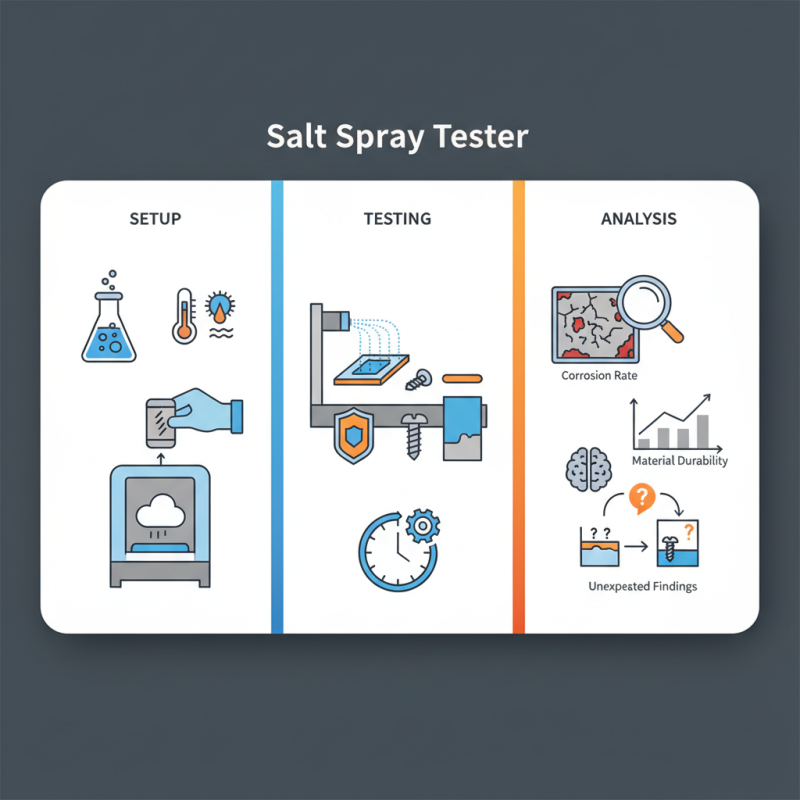
Using a Salt Spray Tester involves careful setup. Proper saline solutions must be prepared. Temperature and humidity levels need to be monitored. These factors influence test outcomes significantly. Mistakes during setup can lead to unreliable results, highlighting the importance of precision in testing procedures.
Analyzing results from the Salt Spray Tester requires expertise. Specialists interpret data to determine corrosion rates. Yet, variations in materials can lead to unexpected findings. This unpredictability can challenge even seasoned professionals. Ongoing refinements in testing approaches are necessary to improve reliability. Hence, even experienced users must remain vigilant in their methods.
Understanding the Principles of Salt Spray Testing in Corrosion Analysis
Salt spray testing is a well-established method for evaluating the corrosion resistance of materials. By exposing samples to a saline environment, this process simulates the effects of corrosion in real-world conditions. Understanding the principles of salt spray testing is essential for accurate corrosion analysis. High humidity and salt concentration accelerate corrosion processes, making it a valuable tool for testing protective coatings.
The test itself involves placing samples in a chamber where a saltwater solution is atomized. The resulting mist creates conditions similar to coastal or industrial environments. However, results can vary based on several factors. For instance, the composition of the salt solution and the temperature in the chamber affect outcomes significantly. Not all materials react the same way; some may show quick corrosion, while others resist longer.
Interpreting results requires careful analysis. It is important to recognize that some samples may pass initial tests but fail in real-world applications. This discrepancy highlights the need for comprehensive testing protocols. Factors such as surface preparation and coating thickness can influence corrosion rates. Regularly assessing these elements can help improve quality and performance in practical situations. Understanding both the benefits and limitations of salt spray testing is crucial for effective corrosion analysis.
Selecting the Right Salt Spray Tester: Key Features and Specifications
When selecting a salt spray tester, certain key features and specifications stand out. Look for testers that comply with ASTM B117 standards. This ensures reliable and consistent results. The temperature control is crucial. An optimal range is often between 35°C and 50°C. Precise control here can influence corrosion rates significantly. A high-quality salt spray tester includes a clear, user-friendly interface. This allows for easier operation and data interpretation.
Another important aspect is the chamber size. Consider your testing samples. A chamber that accommodates larger samples may be necessary for efficient testing. Additionally, a built-in monitoring system enhances the credibility of the results. It provides real-time data on corrosion progress. Reports highlight that chambers with good insulation have a longer lifespan and more reliable results.
Tip: Regular maintenance of the salt spray tester is essential. Clean the nozzle and chamber regularly to ensure accuracy. Remember, even the best equipment can produce misleading results if it’s not properly maintained.
Tip: Always calibrate your equipment before testing. This can prevent variability in your data, leading to more reliable outcomes. Understanding and applying these features will give you a solid start in corrosion testing.
Standard Testing Methods: ASTM B117 and ISO 9227 Explained
When conducting corrosion testing, understanding standard methods is crucial. Two well-known standards are ASTM B117 and ISO 9227. Both focus on salt spray testing to assess corrosion resistance. These methods simulate a saline environment to identify how materials react over time.
ASTM B117 outlines a specific testing process. It employs a salt solution, usually sodium chloride, which is atomized into a chamber. The temperature and salinity levels are strictly controlled. This creates a harsh environment, helping predict material lifespan. It is commonly used in many industries.
ISO 9227 has similar objectives but offers variations in methodology. This standard also includes different types of salt solutions. Using these alternatives can provide insights into various corrosion mechanisms. It's vital to choose the right standard based on your material and application needs.
Tips for effective testing include regularly checking the salt concentration in the solution. Use calibrated equipment to maintain consistent environmental conditions. Also, document all testing conditions meticulously. This helps enhance reliability and provides an essential reference for future tests. Regularly revisiting your methods can uncover weaknesses in testing practices and improve accuracy over time.
How to Use a Salt Spray Tester for Effective Corrosion Testing?
| Test Parameter | ASTM B117 | ISO 9227 |
| Test Type | Salt Spray | Salt Fog |
| Solution Composition | 5% NaCl | 5% NaCl (with optional additives) |
| pH Level of Solution | 6.5 - 7.2 | 6.5 - 7.2 |
| Temperature | 35°C (95°F) | 35°C (95°F) |
| Exposure Duration | Up to 500+ hours | Up to 500+ hours |
| Assessment Method | Visual and Rating | Visual and Rating |
Interpreting Results: Analyzing Corrosion Rate and Test Duration Data
Interpreting results from a salt spray test involves careful analysis of corrosion rates and test duration data. Various industries use these tests to predict material longevity in harsh environments. According to a report by ASTM, a corrosion rate of 0.5 mm per year can indicate acceptable material performance for many applications.
A critical aspect is understanding how duration affects corrosion rates. Shorter tests may not accurately reflect long-term exposure. For example, a 48-hour exposure may suggest minimal corrosion, while a six-month test could reveal significant degradation, challenging initial assumptions. Data analysis is essential for appropriate material selection, especially in industries like automotive and aerospace, where reliability is paramount.
Corrosion rates can vary dramatically. A report from NACE International states that environments with high humidity and salinity can accelerate corrosion by 10 to 100 times compared to controlled conditions. These numbers highlight the importance of comprehensive data interpretation. Relying on preliminary tests can lead to oversights, emphasizing the need for extended duration studies to validate findings effectively.
Maintaining and Calibrating Your Salt Spray Tester for Reliable Results
Maintaining and calibrating your salt spray tester is crucial for obtaining reliable corrosion testing results. Regular maintenance helps to ensure the uniformity of the test environment, which directly impacts the accuracy of your findings. It’s important to check the salt concentration and adjust it as needed. This can vary due to factors like evaporation or absorption. Regularly testing the pH of the solution is also essential. Aim for a pH level between 6.5 and 7.2 to mimic natural conditions better.
Calibration is another critical aspect. Ensure the spray nozzle is fine-tuned for optimal performance. Over time, nozzles can become clogged or worn out. Remember to run a calibrating test periodically. This helps identify any deviations in performance. It can be easy to overlook these steps, but they are vital for experimental integrity. Without proper calibration, your results may be misleading, leading to costly mistakes.
Keeping detailed records of maintenance and calibration activities is advisable. This promotes accountability and enables trend analysis. Be mindful of any emerging patterns in your testing results that may indicate equipment issues. A reflective practice can enhance the reliability of your testing apparatus over time, ensuring that your corrosion tests provide valuable insights into material performance.





