What is Roll to Roll UV Printer and How Does It Work?
The Roll to Roll UV Printer represents a significant advancement in printing technology. This printer format enables efficient production on flexible materials, emphasizing speed and quality. Its ability to print on various substrates sets it apart in the market.
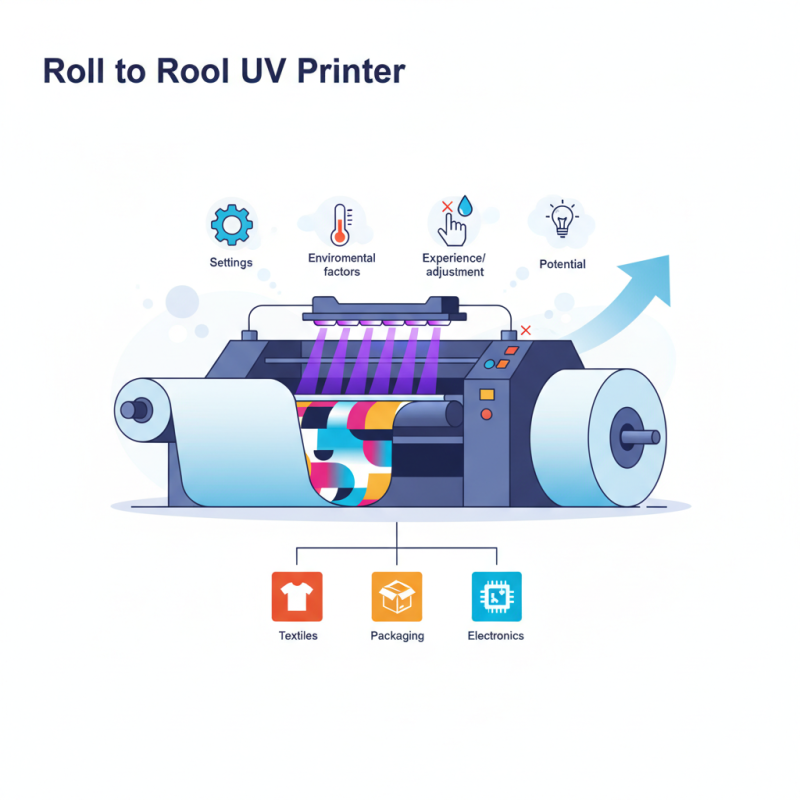
Operating a Roll to Roll UV Printer involves several intricate processes. First, the printer feeds the material continuously, creating a seamless workflow. The UV light cures the ink instantly, resulting in vibrant, durable prints. Many industries, from textiles to packaging, benefit from this technology.
However, challenges exist. Print quality can vary based on material and environmental factors. Users often grapple with settings and adjustments needed for optimal results. It requires experience to master. Despite these imperfections, the potential of Roll to Roll UV Printing continues to drive innovation and creativity across various sectors.
What is Roll to Roll UV Printing Technology?
Roll to roll UV printing technology represents a significant advancement in the printing industry. This process involves transferring images from a roll of material while using ultraviolet light to cure the ink. The result is high-quality prints on various substrates, including plastic, paper, and fabric. According to a recent market research report, the global UV printing market is projected to grow at a CAGR of 12.8% from 2022 to 2027, indicating a surge in demand for this innovative technology.
One of the key advantages of roll to roll UV printing is its efficiency. Roll systems can handle large volumes of material with minimal downtime. This is crucial for businesses aiming to increase production rates. However, achieving consistent quality can be challenging; variations in material thickness or ink viscosity can lead to inconsistencies. Factors such as temperature and humidity must also be monitored carefully to avoid defects during printing.
Moreover, roll to roll UV printers often require a learning curve. Operators need to understand the intricacies of ink types and drying times. Without this knowledge, issues like ink adhesion and smudging can arise. Despite these hurdles, the potential for vibrant colors and durability in finished products makes roll to roll UV printing a compelling choice for many industries, from packaging to textiles.
Roll to Roll UV Printer Market Growth (2018-2023)
Key Components of Roll to Roll UV Printers
Roll to Roll UV printers are advanced machines designed for high-volume printing on flexible materials. They use ultraviolet light to cure ink as it is applied, allowing for vibrant colors and detailed images. Understanding the key components of these printers is essential for optimizing their use in various industries.
The printing mechanism involves several crucial parts. The print heads apply UV ink onto the substrate as it moves through the printer. Quality print heads ensure sharp images and precision. The UV curing system follows closely behind, using intense light to solidify the ink instantly. This process minimizes drying time, making the workflow efficient. Other vital components include the unwind and rewind systems, which manage the tension of the roll. They ensure a smooth feed, preventing jams and inconsistencies.
In addition, the control system plays a significant role. It regulates the speed, temperature, and ink flow. Programmable settings can lead to errors if not configured correctly, leading to print defects. Regular maintenance of these components is crucial for achieving consistent results. Without it, even a small oversight can disrupt production, showcasing the delicate balance required in operating Roll to Roll UV printers.
The Printing Process: How Roll to Roll UV Printers Operate
Roll to roll UV printers are innovative devices designed for large-scale printing tasks. They use a continuous flexible substrate fed through the printer. This process allows for high efficiency and speed. UV light cures the ink instantly as it's printed, ensuring vibrant colors and sharp details. The ink adheres well to various surfaces, making these printers versatile.
One challenge with roll to roll UV printing is achieving consistent quality. Variations in substrate tension can lead to misalignment. Regular maintenance and calibration are essential. Make sure to check the machine settings often. Another tip is to run test prints before full production. This helps identify potential issues early on.
Using a roll to roll UV printer opens up creative possibilities. You can print banners, labels, and wallpaper, among other things. Experimenting with different materials can yield unique results. However, be aware that not all substrates are compatible. Always verify compatibility based on your printer’s specifications. Additionally, fluctuations in ink viscosity can impact the final output. Keeping the environment stable will help maintain print quality.
What is Roll to Roll UV Printer and How Does It Work?
| Feature | Description | Benefits |
| Printing Technique | Uses ultraviolet (UV) light to cure ink as it is printed. | Fast drying times and high durability of prints. |
| Media Compatibility | Can print on a variety of flexible materials. | Versatility for different applications such as banners and signage. |
| Ink Type | UV-curable inks that are quick to cure and resistant to fading. | Long lasting prints with vibrant colors. |
| Production Efficiency | Allows for continuous printing on rolls. | Reduction in labor costs and increased output rates. |
| Environmental Impact | Lower volatile organic compound (VOC) emissions compared to solvent inks. | More eco-friendly printing process. |
| Print Resolution | High-quality prints with resolutions up to 1440 dpi. | Sharp and detailed images suitable for professional applications. |
Applications of Roll to Roll UV Printing in Various Industries
Roll to roll UV printing is a versatile technology used across various industries. This printing method employs ultraviolet light to cure ink on flexible materials. The flexibility of roll to roll printers allows for seamless printing on wide media, such as vinyl, fabric, and paper. Industries like signage, textiles, and packaging have greatly benefited from this approach.
In the signage industry, vibrant colors and intricate designs are easily produced. Businesses can create eye-catching displays that stand out in crowded markets. Textile applications include custom designs on sportswear and uniforms, allowing for quick production and adaptation to trends. Packaging also sees advantages, with roll to roll printers enabling short runs and innovative designs for consumers.
However, the technology does have its limitations. Setup times can be lengthy, which impacts production speed. Additionally, achieving consistent quality across long runs requires skilled operators. While roll to roll UV printing offers many benefits, it also presents challenges that need addressing for optimal use.
Advantages of Using Roll to Roll UV Printers Over Traditional Methods
Roll to roll (R2R) UV printers are revolutionizing the printing industry. Unlike traditional methods, R2R technology allows for continuous printing on flexible substrates. This process enhances efficiency, significantly reducing production time and waste.
According to a report from Smithers Pira, the digital printing market is expected to reach $187 billion by 2025. This shift indicates a growing preference for UV printing technologies.
One notable advantage of R2R UV printers is their ability to produce vibrant, high-quality prints. The UV curing process dries the ink instantly, leading to sharp images and reduced smudging. Additionally, R2R printers can accommodate a variety of materials, including plastics, fabrics, and films. This versatility appeals to industries ranging from packaging to signage.
A report by Technavio suggests that the global roll-to-roll printing market is projected to grow at a CAGR of about 6% from 2021 to 2025, reflecting significant industry demand.
However, there are challenges that accompany these advancements. The initial investment for R2R UV printers can be substantial. Companies must also invest in staff training to properly operate these machines. It's crucial to assess both cost and benefit before making a decision. The balances between quality and production speed are delicate. Many manufacturers still struggle to achieve optimal performance levels.
Therefore, manufacturers should continuously refine their approaches to fully harness the benefits of this emerging printing technology.