


Rail Freight can be a practical option for global importers moving containerized cargo across long inland corridors. It may offer a useful balance between ocean shipping and air freight when the route, schedule, and cargo needs align. The details matter. Terminal locations, border handoffs, and final-mile trucking all affect delivery time and total cost.
A competitive rate does not guarantee a smooth shipment. Before booking, confirm the planned route, estimated transit time, cargo dimensions, weight limits, and container availability with your freight provider. Ask where delays are most likely, and leave room for schedule changes. A container waiting at a terminal can quickly disrupt a carefully planned delivery.
Good preparation starts with clear cargo information and complete shipping documents. Check documentation and customs requirements with your freight forwarder and customs broker for each origin and destination. Verify how the shipment connects to your warehouse, including unloading capacity and delivery appointments. These checks can feel repetitive, but small mismatches often create avoidable work. Even careful planning cannot remove every delay; rail connections and local conditions can change. That uncertainty deserves more attention than a low headline rate.
The ten tips in this guide focus on practical decisions importers can make before and during a rail shipment. They cover route selection, cost comparisons, packaging, documentation, tracking, and contingency planning. No single approach fits every lane. A second review is often worthwhile.
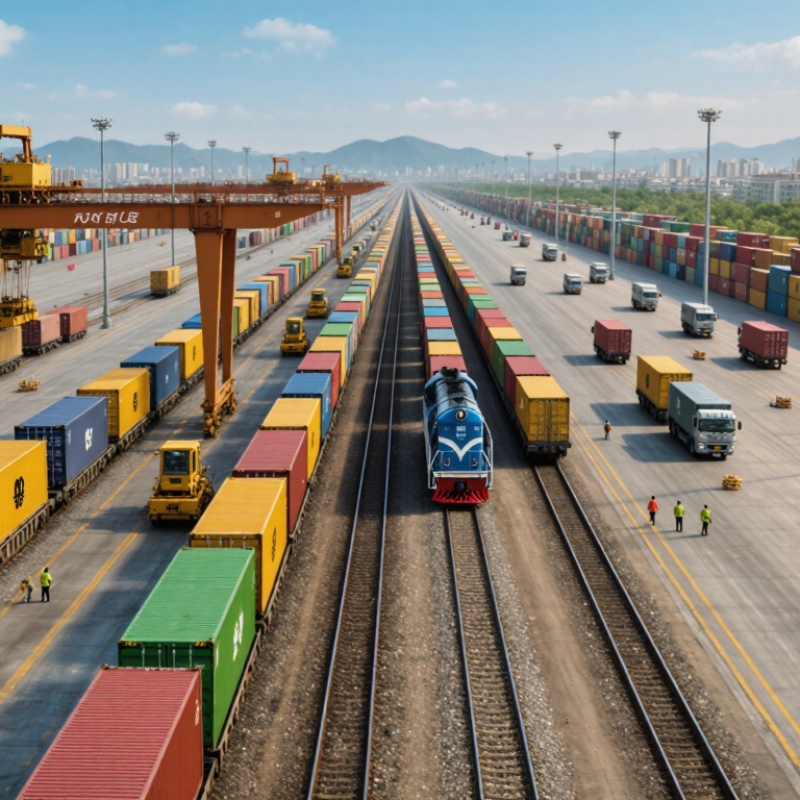
Rail freight can suit importers moving steady volumes over long inland distances. It often offers more predictable line-haul timing than road transport, with less exposure to highway congestion. Costs may also be competitive for full containers. But rail is not automatically faster or more sustainable; routes, terminal access, and energy sources matter. Distance matters.
Check the full journey, not just the rail segment. Is the supplier near a rail terminal? Can your warehouse receive a container by truck at the other end? Each transfer adds handling, coordination, and possible delay.
Check the handoffs.
Ask for realistic estimates covering pickup, terminal dwell time, rail transit, and final delivery—not just the advertised train schedule.
Cargo needs are just as important. Rail may work well for durable goods with flexible delivery windows, but less well for urgent shipments or products requiring tightly controlled temperatures. Confirm equipment availability, tracking details, and how delays are communicated.
A paper schedule can look tidy. Actual operations are messier, and I would leave buffer time for missed connections or terminal congestion.
Compare the total door-to-door cost with sea, road, or air options before committing.

Rail freight works best when the route fits the cargo, not just the map. Compare door-to-door transit time, border handoffs, and terminal access before choosing a corridor. A train may cover the long distance quickly, yet a missed weekly departure can add several days. Check how inland drayage connects to both rail terminals, especially for heavy or temperature-sensitive loads. Small delays matter.
Tips: Ask for a written route plan showing transfer points, scheduled departures, expected dwell time, and backup options. Confirm container availability and who monitors exceptions. Keep the details specific.
Choose a service level that matches the shipment’s value and delivery window. Consolidated rail can lower costs for smaller loads, but extra handling may increase damage exposure. Full-container service offers more control, though it is not automatically faster. Vet logistics partners by asking who owns each handoff, how delays are escalated, and what tracking updates include. Request recent performance data for the same corridor, not a broad network average. Estimates can look precise while excluding terminal congestion, so challenge that assumption before booking. Leave time for customs documentation and local pickup, even when the rail schedule seems dependable.
Indicative port-to-port or terminal-to-terminal transit-time ranges by freight mode. Compare the full route, including inland transport, customs clearance, and handling, before choosing a service.
Transit times are broad planning estimates, not guarantees. Actual schedules vary by corridor, service, season, border procedures, and origin-to-destination arrangements.
Before cargo reaches the rail terminal, measure each package and record its gross weight. Small discrepancies can affect loading plans and handling arrangements. Note any oversized pieces, uneven weight distribution, or items that need special lifting equipment. A clear cargo list helps everyone work from the same details.
Packaging must withstand repeated handling and vibration during transit. Use sturdy crates or cartons, protect exposed edges, and secure goods so they cannot shift inside. Keep labels visible on more than one side. For palletized cargo, check that wrapping and straps hold firm without hiding handling marks. Packaging can look solid at origin and still loosen along the route.
Prepare the commercial invoice, packing list, and rail transport document with matching descriptions, quantities, and weights. Use specific product descriptions rather than vague terms such as “parts.” Check that package counts agree across every document. A frequent oversight is copying an old weight into a new shipment file. It is easy to miss. Confirm document formats and any route-specific details with your freight forwarder before dispatch; requirements can vary by destination and service.
Rail freight can look predictable on a timetable, but each handoff can shift the arrival date. Track more than the train’s location: monitor departure, border arrival, customs release, terminal availability, and final delivery. Ask your logistics provider how often milestones update and who will flag exceptions. A status that says “in transit” may hide a long pause at a terminal. Small details matter.
Customs preparation should begin before the cargo reaches a border. Check that invoices, packing lists, product descriptions, and origin documents agree, and confirm local requirements with a qualified customs professional. Even a minor mismatch can delay release. Keep digital copies accessible, but do not assume digital records replace documents required at destination.
Build time into the plan for inspections, congestion, weather, and missed connections. A few days of buffer can protect production schedules, though too much stock ties up cash. Set a practical trigger for action, such as an arrival estimate slipping by 48 hours. Then review storage costs, delivery appointments, and customer commitments. One weak spot in many plans is relying on a single ETA; it feels efficient, until conditions change.
| # | Planning Area | Recommended Action | When to Do It | Details to Track |
|---|---|---|---|---|
| 1 | Route and service selection | Compare the full route, including rail terminals, transshipment points, and final-mile delivery—not just the quoted rail segment. | Before booking | Origin and destination; interchange points; scheduled departures; terminal locations; inland delivery arrangements. |
| 2 | Transit-time planning | Use the carrier’s current schedule as a planning estimate and allow extra time for border checks, terminal handling, and network disruption. | When setting the delivery plan | Scheduled transit; estimated arrival; delivery appointment; required-by date; contingency time. |
| 3 | Shipment tracking | Monitor milestone events and investigate gaps between expected and actual updates rather than relying only on a single arrival estimate. | From dispatch through delivery | Departure; interchange; border arrival and release; destination terminal arrival; cargo availability; final delivery. |
| 4 | Customs documentation | Check that commercial invoices, packing lists, transport documents, and any required certificates are complete and consistent. | Before cargo dispatch | Importer and exporter details; goods description; quantities; declared value; origin; commodity classification. |
| 5 | Customs coordination | Confirm who files the import entry, which border or inland location handles clearance, and how document corrections will be managed. | Before booking and again before arrival | Customs broker contact; filing responsibility; entry status; inspection requirements; release confirmation. |
| 6 | Commodity classification | Verify the tariff classification and any applicable import controls with a qualified customs professional before shipping. | Before the first shipment of a product | Product composition and use; tariff code; permits or licenses; restrictions; supporting evidence. |
| 7 | Packaging and loading | Use packaging and load securing suitable for repeated handling and rail movement, and confirm that the load meets applicable equipment limits. | Before loading | Gross weight; dimensions; load distribution; securing method; packaging condition; handling instructions. |
| 8 | Terminal charges and free time | Review destination-terminal rules, availability notices, free-time terms, and charges that may apply if cargo is not collected promptly. | Before cargo arrival | Free-time start and expiry; storage or detention terms; release requirements; collection appointment. |
| 9 | Delay response plan | Agree on who will notify stakeholders, assess alternative routing or delivery options, and approve any additional costs. | Before dispatch | Escalation contacts; decision-maker; affected delivery dates; alternate transport options; cost approval process. |
| 10 | Delivery and receiving | Coordinate terminal release, onward transport, and the consignee’s receiving hours so cargo is collected and delivered without avoidable waiting. | Before destination arrival | Release documents; pickup booking; vehicle or equipment requirements; delivery slot; proof of delivery. |
| Planning note: Transit times, border procedures, terminal rules, and charges vary by route, service, shipment, and local requirements. Confirm current details with the relevant carrier, terminal, customs broker, and transport provider. | ||||
Rail freight can lower costs on long inland routes, but the quoted rate is only part of the bill. Ask the carrier or forwarder to separate line-haul charges, terminal handling, documentation, and final-mile delivery. Compare routes by total transport cost, not distance alone. A cheaper route may involve another transfer or longer dwell time. Small delays matter. Check where containers change trains, how often departures run, and whether terminals offer secure storage. Build buffer days around port cutoffs and factory loading, especially before seasonal peaks.
Choose cargo insurance that matches the goods’ value, and read the exclusions carefully. Ask for tracking milestones at departure, terminal handoffs, and arrival, rather than relying on one broad status update. Share accurate weights, dimensions, packing details, and contact information before booking; corrections can trigger fees or missed slots. Keep quotes, booking confirmations, and exception notices so disputed charges can be checked against agreed terms. I would still leave room for error: rail timetables can shift, and a buffer is not wasted money.


For those larger-sized parts, or smaller quantity runs, we have 2 independent powder coat booths and ovens. The quality, durability and affordability of today’s powder coating finishes make this the process of choice for world-class companies.
Powder coating advantages over other forms of coating are many. Materials used in the Powder coating process can be metals and non-metals that come in a multitude of thicknesses, textures, colors, etc. Another of Powder coating’s biggest advantages over conventional coatings is its ability to create finishes in many different textures. Powder Coating Booths allow us the ability to apply these advantages to large products.
Tri-State Fabricators runs a full-service conveyor line for painting. Wet painting can provide protection or decoration to many different part styles. From start to finish, every project is easier to undergo random and point-based inspection by our skilled painting team.
Advantages to our Wet Paint Line are these lines start with product prep and ends with a thorough inspection of a high quality finished product. Our ability to complete large and small projects with a superior finish and doing so in a timely and economical fashion. This passes along the savings in production to our customers. When powder coating ins not an option, our Wet Paint Line gets the job done right the first time.
When the parts get big and heavy we roll-out our custom paint racks and oversize booth. By utilizing our partnerships with all the major paint brands, we can match virtually any color with wet paint.
The advantages of having access to a Wet Paint Booth are many. Large projects of many different shapes can be loaded into the booth. The Wet Paint Booth offers an environment that is much more controlled than a typical parts painting operation.
Not only are they used because of their controlled environment, but they’re are also advantageous when it comes to applying paint to parts that are needed in industries that require specialty coatings such as medical, aerospace, etc.
Our military forces have some very high standards when it comes to the finish of their vehicles and equipment. From the first pre-treatment step to final coat, it takes a great deal of knowledge and experience to protect the men and women of our armed forces. They deserve only the best, and Tri-State Fabricators provides it.
All of our processes are closely monitored by our staff and management teams. Both of which are highly trained in the processes of metal fabrication and finishing. Tri-State Fabricators’ goal is to always fully satisfy each and every customer, including the military. We will always put a 110% into what we do.
Abrasive media blasting is an excellent way to remove old paint, rust, and increase the paint/powder adhesion. Glass beads produce a much smoother and brighter finish than angular abrasives; leaving the part clean yet without any dimensional change. Chemically inert and environmentally friendly, we can recycle our beads approximately 30 times; making them a more preferred method of metal cleaning or surface finishing.
Advantages to Glass Bead Blasting are many. Glass bead blast media is used when a project is needing rough surfaces need to become smooth for applications of coatings such as paint. It is typically used to clean paint and rust from a product surface without deforming the surface it is being used on. Overall, compared to many other blasting media, Glass Bead Blasting is a very economical choice and those savings are always passed on to our customers.
Tri-State Fabricators utilize a zinc phosphate wash to clean and etch the material to ensure the best paint adhesion possible. The unique design of our 3-stage wash system does the work like a 5-stage. From Cleaning and rinsing to conversion coating and post-treatment, Our Part Washing process is a complete service and works throughout the fabrication service and the finishing service.
Along with the previously mentioned benefits, Curing is a vital chemical reaction that leaves the product finish hard and relatively safe from mild abrasion and aggressive corrosion. This process can be done in more than one way; ambient air-dry or in curing ovens at temps that exceed 240°.
From fixing paint mistakes (someone else’s of course) to simply cleaning our paint line hooks, our burn-off oven is put to good use. After a quick burn-off, a little clean up, and a fresh coat of paint, your parts will look better than new.
Why does our Burn-Off Oven work so well? Because super heating the air around parts turns the materials into ashes. From paint and powder coatings to rubber and machining oils, high temps do the job without degrading the integrity of the part.
Masking is a vital part of producing high quality products. We have die-cut masking patterns to protect machined surfaces as well as a wide range of plugs and caps to protect threaded holes and bolts. We provide permanent and temporary masking.
Masking allows the selected sections of a product to be protected from a fabrication or finishing service. This can be with both chemicals when etching and tapes, paints when only finishing just a section of the product. Masking is great in aiding the customization process of a project.
Screen printing is a photographic process that transfers artwork onto a porous nylon screen which allows colored ink to flow through the screen and be deposited on an aluminum or plastic component. We can generally have just about any design created onto a screen for your parts.
Some of the advantages of Screen Printing are, brand recognition for your business displaying on your products, assembly instructions, product warnings/hazards, etc. Tri-State Fabricators produces Screen Printing of the highest quality so you know it’s durable.
Metal Finishing is the art of treating the exterior portion of product, often metal but can also be made of other materials, so that the surface is clean and free of any debris. Then the process of applying coats or either paint of powder coat takes place. This coating process improves the quality of the product in both appearance and resistance to wear and corrosion.
Tri-State Fabricators, Inc., understands that a project typically isn’t complete until a high-quality finish has been added to your product. This is why our painting and powder coating teams continuously inspect the products throughout the Metal Finishing process.

