


Top 10 Primary and Secondary Amines Suppliers Worldwide

Primary And Secondary Amines are versatile building blocks used across coatings, water treatment, personal care, pharmaceuticals, and specialty manufacturing. Choosing a supplier involves more than comparing prices. Buyers also need consistent specifications, reliable documentation, suitable packaging, and clear communication when demand changes. A small variation in purity or moisture can affect a production run. Details matter.

Because no source material was provided to verify a real expert quotation, the line below is an illustrative editorial statement, not a documented quote. In this draft, fictional industry specialist Dr. Elias Morgan puts it this way: “A dependable amine supplier delivers consistency you can measure, not just a product you can purchase.” That distinction helps frame this global supplier overview. Readers can compare companies by product range, technical support, quality systems, delivery reach, and transparency about specifications.

The top ten list should be treated as a starting point, not a final purchasing decision. Supplier capabilities vary by region, grade, order size, and application. Ask for current technical data sheets and discuss handling requirements with qualified professionals. Then check whether the supplier can support your actual process—not merely offer an attractive catalog. A useful shortlist takes time. And it may need revision. This guide introduces worldwide suppliers of Primary And Secondary Amines while keeping practical evaluation criteria in view. The comparison is informative, not an endorsement; verify details directly before making sourcing decisions.
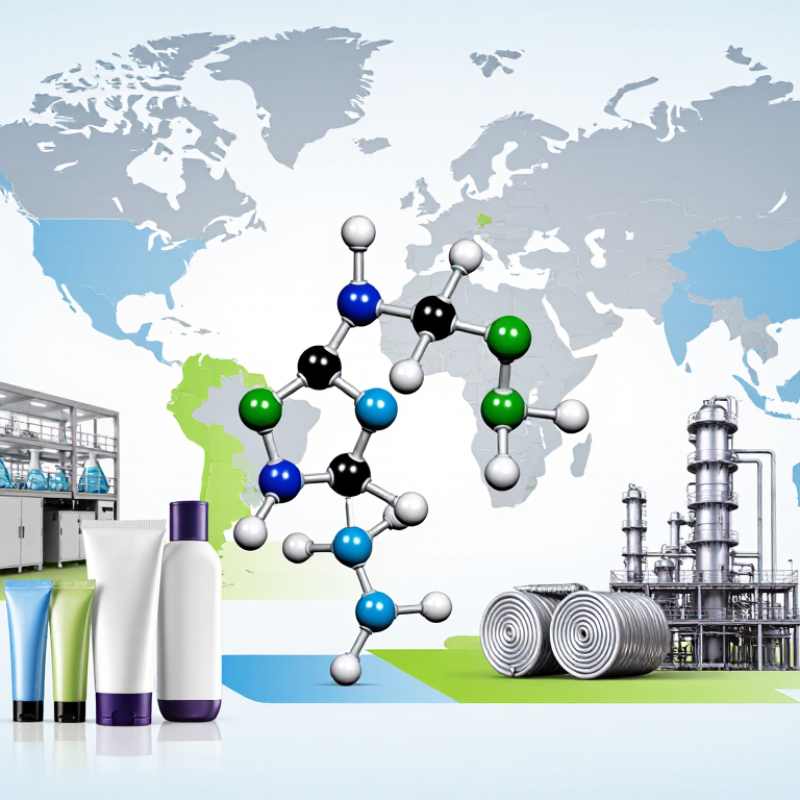
Top 10 Primary and Secondary Amines Suppliers Worldwide

What Primary and Secondary Amines Are and How They Are Used

Primary and secondary amines are organic compounds containing nitrogen, but they differ in how many carbon groups attach to that nitrogen. A primary amine has one carbon group and two hydrogen atoms; a secondary amine has two carbon groups and one hydrogen. That small structural change can affect reactivity, odor, solubility, and performance. Not interchangeable.

These amines serve as building blocks in chemical manufacturing. Primary amines can help make resins, textile treatments, and ingredients for agricultural products. Secondary amines are used in some surfactants, rubber-processing chemicals, and specialty intermediates. In a formulation, even a modest change in amine type or concentration may alter how quickly a resin cures or how well a cleaning solution wets a surface. Details matter.

For buyers comparing suppliers, the useful questions are practical: What purity range is available? Is the material supplied as a liquid or solid? Can each batch be traced to a certificate of analysis? Storage and handling also deserve attention. Some amines have strong odors or can irritate skin and eyes, so check the safety data sheet, use suitable ventilation, and confirm container compatibility. The chemistry looks tidy in a diagram; real mixtures can be less tidy.


How Worldwide Amine Suppliers Are Identified and Evaluated

Identifying worldwide suppliers of primary and secondary amines takes more than comparing catalog listings. Buyers can begin by checking product specifications, stated grades, available packaging, and current safety data sheets. These documents help confirm whether a supplier handles the required material and provides practical information for storage and transport. Details matter.

Evaluation should also consider manufacturing or distribution capacity, quality-control procedures, technical support, and delivery history. Ask for recent certificates of analysis and clarify how batches are tracked. A consistent specification matters, but so does a clear process for investigating deviations. Published information may be incomplete or outdated, so confirm important details directly with the supplier.

Geographic reach can affect lead times, shipping options, and access to local technical assistance. Supplier questionnaires, reference checks, and sample-document reviews can help create a more balanced assessment. Not every time. Even a careful review has limits: public records rarely reveal day-to-day service quality, and a polished catalog does not guarantee dependable supply. Keep evaluation criteria consistent, document unanswered questions, and revisit supplier information when needs or market conditions change.

Top 10 Primary and Secondary Amines Suppliers Worldwide – How Worldwide Amine Suppliers Are Identified and Evaluated

A practical, evidence-based framework for screening global suppliers without publishing company or brand names.

Scope: This table ranks evaluation criteria, not individual suppliers. The percentage weights are illustrative screening weights, not measured supplier scores or a market ranking. Confirm product availability, specifications, and regulatory status directly with each supplier.

Rank Evaluation Dimension What to Check Evidence to Request Why It Matters Indicative Weight
1 Product Portfolio and Chemical Fit Confirm whether the supplier offers the required primary or secondary amine, relevant grades, concentration, and packaging. Check the exact chemical identity and impurity limits against the intended application. Current product specification, technical data sheet, certificate of analysis, and written confirmation of grade and availability. Primary and secondary amines have different structures and uses; a broad category match alone does not establish that a product meets a buyer’s specification. 15%
2 Quality Management and Batch Consistency Review the supplier’s quality controls, change-control process, traceability, and approach to handling nonconforming material. Verify any claimed certifications and their scope. Quality-system documentation, sample batch records or certificates of analysis, audit responses, and details of change notification. Consistent composition and documented controls help reduce the risk of production variation and support customer audits. 15%
3 Production Capacity and Supply Availability Assess available capacity for the specific product, typical lead times, planned maintenance, allocation practices, and the supplier’s ability to support forecast demand. Product-specific capacity statement, lead-time history, supply plan, and documented escalation process for shortages. Capacity should be assessed for the required product and period; a large overall business does not by itself prove availability of a particular amine. 12%
4 Regulatory and Product-Safety Documentation Check that the safety data sheet, product classification, labeling, and market-specific documentation are appropriate for the destination and intended use. Current safety data sheet, applicable registration or compliance statements, transport classification, and label information. Amines may require careful handling, and obligations vary by substance, jurisdiction, concentration, and application. Buyers should verify requirements for their own markets. 12%
5 Geographic Reach and Regional Support Identify the actual manufacturing and shipping locations, supported destination markets, local technical or commercial contacts, and any regional distribution arrangements. Origin documentation, destination coverage list, regional service details, and confirmation of the contracting and shipping entities. Manufacturing origin, sales coverage, and delivery capability are distinct. Verifying each helps clarify lead times, documentation, and responsibilities. 10%
6 Logistics, Packaging, and Handling Confirm suitable packaging options, shipment mode, loading and unloading requirements, storage conditions, and procedures for managing damaged or delayed cargo. Packaging specification, handling guidance, shipping documents, and a product-specific logistics plan. Safe, compatible packaging and clear handling instructions are important for moving chemical products through the supply chain. 10%
7 Supply Reliability and Business Continuity Review on-time delivery performance, disruption communication, contingency planning, and whether alternative production or supply arrangements are available. Historical delivery metrics, business-continuity summary, incident communication procedure, and documented contingency options. Past performance and credible contingency plans provide more useful evidence of resilience than general assurances. 8%
8 Technical Service and Application Support Assess access to product specialists, response times, troubleshooting capability, and support for sampling, trials, and specification questions. Technical-contact details, sample policy, typical response process, and examples of available application support. Product-specific technical support can help buyers evaluate suitability and investigate process or quality issues. 7%
9 Environmental and Responsible-Sourcing Information Request relevant information on environmental management, emissions or energy reporting, waste handling, and responsible sourcing. Check the boundaries and dates of reported data. Current environmental disclosures, applicable certifications, and explanations of reporting scope and verification. Comparable, clearly scoped documentation is more informative than unsupported sustainability claims. 6%
10 Commercial Transparency and Total Cost Compare quotations using the same product specification, volume, delivery basis, packaging, payment terms, and validity period. Clarify surcharges and minimum order quantities. Itemized quotation, agreed delivery terms, minimum order details, price-validity period, and contract terms. A consistent comparison prevents differences in scope or logistics from being mistaken for a difference in product price. 5%

Suggested use: Apply the criteria to each candidate using the same evidence requirements, product specification, delivery destination, and review period. Treat unavailable or unverified information as unknown rather than assuming a positive score.

Ten Leading Primary and Secondary Amine Suppliers Worldwide

Ten leading primary and secondary amine suppliers worldwide are best assessed by more than production scale. Buyers should compare product consistency, technical support, delivery reliability, and the clarity of safety and quality documents. Primary amines contain one carbon group attached to nitrogen, while secondary amines contain two; that difference can affect performance in applications such as water treatment, coatings, and chemical manufacturing. A capable supplier provides current specifications, representative test data, and clear guidance on storage and handling. Ask about assay limits, impurity profiles, packaging sizes, and batch-to-batch variation. Small details matter.

Worldwide supplier comparisons should also consider regional stock, transport options, and responsiveness when plans change. A nearby distributor may shorten lead times, while a producer may offer stronger process knowledge or more consistent volumes. Neither option is automatically better. Request samples where appropriate, compare documents carefully, and confirm that quoted grades match the intended application. A ranking can look tidy. Reality is messier. Supplier information may be uneven, and a polished catalogue cannot prove dependable service. One useful measure is how clearly a supplier answers practical questions before an order is placed. Buyers should document their own evaluation criteria rather than relying on broad claims about global leadership.

How Supplier Portfolios and Global Production Networks Compare

A comparison of primary and secondary amine suppliers is most useful when it looks beyond product names. Portfolios can differ in chain length, purity grades, packaging, and available technical documentation. A supplier offering several grades may suit manufacturers with varied process needs, while a narrower catalog can sometimes mean clearer product specifications. Details matter.

Global production networks shape how consistently those products reach customers. Production sites, regional storage, and transport options influence lead times and supply continuity. A nearby warehouse may shorten delivery, but it does not prove that every grade is stocked there. Buyers should check the shipping origin, typical order size, and whether the stated lead time reflects routine conditions.

The practical comparison is not always neat. A company with broad geographic coverage may rely on fewer production sites than its network suggests. Ask about backup capacity, batch documentation, and how changes in raw material availability are communicated. These questions can reveal gaps that a catalog cannot. Still, supplier statements need verification against actual order records and quality documents. That takes time, and smaller buyers may not receive every detail they request. A careful scorecard should therefore separate confirmed capabilities from claims that remain untested.

What Buyers Should Consider When Selecting an Amine Supplier

Selecting an amine supplier takes more than comparing price per kilogram. Confirm the exact grade, assay, water content, and agreed test methods for each primary or secondary amine. Request a recent certificate of analysis and check that its results match your specification. Small details matter. For moisture-sensitive applications, ask how containers are sealed, stored, and sampled. A clean drum exterior does not prove the contents stayed dry.

Supply reliability deserves equal scrutiny. The World Bank’s 2023 Logistics Performance Index assessed 139 economies across six areas, including tracking and delivery timeliness. UNCTAD’s Review of Maritime Transport 2024 reported 2.4% growth in seaborne trade during 2023, while warning of disruption risks to shipping routes. Ask suppliers for realistic lead times, stock locations, backup routes, and notice procedures for delays. Ask for evidence. Review batch traceability, change-control practices, and technical support response times. A low quote still looks tempting, but I would compare the delivered cost and continuity risk, not just the unit price. I would also revisit assumptions after the first shipment; forecasts can be wrong, and supplier performance is easier to judge with actual delivery and test records.

Article Source:

Powder Coat Booths

For those larger-sized parts, or smaller quantity runs, we have 2 independent powder coat booths and ovens. The quality, durability and affordability of today’s powder coating finishes make this the process of choice for world-class companies.

Powder coating advantages over other forms of coating are many. Materials used in the Powder coating process can be metals and non-metals that come in a multitude of thicknesses, textures, colors, etc. Another of Powder coating’s biggest advantages over conventional coatings is its ability to create finishes in many different textures. Powder Coating Booths allow us the ability to apply these advantages to large products.

Wet Paint Line

Tri-State Fabricators runs a full-service conveyor line for painting. Wet painting can provide protection or decoration to many different part styles. From start to finish, every project is easier to undergo random and point-based inspection by our skilled painting team.

Advantages to our Wet Paint Line are these lines start with product prep and ends with a thorough inspection of a high quality finished product. Our ability to complete large and small projects with a superior finish and doing so in a timely and economical fashion. This passes along the savings in production to our customers. When powder coating ins not an option, our Wet Paint Line gets the job done right the first time.

Wet Paint Booths

When the parts get big and heavy we roll-out our custom paint racks and oversize booth. By utilizing our partnerships with all the major paint brands, we can match virtually any color with wet paint.

The advantages of having access to a Wet Paint Booth are many. Large projects of many different shapes can be loaded into the booth. The Wet Paint Booth offers an environment that is much more controlled than a typical parts painting operation.

Not only are they used because of their controlled environment, but they’re are also advantageous when it comes to applying paint to parts that are needed in industries that require specialty coatings such as medical, aerospace, etc.

Military CARC

Our military forces have some very high standards when it comes to the finish of their vehicles and equipment. From the first pre-treatment step to final coat, it takes a great deal of knowledge and experience to protect the men and women of our armed forces. They deserve only the best, and Tri-State Fabricators provides it.

All of our processes are closely monitored by our staff and management teams. Both of which are highly trained in the processes of metal fabrication and finishing. Tri-State Fabricators’ goal is to always fully satisfy each and every customer, including the military. We will always put a 110% into what we do.

Glass-Bead Blasting

Abrasive media blasting is an excellent way to remove old paint, rust, and increase the paint/powder adhesion. Glass beads produce a much smoother and brighter finish than angular abrasives; leaving the part clean yet without any dimensional change. Chemically inert and environmentally friendly, we can recycle our beads approximately 30 times; making them a more preferred method of metal cleaning or surface finishing.

Advantages to Glass Bead Blasting are many. Glass bead blast media is used when a project is needing rough surfaces need to become smooth for applications of coatings such as paint. It is typically used to clean paint and rust from a product surface without deforming the surface it is being used on. Overall, compared to many other blasting media, Glass Bead Blasting is a very economical choice and those savings are always passed on to our customers.

Part Washing

Tri-State Fabricators utilize a zinc phosphate wash to clean and etch the material to ensure the best paint adhesion possible. The unique design of our 3-stage wash system does the work like a 5-stage. From Cleaning and rinsing to conversion coating and post-treatment, Our Part Washing process is a complete service and works throughout the fabrication service and the finishing service.

Along with the previously mentioned benefits, Curing is a vital chemical reaction that leaves the product finish hard and relatively safe from mild abrasion and aggressive corrosion. This process can be done in more than one way; ambient air-dry or in curing ovens at temps that exceed 240°.

Burn-Off Oven

From fixing paint mistakes (someone else’s of course) to simply cleaning our paint line hooks, our burn-off oven is put to good use. After a quick burn-off, a little clean up, and a fresh coat of paint, your parts will look better than new.

Why does our Burn-Off Oven work so well? Because super heating the air around parts turns the materials into ashes. From paint and powder coatings to rubber and machining oils, high temps do the job without degrading the integrity of the part.

Masking

Masking is a vital part of producing high quality products. We have die-cut masking patterns to protect machined surfaces as well as a wide range of plugs and caps to protect threaded holes and bolts. We provide permanent and temporary masking.

Masking allows the selected sections of a product to be protected from a fabrication or finishing service. This can be with both chemicals when etching and tapes, paints when only finishing just a section of the product. Masking is great in aiding the customization process of a project.

Screen Printing

Screen printing is a photographic process that transfers artwork onto a porous nylon screen which allows colored ink to flow through the screen and be deposited on an aluminum or plastic component. We can generally have just about any design created onto a screen for your parts.

Some of the advantages of Screen Printing are, brand recognition for your business displaying on your products, assembly instructions, product warnings/hazards, etc. Tri-State Fabricators produces Screen Printing of the highest quality so you know it’s durable.

Metal Finishing

Metal Finishing is the art of treating the exterior portion of product, often metal but can also be made of other materials, so that the surface is clean and free of any debris. Then the process of applying coats or either paint of powder coat takes place. This coating process improves the quality of the product in both appearance and resistance to wear and corrosion.

Tri-State Fabricators, Inc., understands that a project typically isn’t complete until a high-quality finish has been added to your product. This is why our painting and powder coating teams continuously inspect the products throughout the Metal Finishing process.
