


Top Pre-treatment Processes for Effective Seawater Desalination?

Seawater desalination is a critical technology in addressing global water scarcity. Efficient desalination depends heavily on effective pre-treatment processes. These processes are vital for removing various contaminants before the main desalination stage. A robust pre-treatment process for seawater desalination can greatly enhance overall system efficiency.

Common contaminants include organic matter, suspended solids, and microorganisms. Traditional pre-treatment methods often face challenges in adapting to varying seawater quality. Some techniques may not fully remove all harmful substances, leading to membrane fouling in desalination systems. This can increase operational costs and reduce the lifespan of desalination plants.

Innovative approaches, such as advanced filtration and chemical treatments, are emerging. Yet, the effectiveness of these new methods requires ongoing research and adaptation. Understanding the nuances of local seawater conditions is crucial. Operators must select the best-pre-treatment process for seawater desalination tailored to their specific needs. Continuous evaluation is necessary to ensure optimal performance and sustainability.
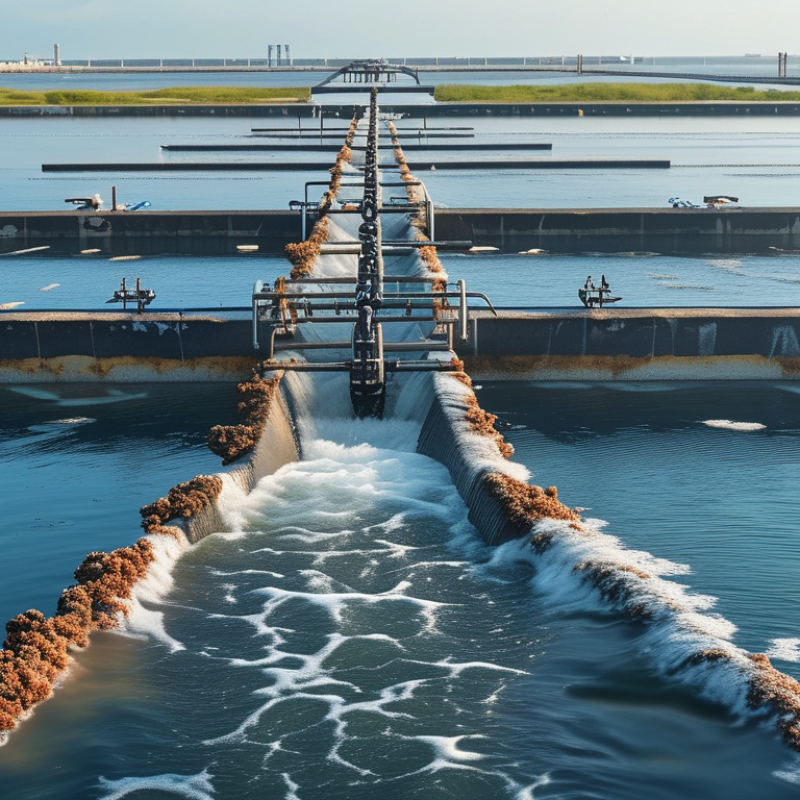
Top Pre-treatment Processes for Effective Seawater Desalination?

Overview of Seawater Desalination Methods

Seawater desalination is essential for overcoming water scarcity. There are various methods used to remove salt and impurities from seawater. Understanding these methods can lead to more effective desalination processes.

Reverse osmosis (RO) is the most common technique. It uses a semi-permeable membrane to separate salt from water. This process requires significant energy and has limitations on the types of contaminants it can remove. Another method is multi-stage flash distillation. This involves heating seawater and capturing steam. It’s effective but can be costly to operate.

Tips: Regular maintenance of the systems is crucial. Neglecting upkeep can lead to decreased efficiency. Consider using pre-treatment processes to minimize fouling and extend membrane lifespan.

Electrodialysis is another method that deserves attention. It uses electric current to pull salt ions through selective membranes. This process is less energy-intensive but may not be suitable for all water sources. Evaluating water quality before choosing a method is vital.

Understanding the pros and cons of each desalination method is important. Each technique has its unique strengths and weaknesses. Engaging with experts in the field can enhance decision-making. Continual improvement and innovation are key to making seawater desalination more effective.


Top Pre-treatment Processes for Effective Seawater Desalination

Importance of Pre-treatment in Seawater Desalination

Pre-treatment plays a crucial role in seawater desalination. It ensures the efficiency and longevity of desalination systems and protects the membranes used in the process. A report by the International Desalination Association highlights that effective pre-treatment can reduce membrane fouling by up to 70%. This reduction not only enhances the system’s performance but also significantly decreases maintenance costs.

Common pre-treatment methods include sedimentation, filtration, and chemical dosing. These processes help remove suspended solids, organic matter, and microorganisms, which can lead to rapid fouling. Research indicates that fouling can decrease desalination efficiency by 30% to 50%. Data shows that pre-treated seawater can enhance recovery rates significantly, achieving performance levels above 90%.

Despite these benefits, the pre-treatment process is often underappreciated. Some plants may opt for minimal pre-treatment, risking early membrane replacement and system downtime. Striking a balance is essential. Too aggressive a pre-treatment, with excessive chemicals, could introduce new challenges, such as chemical residues affecting the final product water. Operators must continually evaluate and improve their pre-treatment strategies to adapt to varying seawater conditions and optimize overall system performance.

Top Pre-treatment Processes for Effective Seawater Desalination

Pre-treatment Process Purpose Common Methods Advantages Limitations
Coagulation and Flocculation To aggregate and remove suspended solids Chemical addition, mixing, settling Effective in reducing turbidity, enhances filtration efficiency Chemical disposal issues, additional costs
Microfiltration To remove bacteria, protozoa, and larger particulates Membrane filtration Effective barrier against microorganisms High fouling potential, membrane replacement cost
Sand Filtration To remove particulate matter Gravity or pressure-driven filtration Low cost, simple operation Ineffective against viruses, requires regular maintenance
Reverse Osmosis Pre-treatment To protect RO membranes from fouling Membrane filtration, chemical treatment Increases RO lifespan, improves efficiency Complex system design, operational costs
Activated Carbon Treatment To remove organic matter and chlorine Granular activated carbon (GAC) filters Effective adsorption of contaminants Regular replacement needed, limited capacity

Common Pre-treatment Techniques for Seawater

Effective seawater desalination begins with robust pre-treatment processes. These techniques aim to remove impurities, ensuring efficient operation of reverse osmosis (RO) systems. The International Desalination Association reports that effective pre-treatment can enhance RO performance by up to 30%.

Common pre-treatment methods include microfiltration and coagulation. Microfiltration employs membranes to filter out larger particles, while coagulation involves adding chemicals to aggregate smaller particles. A study from the American Water Works Association indicates that coagulated water reduces membrane fouling significantly, leading to improved longevity of the reverse osmosis membranes.

Tip: Always monitor the quality of incoming seawater. Changes in turbidity can impact pre-treatment effectiveness. Regular testing is vital for adapting processes as needed. Additionally, consider using automated systems to enhance operational efficiency.

Another technique to explore is active carbon filtration. This method removes organic compounds that can foul RO membranes. While effective, it may require careful balancing to avoid overloading the filtration system. The potential for changes in organic content can lead to unexpected challenges in operation.

Tip: Regular maintenance of filters is crucial. Neglecting this can reduce efficiency and increase operational costs. Balancing pre-treatment processes effectively can lead to smoother desalination operations while addressing potential issues upfront.

Advantages and Disadvantages of Different Pre-treatment Processes

Pre-treatment processes play a crucial role in seawater desalination. They help protect the main desalination unit from fouling and scaling. Different methods exist, each with its own advantages and disadvantages. One common approach is screen filtration. This method removes large particles, such as seaweed and fish. It is simple and cost-effective, but it may not effectively handle smaller contaminants.

Another technique is microfiltration. This method can remove bacteria and larger organic materials. It offers higher quality water for desalination. However, microfiltration systems can be more energy-intensive and expensive to operate. Additionally, periodic cleaning is necessary to maintain performance. This maintenance can lead to increased operational costs.

Reverse osmosis (RO) is another pre-treatment option. It provides excellent contaminant removal rates but requires careful monitoring. RO systems can be prone to fouling if not managed properly. This can lead to significant downtime and increased costs. Balancing efficiency and operational challenges is essential in pre-treatment processes. Effective strategies vary depending on specific site conditions.

Future Trends in Pre-treatment Technologies for Desalination

In the quest for efficient seawater desalination, pre-treatment processes are crucial. They can significantly enhance the lifespan and performance of desalination plants. Recent reports indicate that around 60% of operational costs in desalination facilities stem from membrane fouling and scaling issues. Thus, effective pre-treatment not only boosts efficiency but also reduces maintenance costs in the long run.

Future trends in pre-treatment technologies focus on advancing filtration methods. Innovations like forward osmosis and biofouling-resistant membranes promise improved effectiveness. For instance, membranes that incorporate anti-fouling coatings have shown to decrease biofouling by nearly 50%. Furthermore, hybrid systems combining microfiltration and ultrafiltration are gaining traction, enhancing the removal of suspended solids while minimizing energy consumption.

However, challenges remain. Many emerging technologies require extensive testing before wide-scale implementation. Current studies reveal that while some new methods are promising, they often lack comprehensive data on long-term effects. Researchers are still exploring ways to balance efficiency with sustainability, making continuous innovation essential in the desalination field. The transition to greener technologies is not without obstacles, but the potential benefits make them worthwhile.

Powder Coat Booths

For those larger-sized parts, or smaller quantity runs, we have 2 independent powder coat booths and ovens. The quality, durability and affordability of today’s powder coating finishes make this the process of choice for world-class companies.

Powder coating advantages over other forms of coating are many. Materials used in the Powder coating process can be metals and non-metals that come in a multitude of thicknesses, textures, colors, etc. Another of Powder coating’s biggest advantages over conventional coatings is its ability to create finishes in many different textures. Powder Coating Booths allow us the ability to apply these advantages to large products.

Wet Paint Line

Tri-State Fabricators runs a full-service conveyor line for painting. Wet painting can provide protection or decoration to many different part styles. From start to finish, every project is easier to undergo random and point-based inspection by our skilled painting team.

Advantages to our Wet Paint Line are these lines start with product prep and ends with a thorough inspection of a high quality finished product. Our ability to complete large and small projects with a superior finish and doing so in a timely and economical fashion. This passes along the savings in production to our customers. When powder coating ins not an option, our Wet Paint Line gets the job done right the first time.

Wet Paint Booths

When the parts get big and heavy we roll-out our custom paint racks and oversize booth. By utilizing our partnerships with all the major paint brands, we can match virtually any color with wet paint.

The advantages of having access to a Wet Paint Booth are many. Large projects of many different shapes can be loaded into the booth. The Wet Paint Booth offers an environment that is much more controlled than a typical parts painting operation.

Not only are they used because of their controlled environment, but they’re are also advantageous when it comes to applying paint to parts that are needed in industries that require specialty coatings such as medical, aerospace, etc.

Military CARC

Our military forces have some very high standards when it comes to the finish of their vehicles and equipment. From the first pre-treatment step to final coat, it takes a great deal of knowledge and experience to protect the men and women of our armed forces. They deserve only the best, and Tri-State Fabricators provides it.

All of our processes are closely monitored by our staff and management teams. Both of which are highly trained in the processes of metal fabrication and finishing. Tri-State Fabricators’ goal is to always fully satisfy each and every customer, including the military. We will always put a 110% into what we do.

Glass-Bead Blasting

Abrasive media blasting is an excellent way to remove old paint, rust, and increase the paint/powder adhesion. Glass beads produce a much smoother and brighter finish than angular abrasives; leaving the part clean yet without any dimensional change. Chemically inert and environmentally friendly, we can recycle our beads approximately 30 times; making them a more preferred method of metal cleaning or surface finishing.

Advantages to Glass Bead Blasting are many. Glass bead blast media is used when a project is needing rough surfaces need to become smooth for applications of coatings such as paint. It is typically used to clean paint and rust from a product surface without deforming the surface it is being used on. Overall, compared to many other blasting media, Glass Bead Blasting is a very economical choice and those savings are always passed on to our customers.

Part Washing

Tri-State Fabricators utilize a zinc phosphate wash to clean and etch the material to ensure the best paint adhesion possible. The unique design of our 3-stage wash system does the work like a 5-stage. From Cleaning and rinsing to conversion coating and post-treatment, Our Part Washing process is a complete service and works throughout the fabrication service and the finishing service.

Along with the previously mentioned benefits, Curing is a vital chemical reaction that leaves the product finish hard and relatively safe from mild abrasion and aggressive corrosion. This process can be done in more than one way; ambient air-dry or in curing ovens at temps that exceed 240°.

Burn-Off Oven

From fixing paint mistakes (someone else’s of course) to simply cleaning our paint line hooks, our burn-off oven is put to good use. After a quick burn-off, a little clean up, and a fresh coat of paint, your parts will look better than new.

Why does our Burn-Off Oven work so well? Because super heating the air around parts turns the materials into ashes. From paint and powder coatings to rubber and machining oils, high temps do the job without degrading the integrity of the part.

Masking

Masking is a vital part of producing high quality products. We have die-cut masking patterns to protect machined surfaces as well as a wide range of plugs and caps to protect threaded holes and bolts. We provide permanent and temporary masking.

Masking allows the selected sections of a product to be protected from a fabrication or finishing service. This can be with both chemicals when etching and tapes, paints when only finishing just a section of the product. Masking is great in aiding the customization process of a project.

Screen Printing

Screen printing is a photographic process that transfers artwork onto a porous nylon screen which allows colored ink to flow through the screen and be deposited on an aluminum or plastic component. We can generally have just about any design created onto a screen for your parts.

Some of the advantages of Screen Printing are, brand recognition for your business displaying on your products, assembly instructions, product warnings/hazards, etc. Tri-State Fabricators produces Screen Printing of the highest quality so you know it’s durable.

Metal Finishing

Metal Finishing is the art of treating the exterior portion of product, often metal but can also be made of other materials, so that the surface is clean and free of any debris. Then the process of applying coats or either paint of powder coat takes place. This coating process improves the quality of the product in both appearance and resistance to wear and corrosion.

Tri-State Fabricators, Inc., understands that a project typically isn’t complete until a high-quality finish has been added to your product. This is why our painting and powder coating teams continuously inspect the products throughout the Metal Finishing process.
