


Why Choose Plastic Tubes for Packaging and Industry?

A Plastic Tube can protect a formula, dispense it with control, and fit neatly into a crowded shipment. Its capped opening helps limit spills, while flexible walls make squeezing practical at a bathroom sink, workshop bench, or production line. Plastic tubes also come in different materials and barrier structures. That choice matters. A thin tube may suit one product, while a light-sensitive or moisture-sensitive formula may need more protection.

The wider plastics industry provides useful context, but its figures do not describe tubes alone. PlasticsEurope’s Plastics – the Fast Facts 2023 reported 400.3 million tonnes of global plastics production in 2022. The OECD’s Global Plastics Outlook (2022) estimated that plastics use reached 460 million tonnes in 2019, while only 9% of plastic waste was recycled. These numbers make material selection more than a cost decision. They also highlight the need to assess packaging performance and end-of-life options together.

The right tube depends on its contents, filling process, shipping conditions, and local recycling infrastructure. Some designs are easier to sort than others, and collection systems vary. There is no universal answer. This article examines where plastic tubes offer practical advantages, what trade-offs deserve attention, and which questions buyers should ask before choosing a format. A tube can be convenient. Its environmental profile still needs careful review.
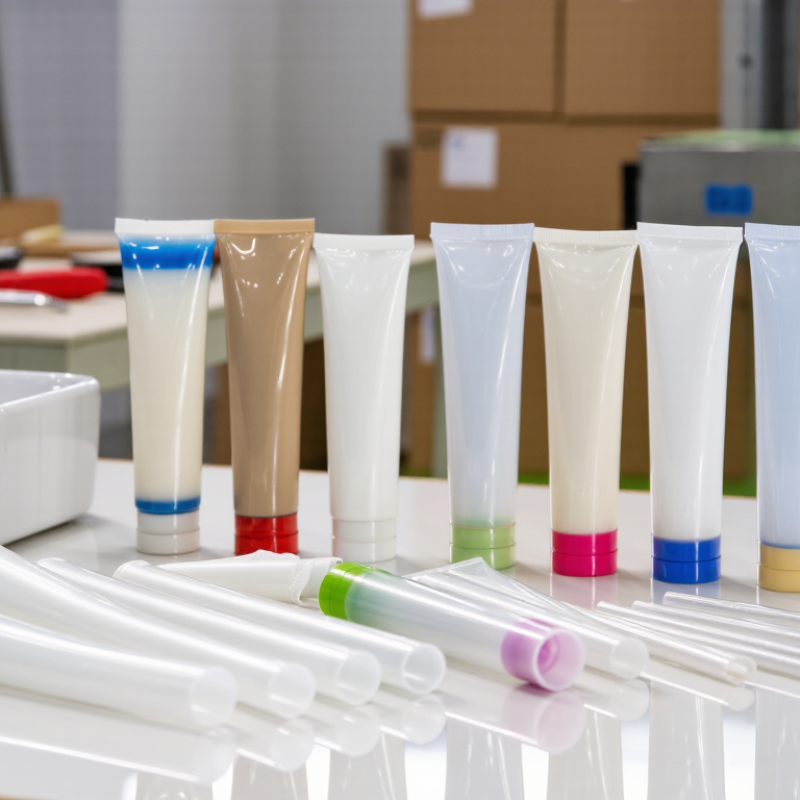
Why Choose Plastic Tubes for Packaging and Industry?

Plastic Tubes: Core Formats and Uses in Packaging and Industry

Plastic tubes take several forms: squeezable tubes for creams and pastes, rigid tubes for protective packaging, and multilayer tubes designed to limit moisture or oxygen exposure. Their narrow openings allow controlled dispensing, while caps and sealed ends help protect contents during storage and transport. In industry, plastic tubing also carries fluids, shields cables, and protects components from dust or abrasion. The right format depends on the material being handled, pressure, temperature, and contact requirements.

The scale of packaging use is significant. Plastics Europe’s Plastics—The Fast Facts 2023 reports that packaging represented about 39% of plastics converter demand in Europe in 2022. This figure covers packaging broadly, not tubes alone. It shows why tube choices matter: small changes in wall thickness, resin, or barrier layers can affect material use and performance. Details count.

A tube is not automatically easy to recycle. The OECD’s Global Plastics Outlook reports that only 9% of plastic waste was recycled worldwide in 2019. Multilayer structures may improve product protection, yet complicate sorting and recycling. For engineers, this is a real trade-off, not a neat answer. Sometimes, simpler material choices deserve another look.


Typical Resin Densities: PP at 0.90–0.91 vs. HDPE at 0.94–0.97 g/cm³

Typical resin data place polypropylene (PP) at 0.90–0.91 g/cm³ and high-density polyethylene (HDPE) at 0.94–0.97 g/cm³. These are representative ranges, not guarantees for every grade. ASTM D792 and ISO 1183-1 describe methods for measuring plastics density; published resin data should be checked for its test method and conditions. The gap looks small. Yet it can affect material use.

For equal-volume tubes, PP’s lower density means less resin mass than HDPE’s, all else being equal. A 100 cm³ tube body would weigh about 90–91 g in PP, versus 94–97 g in HDPE, before additives or closures. That difference may matter when estimating shipping weight or comparing material use across high-volume production. Density alone cannot decide the better tube. Wall thickness, stiffness, impact needs, temperature, and compatibility with the packaged contents also matter. A thin HDPE tube may weigh less than a thicker PP one. Real samples can surprise you. Check the specific resin’s technical data sheet, and compare finished tubes under the same conditions.

How Extrusion, Shoulder Molding, and Closures Form a Tube Package

A plastic tube package starts as a continuous extruded sleeve. A chosen resin is softened, pushed through a die, and formed into a hollow tube. Wall thickness matters: a tube that is too thin may crease during filling, while excess material adds weight and cost. The process also affects how the package bends when squeezed. Small changes in temperature or line speed can alter the finish, so production checks are practical, not optional. It is a precise process. Still, extrusion alone does not make a usable package.

The shoulder and closure complete the structure. A molded shoulder joins the tube body to its opening, creating a transition that must seal reliably and dispense at a controlled rate. Manufacturers may form the shoulder separately and attach it, or mold it directly onto the tube, depending on the design and equipment. The cap, flip-top, or nozzle must match the opening and the product’s use. For example, a narrow nozzle can help deliver a bead of adhesive, while a wider opening may suit a thick cream. Fit deserves attention. A cap that feels secure can still leak if its threads or sealing surface are poorly matched. Tube diameter, shoulder shape, and closure choice should be tested together, with the actual contents and filling conditions. That extra trial can expose awkward handling before a package reaches routine use.

Barrier Design: How Multilayer Tube Walls Protect Sensitive Contents

Plastic tubes are useful when products need controlled dispensing and a protective package. Their barrier performance depends on the wall structure, not appearance alone. A multilayer tube may combine an inner layer that contacts the contents with layers that slow oxygen, moisture, or light. Some designs also use a thin barrier layer to help preserve color, scent, or texture.

Each layer has a job. The inner material must suit the formula, while the outer layer adds strength and supports printing. Between them, a barrier layer can reduce the movement of gases and water vapor. The shoulder, cap, and sealed tail matter too; a strong wall cannot compensate for a poor closure. Still, more layers are not automatically better. Compatibility testing and checks under real storage conditions help confirm performance.

Tips: Match the barrier to the product’s main sensitivity. Ask for data on oxygen and moisture transmission, then test the filled tube for leaks, odor changes, and dispensing consistency. Keep samples in warm and cool conditions. Small differences in sealing can matter. A tube that looks sturdy may still need adjustment.

Testing Tube Performance with ISO 527 Tensile-Property Methods

Plastic tubes must resist pulling forces during winding, filling, handling, and installation. ISO 527 provides controlled methods for measuring tensile properties of plastics, including tensile strength, stiffness, and elongation at break. These values help compare materials and production batches. They do not describe every real-world load.

For a useful test, condition specimens consistently and record temperature, humidity, wall thickness, and pulling speed. A tube wall can be curved, thin, or uneven, so preparing standard specimens may be difficult. Where practical, cut specimens from the wall and note their orientation, such as along or across the tube length. Small details matter. If dimensions or specimen shapes differ from the standard, document the deviation rather than presenting the result as directly equivalent.

During testing, a calibrated tensile machine grips each specimen and pulls it at a specified rate until it stretches or breaks. The resulting force and extension data reveal how the material responds under tension. A higher tensile strength is not automatically better; flexibility, processing needs, and intended use also matter. Tube-wall samples may not represent every section of a finished product. That limitation deserves attention. ISO 527 results are one piece of evidence, best interpreted alongside dimensional checks and relevant performance tests.

Article Source:

Powder Coat Booths

For those larger-sized parts, or smaller quantity runs, we have 2 independent powder coat booths and ovens. The quality, durability and affordability of today’s powder coating finishes make this the process of choice for world-class companies.

Powder coating advantages over other forms of coating are many. Materials used in the Powder coating process can be metals and non-metals that come in a multitude of thicknesses, textures, colors, etc. Another of Powder coating’s biggest advantages over conventional coatings is its ability to create finishes in many different textures. Powder Coating Booths allow us the ability to apply these advantages to large products.

Wet Paint Line

Tri-State Fabricators runs a full-service conveyor line for painting. Wet painting can provide protection or decoration to many different part styles. From start to finish, every project is easier to undergo random and point-based inspection by our skilled painting team.

Advantages to our Wet Paint Line are these lines start with product prep and ends with a thorough inspection of a high quality finished product. Our ability to complete large and small projects with a superior finish and doing so in a timely and economical fashion. This passes along the savings in production to our customers. When powder coating ins not an option, our Wet Paint Line gets the job done right the first time.

Wet Paint Booths

When the parts get big and heavy we roll-out our custom paint racks and oversize booth. By utilizing our partnerships with all the major paint brands, we can match virtually any color with wet paint.

The advantages of having access to a Wet Paint Booth are many. Large projects of many different shapes can be loaded into the booth. The Wet Paint Booth offers an environment that is much more controlled than a typical parts painting operation.

Not only are they used because of their controlled environment, but they’re are also advantageous when it comes to applying paint to parts that are needed in industries that require specialty coatings such as medical, aerospace, etc.

Military CARC

Our military forces have some very high standards when it comes to the finish of their vehicles and equipment. From the first pre-treatment step to final coat, it takes a great deal of knowledge and experience to protect the men and women of our armed forces. They deserve only the best, and Tri-State Fabricators provides it.

All of our processes are closely monitored by our staff and management teams. Both of which are highly trained in the processes of metal fabrication and finishing. Tri-State Fabricators’ goal is to always fully satisfy each and every customer, including the military. We will always put a 110% into what we do.

Glass-Bead Blasting

Abrasive media blasting is an excellent way to remove old paint, rust, and increase the paint/powder adhesion. Glass beads produce a much smoother and brighter finish than angular abrasives; leaving the part clean yet without any dimensional change. Chemically inert and environmentally friendly, we can recycle our beads approximately 30 times; making them a more preferred method of metal cleaning or surface finishing.

Advantages to Glass Bead Blasting are many. Glass bead blast media is used when a project is needing rough surfaces need to become smooth for applications of coatings such as paint. It is typically used to clean paint and rust from a product surface without deforming the surface it is being used on. Overall, compared to many other blasting media, Glass Bead Blasting is a very economical choice and those savings are always passed on to our customers.

Part Washing

Tri-State Fabricators utilize a zinc phosphate wash to clean and etch the material to ensure the best paint adhesion possible. The unique design of our 3-stage wash system does the work like a 5-stage. From Cleaning and rinsing to conversion coating and post-treatment, Our Part Washing process is a complete service and works throughout the fabrication service and the finishing service.

Along with the previously mentioned benefits, Curing is a vital chemical reaction that leaves the product finish hard and relatively safe from mild abrasion and aggressive corrosion. This process can be done in more than one way; ambient air-dry or in curing ovens at temps that exceed 240°.

Burn-Off Oven

From fixing paint mistakes (someone else’s of course) to simply cleaning our paint line hooks, our burn-off oven is put to good use. After a quick burn-off, a little clean up, and a fresh coat of paint, your parts will look better than new.

Why does our Burn-Off Oven work so well? Because super heating the air around parts turns the materials into ashes. From paint and powder coatings to rubber and machining oils, high temps do the job without degrading the integrity of the part.

Masking

Masking is a vital part of producing high quality products. We have die-cut masking patterns to protect machined surfaces as well as a wide range of plugs and caps to protect threaded holes and bolts. We provide permanent and temporary masking.

Masking allows the selected sections of a product to be protected from a fabrication or finishing service. This can be with both chemicals when etching and tapes, paints when only finishing just a section of the product. Masking is great in aiding the customization process of a project.

Screen Printing

Screen printing is a photographic process that transfers artwork onto a porous nylon screen which allows colored ink to flow through the screen and be deposited on an aluminum or plastic component. We can generally have just about any design created onto a screen for your parts.

Some of the advantages of Screen Printing are, brand recognition for your business displaying on your products, assembly instructions, product warnings/hazards, etc. Tri-State Fabricators produces Screen Printing of the highest quality so you know it’s durable.

Metal Finishing

Metal Finishing is the art of treating the exterior portion of product, often metal but can also be made of other materials, so that the surface is clean and free of any debris. Then the process of applying coats or either paint of powder coat takes place. This coating process improves the quality of the product in both appearance and resistance to wear and corrosion.

Tri-State Fabricators, Inc., understands that a project typically isn’t complete until a high-quality finish has been added to your product. This is why our painting and powder coating teams continuously inspect the products throughout the Metal Finishing process.
