


What Is a Pipeline Filter and How Does It Work?

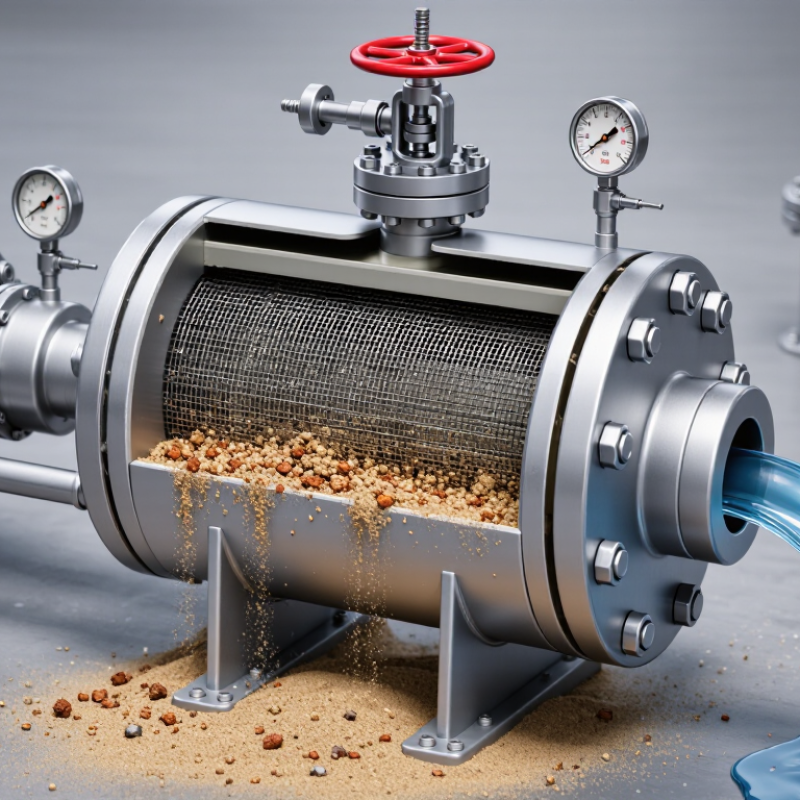
A Pipeline Filter is a critical protection device used to remove unwanted solids from flowing liquids or gases. It helps protect pumps, valves, meters, compressors, and downstream equipment from erosion, blockage, and unstable performance. In a working pipeline, the filter may capture sand, rust flakes, welding debris, scale, or other transported particles.

Dr. Norman N. Li, a recognized membrane and filtration technology expert, said, “A filtration system succeeds when separation, flow, and maintenance are designed together.” This principle explains why filter selection cannot depend on mesh size alone. Engineers must examine pipeline pressure, flow rate, fluid composition, particle size, temperature, and cleaning requirements. A filter that looks efficient on paper may create excessive pressure loss in operation. That mistake can increase energy consumption and reduce production stability.

The working process is straightforward. Fluid enters the filter housing and passes through a screen, cartridge, basket, or specialized separator. Larger particles remain trapped on the filtering surface. Cleaner fluid continues through the outlet. As debris accumulates, differential pressure rises. Operators then clean, replace, or backwash the filter, depending on its design.

Small details matter.

For example, a clogged basket can cause sudden pump cavitation. Poor sealing can allow particles to bypass the element. Incomplete maintenance records may hide a recurring contamination problem. No filter is perfect. Its value depends on correct sizing, reliable monitoring, suitable materials, and disciplined maintenance. This guide explains how a Pipeline Filter works, where it is used, and which practical factors influence its long-term performance.
What Is a Pipeline Filter and How Does It Work?

What Is a Pipeline Filter?

A pipeline filter is a device installed inside a fluid transport line to remove unwanted particles. It protects pumps, valves, meters, and other equipment from damage. Common contaminants include rust flakes, welding debris, sand, and scale. The filter usually contains a screen, perforated basket, or porous element. Fluid passes through the filtering surface, while larger particles remain trapped.

The working principle is simple. Pressure pushes the fluid through the filter element. The opening size determines which particles are captured. A coarse screen may protect a water line, while a finer element may suit sensitive instruments. During field inspections, technicians often check the pressure difference between the inlet and outlet. A rising difference usually indicates clogging. It should not be ignored. A blocked filter can reduce flow and increase energy use. However, selecting a filter is not always exact. Particle shapes, fluid temperature, viscosity, and flow speed can change real performance.

Tips: Confirm the pipe size and flow rate before installation. Choose a suitable filtration rating, but do not select the finest option automatically. It may clog too quickly. Install the filter where maintenance is accessible. Inspect the element regularly, especially after pipe repairs or startup. Keep a simple record of cleaning dates and pressure readings. This small habit can reveal gradual problems. Also, check the manufacturer’s technical data and site conditions together; relying on only one source can lead to an unsuitable choice.


What Is a Pipeline Filter and How Does It Work?

Relative pressure drop across a clean pipeline filter as flow rate increases

A pipeline filter removes suspended solids and other contaminants from a flowing liquid or gas. The filter element traps particles while allowing the process fluid to pass through. Under steady conditions, pressure loss generally increases approximately with the square of flow rate, so doubling the flow can produce about four times the relative pressure drop.

The chart uses normalized engineering values for a clean filter with constant geometry, fluid properties, and filtration area. The reference point is a flow rate of 10 m³/h, where the relative pressure drop is 1. Actual pressure loss depends on filter size, pore rating, fluid viscosity, contaminant loading, and filter-element design.

Why Pipeline Filters Are Used

A pipeline filter is a protective device installed inside a fluid transport system. It removes rust, sand, scale, and other solid particles from liquids or gases. As the fluid enters, a mesh or perforated element traps unwanted material. Cleaner fluid then continues through the outlet. The filter housing contains pressure, while the internal element controls particle removal. Its performance depends on flow rate, particle size, pressure, and fluid temperature.

Why Pipeline Filters Are Used

Pipeline filters protect pumps, valves, meters, heat exchangers, and control equipment from abrasive debris. A single grain of rust can damage a valve seat or distort a measurement. Filters also help maintain stable flow and reduce unexpected shutdowns. In practical maintenance work, technicians often find that a blocked filter causes pressure loss before equipment failure becomes visible. That warning matters. Operators can monitor pressure differences across the filter and schedule cleaning before the system becomes unstable. Cleaner fluid also supports more consistent product quality in processing operations.

Filter selection requires care. A fine screen captures smaller particles, but it may clog faster. A coarse screen allows greater flow, but some debris may pass through. There is no perfect choice. Maintenance teams should check material compatibility, expected contamination, pressure limits, and cleaning access. A filter is not a cure-all. It cannot correct poor pipe design or ignored maintenance. One useful lesson is often overlooked: the filter needs inspection too.

What Is a Pipeline Filter and How Does It Work? – Why Pipeline Filters Are Used

A practical comparison of common pipeline filtration methods, operating principles, and typical applications

Filter Type Primary Function How It Works Typical Contaminants Removed Common Installation Point Cleaning or Maintenance Main Benefit
Basket Strainer Coarse particle protection Fluid passes through a removable perforated basket or mesh element that traps larger solids. Scale fragments, rust, weld slag, leaves, stones, and other coarse debris Upstream of pumps, control valves, meters, and heat exchangers Shut down, isolate, remove, and wash or replace the basket Simple and economical protection for downstream equipment
Y-Strainer Inline mechanical filtration A cylindrical screen inside an angled chamber intercepts suspended particles as the fluid flows through. Dirt, pipe scale, rust particles, and installation debris Liquid, steam, gas, and utility piping near equipment inlets Periodic isolation and screen cleaning; a blowdown valve may simplify service Compact design with relatively low initial cost
Duplex Filter Continuous filtration during servicing Two filter chambers are connected through a changeover valve, allowing one chamber to operate while the other is cleaned. Suspended solids, rust, scale, and process debris Critical fuel, lubrication, cooling, and process-fluid lines Clean one element while the second element remains online Reduces the need to interrupt flow for routine maintenance
Cartridge Filter Fine particle removal A replaceable depth or surface-media cartridge captures particles as fluid passes through the media. Fine sediment, suspended solids, carbon fines, and some microorganisms depending on media rating Water treatment, chemical processing, food processing, and final polishing stages Replace the cartridge when pressure drop or service-life limits are reached Provides controlled filtration ratings in a compact housing
Bag Filter High-volume liquid filtration Liquid flows through a fabric or felt bag, while particles collect on the bag surface and within its depth. Sediment, paint particles, pigments, process solids, and agglomerated material Water, coatings, chemicals, inks, and industrial liquid-transfer lines Remove and replace or clean the bag according to the collected load High dirt-holding capacity and relatively fast element changes
Coalescing Filter Liquid and aerosol separation Special media merge fine liquid droplets into larger droplets that drain by gravity while gas continues downstream. Oil mist, water droplets, and liquid aerosols in compressed gas or process gas Compressed-air systems, gas-treatment lines, and instrument-air supplies Drain collected liquid and replace elements when pressure drop increases Protects pneumatic and gas equipment from entrained liquids
Cyclone Separator Inertial separation of larger particles A rotating flow creates centrifugal force that drives heavier particles toward the collection chamber. Dust, sand, grit, and relatively heavy solid particles Gas, air, and some liquid-solid separation systems Empty the collection chamber and inspect for erosion or wear No filter media is required, reducing consumable use
Magnetic Separator Ferrous-metal removal Magnetic fields attract and retain iron or steel particles while the process fluid continues through the housing. Ferrous wear particles, machining chips, and magnetic metal fragments Lubrication, coolant, hydraulic, and metal-processing lines Remove accumulated metal from the magnetic core or collection surface Targets metallic contamination without significantly restricting flow
Key selection factors: Filter type should be selected according to the fluid, contaminant size and type, required flow rate, operating temperature and pressure, allowable pressure drop, filtration rating, maintenance method, and the consequences of contamination.

How a Pipeline Filter Works Step by Step

What Is a Pipeline Filter and How Does It Work?

A pipeline filter protects downstream equipment from rust, sand, scale, and welding debris. Its operation is simple, but its performance depends on correct sizing. According to the NACE IMPACT study, corrosion costs the global economy about US$2.5 trillion annually. A filter cannot stop corrosion. It can, however, capture loose corrosion products before they damage valves, meters, or pumps.

The process begins when fluid enters the filter housing. Flow slows slightly as it meets a screen, basket, cartridge, or specialized media. Larger particles remain on the filtering surface. Cleaner fluid continues through the outlet. Small details matter. A technician then checks differential pressure across the filter. A rising reading shows that debris is restricting flow. The element may need cleaning, draining, backwashing, or replacement. A clean-looking housing can still hide a damaged mesh. That mistake is easy to make.

The U.S. Environmental Protection Agency’s 7th Drinking Water Infrastructure Needs Survey estimates US$625 billion in needs from 2021 to 2040. This figure shows why dependable filtration and maintenance deserve serious planning. Filter selection should match flow rate, pressure, temperature, fluid chemistry, and particle size. A finer screen is not always better. It can clog quickly and increase energy use. Operators should record pressure readings, inspection dates, and captured debris. These records support safer decisions, although they cannot replace field judgment.

Key Components of a Pipeline Filter

What Is a Pipeline Filter and How Does It Work?

Key Components of a Pipeline Filter

A pipeline filter removes rust, sand, welding debris, and scale from flowing fluids. It protects valves, meters, pumps, and downstream equipment. The U.S. Energy Information Administration reported more than three million miles of natural gas pipelines in the United States. At that scale, small contaminants can create significant maintenance problems.

The filter housing guides fluid through a controlled chamber. Its pressure-rated body must match the pipeline’s operating pressure, temperature, and chemical conditions. Inside, the filter element captures particles through a mesh, perforated basket, cartridge, or coalescing medium. Micron rating matters. A finer element captures smaller particles, but it also creates greater pressure loss. The inlet and outlet nozzles maintain flow direction. A differential-pressure gauge shows when the element is becoming blocked. Drain ports remove collected liquid and sediment. Seals prevent bypass around the element.

Some systems include a bypass valve for maintenance continuity, although careless bypass use can defeat the entire protection system. This is an easy weakness to overlook. The widely cited IMPACT corrosion cost study estimated global corrosion costs at about 2.5 trillion dollars annually, equal to roughly 3.4 percent of global economic output. Filtration cannot stop corrosion alone, but it reduces abrasive solids and moisture-related risks. Field inspections should check element damage, seal wear, pressure readings, and drain condition. A filter can look clean outside while carrying a heavily loaded element inside.

Common Types and Applications of Pipeline Filters

A pipeline filter removes unwanted particles from flowing liquids or gases before they damage equipment. It usually contains a perforated screen, mesh, cartridge, or porous element. As fluid passes through, debris remains on the filtering surface. The cleaned flow continues downstream.

Simple strainers suit water lines, cooling systems, and general utility pipelines. Basket strainers handle larger debris and allow easier cleaning during maintenance. Cartridge filters capture finer particles, such as rust flakes or sediment, in process water. Bag filters are useful when operators need quick element replacement. Magnetic filters can collect ferrous particles from oil or hydraulic fluid.

Filter selection depends on particle size, flow rate, pressure, temperature, and fluid chemistry. A 100-micron screen may protect a pump, while a finer element may support sensitive valves or instruments. Differential pressure gauges provide a practical warning. Rising pressure often means the filter is becoming blocked. Field inspections also show a common mistake: choosing the smallest opening without checking flow capacity. That can cause pressure loss and unstable operation.

Some systems use staged filtration. A coarse strainer catches large debris first. A finer filter follows. This arrangement can extend service life and reduce cleaning frequency. Yet no filter works perfectly under every condition. Seals can age, housings can corrode, and neglected drains can hide contamination. Regular inspection remains necessary, especially after pipeline repairs or sudden changes in pressure.

Powder Coat Booths

For those larger-sized parts, or smaller quantity runs, we have 2 independent powder coat booths and ovens. The quality, durability and affordability of today’s powder coating finishes make this the process of choice for world-class companies.

Powder coating advantages over other forms of coating are many. Materials used in the Powder coating process can be metals and non-metals that come in a multitude of thicknesses, textures, colors, etc. Another of Powder coating’s biggest advantages over conventional coatings is its ability to create finishes in many different textures. Powder Coating Booths allow us the ability to apply these advantages to large products.

Wet Paint Line

Tri-State Fabricators runs a full-service conveyor line for painting. Wet painting can provide protection or decoration to many different part styles. From start to finish, every project is easier to undergo random and point-based inspection by our skilled painting team.

Advantages to our Wet Paint Line are these lines start with product prep and ends with a thorough inspection of a high quality finished product. Our ability to complete large and small projects with a superior finish and doing so in a timely and economical fashion. This passes along the savings in production to our customers. When powder coating ins not an option, our Wet Paint Line gets the job done right the first time.

Wet Paint Booths

When the parts get big and heavy we roll-out our custom paint racks and oversize booth. By utilizing our partnerships with all the major paint brands, we can match virtually any color with wet paint.

The advantages of having access to a Wet Paint Booth are many. Large projects of many different shapes can be loaded into the booth. The Wet Paint Booth offers an environment that is much more controlled than a typical parts painting operation.

Not only are they used because of their controlled environment, but they’re are also advantageous when it comes to applying paint to parts that are needed in industries that require specialty coatings such as medical, aerospace, etc.

Military CARC

Our military forces have some very high standards when it comes to the finish of their vehicles and equipment. From the first pre-treatment step to final coat, it takes a great deal of knowledge and experience to protect the men and women of our armed forces. They deserve only the best, and Tri-State Fabricators provides it.

All of our processes are closely monitored by our staff and management teams. Both of which are highly trained in the processes of metal fabrication and finishing. Tri-State Fabricators’ goal is to always fully satisfy each and every customer, including the military. We will always put a 110% into what we do.

Glass-Bead Blasting

Abrasive media blasting is an excellent way to remove old paint, rust, and increase the paint/powder adhesion. Glass beads produce a much smoother and brighter finish than angular abrasives; leaving the part clean yet without any dimensional change. Chemically inert and environmentally friendly, we can recycle our beads approximately 30 times; making them a more preferred method of metal cleaning or surface finishing.

Advantages to Glass Bead Blasting are many. Glass bead blast media is used when a project is needing rough surfaces need to become smooth for applications of coatings such as paint. It is typically used to clean paint and rust from a product surface without deforming the surface it is being used on. Overall, compared to many other blasting media, Glass Bead Blasting is a very economical choice and those savings are always passed on to our customers.

Part Washing

Tri-State Fabricators utilize a zinc phosphate wash to clean and etch the material to ensure the best paint adhesion possible. The unique design of our 3-stage wash system does the work like a 5-stage. From Cleaning and rinsing to conversion coating and post-treatment, Our Part Washing process is a complete service and works throughout the fabrication service and the finishing service.

Along with the previously mentioned benefits, Curing is a vital chemical reaction that leaves the product finish hard and relatively safe from mild abrasion and aggressive corrosion. This process can be done in more than one way; ambient air-dry or in curing ovens at temps that exceed 240°.

Burn-Off Oven

From fixing paint mistakes (someone else’s of course) to simply cleaning our paint line hooks, our burn-off oven is put to good use. After a quick burn-off, a little clean up, and a fresh coat of paint, your parts will look better than new.

Why does our Burn-Off Oven work so well? Because super heating the air around parts turns the materials into ashes. From paint and powder coatings to rubber and machining oils, high temps do the job without degrading the integrity of the part.

Masking

Masking is a vital part of producing high quality products. We have die-cut masking patterns to protect machined surfaces as well as a wide range of plugs and caps to protect threaded holes and bolts. We provide permanent and temporary masking.

Masking allows the selected sections of a product to be protected from a fabrication or finishing service. This can be with both chemicals when etching and tapes, paints when only finishing just a section of the product. Masking is great in aiding the customization process of a project.

Screen Printing

Screen printing is a photographic process that transfers artwork onto a porous nylon screen which allows colored ink to flow through the screen and be deposited on an aluminum or plastic component. We can generally have just about any design created onto a screen for your parts.

Some of the advantages of Screen Printing are, brand recognition for your business displaying on your products, assembly instructions, product warnings/hazards, etc. Tri-State Fabricators produces Screen Printing of the highest quality so you know it’s durable.

Metal Finishing

Metal Finishing is the art of treating the exterior portion of product, often metal but can also be made of other materials, so that the surface is clean and free of any debris. Then the process of applying coats or either paint of powder coat takes place. This coating process improves the quality of the product in both appearance and resistance to wear and corrosion.

Tri-State Fabricators, Inc., understands that a project typically isn’t complete until a high-quality finish has been added to your product. This is why our painting and powder coating teams continuously inspect the products throughout the Metal Finishing process.
