


Choosing a supplier for grooming tools, hair dryers, shavers, or replacement parts is rarely just a price decision. Small parts matter. A comb attachment that fits poorly or a cable that fails after repeated bending can create returns, delays, and lost trust. Buyers evaluating a personal care appliance accessories factory in the field should look beyond product photos and ask how specifications are tested, documented, and kept consistent between batches.
Grand View Research valued the global personal care appliances market at about USD 23.5 billion in 2022 and projected a 5.3% compound annual growth rate from 2023 to 2030. This report covers appliances broadly, not accessories alone, but it signals a sizeable market where dependable components and practical product updates can support differentiation. Buyers can use that context when assessing a factory’s production capacity, material choices, customization process, and ability to meet forecast demand. Ask for samples, inspection records, and clear tolerance requirements. A polished catalogue is not proof of stable production.
Durability also deserves attention. The UN’s Global E-waste Monitor 2024 reported 62 million tonnes of e-waste generated worldwide in 2022; only 22.3% was documented as formally collected and recycled. That figure does not isolate personal care accessories, yet it reinforces the value of longer-lasting products and thoughtful material decisions. Not just price. A reliable supplier should explain how it checks fit, finish, electrical compatibility where relevant, and packaging protection. Buyers should still verify claims against their own testing needs. No factory is perfect; transparent answers about limits can be more useful than broad promises.
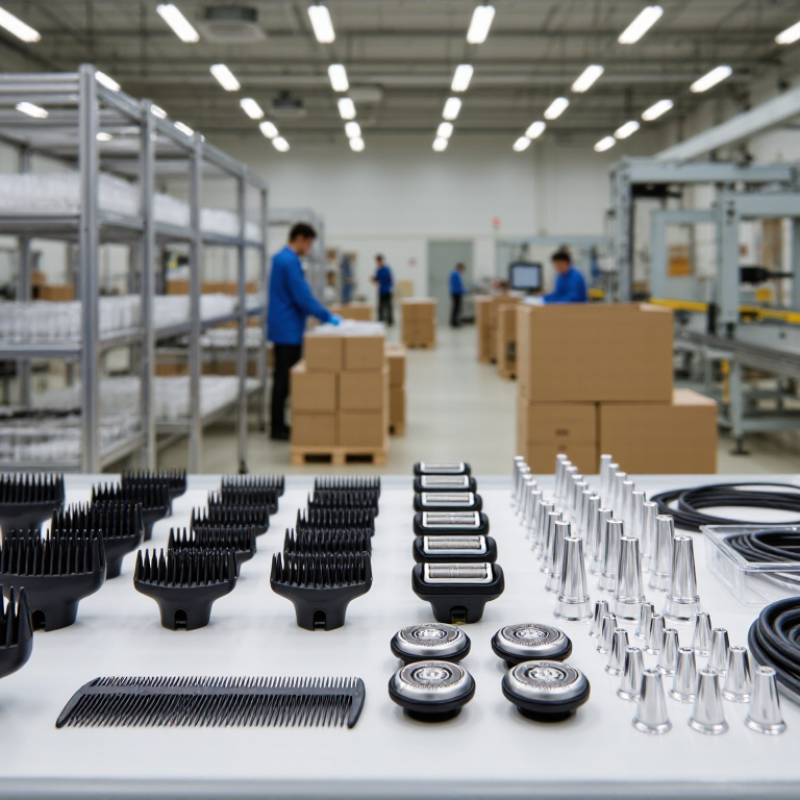
Personal care appliance accessory factories produce the parts people handle every day: dryer concentrator nozzles, diffusers, comb attachments, shaver guards, replacement brush heads, filters, charging stands, and travel cases. Many parts begin as molded plastic or silicone; metal screens and cutting components may be stamped, sharpened, or assembled separately. Small parts matter. A nozzle that sits loosely can rattle, leak airflow, or fall off during use.
Production usually combines tooling, material selection, assembly, and fit testing. Workers check dimensions, edge smoothness, attachment force, and resistance to heat or repeated cleaning. Factories may also make spare-part kits and packaging for different appliance models. Fit is unforgiving. A slight change in a handle or locking tab can make an otherwise sound accessory unusable, so model-specific tooling is common. I would not assume one mold fits every version; that is an easy mistake to make.
Durability matters beyond convenience. The UNITAR and ITU Global E-waste Monitor 2024 reported that the world generated 62 million tonnes of electronic waste in 2022, while only 22.3% was documented as formally collected and recycled. The figure covers e-waste broadly, not personal care accessories alone, but it supports designing replaceable parts that last. That part is easy to overlook. A sturdy clip, washable filter, or replaceable head may extend an appliance’s useful life, though performance still depends on careful material and fit checks.

Buyers define quality through repeatable results, not a single polished sample. Check how accessories fit, move, and withstand routine handling. A loose hinge or rough edge may seem minor, but it can trigger returns. Ask the factory how it controls dimensions, materials, and assembly from batch to batch. Small details matter.
Compliance starts with clear product specifications and records that match the actual item. Request material declarations, test reports, and traceability documents relevant to the product and destination market. For electrical accessories, verify applicable safety testing and inspection records. Keep version numbers and dates on file. Not every document proves current production matches the tested sample.
Factory reviews should include the production floor, not just a document check. Compare approved samples with finished goods, and ask how defects are logged and corrected. Buyers sometimes overvalue tidy paperwork. A checklist helps, but it can create false confidence. Ask staff to explain one recent quality issue and show the corrective action. Their answer may reveal gaps that a certificate cannot. Even careful audits miss things; follow-up inspections and random batch checks still have a place.
| Evaluation Area | What Buyers Should Specify | Practical Acceptance Criteria | Evidence or Verification |
|---|---|---|---|
| Product definition and fit | Accessory type, compatible appliance models, interface dimensions, materials, color, and intended use. | Approved drawings and samples define the fit; mating parts assemble without forced fitting, looseness, or interference. | Controlled drawings, dimensional inspection records, and fit checks using approved reference appliances or gauges. |
| Material and substance control | Material grades for plastics, elastomers, metals, coatings, adhesives, and any skin-contact surfaces. | Materials match the approved specification and applicable destination-market substance restrictions. Requirements depend on product composition and market. | Material declarations, supplier documentation, and risk-based laboratory testing. EU RoHS and REACH requirements should be assessed where applicable. |
| Electrical and appliance safety | Whether the accessory is electrical, heated, powered, or used with a particular appliance. | Safety is evaluated for the relevant finished appliance and accessory combination; applicable requirements depend on product design and sales market. | Risk assessment and relevant test reports. IEC 60335-1 and applicable Part 2 standards may be relevant to household appliances; applicability must be confirmed for the product. |
| Temperature and heat resistance | Maximum operating temperature, exposure duration, cleaning conditions, and foreseeable misuse. | No unacceptable deformation, cracking, loss of fit, or hazardous surface condition under the buyer-approved test profile. | Documented heat-aging or operating-condition tests using agreed temperatures, durations, and acceptance limits. |
| Mechanical durability | Expected attachment cycles, bending or twisting loads, drop exposure, and any moving or locking features. | Parts remain functional and securely attached after the agreed cycle and load tests; no sharp breakage or unacceptable damage. | Test plan with defined sample quantity, conditioning, loads, cycle count, and pass/fail criteria; retain test records. |
| Skin-contact comfort and finish | Surface texture, edge radii, burr limits, seams, and contact materials for accessories used on skin or hair. | No visible burrs, sharp edges, loose particles, or finish defects that conflict with the approved sample and specification. | Visual inspection under defined lighting, tactile checks, and documented reference samples. Any applicable chemical or biocompatibility assessment should be risk-based. |
| Cleaning and moisture exposure | Cleaning method, permitted detergents, rinse conditions, and whether the accessory is intended to be washable. | After the specified cleaning procedure, the accessory retains its function and finish within agreed limits. Do not assume a water-resistance rating unless tested and claimed. | Cleaning-cycle test records. If an ingress-protection claim is made, define and verify the relevant IP rating using IEC 60529 test methods where applicable. |
| Dimensions and production consistency | Critical dimensions, tolerances, cosmetic limits, and inspection frequency for each production run. | Critical-to-fit dimensions meet the approved drawing tolerances; defect classifications and sampling rules are agreed before production. | Inspection reports and calibrated measuring equipment. ISO 2859-1 can be used for attribute-sampling plans, but the buyer must define the sampling plan and acceptance limits. |
| Quality management and traceability | Lot identification, change control, nonconformance handling, corrective action, and record-retention expectations. | Finished goods can be linked to production lots and relevant material or inspection records; unapproved changes are controlled. | Audit records, lot codes, inspection logs, and documented corrective-action procedures. ISO 9001 certification may support supplier assessment but does not by itself prove product compliance. |
| Packaging and transport protection | Individual protection, carton configuration, labeling, storage conditions, and expected transport route. | Packaging prevents agreed foreseeable damage and keeps accessories clean and identifiable through handling and shipment. | Packaging specification and transit-test results. Select a suitable test method, such as an applicable ISTA procedure, based on package type and distribution conditions. |
| Regulatory documentation and claims | Destination countries, product classification, labeling language, and any safety, material, or performance claims. | Claims are supported by appropriate evidence, and required documents and labels are prepared for the specific product and market. | Market-specific compliance review, declarations or test reports where required, and label artwork approval. Requirements vary by product design and jurisdiction. |
| Sampling and release approval | Prototype, pre-production, golden-sample, and shipment-release approval stages. | Mass production matches the signed-off sample and specification; deviations require written buyer approval before shipment. | Approved sample record, pre-shipment inspection report, defect criteria, and written disposition of any nonconforming goods. |
Note: Acceptance limits should be agreed in the purchase specification before production. Standards and regulatory obligations depend on accessory design, intended use, and destination market; the table is a buyer-planning checklist, not a substitute for product-specific compliance assessment.
When assessing a personal care appliance accessories factory, look beyond its stated monthly output. Ask for recent production records and compare them with the number of active lines, shifts, and workers. A large capacity figure means little if several lines are already committed. A spreadsheet can still flatter reality. During a visit, watch one full production cycle, from material preparation to final inspection. Note how operators handle small parts, such as charging contacts or molded attachments. Ask how defects are recorded and what happens when a batch fails inspection. Small details matter.
Customization depends on more than a willingness to change colors. Request examples of adjustable features, including dimensions, materials, surface finishes, and packaging. Then confirm which changes require new tooling, extra setup time, or a higher minimum order quantity. Ask the factory to review a drawing and identify unclear tolerances before quoting. A sample is not proof of stable production. Check whether the approved sample matches the work instructions used on the line. One practical test is a pilot order with several production lots, not just one carefully prepared piece. It may add time and cost, but it can reveal inconsistent fit or finish. Even a clear specification can miss a detail; record decisions in writing before production begins.
When comparing personal care appliance accessory factories, request the same quotation format from each supplier. Separate tooling, samples, packaging, inspection, and freight costs. A low unit price can hide mold fees or expensive replacement parts. Ask for a written lead-time breakdown, from material confirmation to shipment, and check whether quoted dates depend on one component supplier. UNCTAD’s Review of Maritime Transport 2024 reported that maritime trade grew 2.4% in 2023, while forecasting 2.0% growth for 2024. Shipping conditions can shift, so distinguish factory production time from transit time.
Customer support is measurable, too. Ask how quickly the factory acknowledges defects, who handles technical questions, and whether it provides corrective-action reports with photos or test records. McKinsey’s 2020 supply-chain survey found that 93% of respondents planned to make their supply chains more resilient. That supports checking backup materials and escalation contacts, not just price. One comparison can still miss real-world delays; factory answers are not guarantees.
Tips: Request a sample, a dated production schedule, and a named contact. Compare response quality, not just speed. Ask for a recent example of a delayed order and how the factory handled it. That answer may reveal more than a polished presentation.
A reliable personal care appliance accessories factory should be verified through records and samples, not a polished sales presentation. Ask to see its production flow, inspection checkpoints, and material traceability documents. Small details matter. Check whether incoming materials are labeled and whether finished parts are measured against written specifications. For molded or fitted accessories, compare sample dimensions with the appliance interface and test repeated attachment and removal. Ask for evidence of relevant quality systems, then confirm the documents’ scope and validity with the issuing organization.
Discuss capacity in practical terms: monthly output, tooling ownership, lead time, and how the factory handles a rejected batch. Request a small pilot order before committing to larger volumes. Inspect surface finish, color consistency, packaging protection, and the clarity of inspection reports. Ask who records defects and what corrective action follows. Ask for proof. A factory may answer every question smoothly, yet still struggle when specifications change. I would leave room for that possibility and verify responses in writing. Even a detailed checklist can miss problems that appear only after repeated use, so define acceptance criteria before production begins.


For those larger-sized parts, or smaller quantity runs, we have 2 independent powder coat booths and ovens. The quality, durability and affordability of today’s powder coating finishes make this the process of choice for world-class companies.
Powder coating advantages over other forms of coating are many. Materials used in the Powder coating process can be metals and non-metals that come in a multitude of thicknesses, textures, colors, etc. Another of Powder coating’s biggest advantages over conventional coatings is its ability to create finishes in many different textures. Powder Coating Booths allow us the ability to apply these advantages to large products.
Tri-State Fabricators runs a full-service conveyor line for painting. Wet painting can provide protection or decoration to many different part styles. From start to finish, every project is easier to undergo random and point-based inspection by our skilled painting team.
Advantages to our Wet Paint Line are these lines start with product prep and ends with a thorough inspection of a high quality finished product. Our ability to complete large and small projects with a superior finish and doing so in a timely and economical fashion. This passes along the savings in production to our customers. When powder coating ins not an option, our Wet Paint Line gets the job done right the first time.
When the parts get big and heavy we roll-out our custom paint racks and oversize booth. By utilizing our partnerships with all the major paint brands, we can match virtually any color with wet paint.
The advantages of having access to a Wet Paint Booth are many. Large projects of many different shapes can be loaded into the booth. The Wet Paint Booth offers an environment that is much more controlled than a typical parts painting operation.
Not only are they used because of their controlled environment, but they’re are also advantageous when it comes to applying paint to parts that are needed in industries that require specialty coatings such as medical, aerospace, etc.
Our military forces have some very high standards when it comes to the finish of their vehicles and equipment. From the first pre-treatment step to final coat, it takes a great deal of knowledge and experience to protect the men and women of our armed forces. They deserve only the best, and Tri-State Fabricators provides it.
All of our processes are closely monitored by our staff and management teams. Both of which are highly trained in the processes of metal fabrication and finishing. Tri-State Fabricators’ goal is to always fully satisfy each and every customer, including the military. We will always put a 110% into what we do.
Abrasive media blasting is an excellent way to remove old paint, rust, and increase the paint/powder adhesion. Glass beads produce a much smoother and brighter finish than angular abrasives; leaving the part clean yet without any dimensional change. Chemically inert and environmentally friendly, we can recycle our beads approximately 30 times; making them a more preferred method of metal cleaning or surface finishing.
Advantages to Glass Bead Blasting are many. Glass bead blast media is used when a project is needing rough surfaces need to become smooth for applications of coatings such as paint. It is typically used to clean paint and rust from a product surface without deforming the surface it is being used on. Overall, compared to many other blasting media, Glass Bead Blasting is a very economical choice and those savings are always passed on to our customers.
Tri-State Fabricators utilize a zinc phosphate wash to clean and etch the material to ensure the best paint adhesion possible. The unique design of our 3-stage wash system does the work like a 5-stage. From Cleaning and rinsing to conversion coating and post-treatment, Our Part Washing process is a complete service and works throughout the fabrication service and the finishing service.
Along with the previously mentioned benefits, Curing is a vital chemical reaction that leaves the product finish hard and relatively safe from mild abrasion and aggressive corrosion. This process can be done in more than one way; ambient air-dry or in curing ovens at temps that exceed 240°.
From fixing paint mistakes (someone else’s of course) to simply cleaning our paint line hooks, our burn-off oven is put to good use. After a quick burn-off, a little clean up, and a fresh coat of paint, your parts will look better than new.
Why does our Burn-Off Oven work so well? Because super heating the air around parts turns the materials into ashes. From paint and powder coatings to rubber and machining oils, high temps do the job without degrading the integrity of the part.
Masking is a vital part of producing high quality products. We have die-cut masking patterns to protect machined surfaces as well as a wide range of plugs and caps to protect threaded holes and bolts. We provide permanent and temporary masking.
Masking allows the selected sections of a product to be protected from a fabrication or finishing service. This can be with both chemicals when etching and tapes, paints when only finishing just a section of the product. Masking is great in aiding the customization process of a project.
Screen printing is a photographic process that transfers artwork onto a porous nylon screen which allows colored ink to flow through the screen and be deposited on an aluminum or plastic component. We can generally have just about any design created onto a screen for your parts.
Some of the advantages of Screen Printing are, brand recognition for your business displaying on your products, assembly instructions, product warnings/hazards, etc. Tri-State Fabricators produces Screen Printing of the highest quality so you know it’s durable.
Metal Finishing is the art of treating the exterior portion of product, often metal but can also be made of other materials, so that the surface is clean and free of any debris. Then the process of applying coats or either paint of powder coat takes place. This coating process improves the quality of the product in both appearance and resistance to wear and corrosion.
Tri-State Fabricators, Inc., understands that a project typically isn’t complete until a high-quality finish has been added to your product. This is why our painting and powder coating teams continuously inspect the products throughout the Metal Finishing process.

