


Why Is PE Tape Used in Packaging and Industry?

PE Tape is easy to overlook: a narrow strip holding a carton closed, bundling cables, or protecting a smooth panel during handling. Yet its performance depends on details. The polyethylene backing must flex without tearing, while the adhesive must grip the actual surface under real storage and temperature conditions. A tape that works on clean cardboard may behave differently on dusty plastic. Small details count.

Packaging also carries a material footprint. The OECD’s Global Plastics Outlook (2022) reports that packaging generated 40% of global plastic waste in 2019. That figure covers plastic packaging broadly, not PE Tape alone, but it explains why material choice and application deserve scrutiny. PE Tape can support secure packing and temporary protection, though it is not automatically the best choice for every job or disposal pathway. That is the trade-off. Buyers should compare adhesion, thickness, unwind behavior, and removal needs against the task—not just the roll price. I cannot responsibly attach a quotation to a named PE-tape specialist without a verifiable interview or technical source. That gap matters, too. A trustworthy guide should distinguish documented industry evidence from opinion, then explain where practical testing is still needed.
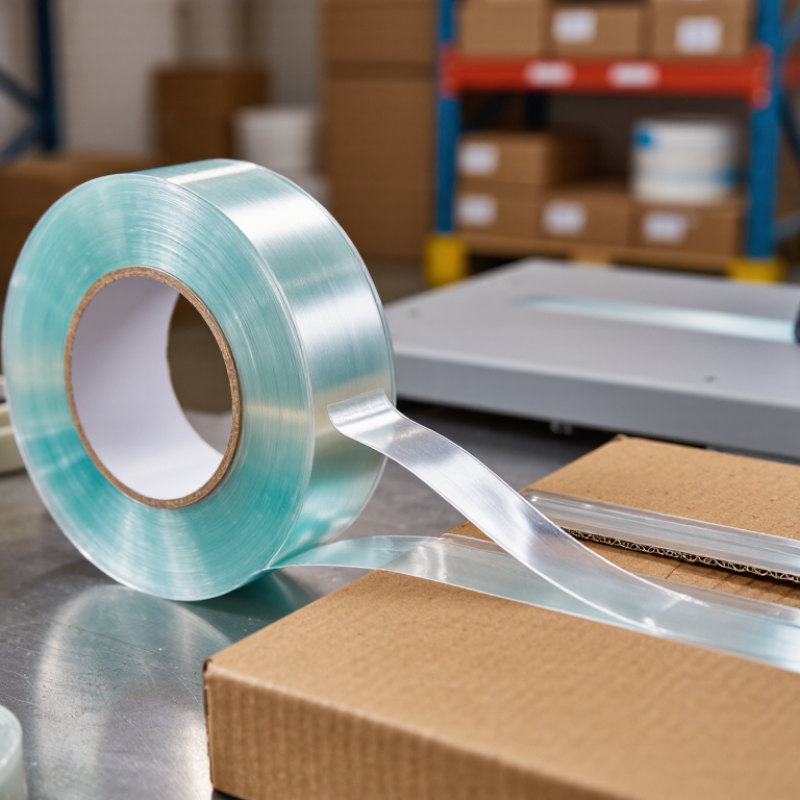
Why Is PE Tape Used in Packaging and Industry?

What PE Tape Is and How Its Material Is Made

Polyethylene (PE) tape is a pressure-sensitive tape with a polyethylene backing and an adhesive coating. PE is made by joining ethylene molecules into long polymer chains, usually through industrial polymerization. The resin is then melted and formed into thin film, often by extrusion. The adhesive is applied separately; PE film alone does not make tape sticky. A simple distinction, but an important one.

The backing may use low-, linear-low-, or high-density polyethylene, each offering different flexibility, toughness, and surface feel. In packaging, a flexible film can conform around corners and resist moisture; in industrial settings, thicker or reinforced versions may help protect surfaces during handling. PlasticsEurope’s Plastics – the Fast Facts 2023 report records global plastics production at 400.3 million tonnes in 2022, with LDPE/LLDPE and HDPE/MDPE together representing about 26.6 percent. That scale helps explain why PE is a widely available tape-film material, though it does not prove every PE tape performs alike. Adhesive chemistry, film thickness, temperature, and the surface being taped all matter. The small details matter. Even a familiar roll can behave differently on dusty, cold, or textured surfaces.


Key Properties That Make PE Tape Useful

PE tape combines a flexible polyethylene backing with a pressure-sensitive adhesive. The backing bends around carton corners, bundled cables, and mildly curved parts without cracking easily. It also resists moisture and many common handling stresses. However, polyethylene has a low-energy surface, so adhesion depends heavily on the adhesive formulation and the surface being taped. Dust, oil, or condensation can weaken the bond. Small details matter.

The market context is substantial: the OECD’s 2022 Global Plastics Outlook estimates that packaging accounted for 31% of global plastics use in 2019. That figure is not specific to tape, but it shows why packaging materials need reliable, practical performance. In industry, PE tape can help protect surfaces, hold lightweight components, or seal packages. Its stretch and conformability are useful, though they do not replace choosing the right tape for a load, temperature, or exposure time. Peel adhesion can be compared using methods such as ASTM D3330; results still depend on test conditions.

Tips: Apply tape to a clean, dry surface, then press it firmly along the full length. Test a small area first, especially on textured plastics or painted parts. Check the stated service temperature, too. A tape that feels secure by hand may still lift after hours in heat or vibration.

Common Types of PE Tape and Their Design Features

Polyethylene tape is not one uniform product.

A common type uses a thin PE film backing with pressure-sensitive adhesive. It bends around cartons, cable bundles, and curved plastic parts without cracking easily. Some versions use low-density PE for flexibility; others use firmer film for more stable handling. Adhesive choice matters too. Acrylic adhesives often suit longer-term exposure, while rubber-based adhesives can provide quick initial grip. Performance still depends on surface cleanliness and temperature.

PE foam tape has a thicker, compressible backing. It can cushion light gaps, reduce vibration, or help join uneven surfaces. Double-sided PE tape places adhesive on both faces, often with a release liner for controlled application. Printed PE tape adds visible handling instructions or identification, though ink durability depends on the print system and exposure.

Small details count. Film thickness affects stretch and tear resistance; adhesive coating affects tack and residue. A dusty carton may defeat a good adhesive. I would test a short strip on the actual surface before choosing a roll, since neat samples do not always predict production results.

How PE Tape Supports Packaging and Industrial Work

PE tape supports packaging by sealing cartons, bundling components, and protecting smooth surfaces during handling. Its flexible backing follows box edges and curved parts, while the adhesive helps hold seams through routine warehouse movement. The right choice depends on the carton, surface, temperature, and time in storage; one grade will not suit every job. A tape choice can still be wrong.

The scale of packaging makes dependable closure important. OECD’s 2022 Global Plastics Outlook reports that packaging accounted for 40% of plastic waste generated worldwide in 2019, out of 353 million tonnes. In the United States, the EPA estimated that containers and packaging generated 82.2 million tons of municipal solid waste in 2018, or 28.1% of the total. These figures describe packaging waste, not tape performance, but they underline why material use and secure handling deserve attention.

On production floors, PE tape can mark temporary zones, hold protective film, or keep light bundles together while parts move between stations. A worker can press a short strip over a carton seam and check whether the flaps stay closed under handling. For heavier loads, rough surfaces, or prolonged outdoor exposure, teams should test the tape under actual conditions and use a suitable fastening method when needed. Small tests help. Overlooked details, such as dust on a surface, can weaken adhesion.

Why Is PE Tape Used in Packaging and Industry? - How PE Tape Supports Packaging and Industrial Work
Application How PE Tape Is Used Useful Characteristics Practical Considerations
Bundling and unitizing Holds grouped items, such as pipes, profiles, or packaged components, together during handling and storage. The flexible film backing can conform around bundled items and is available in tapes designed for different levels of holding force. Choose a tape and application method suited to the bundle weight and surface. PE tape is not a substitute for load-rated strapping where heavy loads require it.
Surface protection Temporarily covers or protects finished surfaces, panels, and components from dust, scuffs, or light handling marks. The polyethylene backing provides a flexible protective layer; some products are formulated for clean removal from specified surfaces. Adhesion and residue depend on the adhesive, surface, temperature, and time in place. Test on an inconspicuous area and follow the product's removal guidance.
Pipe and fitting work Used in selected pipe-wrapping, marking, or temporary protection tasks, depending on the tape's specification. A conformable film backing can wrap around curved surfaces and help cover seams or exposed areas. For corrosion protection, sealing, or buried-pipe systems, use a tape specifically rated for that purpose and install it according to the system requirements.
Temporary masking and holding Secures coverings, liners, or lightweight parts during assembly, transport, or short-term work. Flexible film can be easy to apply to irregular shapes, while adhesive formulations vary to suit different surfaces and removal needs. Confirm compatibility with the surface and the process. Heat, sunlight, and prolonged contact can affect adhesion and removability.
Packaging and transit protection Helps secure protective film or keep selected packages and components together during shipment. The backing is flexible and moisture-resistant, which can be useful when protecting items from incidental splashes or surface contamination. Moisture resistance does not automatically make a taped joint waterproof. For routine carton sealing, select a tape designed and tested for the carton, load, and shipping conditions.
Insulation and HVAC tasks Certain PE tapes are used to hold insulation facings, cover joints, or support duct-related work when specified for the application. The film backing can conform to seams, and adhesive options are available for different temperature and substrate requirements. Use a product rated for the operating temperature, substrate, and applicable building or HVAC requirements; a general-purpose PE tape may not be suitable.
Adhesive selection PE tape may use different adhesive systems, including acrylic- or rubber-based formulations, selected for the intended task. The adhesive affects initial tack, holding performance, temperature range, aging behavior, and removal characteristics. Do not assume all PE tapes perform alike. Check the technical data for the specific product and test it under actual application conditions.
Selection note: PE tape is valued for its flexible polyethylene film backing and the range of adhesive options available. The best choice depends on the substrate, required holding force, exposure conditions, and whether clean removal is needed.

Factors to Consider When Choosing PE Tape

When choosing PE tape, match it to the surface and the job, not just the roll’s appearance. A carton with a dusty, recycled-paper surface may need different adhesion from a clean plastic panel. Check the adhesive type and test a sample on the actual material. PE backing is flexible and moisture-resistant, but performance still varies with adhesive, thickness, and surface condition.

Consider how the tape will be applied and stored. A narrow strip may suit bundling, while wider tape can cover seams with fewer passes. Too much stretch during application can cause the tape to pull back later. More is not better. Compare tack, holding strength, and ease of removal against the package’s weight and handling conditions. Temperature matters, too: a tape that sticks well indoors may behave differently in a cold warehouse or on a warm production line. Check the supplier’s stated service range, then verify it under realistic conditions.

For outdoor or long-term use, assess exposure to sunlight, rain, and abrasion. Also ask whether clean removal matters, since adhesive residue can complicate reuse or finishing. Small trial rolls are useful. They reveal problems a specification sheet may miss, though one test cannot represent every surface or season. Record the surface, application pressure, and storage conditions when comparing samples.

Why density matters: Polyethylene’s relatively low density can help keep film backing lightweight. When selecting PE tape, also consider adhesion, backing thickness, temperature resistance, and the surface it must bond to. Values shown are approximate density ranges for the polymers themselves, not finished tape products.

Powder Coat Booths

For those larger-sized parts, or smaller quantity runs, we have 2 independent powder coat booths and ovens. The quality, durability and affordability of today’s powder coating finishes make this the process of choice for world-class companies.

Powder coating advantages over other forms of coating are many. Materials used in the Powder coating process can be metals and non-metals that come in a multitude of thicknesses, textures, colors, etc. Another of Powder coating’s biggest advantages over conventional coatings is its ability to create finishes in many different textures. Powder Coating Booths allow us the ability to apply these advantages to large products.

Wet Paint Line

Tri-State Fabricators runs a full-service conveyor line for painting. Wet painting can provide protection or decoration to many different part styles. From start to finish, every project is easier to undergo random and point-based inspection by our skilled painting team.

Advantages to our Wet Paint Line are these lines start with product prep and ends with a thorough inspection of a high quality finished product. Our ability to complete large and small projects with a superior finish and doing so in a timely and economical fashion. This passes along the savings in production to our customers. When powder coating ins not an option, our Wet Paint Line gets the job done right the first time.

Wet Paint Booths

When the parts get big and heavy we roll-out our custom paint racks and oversize booth. By utilizing our partnerships with all the major paint brands, we can match virtually any color with wet paint.

The advantages of having access to a Wet Paint Booth are many. Large projects of many different shapes can be loaded into the booth. The Wet Paint Booth offers an environment that is much more controlled than a typical parts painting operation.

Not only are they used because of their controlled environment, but they’re are also advantageous when it comes to applying paint to parts that are needed in industries that require specialty coatings such as medical, aerospace, etc.

Military CARC

Our military forces have some very high standards when it comes to the finish of their vehicles and equipment. From the first pre-treatment step to final coat, it takes a great deal of knowledge and experience to protect the men and women of our armed forces. They deserve only the best, and Tri-State Fabricators provides it.

All of our processes are closely monitored by our staff and management teams. Both of which are highly trained in the processes of metal fabrication and finishing. Tri-State Fabricators’ goal is to always fully satisfy each and every customer, including the military. We will always put a 110% into what we do.

Glass-Bead Blasting

Abrasive media blasting is an excellent way to remove old paint, rust, and increase the paint/powder adhesion. Glass beads produce a much smoother and brighter finish than angular abrasives; leaving the part clean yet without any dimensional change. Chemically inert and environmentally friendly, we can recycle our beads approximately 30 times; making them a more preferred method of metal cleaning or surface finishing.

Advantages to Glass Bead Blasting are many. Glass bead blast media is used when a project is needing rough surfaces need to become smooth for applications of coatings such as paint. It is typically used to clean paint and rust from a product surface without deforming the surface it is being used on. Overall, compared to many other blasting media, Glass Bead Blasting is a very economical choice and those savings are always passed on to our customers.

Part Washing

Tri-State Fabricators utilize a zinc phosphate wash to clean and etch the material to ensure the best paint adhesion possible. The unique design of our 3-stage wash system does the work like a 5-stage. From Cleaning and rinsing to conversion coating and post-treatment, Our Part Washing process is a complete service and works throughout the fabrication service and the finishing service.

Along with the previously mentioned benefits, Curing is a vital chemical reaction that leaves the product finish hard and relatively safe from mild abrasion and aggressive corrosion. This process can be done in more than one way; ambient air-dry or in curing ovens at temps that exceed 240°.

Burn-Off Oven

From fixing paint mistakes (someone else’s of course) to simply cleaning our paint line hooks, our burn-off oven is put to good use. After a quick burn-off, a little clean up, and a fresh coat of paint, your parts will look better than new.

Why does our Burn-Off Oven work so well? Because super heating the air around parts turns the materials into ashes. From paint and powder coatings to rubber and machining oils, high temps do the job without degrading the integrity of the part.

Masking

Masking is a vital part of producing high quality products. We have die-cut masking patterns to protect machined surfaces as well as a wide range of plugs and caps to protect threaded holes and bolts. We provide permanent and temporary masking.

Masking allows the selected sections of a product to be protected from a fabrication or finishing service. This can be with both chemicals when etching and tapes, paints when only finishing just a section of the product. Masking is great in aiding the customization process of a project.

Screen Printing

Screen printing is a photographic process that transfers artwork onto a porous nylon screen which allows colored ink to flow through the screen and be deposited on an aluminum or plastic component. We can generally have just about any design created onto a screen for your parts.

Some of the advantages of Screen Printing are, brand recognition for your business displaying on your products, assembly instructions, product warnings/hazards, etc. Tri-State Fabricators produces Screen Printing of the highest quality so you know it’s durable.

Metal Finishing

Metal Finishing is the art of treating the exterior portion of product, often metal but can also be made of other materials, so that the surface is clean and free of any debris. Then the process of applying coats or either paint of powder coat takes place. This coating process improves the quality of the product in both appearance and resistance to wear and corrosion.

Tri-State Fabricators, Inc., understands that a project typically isn’t complete until a high-quality finish has been added to your product. This is why our painting and powder coating teams continuously inspect the products throughout the Metal Finishing process.
