


What Is a Panoramic Lift and How Does It Work?

A Panoramic Lift is an elevator designed to make the journey visible. Glass panels reveal the surrounding space, whether it is a hotel atrium, a shopping center, or an outdoor tower. Passengers may see floors slide past and notice daylight changing across the cabin. The view is the feature people remember. Yet appearance is only part of the design. A panoramic lift must still move smoothly, carry its rated load, and protect passengers during normal use and unexpected stops.

Its basic operation is similar to that of many conventional elevators. A motor moves the cabin through a shaft, while a controller responds to floor buttons and calls. Depending on the design, the lift may use traction equipment with ropes or a hydraulic system. Sensors monitor doors, position, and other operating conditions. Glass panels are selected and installed as part of an engineered enclosure; they are not simply decorative windows. The exact arrangement varies by building and manufacturer.

Details matter. A clear view should not distract from safe access, reliable controls, or suitable maintenance. The glass can also make fingerprints, reflections, and heat more noticeable than expected. That is easy to overlook. Architects, building owners, and lift professionals need to consider the site, passenger capacity, accessibility, and service requirements together. This guide explains what a panoramic lift is, how its main components work, and which practical questions deserve attention before installation. It cannot replace project-specific engineering advice, but it can make the discussion more informed.
What Is a Panoramic Lift and How Does It Work?

What Is a Panoramic Lift?

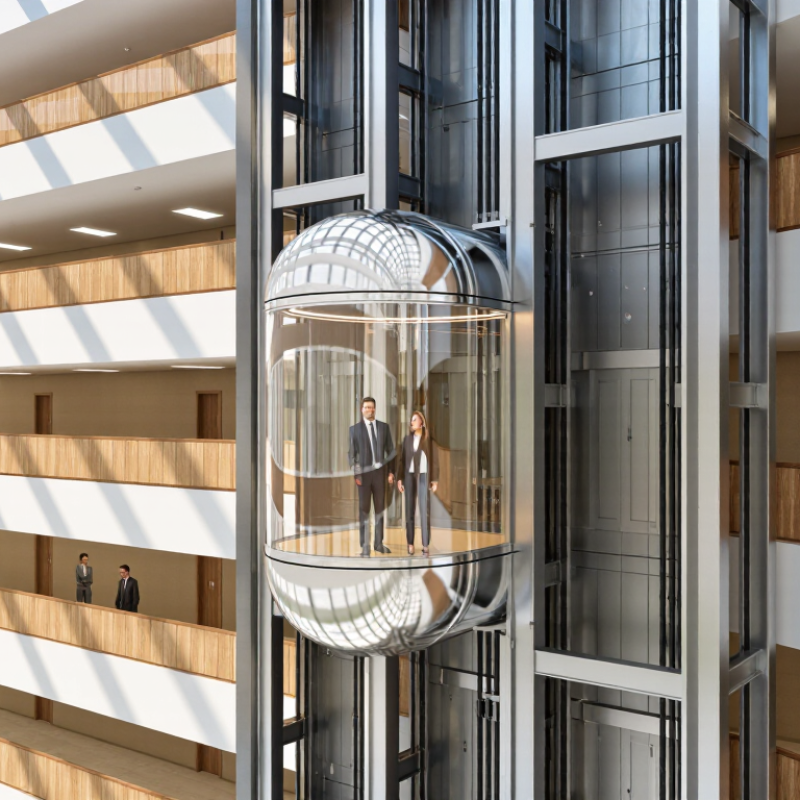
A panoramic lift is an elevator designed to offer a view through transparent or partly glazed walls. It may travel inside a building atrium or along an exterior shaft. Unlike a conventional enclosed car, it lets passengers see floors, structural details, or the surrounding landscape during the ride. The glass is typically safety-rated and supported by a metal frame. It is not simply a sightseeing cabin with a motor attached.

Its main parts include the car, guide rails, drive system, doors, controls, and safety equipment. The drive moves the car along the rails, while sensors and braking systems help manage travel and respond to faults. The exact arrangement depends on the building’s height, layout, and intended passenger load. That matters. A lift beside a busy hotel lobby may need different door timing and capacity than one serving a small office. Clear glass also needs regular cleaning, and glare or reflections can make a view less impressive than expected. An architect and lift engineer should assess structural support, ventilation, accessibility, and maintenance access before installation. Glass can feel open, but some passengers may still find the ride uncomfortable. That is worth considering.


What Are the Main Parts of a Panoramic Lift?

A panoramic lift is an elevator with glazed walls that turn each ride into a view of the building. Its main parts remain familiar: a car, guide rails, a drive system, doors, and safety controls. The car’s frame supports the floor and glass panels. Laminated safety glazing helps contain fragments if glass breaks, while metal mullions divide the panels and carry loads. The view is striking. Yet glare, reflections, and heat can make the cabin less comfortable than expected.

The drive system moves the car along fixed guide rails. Depending on the design, it may use traction equipment and counterweights, or a hydraulic system. A controller coordinates the motor, sensors, floor calls, and door operation; brakes and overspeed protection help manage abnormal movement. The European Lift Association’s 2023 statistical report estimates that Europe has more than six million installed lifts, illustrating the scale of equipment requiring maintenance. That figure covers lifts generally, not panoramic models. For a glass car, technicians also inspect panel fixings, seals, and visibility, alongside ordinary mechanical checks. A small detail matters: fingerprints and dust show quickly on clear glazing, so cleaning access should be planned early.

How Does a Panoramic Lift Operate?

A panoramic lift moves passengers inside a cabin with glass walls, offering views of the building as it travels. Its operating principle is similar to that of a conventional elevator. An electric motor drives the cabin through a traction system, or a hydraulic mechanism raises it using fluid pressure. The exact setup depends on the building’s height, layout, and design. Guide rails keep the cabin on its path, while a controller responds to floor requests and manages acceleration, travel, and stopping.

During a ride, sensors monitor the cabin’s position and speed. When it approaches a selected floor, the control system slows it and levels the cabin with the landing. Door interlocks help prevent movement while doors are open, and emergency communication systems let passengers request help. Glass changes the experience, not the basic need for careful engineering. Still, reflections and bright sunlight can make a moving cabin feel faster than it is. That impression can be unsettling.

Tips: Look for a clear floor indicator before boarding, and keep bags away from the doors. If the ride feels uneven, report it to building staff rather than assuming it is normal. An occasional rattle may have a simple cause, but guessing is not a substitute for inspection.

What Types of Panoramic Lifts Are Available?

Panoramic lifts come in several forms, chosen for the building, route, and view. Glass-walled lifts may sit inside an atrium or travel along an exterior façade. Some use a round or polygonal cabin, giving passengers a broader view, while others use a rectangular cabin that fits more easily into a standard shaft. Drive systems vary too: traction lifts suit many mid-rise and high-rise projects, while hydraulic lifts are often considered for shorter travel. The right choice depends on traffic, floor height, structure, and local safety requirements—not just appearance.

A useful distinction is whether the lift is enclosed in a shaft or exposed behind a purpose-designed glass enclosure. Exterior installations can make a striking entrance, but wind, weather, cleaning access, and heat gain need careful assessment. Fortune Business Insights valued the global elevator market at USD 88.59 billion in 2023 and forecasts USD 132.08 billion by 2032. This market-wide figure includes many lift types; it does not measure panoramic lifts alone. That distinction matters when using market data to plan a project. A beautiful glass cabin can still feel uncomfortable if glare or crowding is overlooked.

Tips: Ask for a traffic study and check sightlines from every landing. Compare glass specifications, ventilation, maintenance access, and emergency provisions. Then review a full-scale cabin mock-up if possible. It may reveal awkward reflections or a cramped handrail position—small details that drawings can miss.

What Is a Panoramic Lift and How Does It Work?

Panoramic lifts are passenger elevators designed to provide views through transparent cabin panels or an enclosing structure. They travel along a guided path, powered by an elevator drive system. Common layouts include vertical lifts inside a building or along its façade, and inclined lifts that follow a sloping route. These layouts describe where and how the lift travels; transparent construction can be used in more than one layout.

Where Are Panoramic Lifts Used?

Where Are Panoramic Lifts Used?

Panoramic lifts are common in hotels, shopping centres, museums, and transport hubs. Their glass walls let passengers see atriums, public spaces, or city views during the ride. In a hotel lobby, for example, a lift may travel beside a tall indoor garden, making each floor easy to spot. At a station, a panoramic cabin can help visitors understand the building’s layout. These lifts also appear in some residential buildings, especially where views are part of the design.

They suit open, high-traffic spaces, but glass alone does not make a lift practical. Designers need to consider privacy, glare, heat, cleaning access, and how the lift connects with accessible routes. A striking view can become a distraction if signs or floor indicators are hard to see. And not every location benefits from a transparent cabin.

Tips: When choosing a panoramic lift, look at the approach as well as the ride. Check whether passengers can find the entrance easily, read controls clearly, and travel comfortably at busy times. Ask how the glass will be cleaned and maintained. Small details matter. A beautiful cabin may still feel exposed or confusing, and that deserves an honest review before installation.

What Is a Panoramic Lift and How Does It Work? - Where Are Panoramic Lifts Used?

Topic Description Practical Details
What it is A panoramic lift is an elevator designed with transparent or partly transparent walls, allowing passengers to see the surrounding space while travelling between floors. The enclosure may use safety glass or other engineered transparent panels. The lift can be installed inside a building atrium or on an exterior façade.
How it works Like other passenger elevators, it moves a car between landings using a lifting system, guide rails, control equipment, doors, and safety devices. Depending on the design, the lift may use a traction system with ropes and a counterweight or a hydraulic system. The selected system depends on the building and project requirements.
Main components Typical components include the passenger car, transparent wall panels, landing doors, guide rails, drive equipment, controls, and safety systems. Visibility through the car walls does not replace required guarding, interlocks, emergency communication, or other elevator safety provisions.
Passenger experience The open views can make a lift journey more engaging and help passengers see the building interior or surrounding landscape. Lighting, reflections, privacy, glare, and passenger comfort should be considered when choosing the location and glazing design.
Hotels and resorts Panoramic lifts are often used in lobbies, atriums, and buildings with views of gardens, coastlines, or cityscapes. They can form part of the guest experience while serving the same circulation role as a conventional passenger lift.
Shopping centres and public venues They may be installed in shopping centres, museums, visitor attractions, and other public buildings where an open view suits the interior. Capacity, accessibility, traffic flow, and applicable building and elevator codes need to be assessed for each site.
Offices and residential buildings Some offices and residential developments use panoramic lifts in atriums or prominent shared spaces as a visible design feature. Placement should account for residents’ or occupants’ privacy, as well as the lift’s intended passenger demand.
Outdoor installations An exterior panoramic lift can provide views while connecting different levels of a building or site. Exterior equipment and glazing must be selected for the local weather conditions and maintained according to the lift design and applicable requirements.
Planning considerations Designers assess the building structure, travel distance, number of stops, expected use, accessibility, and available space. Installation details, permitted dimensions, capacity, and safety requirements vary by project and jurisdiction; they should be confirmed with qualified professionals and local authorities.

Powder Coat Booths

For those larger-sized parts, or smaller quantity runs, we have 2 independent powder coat booths and ovens. The quality, durability and affordability of today’s powder coating finishes make this the process of choice for world-class companies.

Powder coating advantages over other forms of coating are many. Materials used in the Powder coating process can be metals and non-metals that come in a multitude of thicknesses, textures, colors, etc. Another of Powder coating’s biggest advantages over conventional coatings is its ability to create finishes in many different textures. Powder Coating Booths allow us the ability to apply these advantages to large products.

Wet Paint Line

Tri-State Fabricators runs a full-service conveyor line for painting. Wet painting can provide protection or decoration to many different part styles. From start to finish, every project is easier to undergo random and point-based inspection by our skilled painting team.

Advantages to our Wet Paint Line are these lines start with product prep and ends with a thorough inspection of a high quality finished product. Our ability to complete large and small projects with a superior finish and doing so in a timely and economical fashion. This passes along the savings in production to our customers. When powder coating ins not an option, our Wet Paint Line gets the job done right the first time.

Wet Paint Booths

When the parts get big and heavy we roll-out our custom paint racks and oversize booth. By utilizing our partnerships with all the major paint brands, we can match virtually any color with wet paint.

The advantages of having access to a Wet Paint Booth are many. Large projects of many different shapes can be loaded into the booth. The Wet Paint Booth offers an environment that is much more controlled than a typical parts painting operation.

Not only are they used because of their controlled environment, but they’re are also advantageous when it comes to applying paint to parts that are needed in industries that require specialty coatings such as medical, aerospace, etc.

Military CARC

Our military forces have some very high standards when it comes to the finish of their vehicles and equipment. From the first pre-treatment step to final coat, it takes a great deal of knowledge and experience to protect the men and women of our armed forces. They deserve only the best, and Tri-State Fabricators provides it.

All of our processes are closely monitored by our staff and management teams. Both of which are highly trained in the processes of metal fabrication and finishing. Tri-State Fabricators’ goal is to always fully satisfy each and every customer, including the military. We will always put a 110% into what we do.

Glass-Bead Blasting

Abrasive media blasting is an excellent way to remove old paint, rust, and increase the paint/powder adhesion. Glass beads produce a much smoother and brighter finish than angular abrasives; leaving the part clean yet without any dimensional change. Chemically inert and environmentally friendly, we can recycle our beads approximately 30 times; making them a more preferred method of metal cleaning or surface finishing.

Advantages to Glass Bead Blasting are many. Glass bead blast media is used when a project is needing rough surfaces need to become smooth for applications of coatings such as paint. It is typically used to clean paint and rust from a product surface without deforming the surface it is being used on. Overall, compared to many other blasting media, Glass Bead Blasting is a very economical choice and those savings are always passed on to our customers.

Part Washing

Tri-State Fabricators utilize a zinc phosphate wash to clean and etch the material to ensure the best paint adhesion possible. The unique design of our 3-stage wash system does the work like a 5-stage. From Cleaning and rinsing to conversion coating and post-treatment, Our Part Washing process is a complete service and works throughout the fabrication service and the finishing service.

Along with the previously mentioned benefits, Curing is a vital chemical reaction that leaves the product finish hard and relatively safe from mild abrasion and aggressive corrosion. This process can be done in more than one way; ambient air-dry or in curing ovens at temps that exceed 240°.

Burn-Off Oven

From fixing paint mistakes (someone else’s of course) to simply cleaning our paint line hooks, our burn-off oven is put to good use. After a quick burn-off, a little clean up, and a fresh coat of paint, your parts will look better than new.

Why does our Burn-Off Oven work so well? Because super heating the air around parts turns the materials into ashes. From paint and powder coatings to rubber and machining oils, high temps do the job without degrading the integrity of the part.

Masking

Masking is a vital part of producing high quality products. We have die-cut masking patterns to protect machined surfaces as well as a wide range of plugs and caps to protect threaded holes and bolts. We provide permanent and temporary masking.

Masking allows the selected sections of a product to be protected from a fabrication or finishing service. This can be with both chemicals when etching and tapes, paints when only finishing just a section of the product. Masking is great in aiding the customization process of a project.

Screen Printing

Screen printing is a photographic process that transfers artwork onto a porous nylon screen which allows colored ink to flow through the screen and be deposited on an aluminum or plastic component. We can generally have just about any design created onto a screen for your parts.

Some of the advantages of Screen Printing are, brand recognition for your business displaying on your products, assembly instructions, product warnings/hazards, etc. Tri-State Fabricators produces Screen Printing of the highest quality so you know it’s durable.

Metal Finishing

Metal Finishing is the art of treating the exterior portion of product, often metal but can also be made of other materials, so that the surface is clean and free of any debris. Then the process of applying coats or either paint of powder coat takes place. This coating process improves the quality of the product in both appearance and resistance to wear and corrosion.

Tri-State Fabricators, Inc., understands that a project typically isn’t complete until a high-quality finish has been added to your product. This is why our painting and powder coating teams continuously inspect the products throughout the Metal Finishing process.
