


What Is a Padel Shooting Machine and How Does It Work?

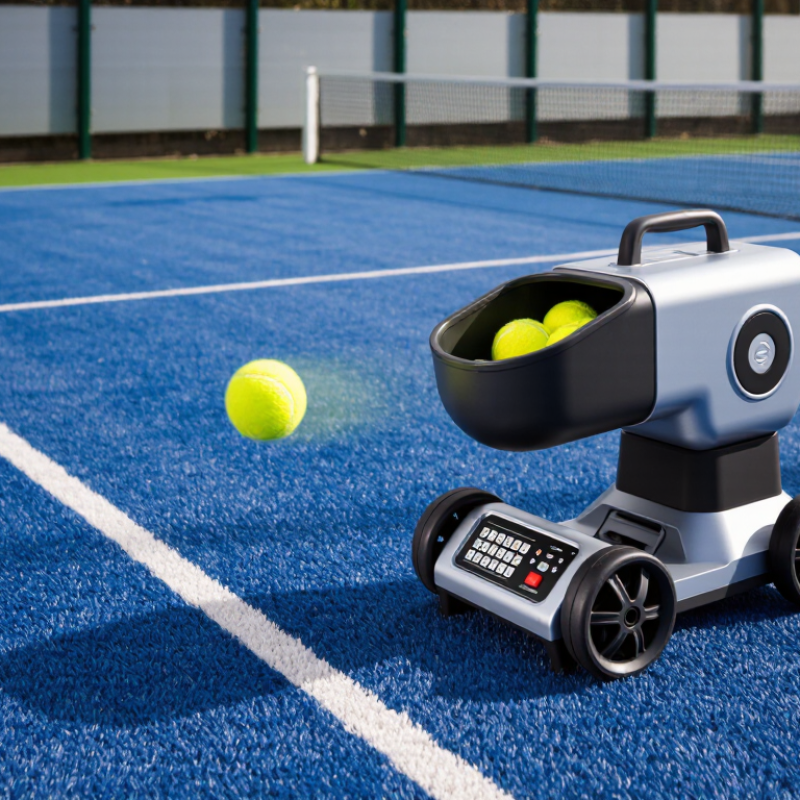
A Padel Shooting Machine is becoming a practical training partner for players who need repetition, timing, and measurable feedback. It is a compact device that stores balls, launches them at selected speeds, and changes their direction or trajectory. Some models produce flat shots. Others simulate lobs, volleys, bandejas, and defensive rebounds. The machine usually combines a ball hopper, rotating wheels, electronic controls, and a rechargeable battery. Two spinning wheels grip each ball and release it forward. Adjusting wheel speed changes pace and spin. An oscillating base can send balls across different zones.

Padel coach and equipment consultant Jordi Rovira explains, “A good machine does not replace a partner; it repeats a useful ball with measurable consistency.” That distinction matters. A real opponent reacts to your position, while a Padel Shooting Machine follows programmed settings. Players can practise split steps, racket preparation, recovery, and wall control without waiting for another person. Small details become visible. Your feet may stop before the ball arrives. Your contact point may drift too far behind your body. The machine reveals those habits, sometimes uncomfortably.

It is not perfect.

Ball speed, court surface, wind, and battery power can affect performance. Some machines also struggle with irregular feeds or damp balls. Users should begin with slower settings and leave clear space around the launch area. A thoughtful training plan matters more than maximum speed. The best results come from combining machine drills with coaching, match play, and honest self-review. That balance makes the technology useful rather than impressive only in appearance.
What Is a Padel Shooting Machine and How Does It Work?

Definition and Purpose of a Padel Shooting Machine

A padel shooting machine is an automated training device designed to deliver balls at controlled speeds, angles, and intervals. It usually uses rotating wheels, a ball hopper, and adjustable launch settings. Players can practise volleys, bandejas, lobs, smashes, and defensive returns without waiting for a partner.

Its main purpose is purposeful repetition. A player may receive the same cross-court ball every ten seconds, then change the launch angle for a deeper challenge. This creates a measurable practice routine. The machine also supports solo training, which is useful when court time or partners are limited. However, it cannot read body language, tactical choices, or emotional pressure. That assumption is too neat. Real match decisions remain essential.

The FIP Global Padel Report 2024 reported more than 25 million players across approximately 90 countries. It also recorded tens of thousands of courts worldwide. This expanding participation increases interest in consistent practice tools, although the report does not prove that every player needs a machine. A reliable unit should offer stable feeding, clear speed controls, safe ball storage, and easy emergency stopping. Testing these features matters more than chasing maximum speed.

Tips: Start with slower feeds and a fixed target. Keep the machine several metres away. Record successful returns, not only missed shots. Change one setting at a time. Human coaching still matters.

What Is a Padel Shooting Machine and How Does It Work? - Definition and Purpose of a Padel Shooting Machine

Data Dimension Accurate Description Practical Relevance for Padel Training
Definition A padel shooting machine is an automated training device that launches balls at controlled intervals, speeds, angles, and trajectories. It provides repeatable practice without requiring another player to feed every ball.
Primary Purpose The machine is designed to help players practise strokes, movement patterns, timing, consistency, and reactions through repeated ball feeds. Players can focus on technique and decision-making while controlling the difficulty of each drill.
Typical Ball Delivery Most machines use rotating wheels, a pneumatic system, or another mechanical launching method to project balls toward the player. The delivery system determines how consistently the machine can reproduce speed, spin, height, and direction.
Ball Compatibility The machine should be used with balls that match its operating requirements. Padel balls are smaller and have lower internal pressure than standard tennis balls. Using unsuitable balls can affect trajectory, feeding reliability, equipment wear, and training accuracy.
Speed Control Adjustable speed allows the user to select slower feeds for beginners and faster feeds for advanced reaction or defensive drills. Progressive speed increases help players develop control before training under greater time pressure.
Spin Control Some machines can produce topspin, backspin, or relatively flat feeds, depending on their wheel arrangement and controls. Spin variation helps players practise reading the ball and adapting racket angle, swing path, and contact point.
Elevation and Trajectory The launcher may be adjusted to send balls at different heights, including low feeds, medium-height shots, and higher defensive balls. Different trajectories can simulate groundstrokes, volleys, lobs, and defensive recovery situations.
Horizontal Direction A rotating or adjustable launching mechanism can direct balls toward different areas of the court, depending on the machine design. Directional changes support drills for forehands, backhands, transitions, lateral movement, and recovery to the ready position.
Oscillation Function Oscillation moves the feed from side to side or across a selected range rather than repeatedly targeting one fixed point. This adds footwork demands and encourages players to prepare early and return to an effective court position.
Feed Interval The interval is the time between successive ball launches. A longer interval allows more preparation, while a shorter interval increases the reaction challenge. Interval adjustments make the same machine suitable for technical practice, conditioning, and high-tempo drills.
Control Method Controls may be located on the machine or provided through a remote controller or digital interface, depending on the model. Accessible controls allow players or coaches to change settings without interrupting the exercise.
Power Source Machines may use rechargeable batteries or an external electrical supply. Battery operation generally improves portability. Training time depends on battery capacity, charging conditions, and the selected feed settings.
Training Applications Common applications include forehand and backhand repetition, volley practice, return-of-serve preparation, overhead work, lobs, and defensive shots. Structured drills can isolate one skill or combine strokes with movement and recovery patterns.
Effect on Consistency Repeated feeds create a stable practice environment, which can help players identify technical errors and build more reliable contact. Consistency improves when repetition is combined with correct technique, appropriate intensity, and regular feedback.
Limitations A machine does not fully reproduce the unpredictable choices, positioning, communication, and tactical responses of a live opponent or partner. Machine drills should complement, rather than replace, match play, coached practice, and partner-based exercises.
Safety Considerations Players should maintain a safe distance during setup, keep clear of the launch area, use suitable protective equipment when appropriate, and stop the machine before making adjustments. Clear court access and controlled settings reduce the risk of impact injuries and equipment-related accidents.
Maintenance Requirements Regular care may include cleaning the feed path, checking wheels and moving parts, inspecting the battery or power connection, and storing the machine in a dry location. Routine maintenance supports dependable feeding and helps preserve the accuracy of repeated drills.
Best Use in a Training Session A productive session normally progresses from low-intensity technical feeds to movement-based drills and then to more demanding speed, spin, or direction changes. Gradual progression improves learning quality and helps reduce unnecessary fatigue or technical breakdown.

Core Components and Their Roles

A padel shooting machine is a training device that launches balls at controlled speeds, angles, and rhythms. Its hopper stores the balls above the feeding system. A rotating gate releases one ball at a time. Two rubber wheels then grip and accelerate it through the launch channel. Wheel speed affects pace and spin. Small differences can change the rebound noticeably.

The motor powers the wheels and feeding mechanism. A control panel adjusts speed, frequency, trajectory, and sometimes topspin or backspin.

An elevation bracket changes the launch angle, helping players practise volleys, lobs, and defensive returns. The frame keeps the unit stable on court. Lockable wheels make positioning easier, although uneven surfaces can still cause movement. That detail is easy to underestimate.

A rechargeable battery allows training without a nearby power outlet. Sensors can detect ball jams, low battery levels, or an open safety cover. These features reduce interruptions and protect the operator.

Keep hands away from the feed area. Always test the lowest setting first. In practical sessions, consistent ball quality matters as much as machine settings.

Poor balls may produce irregular flight, making technical feedback less reliable. The machine also cannot read every tactical decision. It repeats patterns well, but real opponents remain less predictable. That limitation deserves attention.

How the Machine Delivers Padel Shots Step by Step

What Is a Padel Shooting Machine and How Does It Work?

How the Machine Delivers Padel Shots Step by Step

A padel shooting machine is a training device that launches balls at controlled speeds and angles. It helps players repeat specific shots without depending on a partner. The machine usually contains a ball hopper, feeding channel, rotating wheels, and a control panel. Each part affects timing and ball placement.

The process begins when balls enter the hopper. A feeder releases one ball toward the launch wheels. The wheels grip the ball and accelerate it forward. By changing wheel speed, the machine can produce slower lobs or faster drives. An adjustable launch angle changes the ball’s height and distance. Some settings also add side movement or topspin.

A practical session should start with gentle feeds. Watch the ball’s bounce before increasing speed. For volley practice, place the machine near the service line and aim toward the player’s forehand or backhand. For defensive drills, use higher feeds that rebound from the glass. Keep enough space behind the machine. Balls can travel farther than expected.

The machine offers consistency, but it does not read your body position. It cannot replace tactical decisions, communication, or live pressure. I have found repeated feeds useful, although perfect repetition can create false confidence. Wind, court surface, and ball condition still change the shot. Check the settings often, and adjust them when the training feels too predictable.

What Is a Padel Shooting Machine and How Does It Work?

A padel shooting machine uses a ball feeder, rotating wheels, and adjustable controls to repeat a shot cycle. The example below shows how an approximately two-second cycle can be divided from feeding to reset.

The ball is separated and positioned first, then the wheels accelerate and propel it through the launch channel. After release, the machine returns to its ready state for the next ball. Timing varies with feed rate, shot frequency, and the selected trajectory.

Adjustable Settings for Speed, Spin, and Ball Placement

What Is a Padel Shooting Machine and How Does It Work?

A padel shooting machine is a training device that feeds balls at controlled intervals. It usually uses rotating wheels to launch each ball. The player can adjust speed, spin, direction, and feeding frequency. This creates repeatable practice without requiring a partner. In my experience, repeatability is its biggest advantage. It makes small technical errors easier to notice.

Speed settings can begin with gentle feeds for volleys and defensive blocks. Higher speeds challenge reaction time and preparation. Spin controls may add topspin, backspin, or a flatter trajectory. Heavy topspin can push the ball toward the back glass. Backspin often demands softer hands and earlier positioning. Change one setting at a time. Otherwise, it becomes difficult to identify the real problem.

Ball placement is equally important. A machine can target the forehand corner, backhand side, body, or space near the fence. Some models also vary horizontal and vertical angles. Try six balls to one zone, then switch zones. Short feeds can train movement toward the net. Deep feeds can test recovery and balance. Keep the rhythm realistic. Too many identical balls may build habits that fail during a match. I have found that perfect machine timing can feel misleading. Human opponents rarely feed so politely. Use the machine to sharpen a skill, then test that skill through varied drills and live play.

Training Uses, Benefits, and Safety Considerations

A padel shooting machine feeds balls at selected speeds, angles, and intervals. A motorized wheel propels each ball through an adjustable launch opening. Some machines reproduce lobs, volleys, drives, and unpredictable rebounds. The player can repeat one shot without waiting for a partner. That repetition helps coaches assess footwork, racket preparation, timing, and recovery position.

Training should begin with slow, consistent feeds. This allows players to build reliable contact near the body’s ideal hitting zone. Later, varied settings can challenge decision-making and movement under pressure. A coach may use ten-ball sequences, such as three forehand drives followed by a deep lob. The machine also supports solo practice when court time or partners are limited. Still, repetition can create habits that look clean but fail during real rallies. It is not a perfect replacement.

Safety needs equal attention. Place the machine on stable ground, away from walkways and court edges. Inspect the ball container, power connection, and moving parts before use. Players should stand outside the firing line during setup and adjustment. Wear suitable court shoes, and keep loose clothing away from mechanical areas. Start at a low speed, then increase intensity gradually. A sudden high-speed feed can strain the shoulder, wrist, or lower back. Stop immediately if the machine behaves irregularly. Never reach toward the launch opening while it is powered. Coaches should also record settings and rest periods, because fatigue can quietly damage technique.

Powder Coat Booths

For those larger-sized parts, or smaller quantity runs, we have 2 independent powder coat booths and ovens. The quality, durability and affordability of today’s powder coating finishes make this the process of choice for world-class companies.

Powder coating advantages over other forms of coating are many. Materials used in the Powder coating process can be metals and non-metals that come in a multitude of thicknesses, textures, colors, etc. Another of Powder coating’s biggest advantages over conventional coatings is its ability to create finishes in many different textures. Powder Coating Booths allow us the ability to apply these advantages to large products.

Wet Paint Line

Tri-State Fabricators runs a full-service conveyor line for painting. Wet painting can provide protection or decoration to many different part styles. From start to finish, every project is easier to undergo random and point-based inspection by our skilled painting team.

Advantages to our Wet Paint Line are these lines start with product prep and ends with a thorough inspection of a high quality finished product. Our ability to complete large and small projects with a superior finish and doing so in a timely and economical fashion. This passes along the savings in production to our customers. When powder coating ins not an option, our Wet Paint Line gets the job done right the first time.

Wet Paint Booths

When the parts get big and heavy we roll-out our custom paint racks and oversize booth. By utilizing our partnerships with all the major paint brands, we can match virtually any color with wet paint.

The advantages of having access to a Wet Paint Booth are many. Large projects of many different shapes can be loaded into the booth. The Wet Paint Booth offers an environment that is much more controlled than a typical parts painting operation.

Not only are they used because of their controlled environment, but they’re are also advantageous when it comes to applying paint to parts that are needed in industries that require specialty coatings such as medical, aerospace, etc.

Military CARC

Our military forces have some very high standards when it comes to the finish of their vehicles and equipment. From the first pre-treatment step to final coat, it takes a great deal of knowledge and experience to protect the men and women of our armed forces. They deserve only the best, and Tri-State Fabricators provides it.

All of our processes are closely monitored by our staff and management teams. Both of which are highly trained in the processes of metal fabrication and finishing. Tri-State Fabricators’ goal is to always fully satisfy each and every customer, including the military. We will always put a 110% into what we do.

Glass-Bead Blasting

Abrasive media blasting is an excellent way to remove old paint, rust, and increase the paint/powder adhesion. Glass beads produce a much smoother and brighter finish than angular abrasives; leaving the part clean yet without any dimensional change. Chemically inert and environmentally friendly, we can recycle our beads approximately 30 times; making them a more preferred method of metal cleaning or surface finishing.

Advantages to Glass Bead Blasting are many. Glass bead blast media is used when a project is needing rough surfaces need to become smooth for applications of coatings such as paint. It is typically used to clean paint and rust from a product surface without deforming the surface it is being used on. Overall, compared to many other blasting media, Glass Bead Blasting is a very economical choice and those savings are always passed on to our customers.

Part Washing

Tri-State Fabricators utilize a zinc phosphate wash to clean and etch the material to ensure the best paint adhesion possible. The unique design of our 3-stage wash system does the work like a 5-stage. From Cleaning and rinsing to conversion coating and post-treatment, Our Part Washing process is a complete service and works throughout the fabrication service and the finishing service.

Along with the previously mentioned benefits, Curing is a vital chemical reaction that leaves the product finish hard and relatively safe from mild abrasion and aggressive corrosion. This process can be done in more than one way; ambient air-dry or in curing ovens at temps that exceed 240°.

Burn-Off Oven

From fixing paint mistakes (someone else’s of course) to simply cleaning our paint line hooks, our burn-off oven is put to good use. After a quick burn-off, a little clean up, and a fresh coat of paint, your parts will look better than new.

Why does our Burn-Off Oven work so well? Because super heating the air around parts turns the materials into ashes. From paint and powder coatings to rubber and machining oils, high temps do the job without degrading the integrity of the part.

Masking

Masking is a vital part of producing high quality products. We have die-cut masking patterns to protect machined surfaces as well as a wide range of plugs and caps to protect threaded holes and bolts. We provide permanent and temporary masking.

Masking allows the selected sections of a product to be protected from a fabrication or finishing service. This can be with both chemicals when etching and tapes, paints when only finishing just a section of the product. Masking is great in aiding the customization process of a project.

Screen Printing

Screen printing is a photographic process that transfers artwork onto a porous nylon screen which allows colored ink to flow through the screen and be deposited on an aluminum or plastic component. We can generally have just about any design created onto a screen for your parts.

Some of the advantages of Screen Printing are, brand recognition for your business displaying on your products, assembly instructions, product warnings/hazards, etc. Tri-State Fabricators produces Screen Printing of the highest quality so you know it’s durable.

Metal Finishing

Metal Finishing is the art of treating the exterior portion of product, often metal but can also be made of other materials, so that the surface is clean and free of any debris. Then the process of applying coats or either paint of powder coat takes place. This coating process improves the quality of the product in both appearance and resistance to wear and corrosion.

Tri-State Fabricators, Inc., understands that a project typically isn’t complete until a high-quality finish has been added to your product. This is why our painting and powder coating teams continuously inspect the products throughout the Metal Finishing process.


