


Top 10 Types of Nylon Rope and Their Uses

Nylon Rope is valued for its strength, elasticity, and resistance to abrasion, but no single construction suits every job. A twisted rope feels familiar in the hand and works well for general utility. Braided and double-braid designs offer a smoother finish and different handling characteristics. Kernmantle construction pairs a protective outer sheath with a load-bearing core. Each design brings trade-offs. Diameter, construction, finish, and intended load all matter.

A fictional rope-design specialist, Elena Ward, offers this editorial line: “Choose the rope for the task, not just the material.” This is an original illustrative quote, not a documented statement from a real expert. The guide ahead compares ten common types of Nylon Rope and explains where each may be useful, from marine settings to lifting, camping, and everyday securing. A coil resting on a damp dock, for example, faces different conditions from a rope stored in a dry workshop. Nylon can stretch under load, which may help absorb shock but can complicate precise positioning. It is not a universal answer. Check product specifications, inspect rope for wear, and follow the manufacturer’s guidance before use. Even experienced users can overlook a frayed cover or a poor match between rope and task. That deserves a second look.
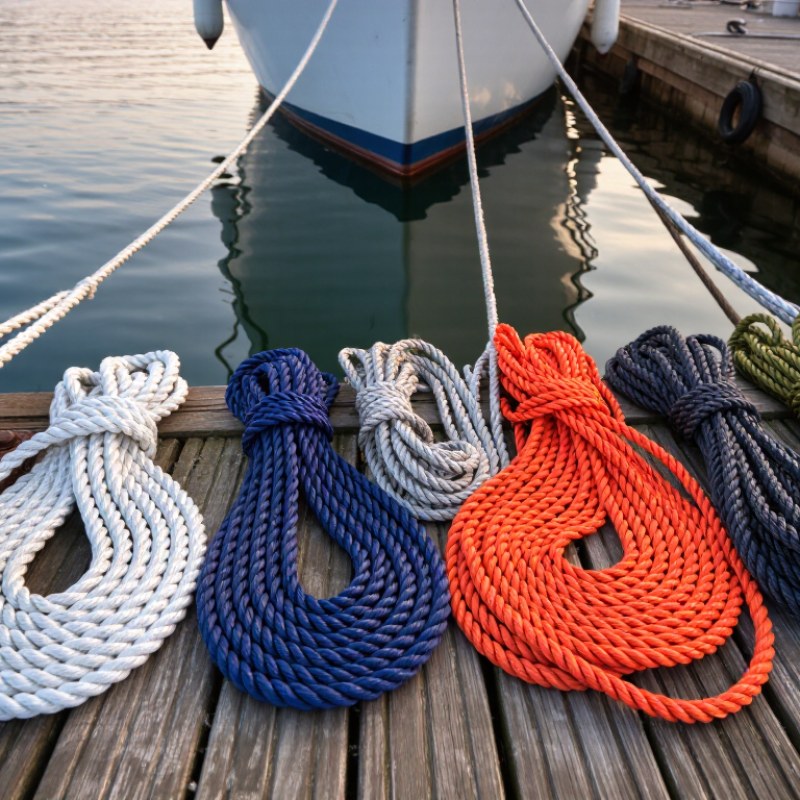
Top 10 Types of Nylon Rope and Their Uses

How Nylon Rope Is Made and What Makes It Distinct

Nylon rope begins as polyamide polymer, usually nylon 6 or nylon 6,6. Nylon 6 is made from caprolactam; nylon 6,6 forms from two chemical building blocks. Melted polymer is pushed through tiny spinneret holes to make filaments. The filaments cool, stretch, and align, then get twisted or braided into rope. Heat-setting helps stabilize the strands. Small process changes matter.

Nylon stands out for strength, abrasion resistance, and stretch under load. That stretch can soften sudden shocks, but it may also make a line feel springy. ASTM D1909’s standard moisture-regain table lists nylon at about 4.5%, compared with about 0.4% for polyester. Wet nylon can feel heavier and behave differently. Textile Exchange’s Materials Market Report 2024 estimates global fiber production reached 124 million tonnes in 2023; it does not isolate rope-grade nylon. That limitation is worth noting.

Tips: Check the rope’s construction and rated load, not fiber type alone. Keep it clean and inspect for fuzzy, flattened, or stiff sections. For critical lifting, follow the maker’s specifications and applicable workplace procedures. A nice-looking rope can still be damaged inside.


Ten Common Types of Nylon Rope by Construction and Form

Nylon rope comes in several constructions, and its stretch can soften a sudden pull. The categories overlap a little, so check the actual rope before choosing it. Three-strand twisted rope is easy to splice and works for general tying and mooring. Four-strand rope feels rounder in the hand, though it is less common. Single-braid rope is flexible and packs neatly for utility lines. Double-braid rope has a braided core and cover, making it a frequent choice for dock lines. Hollow braid has no solid core; it is light and can be spliced by tucking the rope into itself. Solid-braid rope resists flattening and suits compact utility lines.

Kernmantle rope pairs a load-bearing inner core with a protective sheath, a construction used in climbing and rescue ropes; choose a rope rated for its specific task. Plaited rope uses interwoven strands and tends to resist kinking in handling. Tubular nylon webbing is flat and broad, useful for straps and sewn loops rather than ordinary round rope. Nylon shock cord wraps an elastic core with a braided cover, helping secure light loads that need some give. Not every type suits every job. Wet nylon may feel different, and knots can reduce strength. Check the rope’s specifications, inspect wear, and avoid guessing from appearance alone.

Typical Uses of Each Type of Nylon Rope

Three-strand twisted nylon rope suits dock lines, anchor lines, and general mooring, where stretch can soften sudden pulls. Eight-strand plaited rope bends smoothly around winches and cleats. Double-braid construction is commonly chosen for working lines that need a firm grip and a manageable feel. Hollow braid is light and easy to splice, making it useful for small boat lines and utility tasks. Solid braid resists flattening, so it can work well for compact, everyday tie-downs. Check the rope’s rated load, not just its construction.

Kernmantle static rope is used for controlled hauling and rescue systems, where low stretch helps keep movement predictable. Dynamic single ropes are designed for climbing; half and twin ropes are used in specific climbing systems, with compatibility and training essential. UIAA Safety Standard 101 sets a maximum first-fall impact force of 12 kN for tested single ropes, alongside a 40% maximum dynamic elongation. Those figures describe standardized tests, not a guarantee for every real-world fall. Important distinction.

Laid utility rope remains useful for simple general-purpose jobs, while braided nylon lines often handle repeated bending better. Wet conditions, abrasion, knots, and age can all change performance. The labels overlap, which can confuse even careful buyers. Match the rope to the load, handling conditions, and manufacturer’s specifications, then inspect it regularly. A rope that looks sound may still have hidden damage.

How to Choose the Right Nylon Rope for a Task

Choosing nylon rope starts with the task, not the color or price. For anchoring or towing, consider a rope with enough stretch to absorb sudden pulls. For general tie-downs, braided nylon is often easier to handle, while three-strand twisted rope can be spliced and inspected strand by strand. A kernmantle construction may suit applications that need a protective outer sheath. No construction is right for every job.

Check the rope’s rated working load, diameter, length, and construction details. Do not use breaking strength as a safe working limit. Nylon stretches under load, which can reduce shock forces, but it can also create dangerous recoil if a rope parts. Wet nylon may have reduced strength, so consult the rope’s specifications. Knots can weaken rope, sometimes substantially. I would not assume a familiar knot preserves full capacity. Look for cuts, glazing, stiff spots, and frayed fibers before each use, especially near contact with rough edges.

Tips: Match rope to load and conditions. Keep hands clear of tensioned lines. Replace damaged rope; a small flaw can matter. If the task involves lifting people or heavy loads, use properly rated equipment and follow its instructions.

Top 10 Types of Nylon Rope and Their Uses

How to Choose the Right Nylon Rope for a Task

The bars show indicative elongation-at-break ranges, not stretch under a working load. Actual performance varies with rope diameter, construction, manufacturer, and test conditions; always check the rope’s specifications and working-load guidance.

  • Dynamic kernmantle: climbing and fall-arrest applications designed to absorb impact.
  • Static kernmantle: access, hauling, and rescue systems where low stretch is preferred.
  • Double braid or plaited: general-purpose marine, mooring, and utility tasks.
  • Twisted, hollow braid, or solid braid: utility, tying, and light-duty applications; choose based on handling and construction requirements.

Safe Handling, Inspection, and Storage of Nylon Rope

Nylon rope can stretch under load, helping absorb sudden movement, but that elasticity also calls for careful handling. Check the rope’s rated capacity and intended use before rigging it. Keep hands clear of pinch points, and avoid dragging the rope across sharp edges or rough concrete. Never jerk a loaded line; sudden shock can damage fibers even when the outside looks sound.

Inspect the full length before and after use. Look for cut or fuzzy fibers, flattened sections, stiffness, discoloration, melted spots, or a chemical smell. Pay extra attention near knots and eye splices, where wear can hide. If damage is visible or you are unsure, take the rope out of service; do not repair it with tape or guesswork. Follow the rope maker’s inspection guidance, and ask a qualified person when its history is unclear. Stop and inspect.

After use, rinse off grit with clean water when appropriate, then let the rope air-dry fully away from direct heat. Store it loosely coiled in a cool, dry, shaded place, clear of oils, acids, solvents, and sharp tools. Avoid sealing damp rope in a bag. I still check familiar rope twice; routine can make worn gear seem safer than it is.

Top 10 Types of Nylon Rope and Their Uses — Safe Handling, Inspection, and Storage

Nylon Rope Type Construction and Characteristics Common Uses Safe Handling and Inspection Storage and Care
Three-Strand Twisted Rope Three yarn bundles are twisted together. It is flexible, easy to splice, and may rotate under load. Dock lines, utility lines, general marine use, and some mooring applications. Check for fraying, loose strands, hard or glazed areas, and damage where the rope passes through fittings. Avoid sudden shock loading. Coil without kinks and keep clean, dry, and out of direct sunlight when not in use.
Double-Braid Rope A braided cover surrounds a braided core. The construction is flexible and generally resists kinking. Marine running lines, dock lines, and applications requiring a supple, easy-to-handle rope. Inspect the cover for cuts, abrasion, and pulled yarns; check for lumps, soft spots, or core exposure. Follow the maker’s guidance for splicing and end finishing. Rinse off salt or dirt with fresh water when appropriate, then air-dry fully before storing.
Single-Braid Rope A braided construction without a separate braided cover; some versions are hollow and can be spliced by burying the tail. Light-duty marine lines, utility work, and applications where a compact, flexible rope is useful. Look for broken or pulled braid yarns, flattening, abrasion, and uneven diameter. Use only compatible knots or splices. Store loosely coiled in a clean, dry, shaded location and protect it from sharp edges.
Solid-Braid Rope A compact, tightly braided construction that holds its shape and is often easy to handle. General utility lines, light hauling, and household or workshop tasks within the rope’s rated capacity. Examine the full length for cuts, glazing, melted fibers, and local stiffness. Do not exceed the stated working load. Keep away from heat sources, chemicals, and prolonged sunlight; ensure the rope is dry before long-term storage.
Plaited Rope Multiple strands are interwoven in a plaited pattern, creating a flexible construction that is less prone to kinking than some twisted ropes. Mooring, towing, and other marine or utility duties when the rope is specifically rated for the task. Check for uneven wear, strand displacement, cuts, and damage at splices or terminations. Avoid loading over sharp surfaces. Rinse away contaminants where suitable, dry thoroughly, and store loosely without tight bends.
Laid or Hawser-Laid Rope A larger rope formed by twisting together several strands; its construction may be suitable for particular heavy-duty applications. Selected mooring, marine, and industrial tasks when the rope’s specification matches the load and environment. Inspect strands and the rope’s interior where possible for crushing, internal wear, or uneven tension. Use suitable hardware and avoid shock loading. Keep clean and dry, protect from prolonged UV exposure, and store on a suitable reel or in broad coils.
Nylon Kernmantle Rope A load-bearing core is protected by a braided sheath. Nylon versions may be dynamic or low-stretch, depending on their design. Climbing, rescue, or technical work only when the specific rope is certified and intended for that activity. Follow the rope’s inspection and retirement instructions. Check sheath damage, core irregularities, contamination, and history of severe loading; remove questionable rope from service. Store clean, dry, and protected from sunlight, chemicals, sharp objects, and excessive heat. Keep a record of use for critical applications.
Dynamic Climbing Rope A purpose-designed nylon kernmantle rope engineered to elongate under a fall load and reduce impact forces within its certified use. Rock climbing and other activities only as permitted by the rope’s certification and the complete safety system. Inspect before and after use for cuts, sheath wear, flat or unusually soft sections, contamination, and damage from falls. Follow the manufacturer’s retirement criteria. Keep away from battery acid, solvents, heat, grit, and direct sunlight. Store loosely in a rope bag or clean container, fully dry.
Low-Stretch Nylon Rope A rope designed to elongate less than a dynamic climbing rope; it still stretches under load and is not automatically suitable for fall protection. Selected hauling, utility, or technical applications where the rope’s rated performance is appropriate. Check for abrasion, cuts, glazing, damaged terminations, and signs of overload. Use only with compatible equipment and within the specified working load. Store in a dry, shaded place, away from acids, solvents, sharp edges, and heat.
Nylon Anchor or Dock Line Usually a flexible twisted or braided nylon rope selected for marine use; its construction and diameter vary by application. Boat dock lines and other marine tie-up tasks when correctly sized and rated. Inspect chafe points, eyes, splices, and contact areas at cleats or fairleads. Use chafe protection where needed and avoid unsafe snap-back zones under tension. Rinse off salt and debris when practical, dry before storage, and keep out of prolonged sunlight.

Safety note: Nylon absorbs moisture and can lose some strength when wet. It can also stretch significantly under load, and sudden loading may create hazardous forces. Always follow the rope manufacturer’s instructions and the applicable equipment ratings. Do not use general-purpose rope for climbing, rescue, fall arrest, or other life-safety work unless it is specifically certified and approved for that use.

Article Source:

Powder Coat Booths

For those larger-sized parts, or smaller quantity runs, we have 2 independent powder coat booths and ovens. The quality, durability and affordability of today’s powder coating finishes make this the process of choice for world-class companies.

Powder coating advantages over other forms of coating are many. Materials used in the Powder coating process can be metals and non-metals that come in a multitude of thicknesses, textures, colors, etc. Another of Powder coating’s biggest advantages over conventional coatings is its ability to create finishes in many different textures. Powder Coating Booths allow us the ability to apply these advantages to large products.

Wet Paint Line

Tri-State Fabricators runs a full-service conveyor line for painting. Wet painting can provide protection or decoration to many different part styles. From start to finish, every project is easier to undergo random and point-based inspection by our skilled painting team.

Advantages to our Wet Paint Line are these lines start with product prep and ends with a thorough inspection of a high quality finished product. Our ability to complete large and small projects with a superior finish and doing so in a timely and economical fashion. This passes along the savings in production to our customers. When powder coating ins not an option, our Wet Paint Line gets the job done right the first time.

Wet Paint Booths

When the parts get big and heavy we roll-out our custom paint racks and oversize booth. By utilizing our partnerships with all the major paint brands, we can match virtually any color with wet paint.

The advantages of having access to a Wet Paint Booth are many. Large projects of many different shapes can be loaded into the booth. The Wet Paint Booth offers an environment that is much more controlled than a typical parts painting operation.

Not only are they used because of their controlled environment, but they’re are also advantageous when it comes to applying paint to parts that are needed in industries that require specialty coatings such as medical, aerospace, etc.

Military CARC

Our military forces have some very high standards when it comes to the finish of their vehicles and equipment. From the first pre-treatment step to final coat, it takes a great deal of knowledge and experience to protect the men and women of our armed forces. They deserve only the best, and Tri-State Fabricators provides it.

All of our processes are closely monitored by our staff and management teams. Both of which are highly trained in the processes of metal fabrication and finishing. Tri-State Fabricators’ goal is to always fully satisfy each and every customer, including the military. We will always put a 110% into what we do.

Glass-Bead Blasting

Abrasive media blasting is an excellent way to remove old paint, rust, and increase the paint/powder adhesion. Glass beads produce a much smoother and brighter finish than angular abrasives; leaving the part clean yet without any dimensional change. Chemically inert and environmentally friendly, we can recycle our beads approximately 30 times; making them a more preferred method of metal cleaning or surface finishing.

Advantages to Glass Bead Blasting are many. Glass bead blast media is used when a project is needing rough surfaces need to become smooth for applications of coatings such as paint. It is typically used to clean paint and rust from a product surface without deforming the surface it is being used on. Overall, compared to many other blasting media, Glass Bead Blasting is a very economical choice and those savings are always passed on to our customers.

Part Washing

Tri-State Fabricators utilize a zinc phosphate wash to clean and etch the material to ensure the best paint adhesion possible. The unique design of our 3-stage wash system does the work like a 5-stage. From Cleaning and rinsing to conversion coating and post-treatment, Our Part Washing process is a complete service and works throughout the fabrication service and the finishing service.

Along with the previously mentioned benefits, Curing is a vital chemical reaction that leaves the product finish hard and relatively safe from mild abrasion and aggressive corrosion. This process can be done in more than one way; ambient air-dry or in curing ovens at temps that exceed 240°.

Burn-Off Oven

From fixing paint mistakes (someone else’s of course) to simply cleaning our paint line hooks, our burn-off oven is put to good use. After a quick burn-off, a little clean up, and a fresh coat of paint, your parts will look better than new.

Why does our Burn-Off Oven work so well? Because super heating the air around parts turns the materials into ashes. From paint and powder coatings to rubber and machining oils, high temps do the job without degrading the integrity of the part.

Masking

Masking is a vital part of producing high quality products. We have die-cut masking patterns to protect machined surfaces as well as a wide range of plugs and caps to protect threaded holes and bolts. We provide permanent and temporary masking.

Masking allows the selected sections of a product to be protected from a fabrication or finishing service. This can be with both chemicals when etching and tapes, paints when only finishing just a section of the product. Masking is great in aiding the customization process of a project.

Screen Printing

Screen printing is a photographic process that transfers artwork onto a porous nylon screen which allows colored ink to flow through the screen and be deposited on an aluminum or plastic component. We can generally have just about any design created onto a screen for your parts.

Some of the advantages of Screen Printing are, brand recognition for your business displaying on your products, assembly instructions, product warnings/hazards, etc. Tri-State Fabricators produces Screen Printing of the highest quality so you know it’s durable.

Metal Finishing

Metal Finishing is the art of treating the exterior portion of product, often metal but can also be made of other materials, so that the surface is clean and free of any debris. Then the process of applying coats or either paint of powder coat takes place. This coating process improves the quality of the product in both appearance and resistance to wear and corrosion.

Tri-State Fabricators, Inc., understands that a project typically isn’t complete until a high-quality finish has been added to your product. This is why our painting and powder coating teams continuously inspect the products throughout the Metal Finishing process.
